
 Worksheets
Plate Tectonics
Total questions: 81
Worksheet time: 1hrs 20mins

Most geologists think that the movement of Earth’s plates is caused by _______
convection.
continental drift.
subduction.
conduction.
The movement of the tectonic plates is caused by
the rotation of the Earth.
convection currents in the Asthenosphere
the gravity of the iron-nickel core.
the Moho discontinuity.
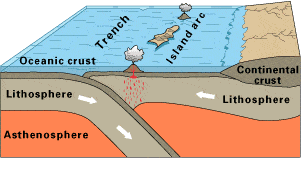
Observe this diagram of a plate boundary. One statement BEST describes what is happening. It is that
the oceanic crust is melting.
the denser ceanic crust is subducting under the less dense oceanic crust
volcanic islands are forming.
the tectonic plates are moving away from each other.
The idea that continents were once part of a single landmass that broke apart and
moved
Continental Drift
Tectonic Plates
Transform
Forms where plates are moving away from each other
Divergent-
Convergent-
Transform-
Formed where two sections of Earth’s crust are colliding
Divergent-
Convergent-
Transform-
The earth is compose of three main layers, except for____?
Crust
Mantle
Core
Lithosphere
______ a hypothesis that new sea floor is created at mid-ocean ridges and that in the process the continents are pushed apart from each other.
PLATE TECTONIC
FAULTS
SEA-FLOOR SPREADING
SEISMOMETER
The three types of plate boundaries are
Convergent, divergent, change
Divergent, allegiant, insurgent
Convergent, divergent, transform
Push, pull, slide
What is common at convergent boundaries?
Valleys
Canyons
Mountains
Rivers
What happens often at transform boundaries?
Rain
Hurricanes
Volcanic activity
Earthquakes
The crust is
Layer of molten metal.
Outermost layer of the Earth.
Made up of the lithosphere and asthenosphere.
Innermost layer of solid metal.
The lower mantle is
Solid material extending to Earth's core.
Made up of the lithosphere and asthenosphere .
Layer of molten metal.
Innermost layer of solid metal.
The outer core is
Made up of the lithosphere and asthenosphere .
Solid material extending to Earth's core.
Layer of molten metal.
Outermost layer of the Earth.
The inner core is
Layer of molten metal.
Outermost layer of the Earth.
Made up of the lithosphere and asthenosphere .
Innermost layer of solid metal.
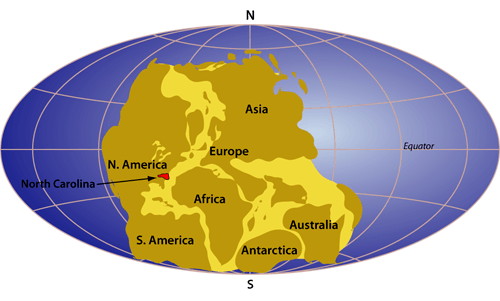
The land mass where all of the continents were once together in one large continent is called ________________.
Laurasia.
Pangaea.
Eurasia.
Gondwana.
Tectonic plates consist of
continental crust.
mesosphere.
both continental and oceanic crust.
oceanic crust.
The fact that similar fossils are found on both sides of the ocean is evidence of
magnetic reversal.
global positioning.
continental drift.
oceanic drift.
How fast the continents move?
3-4 inches per day
3-4 inches per week
3-4 inches per month
3-4 inches per year


Boundary between 2 plates that are sliding past one another
Transform fault boundary
Convergent boundary
Divergent boundary
Reverse fault
Which layer of Earth flows slowly and causes the crust to move?
Crust
Mantle
Inner Core
Outer core

One piece of evidence for Plate Tectonics is that--
some continents appear to fit together like a puzzle.
we have video footage of the plates actually moving.
all continents have formed from volcanic eruptions.
the continents are no longer moving.
Which of the following is NOT evidence to support the theory of plate tectonics?
Fossils
Continental fit
Glaciers
Sand Erosion

What type of boundary is shown in the diagram?
Divergent
Convergent
Slide/Transform

What type of boundary is shown in the diagram?
Divergent
Convergent
Slide/Transform
What is Pangea?
the name of a German scientist
the name of a supercontinent that existed millions of years ago
another name for continental drift
the name of an ancient fossil
What is Wegener's idea that continents are slowly moving over Earth's surface called?
divergence
faults
plates
continental drift
Earth's ______________________ is liquid.
inner core
outer core
The asthenosphere is the layer of the Earth just below the ________________________________.
Mesosphere
Lithosphere
The ridge in the middle of the Atlantic Ocean formed along a _____________________________.
convergent
divergent
Which of the following makes up most of Earth's mass?
crust
mantle
outer core
inner core
The part of the Earth on which the tectonic plates are able to move is the...
lithosphere
asthenosphere
mesosphere
subduction zone
The ancient continent that contained all the landmasses is called...
Pangaea
Gondwana
Laurasia
Panthalassa
The type of tectonic plate boundary involving a collision between two tectonic plates is...
divergent
transform
convergent
normal
The type of tectonic plate boundary that sometimes has a subduction zone is...
divergent
transform
convergent
normal
The San Andreas fault is an example of a...
divergent boundary
transform boundary
convergent boundary
plate boundary
Continental mountain ranges are associated with...
divergent boundaries
transform boundaries
convergent boundaries
plate boundaries
Rift Valleys and mid-ocean ridges are associated with...
divergent boundaries
transform boundaries
convergent boundaries
plate boundaries
Which of the following causes Earth's tectonic plates to move?
Energy from the sun
Magnetic pole reversal
Convection currents in the mantle
Faults in mountain ranges
What event will happen at a transform boundary?
Mountains will form
Volcanoes with form
Mid-ocean ridges with form
Earthquake

Which letter corresponds with the oldest rock?
L
M
N
O
Which letter corresponds with the newest rock?
L
M
N
O
How is possible for new crust to be formed without increasing the surface area of the Earth?
Crust is destroyed at the same time it is created
New crust is underwater where it sinks
New crust breaks more easily than the old crust
What is a subduction zone?
An oceanic plate sinks below a continental plate
A continental plate sinks below a continental plate
A continental plate sinks below an oceanic plate
An oceanic plate sinks below an oceanic plate


What type of boundary is shown in the diagram?
Divergent
Convergent
Transform
What type of boundary is shown in the diagram?
Divergent
Convergent
Slide/Transform
What type of boundary is shown in the diagram?
Divergent
Convergent
Slide/Transform

This famous fault in California has a lot of earthquakes!
New Madrid
Denali Fault
Ramapo Seismic Zone
San Andreas Fault
Scientists recently discovered that rocks collected from the Franklin Mountains in West Tests and rocks collected from mountains in eastern Antarctica were exactly the same age. Further research showed that the rocks were chemically and geologically the same and came from the same magma source. This discovery provides evidence of--
coastal erosion
plate tectonics
ocean currents
glacial melting
Which statement best describes the geologic process that is most likely responsible for the formation of mountains?
They are along a transform plate boundary that is no longer active, so erosion is creating deep valleys.
They are along a transform plate boundary in which plates are currently moving side by side, causing earthquakes and faults
They are along a plate boundary in which plates are currently converging, causing uplift and steep slopes.
They are along a plate boundary in which plates diverged in the distance past, allowing new rock to build up.
A mid-ocean RIDGE is located at the boundary of two tectonic plates. Which diagram correctly models the relative plate motion on each side of a mid ocean ridge?


Rift valleys can from when fractures in Earth's crust widen. The valley walls slowly move at a rate of only a few millimeters a year. Which of these best describes the type of tectonic activity that forms rift valleys?
Rift valleys from where a continental plate moves under an oceanic plate
Rift valleys form where a plate slides horizontally past another plate
Rift valleys from where two plates move away from each other.
Rift valleys form where an oceanic plate moves under another oceanic plate.

The San Andreas fault is a transform fault. The map below shows a student's approximation of where the fault line crosses through the United States. Students were asked to make maps predicting which way land would most likely move over thousands of years.


A mid- ocean ridge separates the Pacific plate and the Nazca plate off the western coast of South America. Which statement best describes the relative motions of the Pacific and Nazca plates?
The Pacific and Nazca plates are moth moving to the east.
The Pacific and Nazca plates are both moving to the west
The Pacific plate is moving to the west, and the Nazca plate is moving to the east.
The Pacific plate is moving to the east, and the Nazca plate is moving to the west.

The image shows a plate boundary. Arrows have been added to indicate the movement of the plates.What plate boundary feature is also shown?
A ridge formed by an inactive convergent boundary
A valley forming at an active divergent boundary
A fault forming at an active transform boundary
A volcano formed by an active transform boundary

The map shows the locations of four active volcanoes in the Caribbean Sea. What do these volcanoes indicate about plate tectonics in the region?
The volcanoes form an island arc, indicating a converging plate boundary
The volcanoes form a line, indicating a diverging plate boundary.
Two plates are moving past each other, causing faulting and magma formation.
Two plates are moving apart, creating new seafloor

The diagram shows a model of the movement of two tectonic plates. When the plates collide, on plate often moves below the other plate. The rising magma that can result from this type of plate movement may produce-
fossil layers
volcanic islands
deep-sea sediment
seafloor spreading

The model below shows two continental plates. The folded mountains in this model form at which type of plate boundary?
Transform boundary
Divergent boundary
Subduction boundary
Convergent boundary

