

wayground logo

Free Printable Worksheets

Font size

S
M
L
XL
Worksheets

World History Spring Final Exam Review

Total questions: 82

Worksheet time: 54mins

Name
Class
Date
1.
Which civilization is the oldest?
a)
Inca
b)
Olmec
c)
Aztec
d)
Mayans
2.
Why were human sacrifices made?
a)
too many people loved in the city
b)
a punishment for not following the rules
c)
to please the gods
d)
animals were considered sacred so humans were used
3.
In the case of religion, a similarity between the Inca, Aztec, and Maya was:
a)
animism
b)
human sacrifice
c)
theocracy
d)
polytheism
4.
The Mayans were located at what letter on the map?
 (Click to hide text)
a)
A
b)
B
c)
C
5.
The Inca were located at what letter on the map?
 (Click to hide text)
a)
A
b)
B
c)
C
6.
This civilization developed in Mexico and built their capital on an island in a lake. 
a)
Aztec
b)
Inca
c)
Maya
d)
ALL 
7.
Who conquered the Aztecs?
a)
Incans
b)
Spanish
c)
French
d)
Portuguese
8.

The Incas developed

a)

Aqueducts, stone buildings, and a vast network of roads and bridges.

b)

the concept of zero and a 365 day calendar.

c)

an awe-inspiring capital city of an island, Tenochtitlan.

d)

pyramids and temples for human sacrifice.

9.
first to circumnavigate globe 
a)
Christopher Columbus 
b)
Vasco da Gama 
c)
Jacques Cartier 
d)
Ferdinand Magellen 
10.
First to sail directly from Europe to India
a)
Bartolomeu Dias 
b)
Vasco Da Gama 
c)
Hernan Cortez
d)
Christopher Columbus 
11.
A patron of explorers;established navigation school 
a)
Hernan Cortez 
b)
Prince Henry 
c)
Bartolomeu Dias 
d)
Vasco da Gama 
12.
Explorer credited with the discovery of the New World
a)
Ferdinand Magellan 
b)
Christoper Columbus
c)
Bartolomeu Dias 
d)
Sir Francis Drake 
13.

What came from the New World? (select all that apply)

a)

Maize (Corn)

b)

Potatoes

c)

Tomatoes

d)

Horses

e)

Cocoa (Chocolate)

14.

Which of the following is a negative impact that the Columbian Exchange had on the native peoples of the Americas?

a)

The spread of disease killed millions of people.

b)

Agriculture spread to more regions.

c)

The use of the horse caused native peoples to leave.

d)

Native peoples were no longer allowed to use their languages.

e)

Europeans established global trade networks that brought maize to Europe, chili peppers to India, and wheat to the Americas.
15.
A common theme among Enlightenment thinkers was
a)
A) a desire to improve society
b)
B) faith in traditional religious beliefs
c)
C) support for democratic forms of government
d)
D) a belief in the inherent goodness of humanity
16.
Enlightened thinkers based their philosophical beliefs on what two things?
a)
power and privilege
b)
money and fame
c)
good looks and charm
d)
reason and logic
17.
John Locke's central political value was
a)
A) the protection of individual rights
b)
B) designing governments around biblical teachings
c)
C) ensuring an equal distribution of wealth
d)
D) the empowerment of the majority of people
18.
You are born with _________________ that can't be taken away; life, liberty, property
a)
A. philosophe
b)
B. natural rights
c)
C. separation of power
d)
D. checks and balances
19.
American's used _________________'s idea of separation of powers to write the US Constitution. 
a)
A. Montesquieu
b)
B. Hobbes
c)
C. Rousseau
d)
D. Voltaire
20.
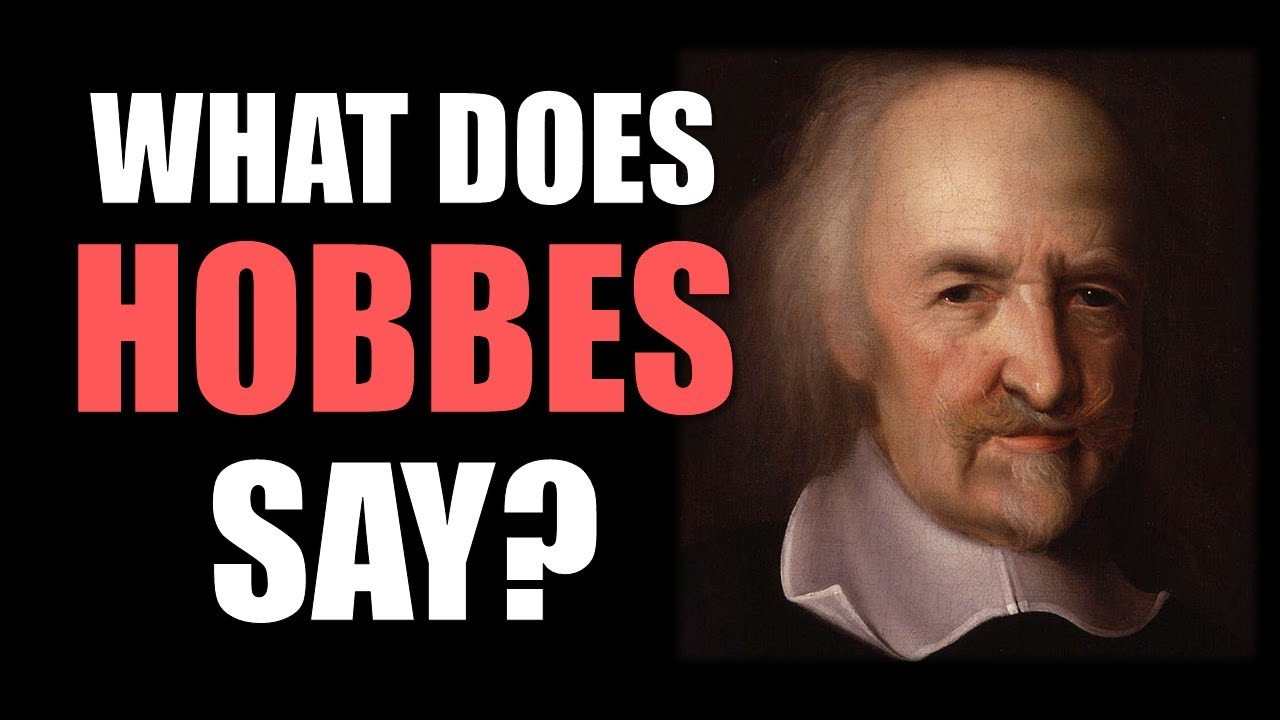
How did Hobbes view human nature?
a)
We are inquisitive and industrious.
b)
We are naturally selfish and quick to fight.
c)
We are naturally altruistic and usually willing to compromise.
d)
We are born a 'blank slate', and we develop differently according to our life's experiences..
21.
The idea that the earth is the center of the universe is the ___________ theory.
a)
geocentric
b)
heliocentric
c)
earthcentric
d)
world's worst
22.
The idea that the sun is the center of the universe is the ____________ theory.
a)
geocentric
b)
heliocentric
c)
solar
d)
sunny
23.
During the Scientific Revolution the heliocentric view of the universe was first proposed by __.
a)
Ptolemy
b)
Francis Bacon
c)
Isaac Newton
d)
Nicolaus Copernicus
24.
What did Kepler add to Copernicus’ heliocentric theory?  
a)
That Jupiter had four moons
b)
That the planets revolved around the earth 
c)
That the sun was the biggest star
d)
That the planets move in eliptical (oval shaped) orbits around the sun
25.
Galileo was tried for heresy because he argued  
a)
That heaven did not exist
b)
That Earth revolved around the sun
c)
Against the law of gravity
d)
That the sun revolved around the Earth
26.
Which scientist developed laws of motion?  
a)
Ptolemy
b)
Copernicus
c)
Galileo
d)
Newton
27.
The English philosopher who proposed the Scientific Method.
a)
Sir Francis Bacon
b)
Voltaire
c)
Thomas Hobbes
d)
hypothesis
28.

What is Divine Right?

a)

a set of rules used by the greeks

b)

the God given right to rule

c)

Hitler's reason to exterminate Jewish people

d)

Machiavelli's theory on power

29.
Who was the monarch of England when Phillip II went to war with his Spanish Armada and lost?
a)
Mary of Scots
b)
Elizabeth I
c)
James I
d)
Charles I
30.

The "Sun King" - "I am the state."

a)

Louis XIV

b)

Thomas Hobbes

c)

Peter the Great

d)

Henry VIII

31.

Led the "Roundheads" in the English Civil War

a)

Oliver Cromwell

b)

John Locke

c)

Sir Isaac Newton

d)

William Harvey

32.

William and Mary ruled England with this type of government...

a)

absolute monarchy

b)

dictatorship

c)

republic

d)

constitutional monarchy

33.
Who modernized Russia bringing better shipbuilding, gov't, manufacturing, city planning, music, and fashion
a)
Louis XIV
b)
Catherine the Great
c)
Peter the Great
d)
Ivan III
34.
Peter the Great moved the capital city of Russia from Moscow to St. Petersburg to:
a)
Be closer to Western Europe in order to open up trade through the Baltic Sea
b)
Move away from the famine and plague that killed thousands
c)
Move away from invading Mongols and other east Asian invaders
d)
Be closer to the great iron reserves of northern Russia
35.

Who was overthrown in the Japanese Meiji Restoration

a)

The Emperor

b)

The King

c)

The Shogunate

d)

Congress

36.
Name one thing the U.S. wanted from Japan in any treaty that was signed after Commodore Perry arrived.
a)
Open Japanese ports to American trade
b)
A promise not to attack America
c)
A promise not to trade with China
d)
Unlimited saki
37.

France was deep in debt because

a)

money spent on the American Revolution

b)

1st and 2nd estate did not pay taxes

c)

money spent on the Seven Years War

d)

all of the above

38.
Most of the people of France belonged to the 
a)
1st 
Estate
b)
2nd Estate
c)
3rd Estate
d)
4th Estate
39.

This new technology was used to execute thousands of French citizens

a)

astrolabe

b)

guillotine

c)

telescope

d)

caravel

40.

Simon Bolivar was

a)

A South American ruler that helped independence movements

b)

A Haitian general that helped independence movements

c)

An American statesman that wrote the Declaration of Independence

d)

A French aristocrat who killed hundreds of civilians during the Reign of Terror
41.
Toussaint L’overtoure 
a)
United the Americas
b)
Defeated the French in Mexico
c)
Was killed by Napoleon
d)
Led a slave rebellion in Haiti
42.
Napoleon assumed dictatorial powers through a sudden seizure of power known as a coupd'etat 
a)
True 
b)
False
43.
Napoleon's final defeat in June of 1815
a)
Battle of Moscow
b)
Battle of Paris
c)
Battle of Trafalgar
d)
Battle of Waterloo
44.
the process of moving from an agricultural society, in which most goods are handmade, to a society that thrives on machine-manufactured goods
a)
textile
b)
economy
c)
industrialization
d)
technology
45.
In what country did the Industrial Revolution begin?
a)
United States
b)
France
c)
Great Britain
46.
What product was first made using machines in factories?
a)
Steel
b)
textiles
c)
locomotives
d)
flying shuttles
47.
Why were railroads so important during this time?
a)
they moved goods more quickly and less expensively over greater distances
b)
they were fun to ride on to go visit family in other states
c)
people could ride on railroads to get to their jobs in another city
48.
Why did river travel improve during the 1800s?
a)
because of the invention of the steam engine
b)
because of the invention of stagecoaches
c)
because of the invention of the reaper
d)
because rivers were getting faster every year
49.
Why did people move to the cities during the Industrial revolution?
a)
Jobs in factories
b)
Jobs on the farm
c)
Family
d)
Friends
50.
Which of the following was NOT associated with early factory working conditions?
a)
Low wages
b)
Safe working conditions
c)
Dangerous working conditions
d)
Widespread pollution
51.
Which statement is true?
a)
Children were not allowed to work in the mines during the Industrial Revolution
b)
Work conditions were closely regulated
c)
There were no labor laws that prevented children from working
d)
Children were allowed to work but they were treated fairly. 
52.

Why did many industrialized or advanced countries need to takeover less advanced countries?

a)

For better climate and cleaner environment

b)

To create a democratic government

c)

To teach the local population about recycling

d)

To claim or takeover natural resources located in those countries

53.

Why were European countries interested in colonizing Africa during the Age of Imperialism?

a)

They wanted Africa's natural resources

b)

They wanted land to develop new types of ships

c)

They wanted to create a perfect society

d)

They wanted to learn new languages

54.

The race for European countries to claim land in Africa was called the _________.

a)

Scramble for Africa

b)

African Marathon

c)

Great Competition

d)

Monopoly

55.

The Berlin Conference split up ________ among European nations.

a)

Africa

b)

Asia

c)

Australia

d)

South America

56.
This country in Asia was known as Britain's "crown jewel".
a)
China
b)
India
c)
Manchuria
d)
Korea
57.
Where did the Sepoy Rebellion occur?
a)
Germany
b)
France
c)
India
d)
Britain
58.

Why were the Opium Wars significant?

a)

It forced China to change to a democratic government

b)

It forced Great Britain to recognise the importance of Confucian values

c)

It forced China to open its doors to trade with the western world

d)

It forced Great Britain to open its doors to trade with the Qing dynasty.

59.

One political objective of both Otto von Bismarck and Giuseppe Garibaldi was to

a)

overthrow divine right monarchies

b)

unify their nations

c)

establish communist systems

d)

form an alliance with Great Britain

60.

Which 19th century ideology led to the unification of Germany and of Italy and to the eventual breakup of Austria-Hungary and of the Ottoman Empire?

a)

imperialism

b)

nationalism

c)

liberalism

d)

socialism

61.
Which event sparked World War I?
a)
the German-French dispute over Alsace-Lorraine
b)
Russia’s quest for a warm water port
c)
assassination of the heir to the Austro-Hungarian throne
d)
sinking of the Lusitania
62.

All of the following are true about trench warfare EXCEPT:

a)

trenches provided protection to soldiers from gun fire

b)

trench warfare was uncommon on the Western Front

c)

each side built extensive networks of trenches

d)

soldiers were forced to live in terrible conditions and share the trenches with dead bodies

63.

Which person was the leader of the political group that brought communism to Russia?

a)

Vladimir Lenin

b)

Nicholas II

c)

Josef Stalin

d)

Aleksander Kerinsky

64.
What treaty officially ended WWI?
a)
Brest-Litovsk
b)
Paris
c)
Versailles
d)
Trafalgar
65.
Which country had to accept blame for WWI?
a)
England
b)
France
c)
Austria
d)
Germany
66.
What impact did the Treaty of Versailles have on the borders of Europe?
a)
No impact, all borders remained the same.
b)
France gave land to Germany.
c)
The Soviet Union was given more land to keep them from invading the rest of Europe.
d)
All of the empires of Europe were split up, and many new countries were created.
67.
Which of the following did NOT happen to Germany as a result of Versailles?
a)
They were able to rebuild, and became a powerful ally to France and England.
b)
They were left powerless with a weak military.
c)
They were forced to pay heavy reparations to the rest of Europe.
d)
They were denied entry to the League of Nations.
68.

Which of the following can be considered a CAUSE of the Great Depression?

a)

Greater government control of economic production

b)

Germany’s invasion of the Rhineland

c)

A weak banking system

d)

Increase of imports and exports

69.

Which of the following is a weapon of totalitarianism?

a)

Free elections for the citizens

b)

Uncensored mass media

c)

Tolerant treatment of all ethnic groups

d)

Secret police that monitor the public

70.

What event led to the start of WWII in Europe?

a)

Germany invaded Poland

b)

Germany invaded Austria

c)

Japan attacked Pearl Harbor

d)

Japan invaded Manchuria

71.

This institution was created as a result of World War II to prevent future wars

a)

the World Bank

b)

the League of Nations

c)

the International Monetary Fund

d)

the United Nations

72.

During the Cold War, what bill did the U.S. Congress pass to provide financial assistance to western European countries?

a)

Truman Doctrine

b)

Open Door Policy

c)

Marshall Plan

d)

Domino Theory

73.

Which of the following statements concerning the German government after World War II is most accurate?

a)

During the Cold War, France, Britain and the U.S. merged their territories to form the Federal Republic of Germany.

b)

Western Germany remained divided among the three western Allied powers until 1980.

c)

After World War II, the Weimar Republic was restored in Germany.

d)

Germany fell under the direct government of the Soviet Union along with the rest of eastern Europe.

74.

What was the mutual defense alliance of non communist nations?

a)

NATO

b)

Warsaw Pact

c)

Truman Doctrine

d)

Open Skies

75.
What was the name for the 1955 alliance of Soviet-dominated countries of Eastern Europe  that were the counterpart to the western alliance?
a)
NATO
b)
Warsaw Pact
c)
European Alliance
d)
Iron Curtain
76.

During the Cold War, what policy did the U.S. follow to stop the spread of communism?

a)

Open Door Policy

b)

Big Stick Policy

c)

Containment Policy

d)

Dollar Diplomacy

77.

How did the US respond to finding out that the Soviets had missiles in Cuba?

a)

They sent the Air Force to bomb Cuba.

b)

They placed a naval blockade around Cuba.

c)

They began placing missiles in the Soviet Union.

d)

They invaded Cuba and the Soviet Union.

78.

What are some positives of globalization?

a)

Cheap sneakers and clothes

b)

Cheap electronics

c)

Information is easy to access and it travels quickly (internet and social media)

d)

All of the answers are correct

79.

What are some negatives of globalization?

a)

Workers are exploited in sweatshops

b)

Pollution and deforestation

c)

Low wages for factory workers in Asia and Africa

d)

All of the answers are correct

80.
What is Zionism?
a)
The belief that the Jewish people deserved a homeland in Palestine.
b)
The belief that the Jewish people were inferior and should not have a homeland.
c)
The belief that the Palestinian people had the right to maintain their territory.
d)
THe belief that the Palestinian people should fight to eliminate the Jewish population.
81.

What was one reason India was divided into two nations in 1947?

a)

Differences between Hindus and Muslims created religious conflict.

b)

Indian leaders disagreed about India's role in the UN

c)

Great Britain feared Indian would be too strong

d)

North India became communist and South India became democratic

82.

In which nation did Nelson Mandela lead a successful reform movement?

a)

Kenya

b)

The Congo

c)

Ethiopia

d)

South Africa
