
 Worksheets
Semester One Final Review
Total questions: 92
Worksheet time: 51mins

What is the movement of people from farms to cities?
Utilitarianism
Urbanization
Proletariat
Enclosure Movement

A place where people and machines join together to mass produce goods.
Cartel
Corporation
Factory
Urbanization

__________ is known as the Father of modern economics, who theorized Laissez-Faire, the idea that the market should have no political interventions?
Adam Smith
Karl Marx
Thomas Malthus
Frederick Engels

In which European country did the Industrial Revolution begin?
France
Britian
Prussia
Spain

Some of the machines invented in the 18th and 19th centuries are:
telephones, geographic positioning system, radios, airplanes
steam engine, railroads, flying shuttle, phonograph, steam ships, light bulb
sailboats, automobiles, wheel barrels, clocks, word processors
automatic washer, hair dryer, rockets, space shuttles
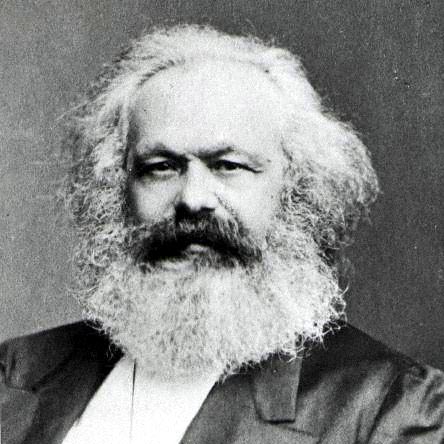
__________________ predicted a violent revolution that would result in the working class taking over in a classless political and economic systems known as communism.
John Adams
Thomas Smith
Karl Marx
Edward Jenner
During the period from 1880 to 1920, the majority of immigrants to the United States settled in urban areas in the North. What was the primary reason for this trend?
Most immigrants had lived in cities in their native countries.
Labor unions gave financial help to immigrants willing to work in the factories.
The Populist Party was successful in preventing immigrants from buying farmland.
Rapid industrialization created many job opportunities.
As a result of increased immigration to the United States in the late 19th century, many immigrant families lived in tenements because
there was a lack of affordable housing in overcrowded cities.
there was inadequate housing on the Great Plains.
they wanted to avoid living in ethnic neighborhoods.
the federal government provided immigrants with free housing.
A reason some businesses hired children was:
To provide the children a bright future and opportunities
So they could save money by paying the children less money
So the children could take care of the heavy labor required for their business
To improve their public image
Powerful companies like Standard Oil that had control over the majority of the industry they were involved in and controlled many businesses related to their own can be called
Labor Unions
Monopolies
Start-ups
Urbanization
What groups of people made up the First and Second Estate?
clergy and bourgeoisie
peasants and middle class citizens
nobles and clergy
working class citizens and emigres
What did the Declaration of the Right of Man declare?
the Third Estate should be abolished
all men were free and equal
all Frenchmen had to pay taxes
French Revolution was null and void
The Enlightenment and American Revolution influenced the French Revolution.
True
False
Who led the Reign of Terror?
Napoleon
Robespierre
Louis XVI
Danton
3) Members of the Third Estate?
the middle class and the peasants
the Catholic clergy
the nobility
the Royals


How did the spread of the principles of the French revolution affect the nobility and the clergy in the inner core and the dependent states of Napoleon's Grand Empire?
They were given more rights.
They lost their land and farms.
They were allowed to draft laws.
They lost their special privileges.
Inspired by the French and American revolutions, Simón Bolívar began the struggle for ______ in 1810.
Haitian independence
Mexican independence
Venezuelan independence
Spanish independence
The Declaration of the Rights of Man ideas came from which era?
Middle Ages
Reformation
Enlightenment
Modern Era
Social and political unrest during the French Revolution led to
the rise of Napoleon
rule of the Jacobins
revival of feudalism
rivalry of aristocrats
What idea in The Declaration of Independence most influenced the French Revolution?
right to own property
power to overthrow a monarch
guarantee of basic human rights
equality among social classes
In what way did Napoleon influence the French legal system?
secret police
unified law code
Catholic Church had ultimate authority
reversed the ideals of the French Revolution
Why was Simon Bolivar called "The Liberator"?
led a slave revolt in Haiti
defeated Napoleon in Belgium
ended the Reign of Terror in France
led independence movements in Latin America
Enlightenment philosophers such as John Locke, Thomas Hobbes and Jean Jacques-Rousseau contributed ideas to which government?
French
Italian
American
English
Which group benefits the most under the economic theory of mercantilism?
Mother countries gain wealth
Individuals gain wealth
Businesses gain wealth
colonies gain wealth
Which European nation claimed Brazil?
Portugal
Spanish
French
Dutch
English

- Nile River
- Hieroglyphics
- Pyramids
Sumer

- Huang He (Yellow) River
- Calligraphy writing
- Paper and Silk
Sumer
The ancient Chinese believed that the gods had given this _______ to bless the ruling family.
The Mandate of Heaven
The Caste System
The Book of the Dead
Hammurabi's code
The Neolithic Revolution occurred when people discovered how to -
grow food and domesticate animals
trade with others in the same river valley
fight wars using metal weapons
make stone temples for religious ceremonies
Which is a major characteristic of Judaism?
belief in a single just and all-powerful God
praying five times a day
following the Eightfold path
worshipping many gods
The ancient civilizations of Mesopotamia and Egypt were similar in that both cultures
established trade routes to China
used the ziggurat form for their temples
developed along rivers
used a hieroglyphic writing system
Hinduism began in which of the following countries?
the United States
Bali
India
Japan
How was the The Black Death spread?
Rats
People biting each other
Food
Contaminated water
What does "Magna Carta" mean in Latin?
Great Charter
Wonderful Idea
Map of the World
Major Cart
Who was invited by Parliament to invade England and take the throne?
Charles I
Oliver Cromwell
William and Mary of Orange
James II
Charles II
The Glorious Revolution ended tensions between
The king, William of Orange and the Pope
Parliament, Catholics, and the King
Parliament, Mary Stuart, and France
The king, Parliament and Protestants
Believed in freedom of speech and religion
Adam Smith
Louis XIV
Voltaire
Montesquie
Favored monarchy that relied on a social contract
Thomas Hobbes
Adam Smith
Mary Wollstonecraft
Rousseau
Believed in limited government and natural rights
Phillip II
John Locke
James II
Voltaire
Believed in separation of powers to keep the government in check
Montesquie
Rousseau
Thomas Hobbes
John Locke
Good government must protect the rights of individual freedoms
Wollstonecraft
Voltaire
Diderot
Rousseau
Who was invited to assume the French throne after Napoleon’s defeat?
Louis XIV
Louis XV
Louis XVII
Louis XVIII
What French ruler wanted to be a “divine right” monarch and had to eventually leave the country during the July Revolution?
Louis XVIII
Louis Philippe
Napoleon III
Charles X
Which came first the Roman Republic or Roman Empire
Republic
Empire
Neither
At the same time
Why did the French people support Napoleon Bonaparte? Check all that apply
He would provide stability
He would conquer all of France's enemies
He would bring France under Great Britain's rule
He would revert back to Absolute Monarchs
In 1453, the Ottomans attacked Constantinople & conquered the ________ Empire
Persian
Roman
Mughal
Byzantine
Arguably one of the greatest Byzantine emperors. Ruled from 527 C.E.- 565 C.E.
Theodora
Justin
Justinian
Belisarius


The Black Plague was thought to be brought to Western Europe through the —
trade routes
Crusades
Mongol invasions
Viking raids

What is the correct definition of a zaibatsu?
A Chinese bank
A Japanese traditional meal
large capitalist enterprises of Japan before World War II, similar to cartels or trusts but usually organized around a single family
A large group of Samaria warriors
president of the United States during WWI who campaigned for peace after the war
George Washington
Franz Ferdinand
Woodrow Wilson
Zimmermann
The Zimmerman Telegram was a letter to which country from Germany?
Mexico
United States
Canada
Cuba
Which of the following is a reason that the US joins World War I?
European colonism
Rise of Nationalism
Sinking of the Lusitania
secret alliances


How did warfare change during WW1?
Armies waged fast, lightning warfare with groundbreaking technology
Armies waged slow, defensive trench warfare due to industrial weapons
Armies met in old-fashioned battles in open fields
Armies used airplanes to bomb the enemy into submission
What impact did U.S. soldiers have on the Western Front?
U.S. soldiers failed to prevent German soldiers from entering Paris
Helped stop last German offensive, helping to convince Germany they couldn't win
Provided only technological and economic aid to the allies to break the trenches
Helped to end the Russian Revolution
What treaty ended WW1?
Treaty of Ghent
Treaty of Berlin
Treaty of Versailles
Great Treaty of 1919
The German people thought that the Treaty of Versailles that their government signed and agreed to was?
Unfair
Fair
Helpful
Necessary
Which term means not taking a side in a conflict?
Isolationism
Neutrality
Alliance
Nationalism

The Spanish-American War (1898) marked a turning point in American foreign policy because the United States--
Developed a plan for peaceful coexistence
Emerged as a new world power
Pledged neutrality in future European conflicts
Refused to become a colonial power
A payment made to the victor by the vanquished to cover the costs of war.
taxes
war bonds
income
reparation

