wayground logo

Free Printable Worksheets

Font size

S
M
L
XL
Worksheets

solar system

Total questions: 92

Worksheet time: 2hrs 47mins

Name
Class
Date
1.
What does a waxing moon mean?
a)
when the lit part of the moon increases
b)
when the lit part of the moon decreases
c)
the pathway the earth takes around the sun
d)
all of the planets, moon, and other space objects going around the sun
2.
What is the definition of orbit?
a)
the spinning of the earth on its axis
b)
when the lit part of the moon increases
c)
all of the planets, moon, and other space objects going around the sun
d)
the imaginary line that goes through the north and south poles that the earth spins on
3.
What is the center of our solar system?
a)
moon
b)
earth
c)
sun
d)
Jupiter
4.
Which one takes 24 hours?
a)
rotation
b)
revolution
5.
What describes the earth going around the sun?
a)
rotation
b)
revolution
6.
What causes day and night?
a)
rotation
b)
revolution
7.
What causes the seasons to change?
a)
rotation
b)
revolution
8.
Which one takes one year?
a)
rotation
b)
revolution
9.
What is energy created by the sun called?
a)
sun energy
b)
hot energy
c)
solar energy
d)
solar heat
10.
What is the sun?
a)
a star
b)
a comet
c)
a planet
d)
an asteroid
11.
How does the moon get its light?
a)
it reflects the sun's light onto the earth
b)
it creates its own light, similar to a star
c)
it gathers light from earth during the day
d)
the moon is actually a yellow color, so it appears to be bright during the nighttime
12.
The planets can appear to move........
a)
East to West, West to East, or stand still
b)
West to East only
c)
East to West only
d)
East to West or stand still
13.
Why do stars in a constellation seem to stay in one position?
a)
The Stars orbit the sun like the Earth does
b)
The Stars do not orbit the sun or earth
c)
The Stars orbit the earth like the moon
14.
What causes the seasons to change?
a)
The earth rotates on its axis
b)
The earth revolves around the sun
c)
The earth's axis is tilted
d)
Wind patterns on earth
15.
Why do we have different phases of the moon?
a)
Because the moon revolves around the earth
b)
Because the moon revolves around the sun
c)
Because the earth rotates
d)
Because the moon rotates
16.
What is the largest planet in our solar system?
a)
Earth
b)
Saturn
c)
Jupiter
d)
The Sun
17.
Stars vary greatly in .........
a)
Size and temperature only
b)
Size and color only
c)
Size, color and temperature
d)
Color and temperature
18.
If the moon is a crescent shape then changes to a gibbous. What is the next phase ?
a)
If the moon is a crescent shape then changes to a gibbous. What is the next phase ?
b)
Cresent
c)
Gibbous
d)
Full moon
19.
The four planets that are nearest the sun are called the.........
a)
Inner planets
b)
Outer planets
c)
Small planets
d)
Gas giants
20.
After a new moon, which phase of the moon appears next?
a)
Crescent moon
b)
New moon
c)
Gibbous moon
d)
Full moon
21.
 How long does it take the earth to rotate once? 
a)
12 hours
b)
24 hours
c)
20 hours
d)
36 hours
22.
The constellation Orion cannot be seen from the same place in the sky all year because....
a)
the Stars move
b)
Earth revolves around the sun
c)
The moon revolves around the earth
23.

This is the first planet from the Sun; it is very hot in the day and very cold in the night.

a)

Mercury

b)

Neptune

c)

Earth

d)

Jupiter

24.

The fourth planet from the Sun; also known as the "red planet."

a)

Neptune

b)

Mercury

c)

Earth

d)

Mars

25.

The sixth planet from the Sun; known for its large rings.

a)

Saturn

b)

Mercury

c)

Earth

d)

Mars

26.

The fifth planet from the Sun; this is the LARGESTplanet in the Solar System.

a)

Jupiter

b)

Mercury

c)

Earth

d)

Neptune

27.

This is the eighth (last) planet from the Sun; it is deep dark blue in color.

a)

Earth

b)

Neptune

c)

Mercury

d)

Jupiter

28.

This is the nearest star to Earth.

a)

the moon

b)

the planet of Mars

c)

the asteroid belt

d)

the sun

29.

These are the four planets FARTHEST from the Sun; Jupiter, Saturn, Uranus, and Neptune.

a)

inner planets

b)

outer planets

c)

solar planets

d)

the best planets

30.

A group of stars that make a pattern in the night sky.

a)

planets

b)

comets

c)

asteroids

d)

constellation

31.

This is the phase of the moon that looks ALMOST full.

a)

crescent

b)

gibbous

c)

full moon

d)

new moon

32.
Which is the second closest planet to the sun?
a)
Earth
b)
Saturn
c)
Venus
d)
Mercury
33.
Which planet is third from the sun?
a)
Mars
b)
Pluto
c)
Venus
d)
Earth
34.
Which is the fourth planet from the sun?
a)
Mars
b)
Saturn
c)
Earth
d)
Jupiter
35.
Which planet is fifth from the sun?
a)
Saturn
b)
Jupiter
c)
Mars
d)
Earth
36.
Which is the sixth planet from the sun?
a)
Earth
b)
Uranus
c)
Saturn
d)
Neptune
37.
Which planet is seventh from the sun?
a)
Saturn
b)
Earth
c)
Venus
d)
Uranus
38.
Which planet is farthest from the sun?
a)
Neptune
b)
Pluto
c)
Earth
d)
Uranus
39.
A natural satellite of a planet.
a)
Asteroid
b)
Comet
c)
Moon
d)
Meteor
40.
What is the difference between the inner planets and the outer planets?
a)
The outer planets are smaller than the inner planets 
b)
The inner planets are smaller than the outer planets
c)
The outer planets have more rocks than the inner planets
d)
the inner planets are heavier than  the outer planets
41.
The inner planets are called terrestrial planets because they are composed of
a)
water
b)
gas
c)
frozen surfaces
d)
rocks
42.
One factor that makes life possible on Earth is
a)
an atmospher
b)
water
c)
greenhouse effect
d)
gravity
43.
Which planet is tipped on its side nearly 90 degrees?
a)
Jupiter
b)
Saturn
c)
Uranus
d)
Neptune
44.
Which planet has a giant red spot?
a)
Jupiter
b)
Saturn
c)
Uranus
d)
Neptune
45.
Which planet is the hottest planet because of its clouds?
a)
Venus
b)
Earth
c)
Mars
d)
Pluto
46.
Put the planets in order from the sun.
a)
Mercury, Venus, Mars Earth, Jupiter, Saturn, Uranus, Neptune, Pluto
b)
Mercury, Venus, Earth, Mars, Jupiter, Sarturn, Neptune, Uranus, Pluto
c)
Mercury, Venus, Earth, Mars, Jupiter, Sarturn,  Uranus, Neptune,Pluto
d)
Mercury, Venus, Earth, Mars, Sarturn, Jupiter, Neptune, Uranus, Pluto
47.
The four inner planets are...
a)
Rocky and small
b)
Very large and made of ice
c)
Small and made of ice
d)
Very large and made of gases
48.
The outer planets are...
a)
Rocky and small
b)
Very large and made of ice
c)
Small and made of ice
d)
Very large and made of gases
49.
How does a telescope help us understand the moon?
a)
It tells us how it was formed
b)
It tells us how hot it is there
c)
It helps us see surface features
d)
It can tell us what the moon is made of
50.
A probe landed on Mars and did a soil test. What information did it discover?
a)
There are no living organisms in Martian soil.
b)
Mars is slightly oval in shape.
c)
Mars is about one-fourth the size of Earth.
d)
The gravity on Mars is much less than on Earth.
51.
Why is space travel difficult for people?
a)
We cannot take the air or food we need into space
b)
the distance are very great; it is dangerous and expensive.
c)
It is impossible to escape the sun's or Earth's gravity.
d)
We do not have a destination to visit that we know will support life.
52.
What holds the planets in their orbits around the sun?
a)
gravity
b)
speed
c)
string
d)
air currents
53.
Which object has the most gravity?
a)
Earth
b)
moon
c)
Jupiter
d)
sun
54.
What is the only planet known to contain life?
a)
Mars
b)
Earth
c)
Neptune
d)
Uranus
55.

When the sun gets higher in the sky, shadows get ______.

a)

longer

b)

gone

c)

shorter

d)

darker

56.

When the sun gets lower in the sky, shadows get______.

a)

longer

b)

gone

c)

shorter

d)

darker

57.

Shadows are longest during _______.

a)

morning and evening

b)

noon

c)

night

58.

Shadows are shortest around______.

a)

morning and evening

b)

noon

c)

night

59.

The sun appears to __________.

a)

rise in the east, set in the west

b)

rise in the west, set in the east

60.
Which light source causes shadows in the outdoor environment? 
a)
The Sun
b)
The Lightbulb
c)
The House
d)
The School
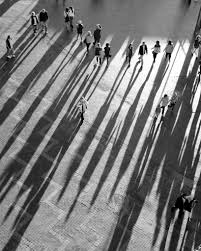
61.

When was this picture most likely taken?

(Hint: think about the shadow's length)

a)

morning or evening

b)

night

c)

noon

d)

afternoon

62.

What do shadows on Earth help show?

a)

Earth's rotation

b)

Earth's revolution

c)

Earth's equator

d)

Earth's axis

63.

If it is summer in the northern hemisphere, what season is it in the southern hemisphere?

a)

spring

b)

winter

c)

fall

d)

summer

64.

Why is it colder in winter than in summer?

a)

The earth is tilted toward the sun.

b)

The earth is farther away from the sun.

c)

The earth is tilted away from the sun.

d)

The earth is closer to the sun.

65.

Where on earth has the most direct sunlight and warmest temperatures all year long?

a)

Arctic circle

b)

Antarctic circle

c)

Temperate climate zone

d)

Equator

66.
As the lighted part of the moon appears to get smaller, we say that the moon is ____________.
a)
waning
b)
disappearing
c)
swelling
d)
waxing
67.
What part of the moon do we see from Earth?
a)
all of it
b)
only one quarter
c)
none of it
d)
the same side
68.
When do we see a full moon?
a)
when half of the sun's light is shining on the half of the moon facing away from us
b)
when the sun goes down and there are no clouds in the night sky
c)
when none of the sun's light is shining on the half of the moon facing toward us
d)
when all the sun's light is shining on the half of the moon facing toward us
69.
How long does it take the moon to change from a new moon to a  full moon?
a)
about 1 month
b)
about 1 year
c)
about 1 week
d)
about 1 day
70.
How does the Sun's position in the sky effect the length of a shadow?
a)
It determines the length of the shadow.
b)
It makes shadows  appear super large.
c)
It helps you to see your shadow.
d)
It blocks all shadows, so you cannot see them.
71.
You are sitting on the beach close to the water's edge in the morning, why do you have to move your blanket by early afternoon?
a)
because the tide is coming in
b)
because the waves are getting larger
c)
because the current in the water is getting stronger
d)
because the sea level is changing
72.
What causes the tides on Earth?
a)
energy coming out from the core of the Earth
b)
movement of tectonic plates
c)
gravitational pull of the sun and moon
d)
volcanic eruptions near the oceans
73.
What moon phase is this picture?
a)
This is the full moon phase.
b)
This is the waxing gibbous moon phase.
c)
This is the waning gibbous moon phase.
d)
This is the first quarter moon phase.
74.
What moon phase is this picture?
a)
This is the waning crescent phase.
b)
This is the waxing gibbous phase.
c)
This is the waning gibbous phase.
d)
This is the new moon phase.
75.
What is this moon phase?
a)
This is the waxing crescent phase.
b)
This is the full moon phase.
c)
This is the waxing gibbous phase.
d)
This is the last quarter moon.
76.
What is this moon phase?
a)
This is the waxing gibbous moon phase.
b)
This is the last quarter moon phase.
c)
This is the first quarter moon phase.
d)
This is the new moon phase.  
77.
What moon phase is this picture?
a)
This is the full moon phase.  
b)
This is the waxing crescent moon phase.
c)
This is the waning gibbous moon phase.
d)
This is the waning crescent moon phase.
78.
What moon phase is this picture?
a)
This is the new moon phase.
b)
This is the waxing crescent moon phase.
c)
This is the waxing gibbous moon phase.
d)
This is the waning crescent moon phase.
79.
What moon phase is this image?
a)
This is the full moon phase.
b)
This is the last quarter moon phase.
c)
This is the waxing gibbous moon.
d)
This is the new moon phase.
80.
What phase of the moon is this image?
a)
This is the last quarter moon phase.
b)
This is the full moon phase.
c)
This is the first quarter moon phase.
d)
This is the waxing gibbous moon phase.
81.
As the moon's shape appears to get smaller, we say that the moon is _.
a)
swelling
b)
waxing
c)
waning
d)
disappearing
82.
How long is a lunar month?  
a)
30
b)
29.5
c)
27
d)
27.3
83.
This tool shows the cardinal directions 
a)
astrolabe
b)
compass
c)
sextant
d)
telescope
84.
This navigational tool measure the height of the horizon to an object in space to help explorers plot their location. 
a)
astrolabe
b)
compass
c)
sextant
d)
telescope
85.
This tool is used by astronomers to make faint, faraway objects appear brighter and closer. 
a)
astrolabe
b)
compass
c)
sextant
d)
telescope
86.
When would an astronomer most likely use a telescope? 
a)
to view the types of clouds in the sky
b)
to study the characteristics of a planet in our solar system
c)
to measure the amount of sunlight Earth receives
d)
to view objects across the ocean
87.
Also known as the "big bear" and contains the Big Dipper
a)
Ursa Major
b)
Ursa Minor
c)
Orion 
88.
Also known as "the hunter" 
a)
Ursa Major
b)
Ursa Minor
c)
Orion 
89.
People in the Northern Hemisphere do see the same constellations as the people in the Southern Hemisphere.
a)
True
b)
False
90.
What are the three important constellations?
 
a)
Ursa Major, Ursa Minor, Orion  
b)
Ursa Major, Big Dipper, Orion  
c)
Ursa big, Ursa small, Orion 
d)
Polaris, Ursa Minor, Orion  
91.
What constellation is this?
a)
Orion
b)
Taurus
c)
Canis Major
d)
Gemini
92.
What constellation is this?
a)
Draco
b)
Ursa Minor
c)
Corona Borealis
d)
Cepheus