wayground logo

Free Printable Worksheets

Font size

S
M
L
XL
Worksheets

Second Semester Review

Total questions: 117

Worksheet time: 2hrs 42mins

Name
Class
Date
1.
A secret telegram from Germany to Mexico was the:
a)
Tooleriod Telegram
b)
Zimmerman Telegram
c)
Lusitania Telegram
2.
The Zimmerman Telegram
a)
Officially announced the entry of the USA into WWI
b)
Was a message sent by the British requesting help from the USA
c)
Asked Mexico to attack the USA in return for land
d)
Warned passengers of the Lusitania that the ship would be sunk
3.
Who did Germany send the Zimmerman telegram to?
a)
France
b)
Mexico
c)
Great Britain
d)
Canada
4.
Who had the first moving assembly line?
a)
Henry Ford
b)
Harrison Ford
c)
Harry Potter
d)
Shamaley Ford (home of the hot shamaley deal)
5.
Henry _______________ launched the automobile industry's first moving assembly line at the Highland Park Plant in Detroit, Michigan, in 1913.
a)
Chevy
b)
Ford
c)
Lexus
d)
Toyota
6.
Which of the following are advantages of using the assembly line?
a)
Increased production and better uniformity
b)
Reduced Cost
c)
Use of Interchangeable Parts
d)
All of the above
7.
What was henry ford's first car called?
a)
The T model
b)
The model T
c)
chevy
d)
toyota
8.
Henry Ford introduced $5.00 a day wage 8 hour workday?
a)
True
b)
False
9.
What became a model for the manufacturing of American cars and consumer products?
a)
The assembly line
b)
Slavery
c)
Sharecropping
d)
Tenant Farming
10.

We intend to begin on the first of February unrestricted submarine warfare. We shall endeavor in spite of this to keep the United States of America neutral. In the event of this not succeeding, we make Mexico a proposal or alliance on the following basis: make war together, make peace together, generous financial support and an understanding on our part that Mexico is to reconquer the lost territory in Texas, New Mexico, and Arizona...


— Zimmerman telegram, 1917


The disclosure of this document contributed to...

a)

a declaration of war against Mexico

b)

the entry of the United States into World War I

c)

the passage of the Treaty of Versailles

d)

a restriction on immigration from Latin America

11.
which country sent the Zimmerman Note?
a)
Britain
b)
America
c)
France 
d)
Germany
12.
What was America's position on WWI?
a)
To get fully involved
b)
They were a part of the alliance so they jumped right in
c)
They remained Neutral
d)
They didn't know anything about  the war
13.

What United States president issued The Fourteen Points?

a)

John F. Kennedy

b)

Theodore Roosevelt

c)

Woodrow Wilson

d)

Franklin D. Roosevelt

e)

William Taft

14.

What group did the fourteen points want to create to maintain peace and protect all countries?

a)

Peace Corps

b)

Nato

c)

United Nations

d)

League of Nations

15.
President Wilson's fourteen points 
a)
initiated U.S. involvement in World War I
b)
laid out his goals for peace
c)
ended World War I
d)
made Germany to accept blame for the war
16.
The 1919 treaty that ended WW1
a)
Reparations
b)
Woodrow Wilson
c)
Reparations
d)
Treaty of Versailles 
17.
What was the purpose of the League of Nations? 
a)
to govern Germany after the war 
b)
to help secure capitalism in Europe
c)
to prevent future conflicts through negotiations and settlements 
d)
to insure US trading rights 
18.

Who was forced to assume total responsibility for World War I?

a)

Germany

b)

United States

c)

Russia

d)

Italy

19.
What was President Wilson's proposed points called that he brought to Versailles?
a)
Fourteen Points
b)
Seven points
c)
Ten Points
d)
Two Points
20.
Which of Wilson's points was accepted by European leaders?
a)
Staying neutral is a choice
b)
League of Nations
c)
not to punish Germany
21.
Which of the following is a reason why the U.S. did not want to join the League of Nations?
a)
There was fear that it would get the U.S. involved in another war
b)
Germany  was allowed into the League of Nations
c)
The League of Nations would be too costly for Americans
d)
The U.S. was pre-occupied with difficulties at home.
22.

An organization of workers dedicated to protecting members' interests and improving wages, hours and working conditions for all.

a)

Labor Union

b)

Workers Rights

c)

Worker Strikes

d)

Collective Bargaining

23.

The negotiation of wages and other conditions of employment by an organized body of employees

a)

Labor Unions

b)

Workers Rights

c)

Worker Strikes

d)

Collective Bargaining

24.

The ____________ movement led efforts to stop child labor, give health benefits and provide aid to workers who were injured or retired

a)

collective

b)

labor

c)

strike

d)

union

25.
What did prohibition make illegal? 
a)
Guns
b)
Tobacco
c)
Alcolholic Drinks
d)
Coffee
26.
What amendment to the Constitution started prohibition?
a)
16th
b)
17th
c)
18th
d)
19th
27.
What was the movement called that pushed the idea of prohibition? 
a)
Temperance
b)
Equal rights
c)
Civil rights
d)
Feminist
28.
What were people called that smuggled and sold illegal alcoholic drinks?    
a)
Prohibitionists 
b)
Bootleggers
c)
Speakeasies
d)
Alcoholics  Abolitionists 
29.
The end of the Prohibition era came with the
a)
passage of the Volstead act
b)
21st Amendment
c)
arrest of Al Capone
d)
start of the Great Depression
30.

In 1920, women in the United States gained the right to vote as a result of a

a)

Presidential order

b)

Supreme Court decision

c)

constitutional amendment

d)

law passed in each of the states

31.

A major goal of the constitutional amendment establishing national Prohibition was to

a)

stop organized crime

b)

eliminate alcohol consumption

c)

restrict immigration

d)

end poll taxes

32.

The photograph shows efforts by the federal government to enforce

a)

urban renewal programs

b)

automobile safety

c)

national Prohibition

d)

vehicle and traffic laws

33.
One reason for US fears of communism in the 1920's was that
a)
millions of Bolsheviks were migrating to the US
b)
the Bolsheviks had taken over Russia during World War I
c)
a Bolshevik army was sailing to the US
d)
Bolshevik spies were found in the US government
34.
The fear of communism taking over the US during the 1920's was called the
a)
Red Menace
b)
Bolshevik Revolution
c)
Red Scare
d)
Palmer Revolt
35.
Nativism is
a)
the idea that Native Americans should have more land
b)
the distrust of immigrants by Americans
c)
a fear of radical ideas
d)
hatred of all people by Native Americans
36.
Nativists in the 1920's had a particular dislike for
a)
mobsters & gangsters from Italy
b)
Irish & German immigrants
c)
Catholics, Jews, & immigrants from southern & eastern Europe
d)
poor immigrants
37.
A Russian communist in the 1920's was known as a 
a)
Galleanist
b)
Dirty Commie
c)
Bolshevik
d)
Red Army
38.
The two Italian immigrants who were executed for killing 2 men at a factory were named
a)
Galleani & Luigi
b)
Harding & Capone
c)
Sacco & Vanzetti
d)
Malone & Galleani
39.
Which law began limiting the flow if immigrants when it was passed in 1921?
a)
National Origins Act
b)
Emergency Quota Act
c)
Dawes Act
d)
Teapot Dome Act
40.

Why were more people able to own automobiles, radios, washing machines, and other goods in the 1920s?

a)

because of advertising

b)

because of lower taxes on imports

c)

because of installment buying

d)

because the trucking industry grew

41.

Making monthly payments until the full price has been paid

a)

consumer goods

b)

installment buying

c)

mechanization

d)

urbanization

e)

renaissance

42.
The Federal Emergency Relief Administration (FERA) gave______ in 1933.
a)
grants and loans to states so they could provide for needy
b)
government jobs (building public roads, buildings, parks, etc.) for young men
c)
created jobs (art, literacy, drama projects, etc.) for artists, musicians, etc. 
d)
workers the right to form unions
43.
Gave direct relief to the poor
a)
FDIC
b)
FERA
c)
NIRA
44.
Program created to provide the elderly with an income (still exists)
a)
Medicare
b)
Social Security
c)
Medicaid
d)
SNAP
45.

Which of the following was not a purpose of the New Deal?

a)

Reform

b)

Recovery

c)

Rebuild

d)

Reform

46.

Which new deal program gave money, clothing, and food to the unemployed?

a)

Civilian Conservation Corp (CCC)

b)

Agricultural Adjustment Act (AAA)

c)

Federal Emergency Relief Administration (FERA)

d)

Nation Recovery Act (NRA)

47.

Which new deal program gave money to states for aid to dependent children?

a)

Social Security Act

b)

National Labor Relations Act

c)

Agricultural Adjustment Act

d)

U.S. Housing Authority

48.
Songs such as "Brother, Can you spare a dime" which tell an important story are called 
a)
Sad and depressing
b)
Oral History
c)
Boring
d)
Old fashion
49.

Once I built a railroad, I made it run, made it race against time.

Once I built a railroad; now it's done. Brother, can you spare a dime? Once I built a tower, up to the sun, brick, and rivet, and lime;

Once I built a tower, now it's done. Brother, can you spare a dime?

—“Brother Can You Spare a Dime?” by Yip Harburg


From whose point of view is this song written?

a)

a gangster during Prohibition

b)

an unemployed person during the Great Depression

c)

a migrant during the Dust Bowl

d)

a wealthy tycoon during the Roaring Twenties

50.
One difference between the administrations of President Roosevelt and President Hoover was that Roosevelt was-
a)
more willing to use government intervention to solve economic problems
b)
unwilling to allow government agencies to establish jobs
c)
able to ignore economic issues for most of his first term in office
d)
opposed to any type of government regulation of financial institutions
51.
What was a major result of FDR’s New Deal programs?
a)
The national deficit declined for most U.S. citizens
b)
The suffrage rights for women changed
c)
The power of the federal government was expanded
d)
The federal government lowered taxes for most Americans
52.
This was the name for Roosevelt's plan to end the Depression
a)
New Deal
b)
Square Deal
c)
Depression Ender 6500
d)
Return to Normalcy
53.
These created jobs and provided people with direct assistance during the Great Depression
a)
Relief
b)
Recovery
c)
Reform
d)
Reduce
54.
These programs were designed to stimulate the economy and end the Depression?
a)
Relief
b)
Recovery
c)
Reform
d)
Reuse
55.
These programs were designed to prevent a future Depression
a)
Relief
b)
Recovery
c)
Reform
d)
Recycle
56.
A major cause of antagonism toward the “new immigrants” who came to the United States after 1880 was the belief that they...
a)
were better educated than native-born Americans
b)
had a higher standard of living than most Americans
c)
adapted easily to American culture
d)
competed with Americans for jobs as unskilled laborers
57.
19th century Chinese immigrants are known for what?
a)
Work in building the Transcontinental Railroad
b)
Work in New York factories
c)
Contributions to the steel industry
d)
Contributions to John D. Rockefeller
58.
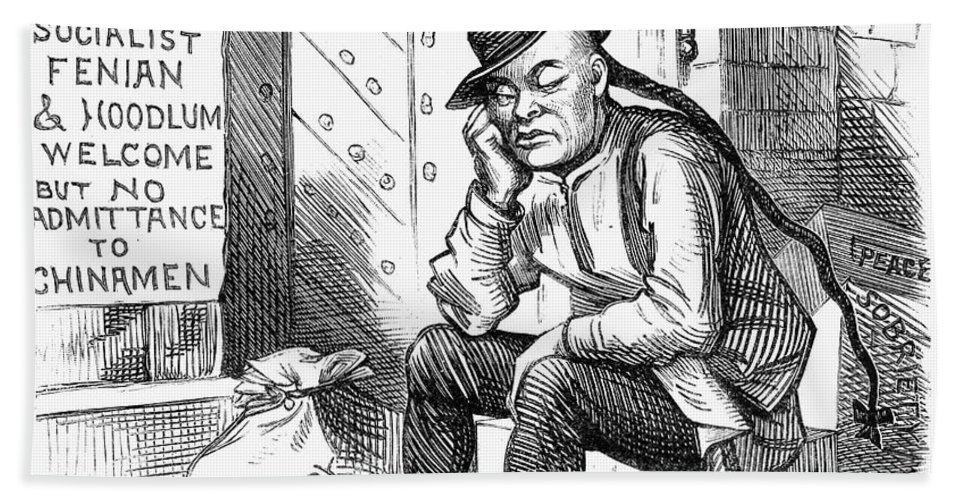
Passed in 1882, the Chinese Exclusion Act did what?
a)
closed America to Chinese immigrants for the next ten years
b)
welcomed more Chinese immigrants to America to perform hard work
c)
allowed Chinese immigrants, but only under a very strict set of rules
d)
closed America to Chinese immigrants for three years then allowed a few at a time
59.
This law specifically barred Chinese laborers from entering the US, and was in place for more than 60 years.
a)
The Chinese Exclusion Act
b)
The Ban on Foreign Labor Act
c)
The Asian Immigration Act
d)
The Chinese Labor Law
60.

What group of immigrants were arriving in large numbers on the West Coast in the middle to late 1800's?

a)

Greek

b)

Chinese

c)

British

d)

French

61.

This foreign policy by Theodore Roosevelt was used to secure the Panama Canal. The US will negotiate, but we also have a "Great White Fleet".

a)

Moral Diplomacy

b)

Big Stick Policy

c)

Roosevelt Corollary

d)

Dollar Diplomacy

e)

Open Door Policy

62.

"speak softly and carry a big stick"

a)

Dollar Diplomacy

b)

Open Door Policy

c)

Moral Diplomacy

d)

Big Stick Diplomacy

63.
Imperialism is __________.
a)
when a powerful nation uses its resources to help a weaker nation
b)
when a weaker nation invites a powerful nation to help it industrialize
c)
when a powerful nation takes control of the economy and government of a weaker nation
64.
Teddy Roosevelt's policy was to "Speak softly and carry a big stick." What did he mean by this?
a)
Debate calmly, and always be willing to negotiate
b)
Speak quietly, but yell if necessary.
c)
Negotiate peacefully, but always have the threat of the military to back you up.
d)
Never back down when there is conflict.
65.
At the end of the Spanish American War, the United States gained which 3 territories? 
a)
Puerto Rico, Cuba, Spain
b)
Spain, Cuba, Guam
c)
Marianas Islands, Philippines, Russia
d)
Philippines, Guam, Puerto Rico
66.
Which group had a racial hatred of immigrants, since they took jobs from Americans for lower wages. 
a)
Nativists
b)
Political bosses
c)
Miners
d)
Labor leaders
67.

This law was made to reduce competition for jobs on the West Coast because it prohibited immigration from China-

a)

Pendleton Act

b)

Homestead Act

c)

Mexican Repatriation Act

d)

Chinese Exclusion Act

68.
The fear of immigration is _______________________
a)
Nativism
b)
Social Darwinism
c)
Scopes Trial
d)
Racism
69.

Some Americans harbored strong hatred or fear of immigrants, and they revived a trend called

a)

Americanization

b)

“Nativism”

c)

the melting pot

d)

Assimilation

70.
Created government jobs (natural resource conservation) for young men in 1933.
a)
National Recovery Administration (NRA)
b)
Tennessee Valley Authority (TVA)
c)
Works Progress/Projects Administration (WPA)
d)
Civilian Conservation Corps (CCC)
71.

A federal work program designed to create jobs for unemployed wage earners during the Great Depression

a)

The Social Security Program

b)

The Works Progress Administration

c)

The Agricultural Adjustment Administration

d)

The Civilian Conservation Corps

e)

The National Labor Relations Act

72.
What are liberty bonds?
a)
Bonds given to the people by the government
b)
A war bond sold to support the war
c)
Bonds sold by banks
d)
Bonds sold by the Statue of Libery
73.
What are some things Americans did on the homefront?
a)
Bought liberty bonds
b)
Planted victory gardens
c)
Rationing
d)
All of the above
74.

All of the following were new technological advances during the war, EXCEPT:

a)

Tanks

b)

Poison Gas

c)

Rifles

d)

U-Boats

75.
What type of warfare was used in WWI?
a)
bench
b)
trench
c)
French
d)
wrench
76.
What is a German submarine?
a)
subway
b)
uboat
c)
blitzkrieg
d)
dreadnought 
77.
Which was most influential in the US joining WWI? 
a)
Attacks in Serbia
b)
Attacks at sea
c)
pity for those who were suffering in Europe
d)
to gain world power
78.
The sinking of this ship is one of the reasons the United States prepares for entry into WWI
a)
Lusitania
b)
SS. America
c)
Titanic
d)
Zimmerman
79.
This telegram is intercepted by the British and shown to the United States, making the U.S even more Anti-German
a)
Lusitania
b)
Zimmerman telegram
c)
Wilson Telegram
d)
Fourteen Points
80.
What attitude did the United States take at the beginning of WWI?
a)
Nationalism
b)
Imperialism
c)
Isolationism
d)
Militarism
81.
What type of fighting used submarines to sink any ship that entered enemy waters?
a)
Lusitania
b)
unrestricted submarine warfare
c)
Uboat
d)
force
82.

Why was the Zimmerman Telegram so significant?

a)

It allowed Russia to exit the war, without further losses

b)

It angered Americans and drove the United States to finally enter the war.

c)

It strengthened the alliance between Mexico and Austria-Hungary

d)

It caused the United States to declare war on Japan

83.

The sinking of the Lusitania was a byproduct of which German policy?

a)

Trench warfare Policy

b)

Impressment Initiative

c)

Unrestricted Submarine warfare

d)

No Man's Land Policy

84.

What was the major reason the United States entered World War I?

a)

a. Japanese forces had occupied Manchuria

b)

b. German troops had landed on American soil

c)

c. The Austro-Hungarian Empire had invaded Belgium

d)

d. Germany had resumed unrestricted submarine warfare

85.
What revolution in Europe helped to push the U.S. toward war?
a)
French Revolution
b)
Russian Revolution
c)
Irishish Revolution
d)
German Revolution
86.
The content of the telegram wanted _________ to enter into an alliance with _______.
a)
U.S.,Germany
b)
Mexico, U.S.
c)
Mexico, Germany
d)
Germany, Russia
87.
At the beginning of World War I, President Woodrow Wilson continued the traditional foreign policy of the United States by
a)
sking Congress to declare war against Germany
b)
refusing to allow trade with either side
c)
adopting a policy of neutrality
d)
sending troops to aid Britain and France
88.

US annexed the following territory due to its strategic location and sugar plantations

a)

Hawaii

b)

Japan

c)

Philippines

d)

Alaska

89.
Why did Americans in Hawaii want to be annexed by the United States?  
a)
Queen Liluokalani was persecuting American sugar growers. 
b)
Annexation had trade advantages for the American sugar growers in Hawaii. 
c)
Laws forced Americans to return land to the Hawaiian government. 
d)
 All are true.
90.
Why was the Open Door Policy important to the United States?
a)
It gave the USA access to new markets for trade in China
b)
It gave Spain new territory in China
c)
It increased Chinese investments in the USA
d)
It kept European goods out of China
91.
What were "spheres of influence"?
a)
European nations controlled special trading and economic rights in specific areas of China.
b)
Europeans had specific areas of China in which they were free to convert the Chinese toChristianity.
c)
Europeans were only allowed to trade certain goods in China.
d)
Europeans could only live and work in certain parts of China.
92.

What was the main economic reason industrialized nations wanted to imperialize non-industrialized nations?

a)

to gain raw materials and new markets

b)

to spread Christianity and other religions

c)

to show their national pride and cultural superiority

d)

to build factories and canals

93.
US policy that says the US can trade within any "sphere of influence" in China
a)
Open-Door Policy
b)
Colonialism
c)
Monroe Doctrine
d)
Roosevelt Corollary
94.
Prior to 1903, which country owned the land of Panama?
a)
United States
b)
Panama
c)
Mexico
d)
Colombia
95.
Which of the following was NOT a reason Americans were concerned about the Cuban people's struggle?
a)
people worried it would make cigars more expensive
b)
businessmen worried about the loss of trade
c)
government leaders were worried about rebellion close to the U.S.
d)
Americans were horrified by government atrocities
96.
The U.S. declared war on Spain after
a)
the Maine exploded in Havana Harbor
b)
an attempted assasination of President Cleveland
c)
the Spanish invaded Puerto Rico
d)
the failed rebellion of José Martí
97.

Intense loyalty and pride in one’s country is known as which of the following?

a)

Imperialism

b)

Nationalism

c)

Unilateralism

d)

Communism

98.
What was the leauge of nations?
a)
An organization to encourage another war
b)
A group of people that fought in ww1
c)
An organization of countries that tries to avoid another war
d)
A group of friends
99.
Why wasnt the U.S invovled in the league of nations?
a)
Other countries didn't think the U.S was fit to join
b)
Many people wanted to keep the U.S out of European affairs
c)
The U.S was lazy
d)
All the other countries didn't like the U.S
100.
What was the name of the contract that ended WWI?
a)
Treaty of Versailles
b)
Treaty of France
c)
Treat of Paris
d)
Treaty of Milan
101.
This was signed to try to PREVENT any future wars after WWI
a)
 NATO 
b)
United Nations 
c)
League of Nations 
d)
Treaty of Versailles
102.

In FDR's first ___________________in office, he sent many bills through congress.

a)

term

b)

100 days

c)

month

d)

week

103.

Which of the following people created government agencies and social programs that led to the end of the Great Depression?

a)

Henry Ford

b)

Herbert Hoover

c)

Franklin D Roosevelt

d)

Theodore Roosevelt

104.

What was the name of the program created by President FDR?

a)

The Answer

b)

The Solution

c)

The New Deal

d)

The Right Deal

105.

Which of the following was NOT a way the Hoover tried to fix the economy?

a)

he founded government agencies

b)

encouraged labor harmony

c)

supported local aid

d)

gave citizens money for aid

106.

Which of the following was NOT a way the Hoover tried to fix the economy?

a)

he founded government agencies

b)

encouraged labor harmony

c)

supported local aid

d)

gave citizens money for aid

107.
The Great Depression was associated with a lack of what?
a)
jobs
b)
food 
c)
prosperity
d)
all of these things
108.
The Dust Bowl took place mainly in what region of Texas?
a)
North Central Plains
b)
Great Plains
c)
Coastal Plains
d)
Mountains and Basins
109.

What was Hoover's view on government during the Great Depression?

a)

Believed it was not the role of the government to step in.

b)

He believed the government should step in.

110.
One difference between the administrations of President Roosevelt and President Hoover was that Roosevelt was-
a)
more willing to use government intervention to solve economic problems
b)
unwilling to allow government agencies to establish jobs
c)
able to ignore economic issues for most of his first term in office
d)
opposed to any type of government regulation of financial institutions
111.
The New Deal stressed Relief, Recover, and _______.
a)
Reform
b)
Revolution
c)
Reinvention
d)
Reinforcement
112.
The three R's of Roosevelt's New Deal were
a)
Relief, Reform, and Recovery
b)
Relief, Reform, and Repair
c)
Repair, Resolve, and Recovery
d)
Skip
113.

All of the following were reason for criticisms of the new deal except?

a)

It was socialism

b)

It added to the national debt

c)

It increased the power of the president

d)

It increased the power of the people

114.
This president thought the federal government should not get involved in the economy. As a result, many Americans blamed him for the Great Depression. This caused him to lose the election in 1932.
a)
Franklin Delano Roosevelt
b)
Theodore Rooselvelt
c)
Herbert Hoover
d)
Calvin Coolidge
115.
Period in 1933 during which FDR passed many programs through congress
a)
The New Deal
b)
Hundred days
c)
Congress of Industrial Organizations
d)
First year
116.
What institution opposed parts of the New Deal because it believed it gave the federal government an unconstitutional amount of power over the states and economy?
a)
Congress
b)
Supreme Court
c)
Stock Market
d)
Executive Branch
117.

Which of the following is not a goal of the New Deal Program?

a)

Relief for the jobless

b)

Lessening government intervention

c)

Economic Recovery

d)

Reforms to prevent future depressions.