
 Worksheets
Final Exam Review B
Total questions: 138
Worksheet time: 2hrs 45mins
Name
Class
Date
1.
Proteins are made of monomers called ___________
a)
Nucleotides
b)
Monosaccharides
c)
Amino Acids
d)
Glycerol and fatty acids
2.
The element _______is found in all of the organic compounds.
a)
Iron
b)
Nitrogen
c)
Carbon
d)
Oxygen
3.
_________ are composed out of carbon (C), hydrogen (H), oxygen (O), nitrogen (N), and phosphorus (P)
a)
Carbohydrates
b)
Lipids
c)
Proteins
d)
Nucleic Acids
4.
DNA and RNA are examples of
a)
Carbohydrates
b)
Lipids
c)
Proteins
d)
Nucleic Acids
5.
Nucleotides are monomers of
a)
Carbohydrates
b)
Lipids
c)
Proteins
d)
Nucleic Acids
6.
Monosaccharides are monomers of
a)
Carbohydrates
b)
Lipids
c)
Proteins
d)
Nucleic Acids
7.
Waxes, oils and fats are examples of
a)
Carbohydrates
b)
Lipids
c)
Proteins
d)
Nucleic Acids
8.
Glycerol and fatty acids are the monomers of
a)
Carbohydrates
b)
Lipids
c)
Proteins
d)
Nucleic Acids
9.
The organic compounds that have many structural purposes and are used in many processes within the
cell are called ____________________.
cell are called ____________________.
a)
Carbohydrates
b)
Lipids
c)
Proteins
d)
Nucleic Acids
10.
What is the function of nucleic acids?
a)
store genetic information
b)
store energy (long-term)
c)
store energy (short-term)
d)
build skin, hair, nails, muscles
11.
What type of macromolecule are enzymes?
a)
Protein
b)
Carbohydrate
c)
Lipid
d)
Nucleic Acid
12.
Which of the following organic compounds is the main source of energy for living things?
a)
carbohydrates
b)
lipids
c)
nucleic acids
d)
proteins
13.
Carbohydrates are made of...
a)
C H O
b)
C H O N
c)
C H O N P
d)
C H O N S
14.
Lipids are made of...
a)
C H O
b)
C H O N
c)
C H O N P
d)
C H O N S
15.
Proteins are made of...
a)
C H O
b)
C H O N
c)
C H O N P
d)
C H O N S
16.
Which macromolecule stores energy, insulates us, and makes up the cell membrane?
a)
lipids
b)
proteins
c)
carbohydrates
d)
nucleic acids
17.

Used for short term (quick) energy.
a)
carbohydrates
b)
lipids
c)
proteins
d)
nucleic acids
18.

Provides long term energy and insulation,
a)
lipids
b)
carbohydrates
c)
nucleic acids
d)
proteins
19.

Building blocks of the body, hair , muscles etc.
a)
protein
b)
nucleic acid
c)
lipids
d)
carbohydrates
20.

Is found in the cell membrane as a bilayer.
a)
lipids
b)
protein
c)
nucleic acid
d)
carbohydrate
21.
All organic molecules contain...
a)
hydrogen
b)
carbon
c)
oxygen
d)
nucleic acids
22.
All living things are made of...
a)
atoms
b)
cells
c)
bacteria
d)
plants
23.
Where is the DNA found in a prokaryotic cell?
a)
floating around in the cytoplasm
b)
in the nucleus
24.
What type of cell has a nucleus?
a)
eukaryotic
b)
prokaryotic
25.

Under a microscope, what kind of cells lack membrane-bound internal organelles?
a)
Prokaryotes
b)
Eukaryotes
c)
Plants
d)
Animals
26.

The picture illustrates a
a)
Prokaryotic Plant Cell
b)
Prokaryotic Animal Cell
c)
Eukaryotic Plant Cell
d)
Eukaryotic Animal Cell
27.
Controls what enters/leaves a cell
a)
cell membrane
b)
Nuclear membrane
c)
cell wall
d)
cytoplasm
28.
stiff, protective outer layer of plant cells
a)
cell membrane
b)
nuclear membrane
c)
cell wall
d)
cytoplasm
29.
releases energy for cells to use, most common in animal cells
a)
mitochondria
b)
ribosomes
c)
lysosomes
d)
nucleolus
30.

Amino acids link together to form proteins. In which organelle would this process occur?
a)
Lysosome
b)
Ribosome
c)
Centriole
d)
Mitochondria
31.
packages proteins for delivery
a)
Endoplasmic reticulum
b)
ribosomes
c)
golgi apparatus
d)
lysosomes
32.
collect sunlight which it converts to sugars
a)
chloroplasts
b)
cytoplasm
c)
cell wall
d)
mitochondria
33.
hold/store water, mainly found in plant cells
a)
nuclolus
b)
ribosomes
c)
golgi bodies
d)
vacuoles
34.
break down (digest) worn out cell parts, mostly in animal cells
a)
cytoplasm
b)
lysosomes
c)
mitochondria
d)
vacuoles
35.
jello-like material, fills the space between cell organelles, is where many chemical reactions occur
a)
cytoplasm
b)
chromatin
c)
chloroplast
d)
cell membrane
36.
Transportation network for the cell, moves materials around in the cell
a)
Lysosome
b)
Nuclear Membrane
c)
Endoplasmic Reticulum
d)
Centriole
37.

What am I?
a)
mitochondria
b)
lysosomes
c)
chloroplast
d)
endoplasmic reticulum
38.

What am I?
a)
cell wall
b)
mitochondria
c)
cytoplasm
d)
chloroplast
39.

What am I?
a)
vacuole
b)
ribosome
c)
endoplasmic reticulum
d)
golgi apparatus
40.

What am I?
a)
Nucleus
b)
Golgi Body
c)
Mitochondrion
d)
Plasma Membrane
41.
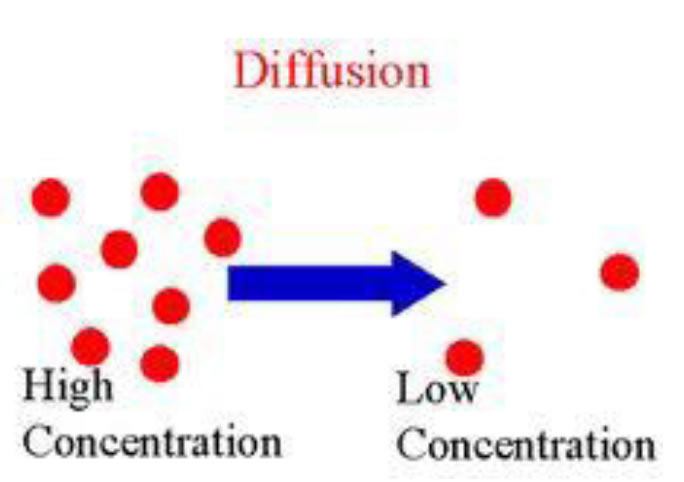
Movement of particles from high to low concentration.
a)
Passive Transport
b)
Active Transport
42.
Osmosis is a form of ______________.
a)
Passive Transport
b)
Active Transport
43.

a)
Passive Transport
b)
Active Transport
44.
Exocytosis
a)
Passive Transport
b)
Active Transport
45.
Endocytosis
a)
Passive Transport
b)
Active Transport
46.
Low to High
a)
Passive Transport
b)
Active Transport
47.
The diffusion of WATER across a semi-permeable membrane is
a)
osmosis
b)
diffusion
c)
endocytosis
d)
exocytosis
48.
The movement of molecules from higher concentration to lower concentration is
a)
diffusion
b)
cell division
active transport
active transport
c)
active transport
d)
tonicity
49.
Active transport requires
a)
energy
b)
the nucleus
c)
chloroplasts
d)
lysosomes
50.
How does a cell maintain homeostasis?
a)
Regulates what enters and leaves the cell
b)
Flexibility
c)
Protective barrier
d)
Structure and support
51.
Another term for equilibrium is...
a)
Not enough
b)
Too little
c)
Homeostasis
d)
Too much
52.
The cell membrane is selectively permeable, which means...
a)
All materials can enter and leave the cell
b)
Certain things can enter while others cannot
c)
The cell manually sorts through all materials
d)
Only certain cells can interact with the cell.
53.
The movement of molecules against a concentration gradient
a)
simple diffusion
b)
facilitated diffusion
c)
active transport
d)
osmosis
54.
A molecule that diffuses down a concentration gradient goes from an area of ______ concentration into an area of ______ concentration.
a)
high, low
b)
low, high
c)
passive, active
d)
active, passive
55.

This picture represents what type of cell transport?
a)
endocytosis
b)
exocytosis
c)
osmosis
d)
passive transport
56.
ALL living cells have this in common
a)
Nucleus
b)
Cell Membrane
c)
Cell Wall
d)
Mitochondria
57.
A cell will _____________________ in a hypertonic solution.
a)
swell
b)
shrink
c)
will not change
d)
will explode
58.
A cell will __________________ in a hypotonic solution.
a)
swell and perhaps burst (lyse)
b)
shrink
c)
the size of the cell will not change
d)
the size of the cell will change from large to small and from small to large
59.
Active transport requires ______, moves materials from __________________, and goes _______ the concentration gradient.
a)
No energy, low to high, against
b)
ATP, high to low, with
c)
ATP, low to high, with
d)
ATP, low to high, against
60.
Controlling what goes into or out of the cell without energy is called
a)
active transport
b)
endocytosis
c)
passive transport
d)
exocytosis
61.
The main source of energy for all life comes from ____.
a)
the Earth
b)
the moon
c)
the sun
d)
the food we eat/make
62.
Most plants appear green because chlorophyll
a)
absorbs green light.
b)
absorbs violet light.
c)
reflects green light.
d)
does not absorb violet light.
63.
If carbon dioxide is completely removed from a plant’s environment, what would you expect to happen to the plant’s production of high-energy sugars (rate of photosynthesis)?
a)
Sugar production will likely increase.
b)
Sugars will not be produced.
c)
The rate of sugar production will decrease .
d)
Fewer sugars will be produced at first, but then the plant will recover.
64.
The raw materials or reactants of photosynthesis are
a)
sugar and water.
b)
sugar and oxygen.
c)
carbon dioxide and water.
d)
carbon dioxide and oxygen.
65.
Which statement about photosynthesis is correct?
a)
Plants get the energy they need for photosynthesis from water.
b)
Plants get the energy they need for photosynthesis from soil.
c)
Plants get the energy they need for photosynthesis from sunlight.
d)
Plants do not require energy to perform photosynthesis.
66.
What are the products of photosynthesis?
a)
Carbon dioxide and water
b)
Carbon dioxide and oxygen
c)
Glucose and oxygen
d)
Glucose and water
67.
The rate of photosynthesis is affected by all of the following except
a)
the amount of salt.
b)
the availability of water.
c)
light intensity.
d)
temperature (enzymes).
68.
What molecule absorbs sunlight for photosynthesis?
a)
chloroplast
b)
thylakoid
c)
grana
d)
chlorophyll
69.

Autotroph or heterotroph?
a)
Autotroph
b)
Heterotroph
70.

Autotroph or Heterotroph?
a)
Autotroph
b)
Heterotroph
71.

Autotroph or heterotroph?
a)
Autotroph
b)
Heterotroph
72.
Which of the following is the correct equation for PHOTOSYNTHESIS?
a)
6CO2 + 6H2O --> 6O2 + C6H12O6
b)
6CO2 + C6H12O6 + 6H2O --> O2
c)
6O2 + 6H2O --> 6CO2 + C6H12O6
d)
C6H12O6 + 6O2 ---> 6H2O + 6CO2
73.
The Calvin Cycle occurs in the ___________.
a)
Stroma
b)
Thylakoid Membrane
c)
Enzyme ATP Synthase
d)
Chlorophyll
74.
The energy provided by ATP comes from what?
a)
Adenosine
b)
The phosphate groups
c)
The bonds between the phosphate groups
d)
The excited electron
75.
After reaching an excited state, electrons jump from the chlorophyll molecules to the __________.
a)
Stroma
b)
Electron transport chain
c)
Photosystem 2
d)
H+ ion reservoir
76.
Adenosine Triphosphate is created after an H+ passes through ____________.
a)
The Stroma
b)
ATP Synthase
c)
The Calvin Cycle
d)
The electron transport chain
77.
The energy required to pump H+ ions into the H ion reservoir comes from the _____________
a)
ATP molecules
b)
Electron Transport Chain
c)
Light
d)
Thylakoid Membrane
78.
The light dependent phase occurs in the __________.
a)
Stroma
b)
Thylakoid Membrane
c)
Chlorophyll
d)
Chloroplast Membrane
79.
The final step of the Light Dependent Phase involves the creations of _____________.
a)
NADPH
b)
Glucose
c)
ATP
d)
CO2
80.
True or False: The Calvin Cycle returns ADP and NADP to the light dependent phase.
a)
True
b)
False
81.
All living things do which of the following?
a)
Chemosynthesis
b)
Respiration
c)
photosynthesis
d)
all of the answers
82.
What is one of the reactants of cellular respiration?
a)
energy
b)
glucose
c)
carbon dioxide
d)
water
83.
What is one of the reactants of cellular respiration?
a)
energy
b)
glucose
c)
carbon dioxide
d)
water
84.
______________ produces the most ATP.
a)
photosnthesis
b)
aerobic respiration
c)
anaerobic respiration
d)
glycolysis
85.
Where does glycolysis take place?
a)
Cytoplasm
b)
Stroma
c)
Thylakoid
d)
Mitochondria
86.
What is the name of the 1st step of cellular respiration?
a)
Glycolysis
b)
Kreb's Cycle
c)
ETC
d)
Anaerobic respiration
87.
Where does aerobic respiration take place?
a)
Cytoplasm
b)
Mitochondria
c)
Stroma
d)
Thylakoid
88.
What is the net gain of ATP during glycolysis?
a)
1
b)
2
c)
4
d)
34
89.
Which type of respiration occurs in the presence of oxygen?
a)
Aerobic
b)
Anaerobic
90.
Which type of respiration occurs without the presence of oxygen?
a)
Aerobic
b)
Anaerobic
91.
What are the two reactants of cellular respiration?
a)
C6H12O6 & 6CO2
b)
6 CO2 & 6H2O
c)
C6H12O6 & 6O2
d)
6CO2 & 6O2
92.
Glucose is broken down during which process?
a)
Calvin cycle
b)
Glycolysis
c)
Krebs Cycle
d)
Photosynthesis
93.
Along with 2ATP, what is produced during glycolysis?
a)
6CO2
b)
6O2
c)
C6H12O6
d)
2 pyruvate
94.
___ produces the most ATP.
a)
Aerobic respiration
b)
Anaerobic respriation
c)
Glycolysis
d)
Photosynthesis
95.
The overall goal of cellular respiration is to make:
a)
Glucose
b)
ATP
c)
Oxygen
d)
Water
96.
Which is a product of Kreb's Cycle?
a)
Carbon dioxide
b)
Glucose
c)
Pyruvate
d)
Water
97.
Which is a product of the ETC?
a)
Carbon dioxide
b)
Glucose
c)
Oxygen
d)
Water
98.
What is the name of the process that helps make beer and wine?
a)
Fermentation
b)
Alcoholic fermentation
c)
Lactic acid fermentation
d)
Glycolysis
99.
Which type of fermentation occurs in muscles?
a)
Alcoholic
b)
Lactic acid
100.
Which sequence of DNA bases would pair with this partial strand
CAT TCA CTG
CAT TCA CTG
a)
ATG TGA CAG
b)
TAC ACT GTC
c)
GTA AGT GAC
d)
CAT TCA CTG
101.
Which of the following units are repeatedly joined together to form a strand of DNA?
a)
amino acids
b)
nucleotides
c)
fatty acids
d)
polysaccharides
102.
The enzyme that unwinds the DNA to prepare for replication
a)
helicase
b)
replicase
c)
polymerase
d)
synthase
103.
DNA replication results in two DNA molecules,
a)
each one with two original strands
b)
each one with two new strands
c)
each one with one new strand and one original strand
d)
one with two new strands and the other with two original strands
104.

order of replication
a)
3, 4, 2, 1
b)
3, 1, 4, 2
c)
2, 1, 4, 3
d)
3, 4, 1, 2
105.
A process in which DNA has the unique ability to make an exact copy of itself.
a)
Replication
b)
Translation
c)
Transcription
106.
In what phase of the cell cycle does DNA replication take place?
a)
G1
b)
S
c)
G2
d)
M
107.
The process of DNA replication is called semi conservative because it results in
a)
none of these
b)
Two DNA molecules. One original molecule and one with two new strands
c)
two exact copies with new strands
d)
two identical molecules, each with 1 original strand and one new.
108.
Place the following in sequential order
1. Recoil
2. Straightens the double helix
3. Breaks Hydrogen bonds
4. Adds Free nucleotides
1. Recoil
2. Straightens the double helix
3. Breaks Hydrogen bonds
4. Adds Free nucleotides
a)
1, 2, 3, 4
b)
3, 4, 2, 1
c)
3, 2, 4, 1
d)
2, 3, 4, 1
109.

Based on the diagram, the enzyme (represented in gray) is most likely...
a)
DNA polymerase
b)
DNA Ligase
c)
Nuclease
d)
Helicase
110.
If DNA has 15% Thymine, how much Cytosine does the DNA have?
a)
15%
b)
30%
c)
85%
d)
35%
111.
What is the complimentary DNA strand to this DNA strand: ATTGCT
a)
ATTGCT
b)
TAACGA
c)
UAACGA
d)
CGGATC
112.
Given this DNA sequence what is the complimentary mRNA sequence? ATTGTT
a)
ATTGTT
b)
TAACAA
c)
UAACAA
d)
CGGTGG
113.
What is the beginning and end product of transcription?
a)
DNA-->protein
b)
DNA-->mRNA
c)
mRNA-->DNA
d)
mRNA-->proteins
114.
What process must occur just before translation occurs?
a)
replication
b)
ribosomes
c)
transcription
d)
translation
115.
What sugar is found in DNA?
a)
Deoxyribose sugar
b)
sucrose sugar
c)
ribose sugar
d)
lactose sugar
116.
What sugar is found in RNA
a)
deoxyribose sugar
b)
ribose sugar
c)
lactose sugar
d)
sucrose sugar
117.
How many bases are codons long?
a)
1
b)
2
c)
3
d)
4
118.
Given this anti-codon sequence what is the codon sequence? ACU
a)
ACU
b)
TGA
c)
UGA
d)
GGG
119.
What are ribosomes used for?
a)
make mRNA (transcription)
b)
make proteins (translation)
c)
make DNA (replication)
d)
maybe
120.
A mutation that results in no amino acid change?
a)
point mutation
b)
frameshift mutation
c)
silent mutation
d)
nonsense
121.
A mutation the either inserts or deletes a nucleotide causing many codons the changes is called what?
a)
point mutation
b)
frameshift mutation
c)
silent mutation
d)
nonsense mutation
122.
A mutation the results in the amino acid changing into a stop is what kind of mutation?
a)
point mutation
b)
frameshift mutation
c)
silent mutation
d)
nonsense mutation
123.
A mutation the results in the amino acid changing into a stop is what kind of mutation?
a)
point mutation
b)
frameshift mutation
c)
silent mutation
d)
nonsense mutation
124.

In mitosis, the two resulting cells are
a)
different from the starting cell and identical to each other.
b)
different from the starting cell and different from each other.
c)
identical to the starting cell and different from each other.
d)
identical to the starting cell and identical to each other.
125.

Fruit fly body cells have 8 chromosomes. After mitosis, you would expect a resulting fruit fly daughter cell to have ...
a)
16 chromosomes.
b)
46 chromosomes.
c)
8 chromosomes.
d)
4 chromosomes.
126.
In which type of cells will mitosis occur?
a)
egg cells
b)
sperm cells
c)
jail cells
d)
Body cells except the sperm and egg cells
127.
After meiosis is complete, the new cells:
a)
are all identical
b)
are all different
c)
are half identical and half different
d)
are all stretched out
128.
How many daughter cells are produced from meiosis ?
a)
10
b)
6
c)
4
d)
2
129.
The female sex cell is called
a)
zygote
b)
sperm
c)
fertilization
d)
egg
130.
The male sex cell is called
a)
egg
b)
zygote
c)
sperm
d)
mitosis
131.
Humans have how may chromosomes ?
a)
112
b)
46
c)
8
d)
67
132.
Most of the cells in the human body are produced by
a)
mitosis
b)
meiosis
133.
Why do we need meiosis?
a)
To double the number of chromosomes going into sex cells
b)
To halve the number of chromosomes going into sex cells
c)
To triple the number of chromosomes going into sex cells
d)
To not change the number of chromosomes going into sex cells
134.

Name that process
a)
Mitosis
b)
Meiosis
c)
Mutation
d)
Cell Cycle
135.
During which phase of the meiotic cell cycle does DNA Replication occur?
a)
Interphase
b)
Prophase
c)
Metaphase
d)
Telophase
136.
In Meiosis if the parent cells has 40 chromosomes, then how many will the daughter cells have
a)
40
b)
10
c)
20
d)
18
137.

The stages of mitosis in order
a)
Metaphase, Anaphase, Prophase, Telophase
b)
Prophase, Anaphase, Metaphase, Telophase
c)
Prophase, Metaphase, Anaphase, Telophase
d)
Anaphase, Prophase, Telophase, Metaphase
138.
A cat has a total of 38 chromosomes in its body cells. How many in its gametes?
a)
38
b)
19
c)
76
d)
10
100 %

