Wayground logo

Free Printable Worksheets

Font size

S
M
L
XL
Worksheets

Earth Science Test 3

Total questions: 44

Worksheet time: 41mins
Name
Class
Date
1.
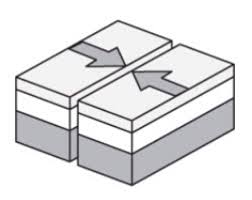
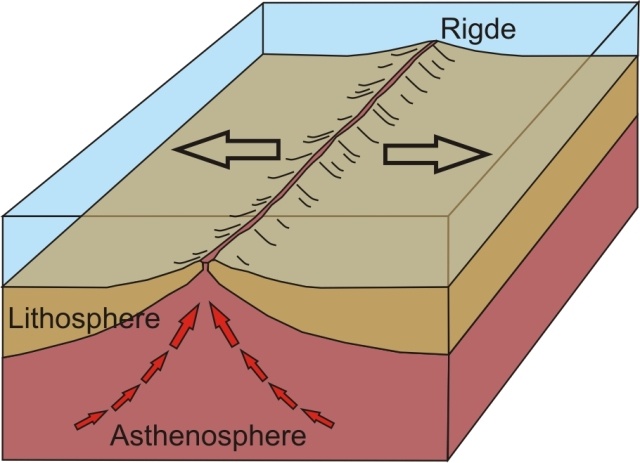
What kind of plate boundary is shown here?
a)
divergent
b)
convergent
c)
transform
d)
subducting
2.
What kind of plate boundary is shown here?
a)
divergent
b)
convergent
c)
transform
d)
submergent
3.
What kind of plate boundary is shown here?
a)
divergent
b)
convergent
c)
transform
d)
strike slip
4.
What geologic feature/event you be most likely to find at a transform boundary?
a)
Earthquakes
b)
Volcanoes
c)
Mountains
d)
Rift Valleys
5.
Name the boundary
a)
convergent boundary
b)
divergent boundary
c)
transform boundary
d)
sergent boundary
6.
Name the boundary
a)
convergent boundary
b)
divergent boundary
c)
transform boundary
d)
sergent boundary
7.
In which type of boundary do the plates move away from each other?
a)
convergent
b)
normal
c)
divergent
d)
transform
8.
The area where two or more plates meet is called a __________________.
a)
fault
b)
plate boundary
c)
plate edge
d)
ring of fire
9.
Plates slide past one another at ____________ boundaries.
a)
divergent
b)
convergent
c)
transform
d)
submergent
10.
Plates move towards one another at ______________ boundaries.
a)
divergent
b)
convergent
c)
transform
d)
detergent
11.

Two plates come together or collide at what boundary?

a)

Convergent

b)

Divergent

c)

Transform

12.

New oceanic crust (sea floor) is created at this boundary.

a)

Divergent Oceanic

b)

Divergent Continental

c)

Convergent Oceanic

d)

Transform

13.
Mountains form at a ___________ boundary.
a)
transform
b)
divergent
c)
convergent
d)
subduction
14.
Transform boundaries are most likely to produce what phenomenon?
a)
volcanoes
b)
deep sea trenches
c)
underwater mountain ranges
d)
earthquakes
15.

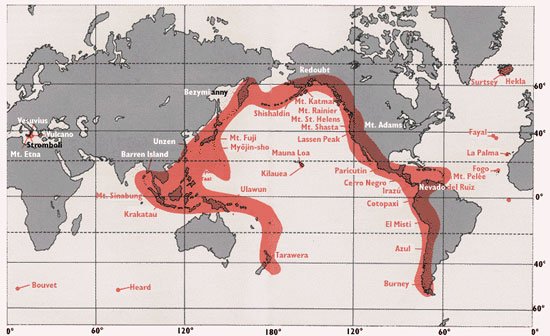
The area where the majority of volcanoes form along plate boundaries around the Pacific Ocean is called

a)

death ring

b)

fire zone

c)

ring of fire

d)

zone of fire

16.
What are the puzzle pieces of the Earth's surface called?
a)
Tectonic plates
b)
Puzzles
c)
Earthquakes
17.
What is the instrument used to measure earthquakes?
a)
Seismograph
b)
Seisologist
c)
Scale
18.
This is the name for the chain of volcanos around the edge of the Pacific Plate.
a)
Circle of Fire
b)
Ring of Lava
c)
Ring of Fire
d)
Circle of Magma
19.
When a river flows over the Earth and carves out a hole in the surface it makes a 
a)
hill
b)
mountain
c)
canyon
20.
What natural force formed the Grand Canyon millions of years ago?
a)
a landslide
b)
an earthquake
c)
a river
21.
All of the following shape the surface of the earth except
a)
Glaciers
b)
Rivers
c)
Wind
d)
Clouds
22.

Volcanoes create new land on the Earth’s surface when –

a)

lava flows then cools and hardens to form rock.

b)

an eruption destroys the side of a mountain.

c)

magma forms giant underground chambers.

d)

saltwater touches lava and changes into steam.

23.

A volcano can directly change Earth’s surface by —

a)

adding heat to the atmosphere.

b)

building up layers of hardened lava.

c)

releasing water vapor into the air.

d)

shooting out clouds of ash and smoke.

24.
Mountains are formed when _________ push together.
a)
hills
b)
tectonic plates
c)
valleys
d)
canyons
25.
Which of the following landforms is the result of a river carving out land by erosion?
a)
A. Canyon
b)
B. Sand dune
c)
C. Delta
d)
D. Mountain
26.
What is a break in the lithosphere along which movement in an earthquake has first occurred?
a)
Earthquake
b)
Epicenter
c)
Fault
d)
Focus
27.
What is an instrument that detects and records waves produced by earthquakes? (This piece of equipment can measure the magnitude of an earthquake.)
a)
Epicenter
b)
Fault
c)
Seismogram
d)
Seismograph
28.
What geologic feature/event would you most likely to find at a convergent boundary between two pieces of continental crust?
a)
Volcano
b)
Mountain
c)
Rift
d)
Island Arc
29.
Creates new ocean floor:
a)
Divergent
b)
Convergent
c)
Transform
30.
Sliding past:
a)
Divergent
b)
Convergent
c)
Transform
d)
Actually, all of them
31.

When two plates slide by each other you are more likely to experience

a)
b)
c)
d)
32.
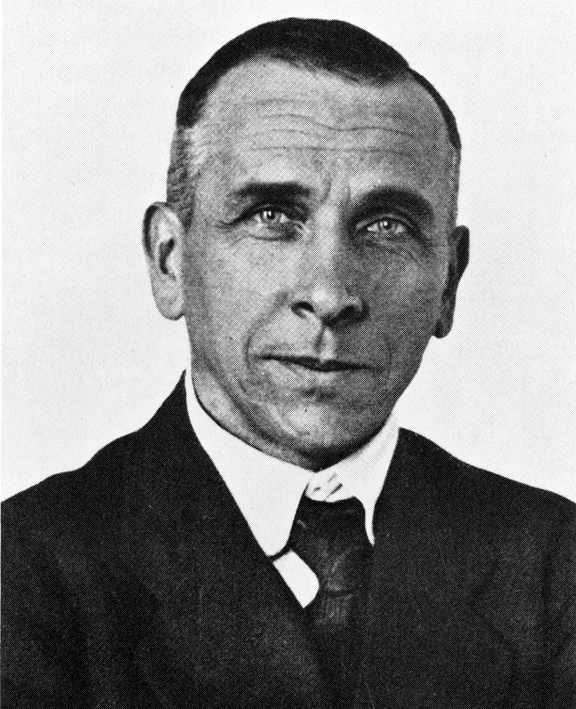
Who is the person credited with developing the theory of continental drift?
a)
Harry Hess
b)
Galileo
c)
Alfred Wegener
d)
Newton
33.

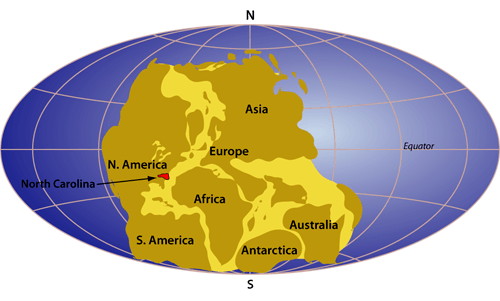
What is this a picture of?

a)

plate tectonics

b)

continental drift

c)

Pangaea

d)

glacier scaring

34.
What does the theory of continental drift state?
a)
The continents were once joined in a super-continent and have moved over time
b)
Continents are stationary and do not move
c)
The Earth is broken into lithospheric plates that move due to convection currents
d)
none of the above
35.
According to Wegener's hypothesis of continental drift, 
a)
Earth's surface is made up of seven major landmasses
b)
the continents DO NOT move
c)
Earth is slowly cooling and shrinking
d)
the continents were once joined together in a single landmass
36.
1 meter = _______ cm
a)
1
b)
1,000
c)
100
d)
400
37.

190 km = ___m

a)

190

b)

190,000

c)

19

d)

19,000

38.
___m = 17km
a)
17,000
b)
170
c)
1,700
d)
I will miss Mr. Campbell next year.  :(
39.
Convert from meters to cm:  9 meters
a)
900 cm
b)
90 cm
c)
0.9 cm
d)
0.09 cm
40.
Convert 300 meters to centimeters:
a)
3000 cm
b)
0.3 cm
c)
30,000 cm
d)
3 cn
41.

8KG= ____g

a)

80

b)

800

c)

8,000

42.

9 km = ______m

a)

90

b)

900

c)

0.90

d)

9000

43.
1000 m = _____km
a)
1
b)
10
c)
100
d)
1000
44.
convert 650 m to km
a)
6.5
b)
0.65
c)
65
d)
0.065