wayground logo

Free Printable Worksheets

Font size

S
M
L
XL
Worksheets

TIME PERIOD 6 VOCABULARY

Total questions: 96

Worksheet time: 52mins

Name
Class
Date
1.
Why was Stalin intent on industrializing the Soviet Union as quickly as possible?
a)
He feared that the Soviet Union would be attacked by the West
b)
He wanted to "keep up" with the West
2.
Under the First Five Year Plan - the export of food stopped in 1933 when famine occurred in Russia. 
True or False?
a)
True
b)
False
3.
Under the First Five Year Plan - what was NOT implemented?
a)
Coal and Steel production was sped up. 
b)
Mechanisation of the Donets Basin and beyond the Urals.
c)
More oil was produced. 
d)
It was ensured that all workers were fed at work. 
4.

In China there was a time when Mao wanted to eliminate anyone that criticized his government. What is this time called?

a)

Long March

b)

The Middle Way

c)

The Great Leap forward..

d)

The Cultural Revolution

5.

When did Mao and the Communists take control of China?

a)

Right after WWII

b)

in the 1930's

c)

the end of WWI

d)

during WWII

6.

The Great Leap Forward was

a)

very successful

b)

did not change much in China.

c)

was very unsuccessful

d)

all the above

7.

Which of the following describe why the Great Leap Forward was unsuccessful?

a)

People refused to move to larger farms.

b)

People wanted to be able to work for themselves and make a profit.

c)

Chinese farmers did not know how to plant crops on large plots of land.

d)

The Communist government rejected Mao's Idea and farms were never organized.

8.

What is the name of the army of young students that Mao used to enforce policies in the 1960's?

a)

The Red Guard

b)

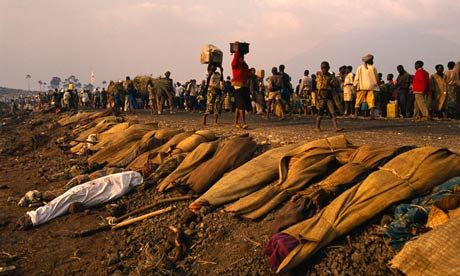
The Kuomintang

c)

The great Collective

d)

The Alliance for Progress

9.

Which jobs did Mao think would lead China to become most prosperous?

a)

farmers and workers

b)

students and teacher

c)

military and scientific

d)

businessmen and managers

10.

This image represents the young students know and the ______ in the ____________.

a)

Nationalist in the Cultural Revolution

b)

Red Guard in the Great Leap Forward

c)

Communist party in Russian Revolution

d)

Red Guard in the cultural Revolution

11.

What were the goals of the Great Leap Forward?

a)

To modernize China through agriculture and industry

b)

To develop a stronger military

c)

To make all the Chinese people work harder than ever before

d)

To grow enough crops that they could sell what they don't eat

12.

What was a commune?

a)

A state in China that was full of factories

b)

A community of people who had freedom within China

c)

A community of people that worked and lived together under government rule

d)

A large group of people with jobs in the government

13.

Why was there a food shortage during the Great Leap Forward?

a)

A bad hurricane hit China

b)

Farmers were turned into steel workers and there was bad weather

c)

The farmers were given freedom to grow crops, but they failed

d)

Farmers grew the wrong kinds of crops

14.

How many people died in the Great Leap Forward? (estimated)

a)

25,000-30,000

b)

2,500,000-3,500,000

c)

350,000-500,000

d)

25,000,000+

15.

What was the Cultural Revolution?

a)

Mao's attempt to regain control of China and get rid of anything "old" in the country

b)

Introducing democracy to the Chinese people

c)

Showing the rest of the world how powerful Mao was

d)

Growing crops and producing steel at a very rapid rate

16.

What was Mao's "Little Red Book?"

a)

Instructions for how to be a Communist

b)

News stories and current events

c)

Speeches and quotes from Mao for the Chinese people to memorize

17.
Many people lost their jobs during the Great Depression.  The national government responded with President Franklin Roosevelt's "New Deal," which
a)
provided programs to help people make money to provide for their needs. 
b)
helped reduce the national debt, providing more capital for businesses
c)
forced people to join the military forces to make money for their needs. 
d)
forced people to use charities to help them provide for their needs. 
18.
During the New Deal, how did the government attempt to improve conditions for farmers?
a)
By ending the practice of sharecropping
b)
By encouraging farmers to grow more to increase profits
c)
By paying farmers to grow fewer crops
d)
By training farmers for jobs in a new field
19.
What was a major result of FDR’s New Deal programs?
a)
The national deficit declined for most U.S. citizens
b)
The suffrage rights for women changed
c)
The power of the federal government was expanded
d)
The federal government lowered taxes for most Americans
20.
North American Free Trade Agreement (NAFTA) promotes the movement of goods between participating countries without restrictive:
a)
A  imports or exports.  
b)
B imports and trade. 
c)
C tariffs or quotas. 
d)
D domestic and offshore.
21.
What was one criticism regarding the passage of the North American Free Trade Agreement (NAFTA)?
a)
U.S. tariffs would decrease profits.
b)
 Outsourced labor would increase prices of goods. 
c)
U.S. companies would move jobs abroad. 
d)
Establishment of similar treaties would hinder economic growth.
22.
NAFTA is an agreement among the U.S., Canada, and Mexico primarily intended to promote
a)
environmental protection
b)
military defense
c)
human rights
d)
free trade
23.
What is the purpose of OPEC?
a)
set the price of petroleum
b)
encourage the use of oil throughout the Middle East
c)
Develop new ways to extract oil from the Earth
d)
increase the sale of petroleum in 1st world nations
24.
Which statement best describes an immediate result of the Organization of Petroleum Exporting Countries (OPEC) selling oil above market value?
a)
The United States would increase research for alternative fuels 
b)
Oil prices in the United States would rise
c)
The United States would halt the sale of fuel to China
d)
Oil production in the United States would rise
25.
In 1949, the United States and eleven other countries agreed to form which alliance?
a)

SEATO
     
b)
ANZUS   
c)
NATO 
d)
OPEC
26.
 • Creation of NATO 
 • Creation of Warsaw Pact 
 • Building of Berlin Wall
 • Beginning of Nuclear Arms Race

Which of these is most closely associated with the developments in this chart?
a)
Cold War
b)
World War I
c)
Treaty of Paris
d)
Treaty of Versailles
27.
What effect did the formation of the North Atlantic Treaty Organization (NATO) in 1949 have on United States diplomatic history?
a)
It committed the US to a peacetime military alliance
b)
It strengthened US influence in oil-producing nations
c)
It eased tensions with the Soviet Union and its satellites.
d)
It created new patterns of international trade
28.
What were the Truman Doctrine and the North Atlantic Treaty Organization (NATO) of the United States' responses to?
a)
The threat of Nazis in the 1930s
b)
The fear of economic depression after WWI
c)
The concern about the partition of India in 1947
d)
The Communist threat after WWII.
29.
The North Atlantic Treaty Organization (NATO) was formed in 1949. What is the agreement among the nations that formed NATO?
a)
to ally in common defense
b)
to prevent the spread of infectious disease
c)
to share the costs of developing new technology
d)
to provide nuclear weapons to member nations
30.
Why was the North Atlantic Treaty Organization (NATO) formed?
a)
to promote free trade among European countries
b)
to encourage the economic recovery of Europe
c)
to regulate the production of weapons for war
d)
to contain the expansion of the Soviet Union
31.
Which alliance was formed to protect Western Europe from Soviet influence?
a)
North Atlantic Treaty Organization
b)
Southeast Asia Treaty Organization
c)
Warsaw Pact
d)
League of Nations
32.
Which organization was established in reaction to the creation of the North Atlantic Treaty Organization (NATO)?   
a)
  African Union  
   
b)
World Bank
c)
United Nations 
d)
Warsaw Pact
33.
What has been a major success of the European Union (EU) in recent years?
a)
the creation of a single military force
b)
the rejection of national sovereignty
c)
the adoption of a single language
d)
the elimination of trade barriers
34.
A major factor that encouraged member states to form the European Union was the
a)
the threat of external military forces
b)
mutual advantage of economic integration
c)
need to protect human rights
d)
popular demand for unified social institutions
35.
When was the U.N. created?
a)
After WWI
b)
After WWII
c)
During the Great Depression
d)
During WWII
36.
What is the primary purpose of the U.N.?
a)
keep peace in the world
b)
foster global growth and economic stability
c)
help reduce poverty
d)
regulating trade and tariffs/ to sort out trade problems 
37.
This agency promotes worldwide health to combat the spread of diseases. 
a)
World Trade Organization
b)
World Health Organization
c)
The United Nations (UN)
d)
North Atlantic Treaty Alliance (NATO)
38.

Individual citizens may participate in this organization whose main goal is to help people around the world by responding to disasters and running programs in local communities.

a)

The North Atlantic Treaty Organization

b)

The Red Cross and Red Crescent

c)

The European Union

d)

The United Nations

39.

The American Red Cross provides _____________ to people hurt by war or natural disasters.

a)

food, medicine and supplies

b)

books and games

c)

crayons and coloring books

d)

pens and paper for letter writting

40.

________ makes longer-term loans to pay for specific projects related to development or poverty reduction.

a)

World Trade Organization

b)

World Bank

c)

IMF

d)

Federal Reserve

41.

What is the mandate of the World Bank

a)

Reduce poverty by lending rich corporations' money to poor corporations

b)

Reduce poverty by lending rich countries' money to poor countries

c)

Ensure stability of the international monetary system

d)

Ensure stability of the international political system

42.
What is the purpose of International Organizations?
a)
to keep the world a safe and stable place to live
b)
to ensure that countries remain isolated from one another
c)
to only ensure that countries do not go to war with one another
d)
to only ensure that people are healthy 
43.
What is the primary purpose of the World Trade Organization?
a)
keep peace in the world
b)
foster global growth and economic stability
c)
help reduce poverty
d)
regulating trade/ to sort out trade problems 
44.
What does OPEC stand for?
a)
Organization of Petroleum Exporting Countries
b)
Oil of Political Economic Countries
c)
Organization of People Economic Communitities
d)
Oil People Economically Consume
45.
What court is known as the "World Court?"
a)
International Court of Justice
b)
World Health Organization
c)
North Atlantic Treaty Alliance
d)
World Trade Organization 
46.

Which group had the following goals:

Independence

Boycott British Goods

Natives in government positions

a)

Boers

b)

Boxers

c)

Indian National Congress

d)

Zulu Nation

47.

Who was most known for using nonviolent civil disobedience to achieve Indian independence?

a)

Mohandas Gandhi

b)

Jomo Kenyatta

c)

Gamal Abdul Nasser

d)

Nelson Mandela

48.

What was one reason India was divided into two nations in 1947?

a)

Differences between Hindus and Muslims created religious conflict.

b)

Indian leaders disagreed about India's role in the UN

c)

Great Britain feared Indian would be too strong

d)

North India became communist and South India became democratic

49.

What Africa nation gained independence from FRANCE after a violent eight year war?

a)

Algeria

b)

South Africa

c)

Egypt

d)

Ethiopia

50.

In which nation did Nelson Mandela lead a successful reform movement?

a)

Kenya

b)

The Congo

c)

Ethiopia

d)

South Africa

51.

Who led the fight to free Kenya from British control?

a)

Nelson Mandela

b)

Desmond Tutu

c)

Kwame Nkrumah

d)

Jomo Kenyatta

52.

The end of the Mandate System after WWII resulted in:

a)

formation of multiple communist nations in Southeast Asia

b)

conflicts based on religious difference in the Middle East

c)

spread of Christian ideas in Europe

d)

the Great Depression in the United States

53.

Who did all of the following:

-nationalized the Suez Canal

-Established a close relationship with USSR

-Built the Aswan High Dam

a)

Abdul Gamal Nasser

b)

Golda Meir

c)

Jomo Kenyatta

d)

Indira Gandhi

54.

Who built up India's nuclear program and established a close relationship with the Soviet Union?

a)

Golda Meir

b)

Indira Gandhi

c)

Margaret Thatcher

d)

Gamal Abdul Nasser

55.

The purpose of Mohandas Gandhi’s actions such as the Salt March and the textile boycott was to

a)

begin a cycle of armed revolution

b)

draw attention to critical issues

c)

increase the strength of the military

d)

resist the power of religious leaders

56.
Kwame Nkrumah in Ghana supported
a)
Africans joining the British military
b)
migration of Africans to industrialized nations
c)
foreign aid to help African countries
d)
independence movements in Africa. 
57.
What strategies did Kwame Nkrumah use to achieve independence for Ghana?
a)
Civil war against the Ghanaian people who were loyal to the British regime.
b)
Armed struggle and militancy against the British Government
c)
Non-violent resistance such as protest, strikes, and boycott.
d)
Assassination of the British Governor of Ghana.
58.
Which of the following is NOT a strategy used by Gandhi to achieve independence for India?
a)
Negotiations with British
b)
Violent Riots
c)
Extreme Hunger Strikes
d)
Satyagraha Campaigns
59.
What was one significant impact of the partition of India?
a)
An occupation of East Pakistan by the British army to assist the transition
b)
A large wave of migration of Muslims to India and Hindus to Pakistan
c)
An extension of the British occupation in India to weaken the transition
d)
A large wave of migration of Muslims to Pakistan and Hindus to India
60.
What is Zionism?
a)
The belief that the Jewish people deserved a homeland in Palestine.
b)
The belief that the Jewish people were inferior and should not have a homeland.
c)
The belief that the Palestinian people had the right to maintain their territory.
d)
THe belief that the Palestinian people should fight to eliminate the Jewish population.
61.
The term "Decolonization" refers to . . . 
a)
The European powers trading colonies because to other countries because they could no longer afford to maintain them
b)
The process by which the European powers helped their colonies to gradually become self-sufficient and able to manage their own affairs
c)
The process by which colonies were lost during World War II
d)
The process by which colonies obtained their independence after World War II
62.

Simón Bolívar, Ho Chi Minh, and Jomo Kenyatta are significant historical figures because they all

a)

instituted theocratic reforms

b)

formed international peacekeeping alliances

c)

established worldwide trade networks

d)

led independence movements

63.

The primary goal of the Indian National Congress (1885-1947) was to

a)

reform the Hindu religion

b)

partition India between Muslims and Hindus

c)

create a socialist economy

d)

gain independence from Great Britain

64.

The Boxer Rebellion and the work of Sun Yixian (Sun Yat-sen) are most closely associated with the

a)

Long March

b)

Golden Age of China

c)

Cultural Revolution

d)

rise of nationalism in China

65.

Which segment of Chinese society gave the most support to the Communists during the Revolution?

a)

peasants

b)

religious leaders

c)

landowners

d)

bureaucrats

66.

In China, the terms Long March, Little Red Book, and Great Leap Forward are most closely associated with the

a)

economic policies of the Kuomintang

b)

expulsion of foreigners during the Boxer Rebellion

c)

foreign policy under Deng Xiaoping

d)

leadership of Mao Zedong

67.

One way in which Joseph Stalin’s five-year plans and Mao Zedong’s Great Leap Forward are similar is that both plans were

a)

efforts to reduce human rights violations

b)

policies to improve relations with the West

c)

methods used to control population growth

d)

attempts to increase agricultural and industrial production

68.

What was an immediate result of the Great Leap Forward (1958)?

a)

independence of Kenya from Great Britain

b)

the breakup of the Soviet Union

c)

the relocation of Bosnian refugees

d)

increased famine in China

69.

An immediate result of the Cultural Revolution in China was that it

a)

helped to establish democracy in urban centers in China

b)

led to economic cooperation with Japan and South Korea

c)

disrupted China’s economic and educational systems

d)

strengthened political ties with the United States

70.

What was the main goal of Zionism?

a)

forming a representative government in China

b)

establishing a Jewish homeland in the region of Palestine

c)

improving the standard of living in developing countries

d)

creating an international peacekeeping organization to solve global conflicts

71.

Which document is most closely associated with the Arab-Israeli conflict?

a)

Balfour Declaration

b)

Kyoto Protocol

c)

Communist Manifesto

d)

Treaty of Nanjing

72.
Why did a wave of decolonization and independence movements occur across Africa and Asia after World War II?
a)
Imperial nations realized that they were being unjust to the colonies 
b)
Colonies obtained advanced weaponry which allowed them to fight back against their colonizers
c)
WWII had been fought against imperialism and discredited the idea of Empire.
d)
The treaty signed by all major leaders forced countries to grant independence to their colonies
73.
What was a consequence of the United Nations' partition of Palestine?
a)
The Treaty of Versailles
b)
The Arab-Israeli War 
c)
The Cold War
d)
The Potsdam Agreement
74.
What is the meaning of apartheid?
a)
Inferior
b)
Apartness
c)
Superior
d)
Closedness
75.
Who became the first black president in South Africa?
a)
Nelson Mandela
b)
Barack Obama
c)
FW de Klerk
d)
Winnie Mandela
76.
When the British left India, the country was divided into two nations:  India and _________
a)
Nigeria
b)
Rwanda
c)
North Korea
d)
Pakistan
77.
The Middle East "Mandates" created in World War I left France with . . . 
a)
Nothing
b)
Iraq and Syria
c)
Syria and Lebanon
d)
Iraq and Palestine
78.
The process by which European colonies in Africa and Asia became independent states. 
a)
decolonization 
b)
Mau Mau
c)
civil disobedience 
d)
partition 
79.

Under apartheid, laws called for the separation of __ in South Africa.

a)

money

b)

races

c)

schools

d)

food

80.

What was the "ANC"

a)

African Nato Congress

b)

African National Congress

c)

American National Congress

d)

African Never Changes

81.

Who led the African National Congress?

a)

Desmond Tutu

b)

Stephen Biko

c)

FW De Klerk

d)

Nelson Mandela

82.
A major goal of the Hutu-led regime in Rwanda in 1994 was to-
a)
Eliminate Tutsi minority
b)
Promote ethnic tolerance
c)
Align with the Soviet Union
d)
Strengthen ties with Belgium 
83.
Genocide involves acts committed with the intent to 
a)
create world peace
b)
destroy a group of people based on a common characteristic
c)
hurt a specific world power
d)
destroy a country because of its political positions
84.
What was the main reason the Rwandan genocide occurred?
a)
the collapse of the Belgian government
b)
Years of discrimination against the Hutus
c)
Radio station message saying to "cut down the tall trees"
d)
The president telling people  to slaughter each other
85.
Who fought in the Boer war?
a)
British and the Zulu
b)
British and the Dutch
c)
Soviets and the Nazis
d)
Dutch and Spanish
86.

How did the end of WWII affect the Cold War

a)

USA and USSR come out as Super Powers

b)

Germans were mad about the division of Germany

c)

The US and USSR fought to annex parts of Europe

d)

The Germans convinced the Americans to fight the Russians

87.

How did nukes influence foreign relations during the cold war

a)

Lead to the use of proxy warfare (get others to do the fighting for you)

b)

Caused greater tension but lead to more diplomacy instead of shooting

c)

Lead to an arms race

d)

All of the above

88.

What was the "Iron Curtain"

a)

A wall in Berlin

b)

The ideological separation between East and West Europe

c)

An obstacle for the UN

d)

A naval blockade against the Russians

89.

Which result of World War II led most directly to the beginning of the Cold War?

a)

The trials of Nazi leaders for war crimes at Nuremberg

b)

The creation of Soviet-controlled regimes in Eastern Europe

c)

The formation of the United Nations to promote global development

d)

The creation of the Jewish state of Israel

90.

The Cold War term “Berlin Airlift” refers to the...

a)

American effort to stop the Stalin’s blockade of roads and railways leading through East Germany to West Berlin

b)

Pipeline of Nazi sympathizers who were able to help many German war criminals escape to South America

c)

Transport by military aircraft of East Berliners who had escaped over the Berlin Wall and asked to be relocated to West Germany

d)

Allied bombing of Berlin and other German cities that brought about an end to the war in Europe

91.

I have always regarded colonialism as the policy by which a foreign power binds territories to herself by political ties with the primary object of promoting her own economic advantage.

—Ghana: The Autobiography of Kwame Nkrumah, 1957


This excerpt implies that Kwame Nkrumah supported the —

a)

participation of Africans in the British military

b)

migration of Africans to industrialized nations

c)

use of foreign aid to improve conditions in developing African countries

d)

spread of independence movements throughout Africa

92.

Which of the following characterized Joseph Stalin’s leadership of the Soviet Union?

a)

Centralized royal authority, a hereditary transfer of power, and cooperation between church and state

b)

Free elections, tolerance of opposition groups, and the encouragement of religious diversity

c)

Censorship, government control of industry, and religious persecution

d)

The theory of divine right, rule by elites, and laws guided by religious doctrines

93.

"Gorbachev still faces an economy that cannot simultaneously maintain rapid growth in defense spending, satisfy demand for greater quantity and variety of consumer goods and services, invest the amounts required for economic modernization and expansion, and continue to support client-state economies. "


This intelligence report proved to be an accurate assessment of the —

a)

situation that would contribute to the collapse of communism in Eastern Europe

b)

military strategy that eventually led to aggression between the Soviet Union and the United States

c)

policies that severely limited individual rights and liberties in Eastern Europe

d)

refusal to negotiate arms-reduction treaties that would result in Gorbachev’s resignation as president of the Soviet Union

94.

Increasing interdependence of nations and peoples across the globe.

a)

Infrastructure

b)

Globalization

c)

Interdependence

d)

Specialization

95.

A policy in which a nation does not try to limit imports or exports by enacting tariffs (taxes on imports) or subsidies (taxes on exports).

a)

Free Trade

b)

Trade

c)

Goods

d)

Supply and Demand

96.
A large company that has operations in more than one country.
a)
Domestic Corporation
b)
Multinational Corporation
c)
Foreign Corporation
d)
State Corporation