
 Worksheets
Year 8 Biology Quiz
Total questions: 40
Worksheet time: 27mins
Name
Class
Date
1.
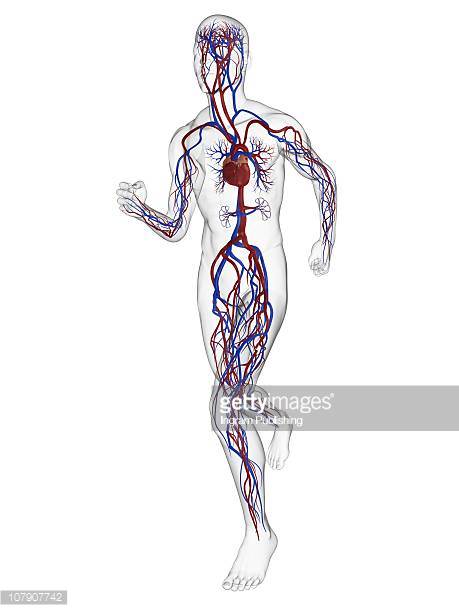
What is the main organ of the circulatory system?
a)
small intestine
b)
bone
c)
lungs
d)
heart
2.
How many types of blood vessels are in our body?
a)
1
b)
2
c)
3
d)
4
3.
Arteries carry oxygen rich blood away from the heart.
a)
True
b)
False
4.
Veins carry oxygen poor blood back to the heart.
a)
False
b)
True
5.
The job of the heart is to . . .
a)
pump blood around the body.
b)
send food to the small intestines.
c)
break down food.
d)
give energy to the body.
6.
How does the heart work?
a)
It pumps blood first to the lungs, back to the heart and then around the rest of the body.
b)
It pumps blood first to the rest of the body, back to the lungs and then to the heart.
c)
It pumps blood around the rest of the body, back to the heart and then to the lungs,
7.
______________ are the smallest blood vessels.
a)
Arteries
b)
Veins
c)
Capillaries
8.
The circulatory system works with the ___________ system to provide our body with oxygen.
a)
respiratory
b)
digestive
c)
muscular
d)
skeletal
9.
The circulatory system works with the __________ system to obtain energy from nutrients that we eat.
a)
respiratory
b)
digestive
c)
skeletal
d)
nervous
10.

Which is a function of the cardiovascular system?
a)
to move water throughout the body
b)
to transport gases throughout the body
c)
to eliminate waste from the body
d)
to provide structural support for the body
11.
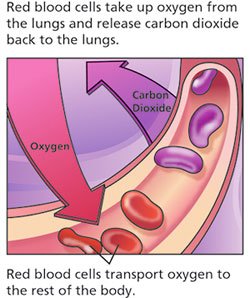
These cells, in the blood, carry oxygen and give the blood its color.
a)
white blood cells
b)
plasma
c)
platelets
d)
red blood cells
12.
The process of taking in oxygen and releasing carbon dioxide from the body.
a)
transpiration
b)
respiration
c)
digestion
d)
relaxation
13.
Organs of the respiratory system that bring oxygen-rich air into the body and send oxygen-poor air out of the body.
a)
heart
b)
muscles
c)
lungs
d)
bones
14.
The tube in the body through which air moves as it travels to and from the lungs;the windpipe.
a)
heart
b)
bone
c)
blood vessel
d)
trachea
15.
Tiny air sacs in the lungs that are the site of gas exchange between the lungs and blood.
a)
alveoli
b)
relax
c)
diaphragm
d)
nose
16.
A wide muscle that separates the chest cavity from the abdominal cavity and aids in the inflation of the lungs.
a)
diaphragm
b)
heart
c)
nose
d)
trachea
17.
The beginning point of the respiratory system where air is taken into the body.
a)
lung
b)
diaphragm
c)
nose
d)
trachea
18.
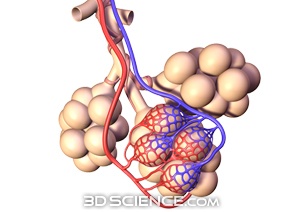
When you breathe, your lungs take in ___ and remove ___.
a)
air/oxygen
b)
oxygen/carbon dioxide
c)
carbon dioxide/waste
d)
waste/air
19.
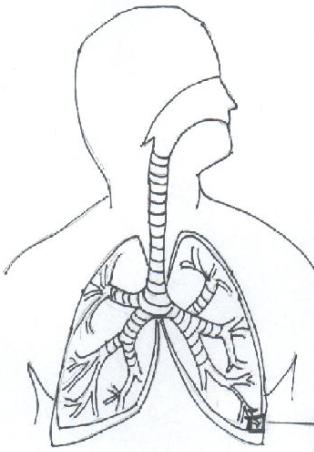
What is the function of the bronchi?
a)
Transport air from nose to lungs
b)
Transport air from trachea to lungs
c)
Transport air from lungs to alveoli
d)
Transport air from alveoli to blood
20.

Flap of tissue that covers the opening to the windpipe during swallowing
a)
Pharynx
b)
Trachea
c)
Epiglottis
21.
When the diaphragm contracts and moves down, the lungs are...
a)
expanding with air
b)
shrinking - pushing air out
22.
When the diapragm relaxes and moves back up, the lungs are...
a)
expanding with air
b)
shrinking - pushing air out
23.
The process by which the body breaks down food so that it can be used for energy.
a)
composition
b)
digestion
c)
deposition
d)
absorption
24.
The muscular organ in the body where chemical and mechanical digestion take place.
a)
pancreas
b)
liver
c)
stomach
d)
esophagus
25.
A long folded tube inside the body attached to the stomach where nutrients in the food are absorbed.
a)
large intestine
b)
small intestine
c)
esophagus
d)
rectum
26.
The opening at the end of the digestive track where feces exits the body.
a)
large intestine
b)
small intestine
c)
rectum
d)
anus
27.
To take in matter or energy
a)
collection
b)
composition
c)
aborption
d)
density
28.
A fluid in the mouth that helps digest food.
a)
pepsin
b)
pepsi
c)
saliva
d)
salty
29.
A muscular tube that helps move food from the mouth to the stomach.
a)
esophagus
b)
trachaea
c)
small intestine
d)
gall bladder
30.
Provides additional enzymes(pancreatic juice) to help nutrients get absorbed by the small intestine.
a)
liver
b)
kidneys
c)
gall bladder
d)
pancreas
31.
Part of the digestive system that takes food into the body.
a)
esophagus
b)
mouth
c)
rectum
d)
anus
32.
The tube after the small intestine where the liquid is absorbed.
a)
large intestine
b)
small intestine
c)
rectum
d)
stomach
33.
An organ of the digestive system that makes chemicals to help the body break down fats and rid itself of harmful substances.
a)
esophagus
b)
mouth
c)
liver
d)
stomach
34.
A series of wave-like muscle contractions that moves food to different processing stations in the digestive tract.
a)
adduction
b)
primary wave
c)
peristalsis
d)
inversion
35.

a)
pancreas
b)
esophagus
c)
stomach
d)
liver
36.

a)
esophagus
b)
liver
c)
stomach
d)
pancreas
37.

a)
stomach
b)
pancreas
c)
large intestine
d)
small intestine
38.

a)
pancreas
b)
trachea
c)
liver
d)
esophagus
39.

a)
large intestine
b)
small intestine
c)
rectum
d)
esophagus
40.

a)
purging
b)
peristalsis
c)
platinum
d)
paralysis
100 %

