
Font size
 Worksheets
Totalitarianism to Cold War
Total questions: 107
Worksheet time: 1hrs 27mins

A society with no classes or private property and all business is ran by the government.
totalitarianism
Gulag
Communism
Reparations

Horrific labor/work camps
Gulag
Totalitarianism
Communism
Fascism

A political belief that focuses on extreme nationalism and a dictatorship of one leader with only one party
Totalitarianism
Fascism
Communism
Reparations

In the 1920’s and 1930’s, the rise of totalitarian governments in Germany, Italy, and Spain was largely the result of?
the success of the Communists in establishing a command economy in the Soviet Union
Movements demanding the return of the old monarchies
The active support of the United States
severe economic and social problems that arose in Europe after World War I

During the mid-1930’s, which characteristic was common to Fascist Italy, Nazi Germany, and Communist Russia?
Government ownership of the means of production and distribution
One-party system that denied basic human rights
Encouragement of individual freedom of expression in the arts
Emphasis on consumer goods rather than on weapons

Which of the following is FALSE about Mussolini when he took power in Italy.
He violated the Versailles Treaty by invading Ethiopia
He promised to establish a New Roman Empire
He promised to get Italy out of the depression
He established gulags for political opponents

Which of the following did NOT happen under Stalin's direct leadership?
The Great Purges
Establishment of Gulags
Holocaust
Ukrainian Genocide

Which of the following is FALSE about Hitler's actions when he became Chancellor?
He gave Jews important positions within his government because they were the superior race.
He ignored the League of Nations and expanded Germany's borders.
He Built up Germany's military, going against the Treaty of Versailles.
All of the above

Why did Japan follow imperialist policies after World War I?
To obtain natural resources for manufacturing
To attack the Soviet Union for oil
To convert people to Shinto (their religion)
To compete with China in trade

Which are NOT elements/outcomes of Joseph Stalin's Five-Year Plan?
While production might of been high the quality of the products was usually low
Allowed for the Soviet Union to rank second in production on the world
All economic activity was placed under government control
Punishment: Soviet citizens were not working hard enough and needed to be taught a lesson
Which of the following is NOT a characteristic of totalitarianism?
free and open discussion of ideas
a single party system with one candidate
government control of communications and media
government elimination of op positional groups
What is the definition of Police Terror and Fear?
When Dictators kills anyone who opposes them or tries to challenge their authority.
When people are afraid of the police and they cannot act out against their government.
Dictators create a police force that helps them maintain power.
All of the above
How did Stalin stay in power in the Soviet Union?
He used public speaking to win over the people of the Soviet Union.
Stalin executed political opponents.
Stalin maintained power through free elections.
He inherited leadership of the country through his family.
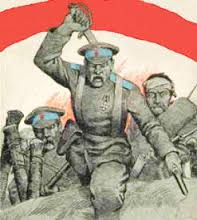
What was the name of Stalin's secret police?
Cheka- NKVD
Cheka- NPCC
Chevka-NTSS
Chevka-NTRC
The famine in Ukraine during the 1930s resulted from the Soviet government’s attempt to _______________________.
End a civil war
implement free-market practices
collectivize agriculture
introduce crop rotation
How will you describe the idea of Revolution supported by Stalin?
Socialism in one country
International socialism
Revolution in Europe
Exportation of Revolution
How did economic depression lead to the rise of dictators?
Germany's attempt at democracy after WWI replaced by Hitler
a long and severe recession in an economy or market
Economic instability and desperation leads citizens to seek out alternatives and more authoritarian leaders
When the economy is strong people trust the government.
who was Benito Mussolini?
was the fascist prime minister of Italy with dictatorial powers
was the fascist prime minister of Germany with dictatorial powers
was the fascist prime minister of India with dictatorial powers
was the communist prime minister of Italy with dictatorial powers
what is fascism?
main goals was to increase the output of industrial goods, and he placed emphasis on electrical power, capital goods, coal, iron, and machinery, and agriculture.
an authoritarian and nationalistic right-wing system of government and social organization. However, different than communism as it's control over private industry (economic activity) is limited.
regimes that establish complete political, social, and cultural control over their subjects, (both private and public lives) and are usually headed by a charismatic leader.
A government led by a queen or king passed down through royal bloodlines
what were the main ideas of Main Kampf?
Class struggle was inevitable
Hitler's ideas about the need for more democratic ideas.
Hitler's youth, early days in the Nazi Party, future plans for Germany, and ideas on politics and race. The original title Hitler chose was "Four and a Half Years of Struggle against Lies, Stupidity and Cowardice."
Hitler's desire to intentionally start WWII.
what was the enabling act?
law that gave the government the power to ignore the constitution problems allowing Stalin to take over Germany
law that gave the government the power to ignore the constitution problems allowing Hitler to complete control of Germany
law that gave the government the power to ignore the constitution problems allowing Hideki Tojo to take over Japan
law that gave the government the power to ignore the constitution problems allowing Franco to take over USSR.
what were the concentration camps?
a camp in which people are detained or confined, usually under harsh conditions and without regard to legal norms of arrest and, imprisonment , that are acceptable in a constitutional democracy.
German unemployment had fallen from six million to one million.. Greatly improving the economic condition of Germany= earning more followers
German unemployment had fallen from six million to one million.. Greatly improving the economic condition of Germany= earning more followers
Nazis in Germany torched synagogues, vandalized Jewish homes, schools and businesses and killed close to 100 Jews. In the aftermath of Kristallnacht, also called the "Night of Broken Glass," some 30,000 Jewish men were arrested and sent to Nazi concentration camp
How did Hitler impact the unemployment in Germany?
Under communism - economic production and most economic decision are made by the government. Unlike in fascism where individuals may own their own business and property.
laws which institutionalized many of the racial theories prevalent in Nazi ideology. The laws excluded German Jews from Reich citizenship and prohibited them from marrying or having sexual relations with persons of "German or related blood."
Nazis in Germany torched synagogues, vandalized Jewish homes, schools and businesses and killed close to 100 Jews. In the aftermath of Kristallnacht, also called the "Night of Broken Glass," some 30,000 Jewish men were arrested and sent to Nazi concentration camp
German unemployment had fallen from six million to one million.. Greatly improving the economic condition of Germany= earning more followers
What was Kristallnacht?
Propaganda, censorship, police terror, fear, violence, controlling private lives, changing laws, discrimination of "others", controlling the economy.
Nazis in Germany torched synagogues, vandalized Jewish homes, schools and businesses and killed close to 100 Jews. It is also called the "Night of Broken Glass," after which some 30,000 Jewish men were arrested and sent to Nazi concentration camp
The treaty caused political and economic instability be placing complete blame on Germany, requiring demilitarization and huge amounts of reparations to be paid. Other countries were upset by changes in boundaries and a lack of a voice and rewards they failed to gain after participating in WWI.
a camp in which people are detained or confined, usually under harsh conditions and without regard to legal norms of arrest and imprisonment that are acceptable in a constitutional democracy.
How did Hitler use violence and terror in Nazi Germany?
Under the state of emergency established by the decree, the Nazi regime could arrest and detain people without cause and without limits on the length of incarceration
Burned books and promoted violence against "others" including the sterilization of "inferiors"
Concentration camps and the eventual " Final Solution" to kill all Jews (Genocide of 6-9 million)
All of the above
Although both communism and fascism can be described as totalitarian. How was communism and fascism different?
Under communism - economic production and most economic decision are made by the government. Unlike in fascism where individuals may own their own business and property.
Propaganda, censorship, police terror, fear, violence, controlling private lives, changing laws, discrimination of "others", controlling the economy.
because it favored traditional groups & didn't try to control every aspect of people's lives
focused on anti-big business, anti-bourgeois, and anti-capitalist rhetoric, although such aspects were later downplayed in order to gain the support of industrial entities, and in the 1930s the party's focus shifted to anti-Semitic and anti-Marxist themes.
How did totalitarian government control their people?
Propaganda, censorship,
police terror, fear, violence
controlling private lives, changing laws
all of the above

Who is this fascist dictator of Germany?
Adolf Hitler
Benito Mussolini
Joseph Stalin
Francisco Franco
What was Hitler's nickname?
Der Fuhrer
Il Duce
Man of Steel
The Incorruptible
Hatred and mistreatment of a group different than your own is called...
Police Terror
Persecution
Propaganda
Censorship
Indoctrination
The Munich Pact incorporated this policy
Isolationism
Neurality
Appeasement
This document laid the foundation for the United Nations
Atlantic Charter
Cash and carry
Lend-Lease Act

What years did WWII begin and end?
1938-1951
1945-1951
1939-1945
1936-1944

The Soviet Union entered World War II ---
in response to United States involvement
after the D-Day invasion of Normandy
after the defeat of the Bolshevik party
in response to German invasion

What trials held German officials responsible for the Holocaust?
Nuremburg Trials
Berlin Trials
Intolerable Trials
Nazi Trials

What was the name of the event when Germany bombed London?
Battle of Britain
British Assault
Blitzkrieg of Britain
Enclosure of England

Which German country was a democracy after World War II?
West Germany
East Germany
Prussia
Weimar Republic

What country did Germany invade to start WWII?
Poland
France
Soviet Union
Britain

Which plan aided European countries after World War II?
Marshall Plan
Freedom Plan
Truman Plan
European Plan

Which two cities were attacked with atomic bombs by the United States?
Nagasaki & Hiroshima
Tokyo & Kyoto
Tokyo & Yokohama
Osaka & Kyoto

The North Atlantic Treaty Organization (NATO) was formed during period —
1
2
3
4

During the Cold War, what bill did the U.S. Congress pass to provide financial assistance to western European countries?
Truman Doctrine
Open Door Policy
Marshall Plan
Domino Theory

During what Cold War event did the U.S. bypass a Soviet blockade in Germany without provoking a military conflict?
Berlin Airlift
Vietnam War
Watergate Scandal
Bataan Death March

Where was Korea divided?
18 parallel
34 parallel
38 parallel
15 parallel


The act of preventing nuclear attack by threatening retaliation is called
deterrence
domino theory
militarism
containment


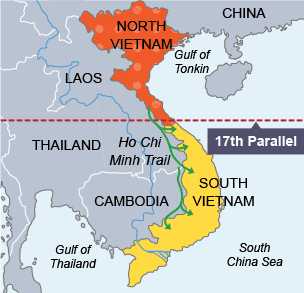
Images like this one refer to what theory about the spread of Communism in Asia (China, Korea, Vietnam)?
The Mar$hall Plan
The Domino Theory
Proxy Wars
Flexible Response
Which quote by Mikhail Gorbachev best defends his policies of glasnost and perestroika?
"More socialism means more democracy, openness and collectivism in everyday life."
"America must be the teacher of democracy, not the advertiser of the consumer society."

What were the defining characteristics of the Cold War?
Prohibition, Flappers, Jazz
Arms Race, Space Race, Red Scare
Holocaust, Nazi Germany, Pearl Harbor
Poverty, Unemployment, Dust Bowl

The state of tension between the United States and the Soviet Union without actual fighting that divided the world into two camps was the what?
Policy of containment
Warsaw Pact
Cuban Missile Crisis
Cold War
One significant result of the electronic information age is that
English has become the primary language of global communications.
politically repressive regimes such as that of China are trying to control the Internet.
the gulf between the technological haves and have-nots has widened.
All these answers are correct.
Which natural resource or crop have developing nations been able to trade in the global economy on terms most favorable to themselves?
cocoa
coffee
diamonds
oil

Which conclusion about Internet usage can be drawn from this chart?
Developing nations have easier access to the Internet than developed nations do.
A high standard of living in a nation is linked to high Internet usage.
Internet usage limits international cooperation.
Eastern Hemisphere nations use Internet connections more than Western Hemisphere nations do.

What is a major reason for the trend illustrated by the graph?
the fall of communist governments in Eastern Europe
the formation of oil cartels, such as the Organization of Petroleum Exporting Countries (OPEC)
an increase in global interdependence resulting from modern technology and expanded trade agreements
a general decline in the standard of living for people in developing countries

Based on this late 20th-century map, which conclusion is accurate?
The worldwide distribution of wealth is unequal.
Social mobility between social classes is increasing.
The communist movement is growing.
Economic self-sufficiency in less developed countries is increasing.
The increased flow of trade, people, technology, culture and ideas among countries.
Colonization
International trade
Globalization
Decolonization
Which is an accurate statement regarding modern African nations?
Most African nations have rejected membership in the United Nations.
For economic reasons, many African nations have maintained ties with their former colonial powers.
Most African nations are experiencing a decrease in urbanization.
Most African nations are miIitary allies of Russia.
Inexperienced leaders in African countries
Many African countries were undeveloped
Many African economies are based on agriculture
Many African nations thrived after independence
allows open trade with US, Mexico, and Canada.
Immigration
NAFTA
Persian Gulf War
Great Recession
the U.S. was attacked by the Al Qaeda which resulted in the War on Terrorism and the Patriot Acts
9/11 Attacks
Affordable Care Act
Bush v Gore
Election of 2008
the process by which businesses or other organizations develop international influence or start operating on an international scale.
Foreign Oil Dependency
Globalizaiton
Manufacturing- Service Industry
U.S-Israel Relations
Led an independence movement against the British in Ghana.
Jomo Kenyatta
Nelson Mandela
Kwame Nkrumah
Mahatma Gandhi
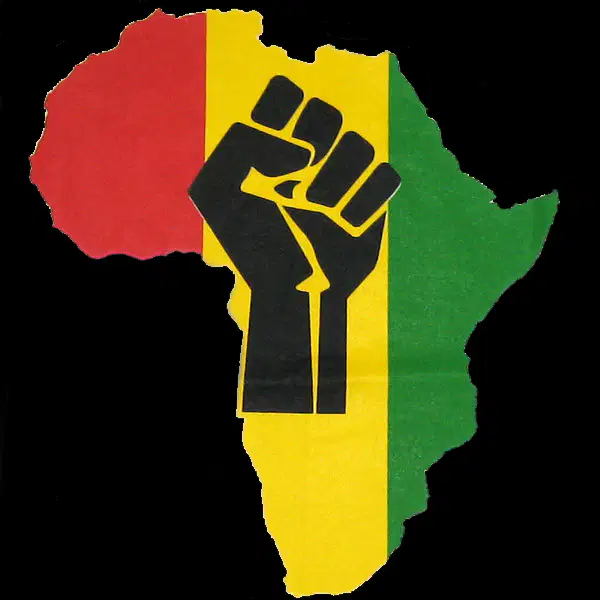
The original goal of Pan-Africanism was to
demand democratic reforms
encourage ethnic rivalry
promote a united Africa
divide Africa into separate countries
Which country led NATO (North Atlantic Treaty Organization)?
Soviet Union
US
Great Britain
China
What were the goals of the Marshall Plan & the Truman Doctrine?
To stop the spread of communism
To stop the spread of democracy
To encourage the spread of communism
To encourage the spread of democracy

