
 Worksheets
Cycle V Interim Review
Total questions: 108
Worksheet time: 1hrs 5mins
Name
Class
Date
1.

This was a decision made at
a)
Potsdam & Berlin Conference
b)
Treaty of Versailles
c)
Potsdam & Yalta Conferences
d)
Manhattan Project Meeting
2.

Who are these Three men who met after WWII in a German town named Potsdam?
a)
Stalin, FDR and Winston Churchill
b)
Truman, Stalin and Churchill
c)
Stalin, FDR and Truman
d)
Stalin, Truman and George Marshall
3.
This organization was created to protect nations from war, from genocide and to create international rules of behavior
a)
The League of Nations
b)
The United Nations
c)
North Atlantic Treaty Organization
4.
In what country is the city of Berlin located?
a)
France
b)
Germany
c)
England
d)
Soviet Union
5.
Which country did the U.S. send military aid to during the Korean War?
a)
North Korea
b)
South Korea
c)
Germany
d)
Japan
6.
Which 2 superpowers were involved in the Cold War?
a)
Britain and the Soviet Union
b)
France and Germany
c)
Japan and the Soviet Union
d)
The U.S. and the Soviet Union
7.
Why did the U.S. enter the Korean War?
a)
It did not want another country to fall to communists
b)
It did not want another country to be split
c)
It wanted to attack North Korea
d)
It wanted to sell more weapons to its allies
8.
Why did the U.S. want the Soviet Union to remove its nuclear weapons from Cuba?
a)
It wanted to protect Cuba from communism
b)
Cuba is close to the U.S. border
c)
It was protecting nearby countries in Central America
d)
The U.S. did not have any missiles of its own
9.
Which side ended up winning the Vietnam war and taking control of the entire country?
a)
Soviet Union
b)
North Vietnam
c)
United States
d)
South Vietnam
10.
What was a major reason for Cold War?
a)
Ideological differences between USA and USSR
b)
The weather was too low
c)
Insufficient money for war reparations
d)
Inability of the UN to maintain peace
11.
Why is the Cold War called a "Cold" war?
a)
The areas affected were in the polar regions of the world
b)
The war was fought during winter months only
c)
Leaders of the superpowers were sick with coughs and fevers
d)
There was never direct fighting between the two superpowers
12.
How does socialism differ from capitalism?
a)
In socialism, the goverment controls the means of production; whereas, capitalism focuses on the private owner.
b)
In socialism, the goverment provides subsidies for small buisnesses; whereas, capitalism only depends on the corporations to spark the economy.
c)
In socialism, the goverment does not provide any form on humanitarian aid; whereas, capitalism funds small buisness with tax relief.
d)
In socialism, the government controls what the consumer can purchase; whereas, capitalism controls what the business can market.
13.
______________get to make the economic decisions under capitalism.
a)
Individuals
b)
Government
c)
Literally no one
d)
The President
14.
The government or groups of workers might control these resources but the profits are divided among the people.
a)
Capitalism
b)
Communism
c)
Socialism
d)
Mixed Economy
15.
The United States is an example of what economic systems?
a)
Capitalism
b)
Socialism
c)
Mixed Economy
d)
Communism
16.
Classless society: all members of society are considered to be equal
a)
Communism
b)
Capitalism
17.
Focus is on the progress of the community as a whole
a)
Communism
b)
Capitalism
18.
The government or groups of workers might control these resources but the profits are divided among the people.
a)
Capitalism
b)
Communism
c)
Socialism
d)
Mixed Economy
19.
What is NOT true about communism?
a)
People were poor.
b)
People were rich.
c)
No one could own property.
d)
People had very little freedoms.
20.
The Berlin Airlift was:
a)
America's plan to get rid of the Berlin Wall
b)
Necessary for supply of food and fuel to people of West Berlin
c)
Rescuing Berliners
d)
A plan for freeing East Berlin from communism
21.

What was the purpose of this video?
a)
scare Americans about the threat of nuclear attacks
b)
entertain and make fun of nuclear attacks
c)
explain the effects of an nuclear attack
d)
calm Americans by teaching them how to survive an atomic attack
22.

This image represents
a)
Duck and Cover
b)
Great Depression Homelessness
23.

The Berlin Airlift was a response to
a)
Soviet Union creating a blockade around West Berlin
b)
U.S. leaving their zone of control
c)
World War II countries needed supplies
d)
Tension between capitalist and communist countries
24.
The Berlin Blockade and Airlift was a consequence of
a)
Germany suffering after WWII
b)
the Soviet Union's reaction to the 3 allied powers uniting their zones
c)
Potsdam and Yalta Conferences
d)
the Soviet Union's invasion of West Germany to create a communist Germany
25.

Which cause of WWII does this image represent?
a)
Nazi-Soviet Non Aggression Pact
b)
Great Depression
c)
Treaty of Versailles
d)
Nationalism
26.

Which cause of WWII does this image represent?
a)
Nazi-Soviet Non Aggression Pact
b)
Great Depression
c)
Treaty of Versailles
27.

Which cause of WWII does this image represent?
a)
Nazi-Soviet Non Aggression Pact
b)
Great Depression
c)
Treaty of Versailles
28.
Which of the following is NOT associated with modern totalitarian leaders?
a)
Single allowed party
b)
Freedom of speech and press
c)
propaganda used to inspire patriotism
d)
the build-up and promotion of militaries
29.
Why was the League of Nations weak?
a)
no raw materials
b)
Russia signed the Treaty of Versailles
c)
The League of Nations HAD a powerful army to use
d)
Powerful nations like the USA didn't join
30.
Hitler followed the rules of the Treaty of Versailles.
a)
true
b)
false
31.
Which country did Hitler invade that triggered the all-out conflict in Europe?
a)
Czechoslovakia
b)
Austria
c)
Poland
d)
Great Britain
32.
In what way did Hitler violate the Treaty of Versailles in 1935?
a)
He invaded Berlin
b)
He bombed the U.S.
c)
He built up his military
d)
He signed a pact with Stalin
33.
Complete the sequence of events:
Treaty of Versailles > ________________________________________ > World War II
Treaty of Versailles > ________________________________________ > World War II
a)
World War I
b)
Rise of Fascism
c)
Great Recession
d)
Industrial Revolution
34.

President who decided to drop the atomic bomb on Japan
a)
Franklin D. Roosevelt
b)
Harry Truman
c)
Donald Trump
d)
John J. Pershing
35.

Developed the atomic bomb
a)
Manhattan Project
b)
Geneva Convention
c)
Nazi- Soviet Non Aggression Pact
d)
Appeasement
36.

Policy of giving in to Hitler’s demands in order to keep peace
a)
Holocaust
b)
Atlantic Charter
c)
Manhattan Project
d)
Appeasement
37.

Japanese city that was the first to be hit with an atomic bomb
a)
Pearl Harbor
b)
Tokyo
c)
Hiroshima
d)
Battle of Okinawa
38.

Which cause of WWI does this image represent?
a)
Militarism
b)
Nationalism
c)
Imperialism
d)
Alliances
39.

Which cause of WWI does this image represent?
a)
Militarism
b)
Nationalism
c)
Imperialism
d)
Alliances
40.

Which cause of WWI does this image represent?
a)
Militarism
b)
Nationalism
c)
Imperialism
d)
Alliances
41.

Which cause of WWI does this image represent?
a)
Militarism
b)
Nationalism
c)
Imperialism
d)
Alliances
42.
Germany had to pay $33 billion dollars in _______________.
a)
land
b)
military
c)
reparations
d)
resources
43.
Germany also had to take ______ for the war.
a)
a hit
b)
blame
c)
one for the team
44.
What sparked World War I?
a)
Assassination of Archduke Franz Ferdinand
b)
Assassination of Archduke Marmaduke
c)
Assassination of Archduke Fidel Castro
d)
Assassination of Archduke Kaiser Wilhelm
45.
Why was Italy dissatisfied with the Treaty of Versailles?
a)
not awarded the land promised to them
b)
not given a strong nationalistic leader
c)
not given enough money
46.
The Treaty of Versailles blamed who for the War
a)
Austria
b)
Hungary
c)
Germany
d)
Ottoman Empire
47.
What is a dictator?
a)
A leader of a democracy.
b)
A leader that has complete control of their government.
c)
A form of government that denies freedom.
d)
A parliament.
48.
Who promised to restore Germany to its former power?
a)
Joseph Stalin
b)
Benito Mussolini
c)
Adolf Hitler
d)
Napoleon Bonaparte
49.
What was going on in Germany in the 1930's that allowed the people to turn to a person like Hitler to lead them?
a)
The Great Depression
b)
Civil War
c)
Massive attacks from outside nations
d)
A period of great economic growth
50.
How did the terms of the Treaty of Versailles impact Germany?
a)
The Treaty helped Germany overcome the Great Depression
b)
It crippled the German economy and government
c)
It allowed the Allies to occupy German territory
51.
Which of the following is an effect Hitler’s reign had on Germany during the 1930’s
a)
Unemployment became a much bigger problem in Germany
b)
Hitler made Germany smaller in hopes to strengthen the economy
c)
Hitler built up the German army, and unemployment decreased dramatically
52.
BRAT stands for
a)
British-Russia Alliance Together
b)
Blame Repair Assassination Treaty
c)
Blocked Routes Alliances Test
d)
Blame Reparations Army Territory
53.
BRAT are terms of which agreement
a)
Treaty of Versailles
b)
Berlin Conference
c)
Paris Peace Meetings
d)
Yalta
54.
Who said German unification would be achieved through "blood and iron"?
a)
Otto Von Bismarck
b)
Giuseppe Mazzini
c)
Giuseppe Garibaldi
d)
Victor Emmanuel
55.
The expansion of Prussia was achieved under the leadership of this man.
a)
Kaiser Wilhelm
b)
Giuseppe Garibaldi
c)
Otto von Bismarck
d)
Frederick William IV
56.
In which country did the Industrial Revolution begin?
a)
The United States
b)
England
c)
France
d)
Germany
57.
What had to occur before the Industrial Revolution could take place?
a)
The Economic Revolution
b)
The Glorious Revolution
c)
The Agricultural Revolution
d)
The French Revolution
58.
What impact did the Agricultural Revolution have on the population of England?
a)
The population increased a little.
b)
The population declined steeply.
c)
The population increased dramatically.
d)
The population stayed the same.
59.
Which 2 natural resources were the backbone of the Industrial Revolution?
a)
wood and peat
b)
oil and natural gas
c)
coal and iron
d)
cotton and tobacco
60.
What product was first made using machines in factories?
a)
steel
b)
textiles
c)
locomotives
d)
automobiles
61.
The cottage industry system involved manufacturing...
a)
of steam engines.
b)
of luxury goods.
c)
in the home.
d)
in small factories.
62.
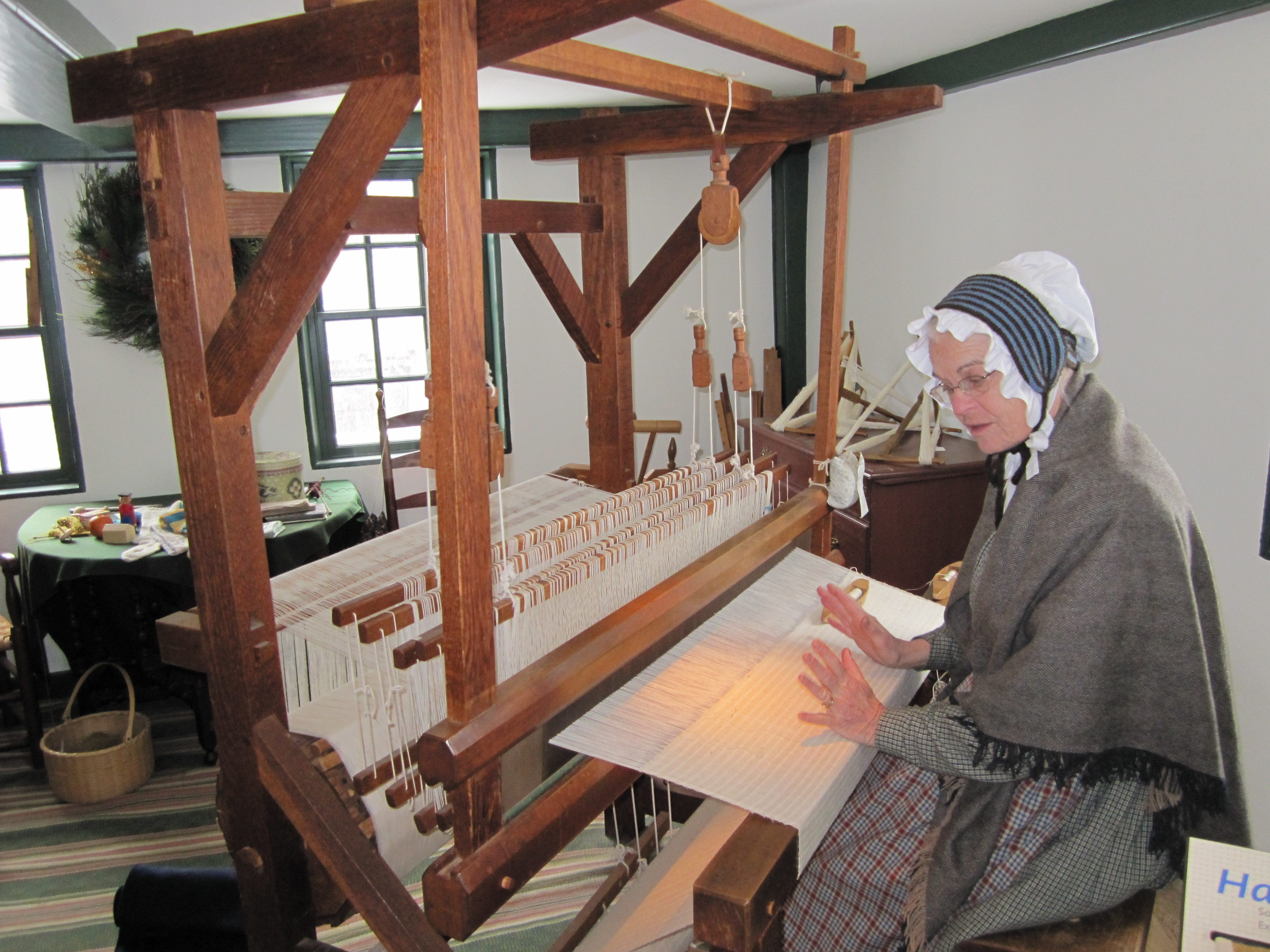
Any fabric that is woven (by machine or hand) is called -
a)
technology
b)
textile
c)
economy
d)
industrialization
63.
European imperialism of Africa, from 1880-World War I, is known as
a)
Spheres of Influence
b)
Scramble for Africa
c)
World War I
d)
French Revolution
64.
At what conference was Africa divided between European nations?
a)
Paris Peace Conference
b)
Vienna Conference
c)
Versailles Conference
d)
Berlin Conference
65.
Taking over land other than your own by force
a)
Imperialism
b)
Nationalism
c)
Industrialism
d)
Socialism
66.

The theme of this image is
a)
Industrialism
b)
Communism
c)
Capitalism
d)
Imperialism
67.
At the beginning of the Industrial Revolution, European nations wanted
a)
Raw materials
b)
Land
c)
Wealth
d)
All of the Above
68.
What was the Industrial Revolution?
a)
Changes and advancements in government
b)
Changes and advancements in militarism
c)
Changes and advancements in religion
d)
Changes and advancements in the production of goods
69.
What was going on in Germany while Great Britain was industrializing?
a)
German Unification
b)
World War I
c)
focus on imperialism of Russia
d)
Great Depression
70.
Galileo was tried for heresy (disagreeing with the church) because he argued
a)
That heaven did not exist
b)
That Earth revolved around the sun
c)
Against the law of gravity
d)
That the sun revolved around the Earth
71.
During the scientific revolution people started using experiments to test theories rather than just believing the ___________
a)
King
b)
Family
c)
Church
d)
Sir Salami
72.
Bacon, Galileo, & Newton promoted the idea that knowledge should be based on experimentation & ________.
a)
observation
b)
guessing
c)
research
d)
what your friends say
73.
He pioneered the use of inductive reasoning for the use in the scientific method.
a)
Kepler
b)
Bacon
c)
Dr. Seuss
d)
Dr. Who
74.
The Enlightenment is
a)
a time of rebirth
b)
a time when science ruled
c)
a time with people used reason and logic to explain the world
d)
a time when technology ruled
75.

Enlightenment philosopher who believed men and women should be equal
a)
Voltaire
b)
Denis Diderot
c)
Mary Wollstonecraft
d)
Adam Smith
76.

Enlightenment philosopher who believed people had natural rights of life, liberty, and property.
a)
John Locke
b)
Montesquieu
c)
Rousseau
d)
Voltaire
77.

Enlightenment philosopher who believed people give the government to ability to rule and in return the government should protect will of the people.
a)
John Locke
b)
Montesquieu
c)
Rousseau
d)
Voltaire
78.
Enlightenment philosphers believe that if government abuses power the people should change it.
a)
True
b)
False
79.
This was an 18th century philosophical movement of intellectuals (thinkers), aiming to apply reason to all endeavors.
a)
Reformation
b)
Renaissance
c)
Enlightenment
d)
Scientific Revolution
80.
What did Thomas Hobbes believe?
a)
Humans should hurt other humans
b)
Humans were naturally cruel, selfish, and greedy
c)
Humans are all so kind and wonderful
d)
Humans should go to church every day
81.
Whose philosophical ideas about life and liberty influenced the way that Thomas Jefferson worded the Declaration of Independence?
a)
Thomas Hobbes
b)
Jean-Jacques Rousseau
c)
John Locke
d)
Adam Smith
82.

One of the earliest to ask for equal rights for women, what Enlightenment writer questioned the men’s ideas that women should only be educated enough to be good wives and mothers?
a)
Elizabeth Cady Stanton
b)
Mary Wollstonecraft
c)
Mary Shelley
d)
Catherine the Great
83.

This image shows the:
a)
Geocentric Solar System
b)
Heliocentric Solar System
84.
What were the villages full of shacks located in cities filled with unemployed Americans called?
a)
Hoovervilles
b)
Okies
c)
Bonus Army Bases
d)
Rooseveltowns
85.
Paying a small % of a stock's price & borrowing the rest is known as what?
a)
buying on margin
b)
speculation
c)
fiat money
d)
price supports
86.
Which of the following is a term for buying something now and paying for it later?
a)
Credit
b)
Debit
c)
Speculation
d)
Investment
87.
Which of the following was a cause of the Depression?
a)
Overproduction
b)
Easy Credit
c)
Unequal Distribution of Wealth
d)
All of the above
88.
What marked the start of the Great Depression in the United States?
a)
The Stock Market Crash
b)
World War I
c)
War World II
d)
The Dust Bowl
89.
Which of the following was a serious problem during the Great Depression?
a)
low prices
b)
buying on margin
c)
high unemployment
d)
business consolidation
90.

During the GD people ran to bank immediately after the Stock Market crash because
a)
they wanted all of their money, causing banks to fail.
b)
they wanted to buy more stocks.
c)
people wanted the bank to save all of the money they had left for when times became more difficult.
d)
they wanted to pay all of their debts for buying stock and goods of margin/credit.
91.

Which GD consequence is displayed?
a)
unemployment
b)
hunger
c)
poverty
d)
homelessness
92.

Which GD consequence is displayed?
a)
unemployment
b)
hunger
c)
poverty
d)
homelessness
93.

Which GD consequence is displayed?
a)
unemployment
b)
hunger
c)
poverty
d)
homelessness
94.

Which GD consequence displayed?
a)
unemployment
b)
hunger
c)
poverty
d)
homelessness
95.
An application of Darwin's scientific theories of natural selection and the survival of the fittest to the struggle between nations and races; used in the late 1800s to justify imperialism and racism.
a)
Communism
b)
Social Darwinism
c)
Socialism
d)
Social Theory
96.
Why did Europeans continue to colonize Africa after Slavery was abolished?
a)
Berlin Conference
b)
Sites
c)
Raw materials
d)
Good will
97.
European countries colonized Africa because
a)
They heard about Africa's resources from explorers
b)
They were looking for raw materials and cheap labor
c)
They wanted new markets to sell products
d)
All of the Above
98.
What event led to the age of imperialism?
a)
The Slave Trade
b)
The Industrial Revolution
c)
Enlightenment
d)
Unification of Germany
99.
The race for nations to acquire the most colonies around the world created strong_________ within Western nations.
a)
capitalism
b)
nationalism
c)
socialism
d)
feudalism
100.
Which statement would Social Darwinists most likely support?
a)
Stronger groups
have the right to rule and control weaker groups.
b)
Public education should be guaranteed to all members of a society.
c)
Political equality strengthens the effectiveness of government.
d)
Universal suffrage is a basic human right.
101.
The 19th-century ideas of Social Darwinism and the “White Man’s Burden” were often used to justify
a)
isolationism
b)
imperialism
c)
appeasement
d)
disarmament
102.
What is Spheres of Influence?
a)
Replacing local leaders with foreigners
b)
Putting local leaders in charge (with guidance from foreigners)
c)
Controlling a country through trade and economy
d)
Removing the government and having anarchy
103.
The race for European countries to claim land in Africa was called the _________.
a)
Scramble for Africa
b)
African Marathon
c)
Great Competition
d)
Monopoly
104.
How was Japan opened for trade in the 1850s?
a)
The US sent Commodore Perry and 4 warships to force Japan to sign a trade treaty
b)
Great Britain sent Jonathan Livingstone as a missionary to Japan.
c)
The Shogun insisted that Japanese ports be opened for trade.
d)
Workers threatened to strike if international trade did not begin.
105.
What was the Meiji Restoration?
a)
a period of industrial growth in China
b)
a period of modernization and industrialization in Japan
c)
the return of Indian art objects
d)
the return of African lands after the Zulu Wars
106.
Why did Japan create programs to build railroads, a postal system and a public education system?
a)
to help Japan maintain its traditional values and culture
b)
to help other countries understand Japanese culture
c)
to help Japanese farmers learn new farming techniques
d)
to help Japan become more modern and compete with other industrialized countries
107.
Which of the following is NOT a result of the British Empire?
a)
English is a global language
b)
Spread of Christianity
c)
Great Britain's trade routes around the world today
d)
Capitalism and and democracy are common economic and political systems practiced
108.

This cartoon displays which cause of new imperialism?
a)
Social Darwinism
b)
Economic (trade)
c)
Political (power)
d)
Nationalism
100 %

