wayground logo

Free Printable Worksheets

Font size

S
M
L
XL
Worksheets

Chapter 5 Review

Total questions: 215

Worksheet time: 7hrs 10mins

Name
Class
Date
1.
A relationship between two organisms in which one organism benefits and the other is unharmed...
a)
Mutualism 
b)
Competition
c)
Parasitsm 
d)
Commensalism 
2.
What type of symbiosis?  Hummingbirds feed on nectar from flowers.  The flowers are pollinated by hummingbirds as they move from flower to flower.
a)
commensalism
b)
mutualism
c)
parasitism
d)
predation
3.
What type of symbiosis?  Skunks often live in burrows that have been dug and abandoned by woodchucks.  
a)
commensalism
b)
mutualism
c)
parasitism
d)
predation
4.
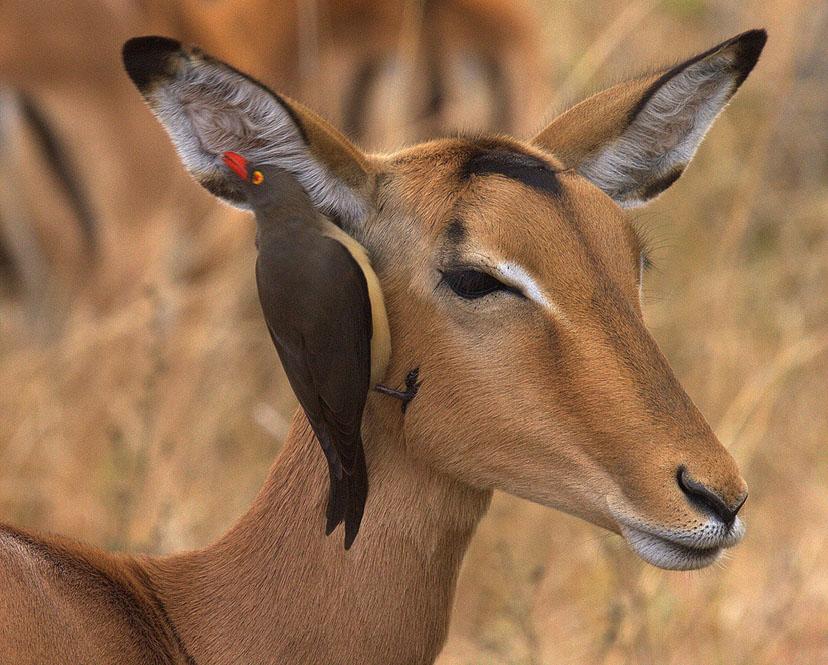
Red-billed oxpeckers are birds that often feed on parasites that infest impala.  This is an example of _______.
a)
commensalism
b)
mutualism
c)
neutralism
d)
competition
5.
A relationship between two organisms in which both organisms benefit. 
a)
Mutualism 
b)
Competition
c)
Parasitsm 
d)
Commensalism 
6.
When a mosquito bites you, you are the __________ and the mosquito is the  ____________.
a)
host, hostess
b)
parasite, host
c)
host, parasite
d)
prey, predator
7.
Which combination of symbols best describe parasitism?
a)
+  +
b)
+  -
c)
+  0
d)
-  0
8.
Which combination of symbols best describe mutualism?
a)
+  +
b)
+  -
c)
+  0
d)
-  0
9.
Plants both trying to get sunlight are 
a)
commensalism
b)
mutualism
c)
compeition
d)
parasitism
10.
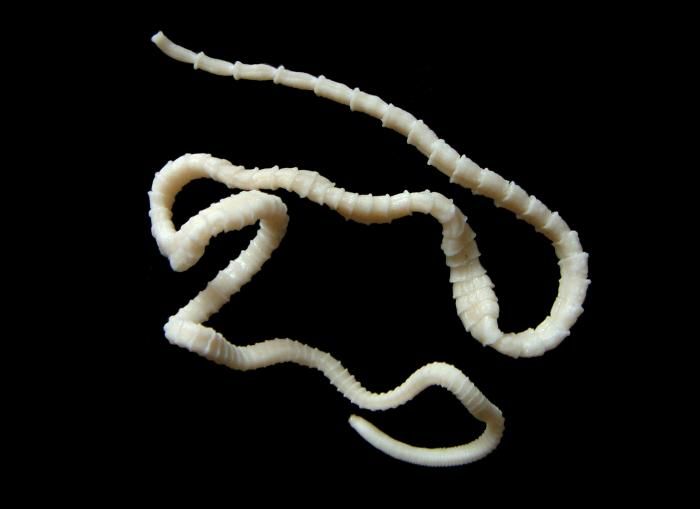
A tapeworm inside a dog is
a)
competition
b)
predation
c)
commensalism
d)
parasitism
11.
A fox chasing a rabbit to eat it is
a)
predation
b)
mutualism
c)
parasitism
d)
commensalism
12.
A fox chasing a rabbit to eat it is
a)
predation
b)
mutualism
c)
parasitism
d)
commensalism
13.
A tick and a dog have this type of relationship.
a)
mutualism
b)
commensalism
c)
neutralism
d)
parasitism
14.
Cattle egrets are birds that forage in fields among cattle. The egrets get easy access to food and the cattle don't care if they are there or not.
a)
mutualism
b)
commensalism
c)
competition
d)
parasitism
15.
Red-billed oxpeckers are birds that feed on parasites found on an impala. The impala gets rid of parasites and the red-billed oxpeckers get a yummy dinner. This is an example of _______.
a)
commensalism
b)
mutualism
c)
neutralism
d)
competition
16.
A relationship between two organisms in which one organism benefits and the other is harmed.
a)
Mutualism 
b)
Competition
c)
Parasitsm 
d)
Commensalism 
17.
A relationship between two organisms in which one organism benefits and the other is unharmed
a)
Mutualism 
b)
Competition
c)
Parasitsm 
d)
Commensalism 
18.
A relationship between two organisms in which both organisms benefit. 
a)
Mutualism 
b)
Competition
c)
Parasitsm 
d)
Commensalism 
19.
Mistletoe extracts water and nutrients from the spruce tree to the tree's detriment (harm). 
a)
Mutualsim 
b)
Parasitism 
c)
Commensalism 
20.
Yucca flowers are pollinated by yucca moths. The moths lay their eggs  in the flowers where  the larvae hatch and eat some of the developing seeds. Both species benefit.  
a)
Mutualism 
b)
Parasitism 
c)
Commensalism 
21.
Lion and Zebra - The lion hunts and kills the zebra for its food.
a)
Predation
b)
Mutualism
c)
Commensalism
d)
Parasitism
22.
Bear and Berries - The bear forages through the forest and finds berries for food.
a)
Predation
b)
Mutualism
c)
Commensalism
d)
Parasitism
23.
Hermit Crabs and Snails -  Hermit crabs live in shells made and then abandoned by snails. 
a)
Predation
b)
Mutualism
c)
Commensalism
d)
Parasitism
24.
Hermit Crabs and Snails -  Hermit crabs live in shells made and then abandoned by snails. 
a)
Predation
b)
Mutualism
c)
Commensalism
d)
Parasitism
25.
Wrasse Fish and Black Sea Bass - Wrasse fish feed on the parasites found on the black sea bass' bod y.
a)
Predation
b)
Mutualism
c)
Commensalism
d)
Parasitism
26.
a relationship that occurs when two or more organims of the same species need the same resource at the same time
a)
competition
b)
symbiosis
c)
predation
27.
the role of an organism in its environment including type of food it eats, how it obtains its food and how it interacts with other organisms
a)
habitat
b)
niche
c)
symbiosis
28.
a symbiotic relationship in which one organism benefits and the organism is not affected
a)
Parasitism
b)
Commensalism
c)
Mutualism
29.
Bacteria that live on the surface of our teeth require sugar from our food to survive. A by-product of their metabolism (body processes) decays the enamel of teeth. What type of symbiotic relationship is this?
a)
mutualism
b)
commensalism
c)
parasitism
d)
predation
30.
Cleaner shrimp living in the ocean eat ectoparasites (parasites on the outer surface of the animal) off of fish. What type of symbiotic relationship is this?
a)
mutualism
b)
commensalism
c)
parasitism
d)
predation
31.

In ecosystems, organisms rely on each other. This is called

a)

Interdependence

b)

relationships

c)

predation

d)

habitat

32.

the act of one animal seeking out, killing and consuming another animal

a)

Predation

b)

Herbivory

c)

Symbiosis

d)

cooperation

33.

Predator prey relationships are important for

a)

Population control

b)

intraspecific competition

c)

Symbiosis

d)

community diversity

34.

All predators are large, warm and fuzzy

a)

true

b)

false

35.

Which is an example of a predator?

a)

Lady bug

b)

Spider

c)

Fox

d)

Rabbit

36.

When an animal consumes plant matter the relationship is

a)

Herbivory

b)

Predation

c)

Prey

d)

Hunting

37.

Herbivores can impact the size and distribution of plant

a)

Populations

b)

Communities

c)

Resources

d)

nutrients

38.

Herbivores help plants by

a)

distributing seeds

b)

Destroying roots

c)

Eating bugs

d)

trampiling vegetation

39.

When predators are removed from an ecosystem it can cause

a)

a trophic cascade

b)

a boom in the plant population

c)

a decrease in the herbivore population

d)

rivers to over flow their banks

40.

The reintroduction of wolves in Yellowstone National Park

a)

Made the ecosystem more stable

b)

Made the ecosystem less stable

c)

Eliminated moose from the park

d)

Caused an increase in the deer population

41.

In what way did the reintroduction of wolves impact plant populations?

a)

The trees grew back fast

b)

The deer population was eliminated from the park

c)

The deer populations relocated to different parts of the park

d)

The bears had more to eat

42.

In what way did the reintroduction of wolves impact rivers

a)

It stabilized the vegetation which prevented erosion

b)

the ecosystem supported more beavers which built more dams

c)

the ecosystem was less stable so there were less fish in the rivers

d)

the wolves chased the deer into the rivers which made them muddy

43.

What caused the wolves in the central US to disappear?

a)

Ranchers and farmers killed them

b)

K-9 distemper killed them off

c)

The population of prey decreased because of hunting

d)

There was a drought that killed the deer

44.

Overall, the presence of wolves

a)

Increased the biodiversity of the ecosystem

b)

decreased the biodiversity of the ecosystem

45.

Wolves in Yellowstone had an impact on

a)

Biotic features of the ecosystem

b)

Abiotic features of the ecosystem

c)

The weather

d)

The climate

46.
When a pine tree grows real tall and blocks sunlight to another pine tree it is _______ competition.
a)
Interference
b)
Intraspecific
c)
Interspecific
d)
Exploitative
47.

Which factor promotes competition between organisms in an ecosystem?

a)

cycling of minerals

b)

limited resources

c)

decomposition of organic matter

d)

presence of saprophytes

48.

Two closely related species of birds live in the same tree. Species A feeds on ants and termites, while Species B feeds on caterpillars. The two species coexist successfully because

a)

each occupies a different niche

b)

they interbreed

c)

they use different methods of reproduction

d)

birds compete for food

49.
No two species can occupy the same niche
a)
Competitive Exclusion Principle 
b)
Limiting Exclusion Theory
c)
Competitive Limiting Principle
d)
Limiting Competitive Theory 
50.
As the population of prey decreases, the population of the predator which eats it will...
a)
Increase
b)
Decrease
c)
Remain Constant
51.
Which of the following is NOT a form of symbiosis?
a)
Mutualism
b)
Commensalism
c)
Parasitism 
d)
Predation
52.
What statement is TRUE about the graph?
a)
The prey is the green line because there needs to be more prey than predators.
b)
The prey is the red line because there needs to be more predators than prey.
c)
The green line is the producers
d)
The red line is the producers
53.

Predator population lags behind prey population because:

a)

Increase in predators leads to decrease in prey

b)

Increase in predators leads to increase in prey

c)

Increase in predators leads to decrease in producers

54.

In ecosystems, organisms rely on each other. This is called

a)

Interdependence

b)

relationships

c)

predation

d)

habitat

55.
An organism that is killed and eaten by another organism
a)
Predator
b)
Prey
c)
Competition
d)
Adaptation
56.
A behavior or physical characteristic that allows an organism to survive
a)
Niche
b)
Prey
c)
Competition
d)
Adaptation
57.
Camouflage is an example of an ______________________ that a prey might have to survive.
a)
Niche
b)
Prey
c)
Competition
d)
Adaptation
58.
On a safari at night, a lion hunts and feeds on an antelope. In this relationship, the lion is the ____________________ and the antelope is the _________________.
a)
Parasite/host
b)
Predator/prey
c)
Prey/Predator
59.
The struggle between organisms to survive as they attempt to use the same resource
a)
Predator
b)
Prey
c)
Competition
d)
Adaptation
60.

In Predator/Prey Graphs what happens to Predator numbers if Prey numbers increase.

a)

The predator numbers INCREASE

b)

The predator numbers DECREASE

61.

In Predator/Prey Graphs what happens to Predator numbers if Prey numbers decrease.

a)

The predator numbers INCREASE

b)

The predator numbers DECREASE

62.

In Predator/Prey Graphs what happens to Prey numbers if Predator numbers decrease.

a)

The prey numbers INCREASE

b)

The prey numbers DECREASE

63.

In Predator/Prey Graphs what happens to Prey numbers if Predator numbers increase.

a)

The prey numbers INCREASE

b)

The prey numbers DECREASE

64.
The role of an organism in its habitat, or how it makes its living
a)
Niche
b)
Prey
c)
Competition
d)
Adaptation
65.
What role does the lynx (wild cat) play?
a)
Predator
b)
Prey
66.

Which factor promotes competition between organisms in an ecosystem?

a)

cycling of minerals

b)

limited resources

c)

decomposition of organic matter

d)

presence of saprophytes

67.

Two closely related species of birds live in the same tree. Species A feeds on ants and termites, while Species B feeds on caterpillars. The two species coexist successfully because

a)

each occupies a different niche

b)

they interbreed

c)

they use different methods of reproduction

d)

birds compete for food

68.
This graph shows ....
a)
When one population inceases, the other decreases. 
b)
When one population decreases, the other inceases. 
c)
When one population increases, the other increases instantly. 
d)
When one population increases, the other increases shortly after. 
69.
What color line shows the predators? 
a)
black
b)
red
70.
When an organism copies a characteristic of something else in order to better its chances for survival and reproduction
a)
hibernation
b)
camouflage
c)
mimicry
d)
migration
71.
A poisonous frog has bright markings on its body.  This is an example of...?
a)
camouflage
b)
mimicry
c)
warning coloration
d)
social interaction
72.

Which example below is an behavioral adaptation?

a)

A seal's layer of blubber keeps it warm.

b)

A pack of wolves chase a moose.

c)

A cheetah's spots make it hard to see.

d)

A turtle's shell protects it from predators.

73.
An animal that is hunted and eaten for food is a 
a)
predator
b)
prey
74.
An example of intraspecific competion would be when ________ & ________ fight for food.
a)
2 lions
b)
Lion/Tiger
c)
Polar Bear/Panda Bear
d)
Pine tree/Oak tree
75.
When two male lions fight over a lady lion this is _______ competition.
a)
Exploitative
b)
Intraspecific
c)
Interspecific
d)
Bullying
76.

When a Lion and a Hyena fight over a gazelle it is ________ comptetion.

a)

Intraspecific

b)

Exploitative

c)

Interspecific

d)

Mean

77.

Two squirrels race up a tree to reach a hidden pile of nuts.

a)

Exploitative

b)

Intraspecific

c)

Interspecific

d)

Bullying

78.

A hyena chases off a vulture to feast on an antelope carcass.

a)

Exploitative

b)

Intraspecific

c)

Interspecific

d)

Bullying

79.

Different species of shrubs and grasses on the forest floor compete for sunlight.

a)

Exploitative

b)

Intraspecific

c)

Interspecific

d)

Bullying

80.

Brown bears hunting for fish on a river’s edge fight over space.

a)

Exploitative

b)

Intraspecific

c)

Interspecific

d)

Bullying

81.

Male big horn sheep butt heads violently in competition for mates.

a)

Exploitative

b)

Intraspecific

c)

Interspecific

d)

Bullying

82.

A bobcat catching a young rabbit. The bobcat is the __?

a)

predator

b)

prey

83.
Cattle egrets forage (feed) in fields among cattle. The egret gets easy access to flying insects stirred up by the cattle, and the cattle don't care if they are there or not.
a)
mutualism
b)
commensalism
c)
competition
d)
parasitism
84.
A tapeworm and a cat have this type of relationship.
a)
mutualism
b)
parasitism
c)
commensalism
d)
competition
85.
Red-billed oxpeckers are birds that often feed on parasites that infest impala.  This is an example of _______.
a)
commensalism
b)
mutualism
c)
neutralism
d)
competition
86.
When two male lions fight over a lady lion this is _______ competition.
a)
Exploitative
b)
Intraspecific
c)
Interspecific
d)
Bullying
87.
Biodiversity refers to
a)
extinct species
b)
the variety of species on Earth
c)
nonrenewable resources
d)
the rate of species decline
88.
A species that is NOT native to a particular region is called
a)
natural
b)
invasive
c)
endemic
d)
extraordinary
89.
Exotic or invasive species leads to all of these problems except
a)
increased biodiversity
b)
loss of biodiversity
c)
disease
d)
loss of native species
90.
When taken to a new habitat, non-native plants often threaten native plants of the new habitat.  Why do they do this?
a)
Non-native plants are able to mutate rapidly
b)
Non-native  plants cause native animals to relocate
c)
Non-native plants are able to be used for medicine
d)
Non-native plants compete with native plants for resources
91.
What effect will an invasive species have on the carrying capacity of an ecosystem?
a)
The carrying capacity will increase
b)
The carrying capacity for everyone will decrease
c)
The carrying capacity will only decrease for those in competition for same resource
d)
The carrying capacity for all animals will stay the same
92.
A population of an organism will only grow exponentially if:
a)
The resources are unlimited
b)
They want to
c)
The resources are limited
d)
They do not like to compete
93.
The particular role (job) of an organism in its environment including types of food it eats, how it obtains its food and how it interacts with other organisms is called a what?
a)
Niche
b)
Habitat
c)
Home
d)
Ecosystem
94.
Why do the populations of invasive species grow so quickly? 
a)
invasive species require more energy than other organisms
b)
invasive species are prey to many animals.
c)
invasive species have no natural predators.
d)
invasive species keep the ecosystems in equilibrium.
95.
What role does the lynx (wild cat) play?
a)
Predator
b)
Prey
96.
What role does the mouse play?
a)
Predator
b)
Prey
97.
What type of competition is shown in this image?
a)
Interspecific
b)
Intraspecific
98.
What type of competition is shown in this image?
a)
Interspecific
b)
Intraspecific
99.
How many types of symbiosis are there?
a)
5
b)
7
c)
3
d)
If you pick this you're silly
1000
100.

which is the 3rd level consumer

a)

grasshopper

b)

grass

c)

frog

d)

snake

101.

which level contains the most energy?

a)

grass

b)

rabbit

c)

snake

d)

hawk

102.
What is the order of succession shown in this figure?
a)
A, B, C, D
b)
B, A, D, C
c)
C, D, A, B
d)
D, A, B, C
103.
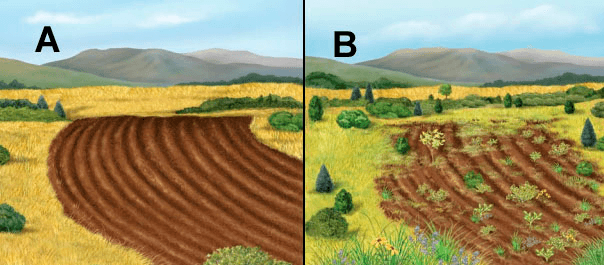
What type of succession is shown going from figure A to figure B?
a)
primary succession
b)
ecological succession
c)
secondary succession
d)
intermediate
104.
What is the goal of the pioneer species in Primary Succession?
a)
To kill the dead materials after a disaster
b)
To rebuild soil
c)
To feed Johnny
d)
To put fresh oxygen into the air
105.
The picture shows what type of succession?
a)
primary
b)
secondary
c)
tertiary
d)
quadanary
106.
The picture shows what type of succession?
a)
primary
b)
secondary
c)
tertiary
d)
quadanary
107.
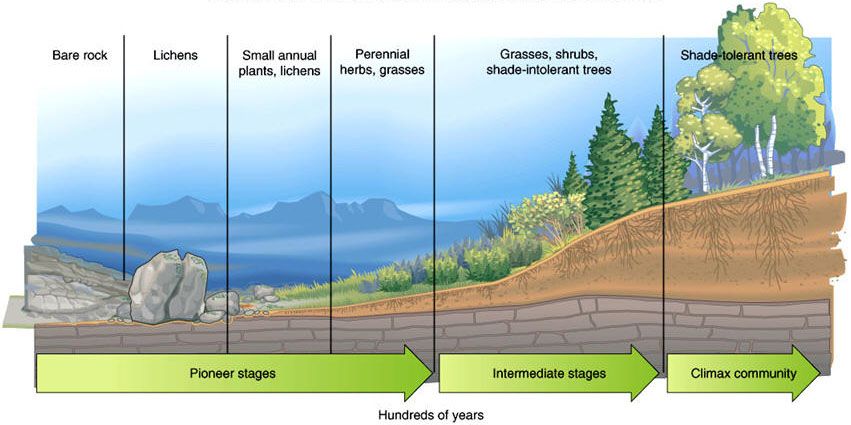
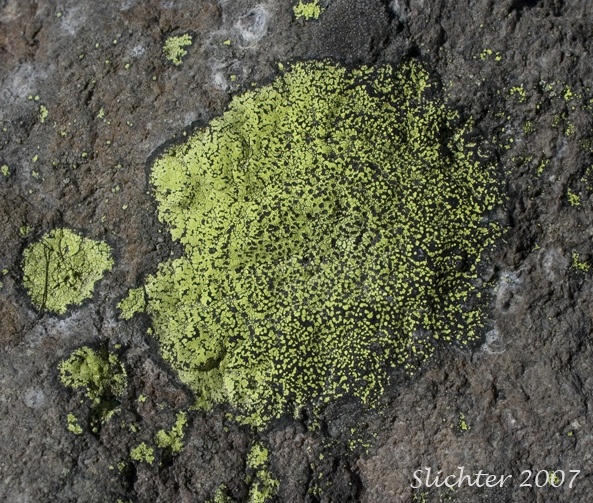
What is the name given to lichen or algae after a primary succession?
a)
pioneer species
b)
volunteer species
c)
founder species
d)
conqueror species
108.
What are examples of pioneer species in a primary succession?
a)
Bushes and Shrubs
b)
Oak trees
c)
Mossess and Lichens 
d)
A rose Bush
109.
After a volcanic eruption, lava covers the land. What is the order that plants grow to repopulate the area?
a)
Lichens → Shrubs → Grasses → Trees
b)
Lichens → tree → shrubs→Grasses
c)
Grasses → Lichens → Shrubs → Trees
d)
Lichens → Grasses → Shrubs → Trees
110.
Reaches a climax community quicker because soil is already present
a)
primary succession 
b)
secondary succession
c)
both types of succession
111.
Final illustration (#8) shows
a)
pioneer species
b)
climax community
c)
only biotic factors
d)
only abiotic factors
112.
What is the most important function of pioneer species?
a)
To create rocks
b)
To create soil and add nutrients to the environment 
c)
To look nice
d)
Food for animals 
113.
Succession that occurs in an area with NO SOIL
a)
ecological succession 
b)
primary succession 
c)
secondary succession
d)
pioneer speciles
114.

What type of species/community is a redwood forest?

a)

Climax Community

b)

Pioneer Species

c)

Intermediate Species

d)

Tertiary Community

115.
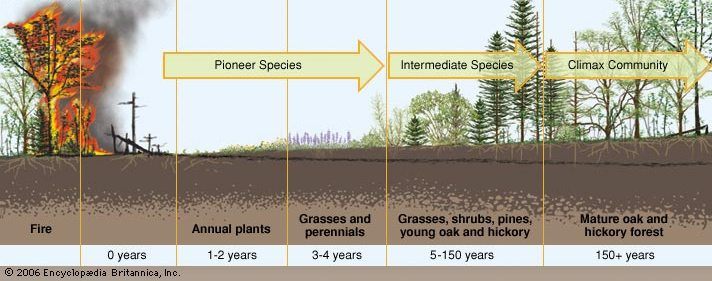
Natural disasters such as flooding and tornadoes are linked to ________________.
a)
primary
b)
secondary
c)
old field
d)
ecosystem
116.
starts with bare rock followed by lichen
a)
primary succession 
b)
secondary succession
c)
both types of succession
117.
this type of succession occurs after a forest fire
a)
primary succession
b)
secondary succession
c)
both
118.

The ability of an ecosystem to maintain its normal patterns of nutrient cycling and biomass production after being subjected to damage caused by an ecological disturbance

a)

ecological inertia

b)

ecological resilience

c)

ecological conservation

d)

ecological survival

119.

A living system that exhibits the ability to resist external fluctuations is considered having ___________.

a)

resilience

b)

instability

c)

resourcefulness

d)

inertia

120.
A pioneer species is...
a)
a large organism
b)
the first organisms to adapt to a new environment 
c)
The best organism 
d)
Abiotic organisms 
121.
What is the first species you will see after a primary succession? (in picture)
a)
lichens
b)
grasses
c)
small plants
122.
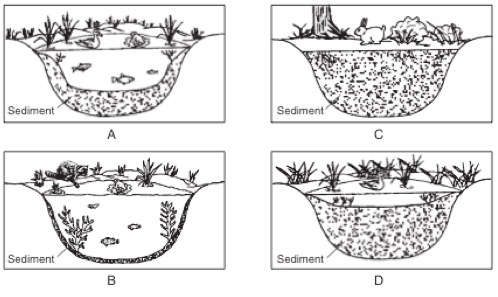
What is the correct order from oldest (happened first) to youngest (happened last) in this pond succession?
a)
A, B, C, D
b)
D, C, B, A
c)
B, A, D, C
d)
C, D, A, B
123.
After a volcanic eruption, lava covers the land. What is the order that plants grow to repopulate the area?
a)
Lichens → Shrubs → Grasses → Trees
b)
Lichens → tree → shrubs→Grasses
c)
Grasses → Lichens → Shrubs → Trees
d)
Lichens → Grasses → Shrubs → Trees
124.
the process by which a new community forms where no community lived before 
a)
resource
b)
invasive (non- native) species
c)
primary succession
d)
competition
125.
Succession type?
a)
primary succession
b)
secondary succession
c)
tertiary succession
d)
variable succession
126.
Succession type?
a)
primary succession
b)
secondary succession
c)
tertiary succession
d)
variable succession
127.
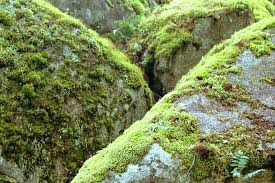
This is an example of...
a)
Climax communities
b)
Secondary succession
c)
Lichen
d)
Pioneer species
128.
This is an example of...
a)
Secondary Succession
b)
Primary succession
c)
Utter and complete destruction! RAWR!
d)
Climax Communities
129.
If the number of births in a population is the same as the number of deaths in a population, what will happen to the growth of the population?
a)
It will increase.
b)
It will decrease.
c)
It will stay the same.
d)
It will fluctuate.
130.
If the number of births is greater than the number of deaths in a population, what will happen to the growth of the population?
a)
It will increase.
b)
It will decrease.
c)
It will stay the same.
d)
It will fluctuate.
131.
What growth pattern describes a population whose growth rate slows or stops following a period of exponential growth?
a)
logistic growth
b)
population growth
c)
exponential growth
d)
predator-prey cycle
132.
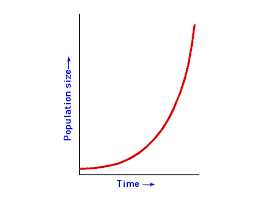
What type of growth is shown in the diagram?
a)
exponential growth
b)
logistic growth 
c)
predator-prey cycle
d)
boom-bust curve
133.
Largest number of individuals of a population that the environment can support...  
a)
carrying capacity
b)
population crash
c)
lag phase
d)
mutualism
134.
Plants and animals that are not native to a habitat (nonindigenous)...
a)
predators
b)
biological magnification
c)
invasive species
d)
prey
135.
What do you call a period of rapid growth?
a)
exponential growth
b)
logistic growth
c)
emigration
d)
predator-prey cycle
136.
What do you call a period of rapid growth?
a)
exponential growth
b)
logistic growth
c)
emigration
d)
predator-prey cycle
137.
What type of growth curve is pictured?
a)
exponential 
b)
logistic
c)
predator-prey
d)
invasive
138.
Which type of growth is best illustrated by this rabbit population?
a)
exponential
b)
logistic
c)
S-shaped
d)
predator-prey
139.
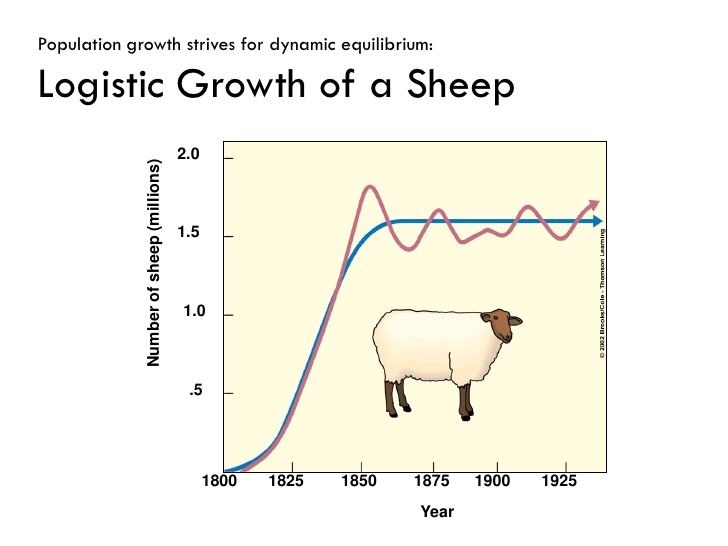
What is the carrying capacity for this sheep population?
a)
1.8 million
b)
1.25 million
c)
1.6 million
d)
1.o million
140.
Type of growth that occurs under ideal conditions?
a)
predator-prey cycle
b)
logistic
c)
exponential
141.
Type of growth that occurs when disease and parasites are present...
a)
exponential
b)
J-shaped
c)
predator-prey
d)
logistic
142.
Type of growth typical of invasive species...
a)
exponential
b)
logistic
c)
S-shaped
d)
predator-prey cycle
143.
Type of growth typical of a screech owl population in a woodland...
a)
exponential
b)
logistic
c)
predator-prey cycle
d)
J-shaped
144.
What is the approximate carrying capacity of Paramecium aurelia cultured alone?
a)
150
b)
400
c)
450
d)
500
145.

Researchers have found that a local squirrel population fluctuates from year to year, increasing one year and decreasing the next. Which of the following factors would cause the squirrel population to grow?

a)

A. the birth rate is equal to the death rate

b)

B. emigration is greater than immigration

c)

C. the death rate is higher than the birth rate

d)

D. the birth rate is greater than the death rate

146.

All populations fluctuate in size. Which of the following is a nonenvironmental factor that might cause a population to be reduced in size?

a)

A. decreased predation

b)

B. increased competition

c)

C. emergence of disease resistance

d)

D. increased availability of a food source

147.

The population size that an environment can sustain is called the carrying capacity. Which of the following factors would not decrease the carrying capacity of a pond environment?

a)

A. drought

b)

B. flooding

c)

C. food shortages

d)

D. unusually low temperatures

148.

Imagine that a city located in a desert environment has grown significantly over the last few decades. Which statement best describes how the growth of the metropolitan city would impact the desert environment in the area?

a)

A. Biodiversity would decrease in the area but increase in the desert beyond the city.

b)

B. By destroying habitat to build homes and highways, the growth of the city would decrease the biodiversity in the desert.

c)

C. The growth of the city would have little impact on the environment, because few animals likely lived there before growth happened.

d)

D. By bringing in water, the growth of the city would improve the entire desert environment

149.

Imagine that a nonnative bird species appears in an ecosystem. Which of the following will not be a likely change in the ecosystem?

a)

A. Native bird species will immediately migrate to another area.

b)

B. Bird predator species will temporarily have more available prey.

c)

C. Each food chain in the ecosystem will adjust over time to include the new species of bird.

d)

D. Birds that share the same niche of the new species will have more competition for food resources.

150.

Populations do not continue to grow to an unlimited size. Their environment, including food and other natural resources, limits their size eventually. This limit is called the

a)

A. differential population.

b)

B. carrying capacity.

c)

C. prey maximum.

d)

D. predator limit.

151.

Zebra mussels are tiny clam-like organisms that strain plankton out of lake water. They attach to piers, boat hulls, pipes, and any other available surface. They prefer attaching to surfaces in water that is 2 to 7 feet deep but have been found at depths of 180 feet in water temperatures ranging from 7˚C to 32˚C. They live mainly in freshwater with salinities (salt concentrations) of 0.21 to 1.47 parts per thousand (ppt), but they can live in estuaries with salinities up to 13.40 ppt. Given what is known about the diet of zebra mussels, which variables influence their fundamental niche

a)

A. nearby boats, fish larvae, water salinity, availability of plankton

b)

B. water depth, water clarity, availability of plankton, water temperature, water salinity

c)

C. water clarity, availability of native mussel species, water temperature, water salinity

d)

D. availability of surfaces for attachment, water depth, water salinity, availability of plankton

152.

Zebra mussels are tiny clam-like organisms that strain plankton out of lake water. They attach to piers, boat hulls, pipes, and any other available surface. They prefer attaching to surfaces in water that is 2 to 7 feet deep but have been found at depths of 180 feet in water temperatures ranging from 7˚C to 32˚C. They live mainly in freshwater with salinities (salt concentrations) of 0.21 to 1.47 parts per thousand (ppt), but they can live in estuaries with salinities up to 13.40 ppt. Given what is known about the diet of zebra mussels, which variables influence their fundamental niche

a)

A. nearby boats, fish larvae, water salinity, availability of plankton

b)

B. water depth, water clarity, availability of plankton, water temperature, water salinity

c)

C. water clarity, availability of native mussel species, water temperature, water salinity

d)

D. availability of surfaces for attachment, water depth, water salinity, availability of plankton

153.

After fires destroyed 793,000 acres of aspen and pine forest in Yellowstone National Park in the unusually dry summer of 1988, biologists were able to study the long-term effects of fire on an ecosystem. The biologists found that the soil after the fire was more fertile and soon gave rise to small plants and new pine trees. What ecological process were the biologists observing?

a)

A. biodiversity

b)

B. equilibrium

c)

C. food web energy flow

d)

D. succession

154.

Forest fires can burn down all of the trees and plants living in an area. However, new growth can spring from the decaying organic matter left behind. What is the gradual, sequential regrowth of a community of species after a forest fire?

a)

A. adaptation

b)

B. pioneer succession

c)

C. primary succession

d)

D. secondary succession

155.

A biologist compares how different ecosystems undergo succession. She divides the series of events that happen during primary succession and secondary succession into three different stages. Which feature might be used to distinguish secondary succession from primary succession?

a)

A. the lack of pioneer species in the second stage

b)

B. the presence of pioneer species in the final stage

c)

C. the presence of trees and large plants in the final stage

d)

D. the presence of soil and organic matter in the first stage

156.
What is the order of succession shown in this figure?
a)
A, B, C, D
b)
B, A, D, C
c)
C, D, A, B
d)
D, A, B, C
157.
What type of succession is shown going from figure A to figure B?
a)
primary succession
b)
ecological succession
c)
secondary succession
d)
intermediate
158.

The picture shows what type of succession?

a)

primary

b)

secondary

159.
The picture shows what type of succession?
a)
primary
b)
secondary
160.
What are examples of pioneer species in a primary succession?
a)
Bushes and Shrubs
b)
Oak trees
c)
Mosses and Lichens 
d)
A rose Bush
161.
After a volcanic eruption, lava covers the land. What is the order that plants grow to repopulate the area?
a)
Lichens → Shrubs → Grasses → Trees
b)
Lichens → tree → shrubs→Grasses
c)
Grasses → Lichens → Shrubs → Trees
d)
Lichens → Grasses → Shrubs → Trees
162.
This is the process that forms a new ecosystem where no organisms lived before.
a)
resource
b)
invasive (non- native) species
c)
primary succession
d)
competition
163.
What is the correct order from oldest (happened first) to youngest (happened last) in this pond succession?
a)
A, B, C, D
b)
D, C, B, A
c)
B, A, D, C
d)
C, D, A, B
164.
In which type of succession is soil is already present?
a)
primary succession 
b)
secondary succession
c)
both types of succession
165.
What is the first species you will see after a primary succession?
a)
lichens
b)
grasses
c)
small plants
166.
What does the final picture (#8) show?
a)
pioneer species
b)
a climax community
c)
only biotic factors
d)
only abiotic factors
167.
Which type of succession does this cartoon show?
a)
primary succession
b)
secondary succession
168.
Which type of succession does this picture show?
a)
primary succession
b)
secondary succession
169.
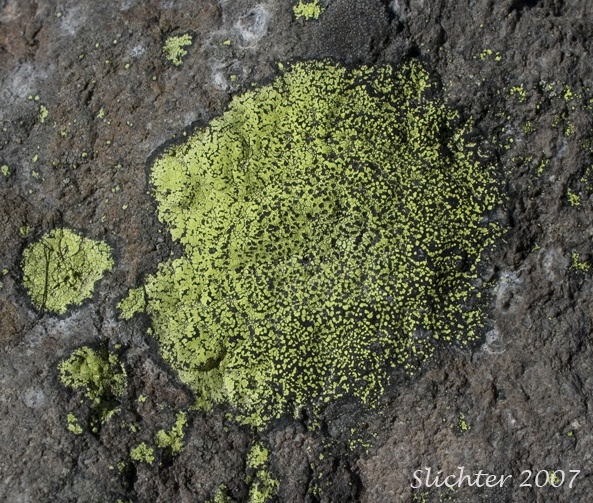
This plant is an example of...
a)
Climax communities
b)
Secondary succession
c)
Lichen
d)
Pioneer species
170.
Succession that occurs in an area with NO SOIL
a)
ecological succession 
b)
primary succession 
c)
secondary succession
d)
pioneer species
171.
How do predator prey relationship affect a population?
a)
They are in competition with each other
b)
One will go extinct
c)
Predators have exponential growth
d)
Controls size of both populations
172.
What is the carrying capacity of the following graph?
a)
1000
b)
8000
c)
800
d)
600
173.
Which kind of dispersion is #1?
a)
clumped
b)
random
c)
uniform
174.
Refer to the diagram of the survivorship curve.
Which curve best describes an organism that invests a lot of energy in parenting?
a)
A
b)
B
c)
C
d)
this is not a survivorship curve
175.
Which survivorship curve represents a species where most of the individuals live through their lives and die of old age?
a)
Type 1
b)
Type 2
c)
Type 3
176.
In an ecosystem, which is NOT a density-
dependent limiting factor?
a)
competition
b)
parasitism
c)
predation
d)
natural disaster
177.
As a population grows, it will most likely stop growing at what size?
a)
Growth limit
b)
Exponential limit
c)
Carrying Capacity
d)
It won't stop growing
178.
The carrying capacity of an environment for a particular species at a particular time is determined by the
a)
number of individuals in the species.
b)
distribution of the population.
c)
reproductive potential of the species.
d)
supply of the most limited resources
179.
What point on the graph represents the carrying capacity?
a)
A
b)
B
c)
C
d)
D
180.
If the carrying capacity of a predator decreases, what will happen to the carrying capacity of the prey?
a)
Will Increase
b)
Will Decrease
c)
Will stay the same
d)
Will fluctuate
181.
the process of entering one country to take up permanent or semi-permanent residence
a)
immigration
b)
emigration
c)
migration
d)
supplication
182.
the process of leaving one country to take up permanent or semi-permanent residence
a)
immigration
b)
emigration
c)
migration
d)
supplication
183.
Even if a country has equal birthrates and death rates it can still experience
population growth due to
a)
Migration 
b)
Doubling Time 
c)
Long life expectancy 
d)
High standard of living 
184.
In which of the following patterns of population are organisms clustered together in groups?
a)
Random
b)
Clumped
c)
Uniform
d)
All of the above.
185.
Which of the following populations has a random dispersion?
a)
flock of flamingoes
b)
herd of bison
c)
pine trees in a pine forest
d)
solitary snakes in a desert
186.
In the graph, the density-independent limiting factor is most likely
a)
predation.
b)
parasitism.
c)
seasonal cycles.
d)
disease.
187.
If a population grows larger than its environmental carrying capacity, then
a)
death rate may rise.
b)
death rate may fall significantly.
c)
birth rate may rise significantly.
d)
immigration rate may increase.
188.
How does an increase in population density impact the spread of infectious disease?
a)
as population density increases, spread of infectious disease decreases
b)
as population density decreases, spread of infectious disease decreases
c)
as population density decreases, spread of infectious disease increases
d)
as population density increases, spread of infectious disease increases
189.
Which will add more organisms to a population? 
a)
5 animals die
b)
0 animals are born
c)
3 animals immigrate to the population
d)
2 animals emmigrate from the population
190.
Regarding population dispersion patterns, which of the following is an improper pairing
a)
random—not evenly spaced
b)
uniform—evenly spaced
c)
clumped—clustered in space
d)
random—clustered in space
191.
An ecologist recorded 12 white-tailed deer, Odocoileus virginianus, per square mile in one woodlot and 20 per square mile on another woodlot. What was the ecologist comparing?
a)
density
b)
dispersion
c)
carrying capacity
d)
quardrats
192.
You are observing a population of lizards when you notice that the number of adults has increased and is higher than previously observed. One explanation for such an observation would include
a)
reduction in death rate
b)
increased immigration
c)
decreased emigration
d)
decreased emigration
193.
What type of growth model is this?
a)
exponential growth model
b)
logistic growth model
c)
Type I curve
d)
Type III curve
194.
A small farming community in Texas covers 14 square kilometers. There are 1400 individuals who live within the town limits. What is the population density of this community?
a)
20 individuals per square km
b)
100 individuals per square km
c)
1000 individuals per square k
d)
40 individuals per square km
195.
The country with the narrowest population pyramid is:
a)
Indonesia.
b)
Brazil.
c)
Denmark.
d)
Democratic Republic of the Congo.
196.
The country with the narrowest population pyramid is:
a)
Indonesia.
b)
Brazil.
c)
Denmark.
d)
Democratic Republic of the Congo.
197.
For every 1,000 babies born in Mozambique this year, nearly 150 of them will die before they reach their 1st birthday. The rate of 150 deaths per 1,000 births is known as the:
a)
crude death rate.
b)
crude birth rate.
c)
total fertility rate.
d)
infant mortality rate.
198.
To measure the population density of monarch butterflies occupying a particular park, 100 butterflies are captured, marked with a small dot on a wing, and then released. The next day, another 100 butterflies are captured, including the recapture of 20 marked butterflies. One would estimate the population to be
a)
200
b)
500
c)
1,000
d)
10,000
199.
A density independent limiting factor is a limiting factor of a population that can affect population growth no matter what the population density. What is a density independent limiting factor that can affect the human population growth of Oklahoma?
a)
disease
b)
tornadoes
c)
food supply
d)
water supply
200.
In a forest ecosystem, which of the following is the best example of a limiting factor for a rabbit population?
a)
Squirrel Population
b)
Sunlight
c)
Grass available
201.

WHAT IS THE R SELECTION THEORY?

a)

ORGANISMS THAT AIM FOR EXPONENTIAL GROWTH

b)

ORGANISMS THAT ONLY REPRODUCE WHAT THE HABITAT CAN HOLD

c)

ORGANISMS THAT AIM FOR NO GROWTH

d)

ORGANISMS THAT AIM FOR 50% GROWTH

202.

WHAT IS THE K SELECTION THEORY?

a)

ORGANISMS THAT AIM FOR EXPONENTIAL GROWTH

b)

ORGANISMS THAT REPRODUCE FOR WHAT THE HABITAT CAN HANDLE

c)

ORGANISMS THAT AIM FOR 50% GROWTH

d)

ORGANISMS THAT AIM FOR NO GROWTH

203.

THE SPECIES THAT REPRODUCE IN A WAY THAT LEADS TO VERY FAST GROWTH ARE CALLED...

a)

R-SELECTED

b)

K-SELECTED

c)

P-SELECTED

d)

Z-SELECTED

204.

THESE SPECIES ONLY MAKE A FEW BABIES IN THEIR LIFETIME AND THEY INVEST IN THEM HEAVILY...

a)

K-SELECTED

b)

R-SELECTED

c)

P-SELECTED

d)

Z-SELECTED

205.

WHICH CATEGORY DO HUMANS FIT INTO?

a)

R-SELECTED SPECIES

b)

K-SELECTED SPECIES

c)

Z-SELECTED SPECIES

d)

P-SELECTED SPECIES

206.

WHICH ARE THE WAYS THAT HUMANS HAVE REDUCED THEIR LIMITING FACTORS?

a)

INCREASED FOOD PRODUCTION

b)

MEDICAL ADVANCES

c)

SEWAGE SYSTEMS

d)

ALL OF THE ABOVE

207.

WHAT IS THE CARRYING CAPACITY OF THE HUMAN POPULATION?

a)

NOBODY KNOWS

b)

11 BILLION

c)

15 BILLION

d)

20 BILLION

208.

WHAT IS THE AVERAGE ESTIMATE OF THE CARRYING CAPACITY FOR HUMANS?

a)

10 - 15 BILLION

b)

15 - 20 BILLION

c)

20 - 25 BILLION

d)

25 - 30 BILLION

209.

A CALCULATION OF HOW MUCH LAND & HOW MANY RESOURCES A PERSON ON THE PLANET REQUIRES TO LIVE.

a)

ECONOMIC FOOTPRINT

b)

ECONOMICS

c)

ECONOMIC HAND PRINT

d)

ECONOMIC FOOD SUPPLY

210.

BIOLOGISTS SAY THAT WE ARE CURRENTLY LIVING THROUGH THE BIGGEST...

a)

EXTINCTION EVENT

b)

BABY BOOM

c)

SOLAR FLARES

d)

EXTINCTION DECLINE

211.

WHAT YEAR DID THE POPULATION GROWTH PEAK?

a)

1960

b)

1962

c)

1970

d)

1972

212.

THE POPULATION GROWTH RATE HAS BEEN DECLINING SINCE 1962.

a)

TRUE

b)

FALSE

213.

AT WHAT RATE WAS THE HUMAN POPULATION GROWING BEFORE 1962?

a)

1.2%

b)

2.2%

c)

3.2%

d)

4.2%

214.

THE HUMAN POPULATION GROWTH HAS SLOWED BECAUSE...

a)

WOMEN ARE CHOOSING JOBS OVER CHILDREN

b)

CONTRACEPTION

c)

WOMEN ARE MORE EDUCATED NOW

d)

ALL OF THE ABOVE

215.

THIS IS WHEN THE EFFECTS OF REPRODUCTION WORK TO SLOW DOWN THE THE GROWTH RATE.

a)

POSITIVE FEEDBACK LOOP

b)

NEGATIVE FEEDBACK LOOP

c)

EXTINCTION FEEDBACK LOOP

d)

ALL OF THE ABOVE