
 Worksheets
Y10 iGCSE Summer Exam Revision Quiz
Total questions: 75
Worksheet time: 1hrs 14mins
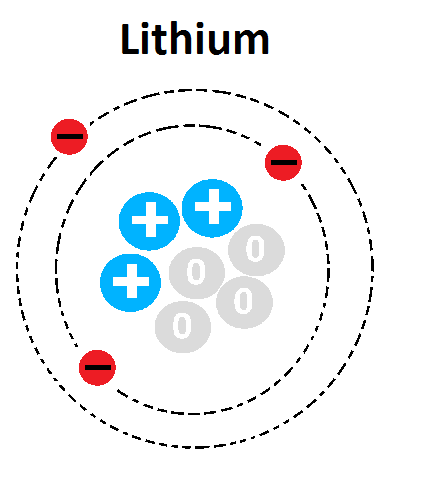
What is the central part of an atom called?
neutron
proton
nucleus
electron
The positive particle is called...
neutron
proton
nucleus
electron
This atom is neutral. How can you figure this out from the diagram?
there's the same number of electrons and neutrons
there's the same number of electrons and protons
there are 2 electrons on the first shell
there are 3 protons inside the nucleus
The electron configuration of this atom is:
5, 3
3, 1
1, 2
2, 1
The atomic number of this atom is:
3
4
7
0
The mass number of this atom is:
3
4
7
0
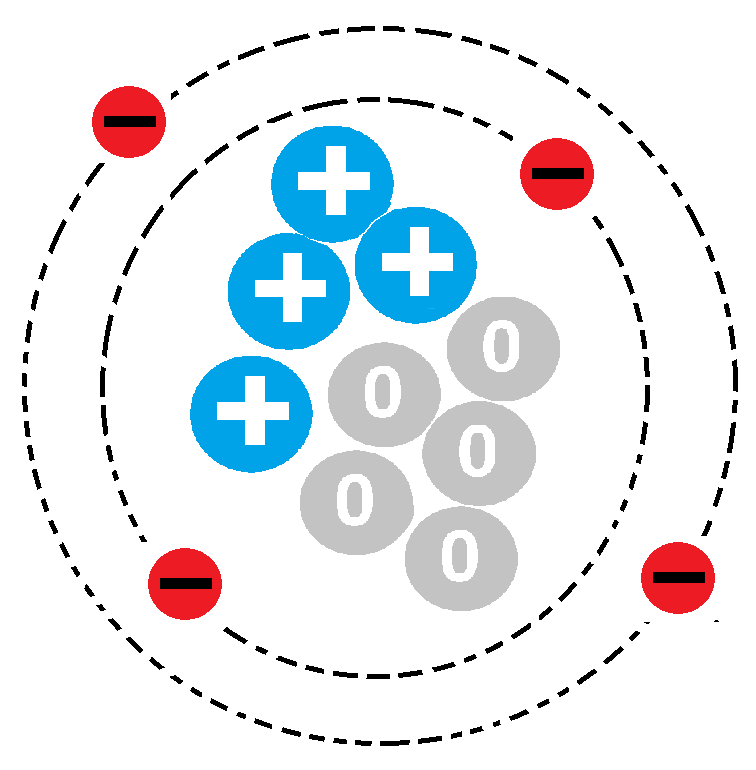
What is the atomic number of this atom?
4
5
9
none of the above

What is the mass number of this atom?
4
5
9
none of the above

What is the atomic number of this atom?
9
10
19
27

The electron configuration of Neon is:
(8, 2)
(1, 9)
(8, 8)
(2, 8)
What would this atom do to become an ion?
gain 6 electrons
lose 2 electrons
lose 4 protons
gain 5 neutrons
What would this atom do to become an ion?
lose 1 electron
gain 3 protons
lose the nucleus
gain 7 electrons
What would this atom do to become an ion?
lose 8 electrons
gain 2 protons
this atom is already stable so it won't make an ion
gain 8 electrons


What is the picture displayed?
atom
element
molecule
compound


The following is a:
Compound
Element
Mixture of elements
Mixture of compounds

Atom, element, compound or mixture?
atom
element
compound
mixture

H2O

element
compound
mixture

element
compound
mixture
What type of elements will form an ionic bond?
Metal + Metal
Non-metal + Non-metal
Metal + Non-metal
None of the above
Which of the following compound is ionic?
NO2
NaCl
CO
CH4
Ionic compounds such as sodium chloride have very high melting points.
True
False
Ionic compounds have high melting points because
they have lots of strong electrostatic bonds arranged in a 3-D lattice
they have lots of electrons
they have lots of protons
they have lots of strong covalent bonds

Which picture is a mixture?
A
B
C
D

This image represents
A mixture of compounds and elements
Atoms of a pure solid
A gaseous compound
A solid mixture
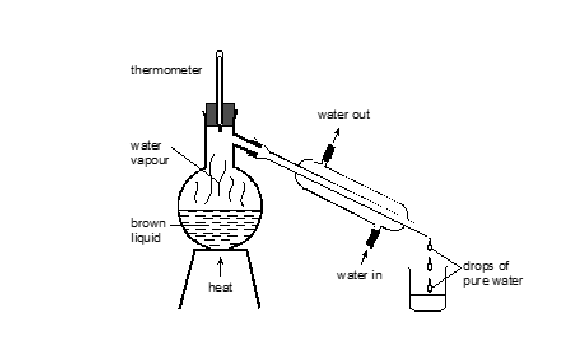
Distillation could be used to separate
a mixture of water and salt (sodium chloride)
a mixture of water and sand
a mixture of 5 coloured inks
a mixture of sand and gravel
Which factors affect the rate of a reaction?
temperature
concentration
surface area
pressure
catalyst
A temperature increase causes the particles to ......
to slow down
move faster
collide higher
in the right order
Why does a higher concentration increase the rate of reaction?
it increases the amount of reactants
it lowers the activation energy
it increases the energy of particle collisions
it increases the frequency of particle collisions
Why does a higher temperature increase the rate of a reaction?
it increases both the frequency and energy of particle collisions
it only increases the frequency of particle collisions
it only increases the energy of particle collisions
it reduces the activation energy of the reaction
Grinding a soluble tablet into powder increases the rate of reaction due to increased
concentration
surface area
temperature
reactants
A temperature increase causes the particles ......
to slow down
move faster
collide higher
in the right order
Choose the more reactive metal
sodium
potassium
Choose the least reactive metal
calcium
magnesium
iron
copper
Choose the less reactive metal
copper
gold
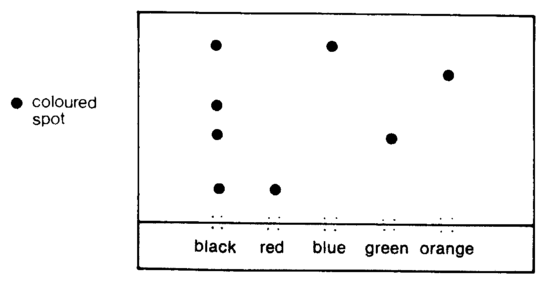
On the chromatogram given................................is a mixture.
red
orange
green
black
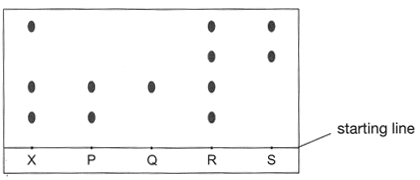
The diagram below shows a chromatogram obtained when a sample X was analysed together with four other known dyes P, Q, R and S. Dye Q was known to cause cancer. Which of the following dye(s) is/are safe for use?
P only
S only
P and S
P and X
Which coloured inks are pure?
red
orange
green
blue
A(n) _______ is a substance with a pH greater than 7.
Alkali
Acid
Buffer
Water
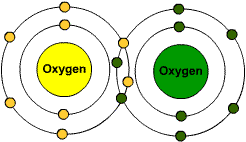
Non-metal + non-metal
covalent
ionic
Makes a squeaky pop sound when lit
Hydrogen
Oxygen
Chlorine
Ammonia
What is the relative formula mass of NaOH?
Na= 23
O= 16
H= 1
20
39
40
45
What is the RFM of NaCl ?
Na= 23
Cl= 35
58
57
60
62
For surfacing roads and roofs
petrol
bitumen
fuel oil
kerosene
Petrol is used for:
A. gas stoves
B. surfacing roads
C. as fuel for cars
D. as fuel for lorries
Molecules collected at the bottom of the fractionating column tend to be...
A. heavier, more viscous and less flammable
B. lighter, more viscous and less flammable
C. heavier, less viscous and less flammable
D. heavier, more viscous and more flammable
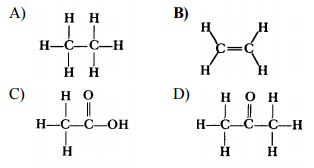

propane
butane
pentane
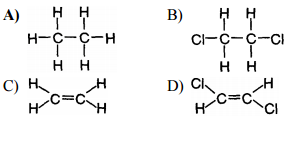
Which formula represents ethene?
A
B
C
D
Which compound would make bromine water colourless?
A
B
C
D
The initial temperature was measured to be 20oC and the final temperature was 45oC. The reaction was
exothermic
endothermic
The initial temperature was measured to be 20oC and the final temperature was 10oC. The reaction was
exothermic
endothermic
You have 20 g of water. Specific heat (c) of water is 4.18. Temperature changes from 20° C to 25° C. How much heat energy (Q) moves from the surroundings to the water?
Use the formula: Q = mc∆t
418 J
209 J
83 J
4.18 J
The mass of a catalysts in a chemical reaction
stays the same
increases
decreases
The alkali metals get ......................... as you go down the group.
more
less
Which equation is balanced?
Na + Cl2 --> NaCl
2Na + Cl2 --> NaCl
2Na + Cl2 --> 2NaCl
Na + 2Cl2 --> NaCl

