wayground logo

Free Printable Worksheets

Font size

S
M
L
XL
Worksheets

Periodic Table Test

Total questions: 70

Worksheet time: 1hrs 13mins

Name
Class
Date
1.

What is the atomic number of this element?

a)

26

b)

55

c)

58

d)

84

2.

What element has an atomic number of 79?

a)

Selenium (Se)

b)

Bromine (Br)

c)

Gold (Au)

d)

Neon (Ne)

3.

It is the number of this particle that determines which element an atom is....

a)

proton

b)

neutron

c)

electron

d)

atomic mass unit

4.

How many protons does a neutral atom of this element have?

a)

61

b)

107

c)

108

d)

47

5.

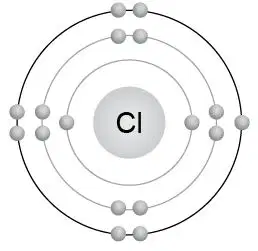
How many electrons does a neutral atom of this element have?

a)

61

b)

107

c)

108

d)

47

6.
What element does the Bohr Model represent?
a)
Nitrogen
b)
Potassium
c)
Sodium
7.
In the modern periodic table elements are arranged by:
a)
atomic mass
b)
atomic number
c)
valence electrons
d)
number of isotopes
8.
Each column in the periodic table is called a 
a)
period
b)
group
c)
cluster
d)
unit
9.
The atomic number tells you what?
a)
number of electrons
b)
number of protons
c)
number of neutrons
d)
both electrons and protons in an atom.
10.
Calcium is most like which of the following?
a)
Barium
b)
Potassium
c)
Cesium
d)
Nitrogen
11.
Beryllium is in group number______.
a)
Group 2
b)
Group 3
c)
Group 4
d)
Group 7
12.
The period for Bromine is ___________.
a)
3
b)
2
c)
4
13.
What is the name of the group that never reacts--ever ever they are stable with a full outermost ring!!!
a)
noble gases
b)
transition
c)
halogens
d)
borons
14.
What is the chemical symbol for Lithium?
a)
H
b)
He
c)
Li
d)
N
15.
The number at the bottom of each square on the periodic table is the ...
a)
atomic number
b)
atomic mass
c)
chemical symbol
d)
element name
16.
The number at the top of each square on the periodic table is the ...
a)
atomic number
b)
atomic mass
c)
Chemical Symbol
d)
Element Name
17.
The horizontal row on the periodic table is called a
a)
group
b)
family
c)
period
d)
atomic number
18.
Which element is found in group 16 period 3?
a)
Sulfur (S)
b)
Selenium (Se)
c)
Chlorine (Cl)
d)
Carbon (C)
19.
Which element is found  in group 17 period 3?
a)
Chlorine
b)
Flourine
c)
Oxygen
d)
Phosphorous
20.
Which element is found in period 3 group 2?
a)
Sodium (Na)
b)
Magnesium (Mg)
c)
Yttrium (Y)
d)
Boron (B)
21.
Which element is found in group 1 period 2
a)
Lithium
b)
Magnesium
c)
Beryllium
d)
Potassium
22.
Which element is found in group 2 period 7?
a)
Radium (Ra) 
b)
Radon (Rn)
c)
Stontium (Sr)
d)
Lutetium (Lu)
23.

Which of the following will have similar properties?

a)

O, S, Se

b)

O, F, Ne

c)

N, Ne, Na

d)

H, K, P

24.

Elements in the same group have : (2 correct answers)

a)

Similar chemical properties

b)

Similar names

c)

Same number of outer (valence) electrons)

d)

The same number of protons

25.

The blue elements (left side) are called 

a)
metals
b)
nonmetals
c)
metalloids
d)
noble gases
26.

The yellow elements (right side) are called 

a)
metals
b)
nonmetals
c)
metalloids
d)
noble gases
27.
The atoms along the staircase are called 
a)
metals
b)
nonmetals
c)
metalloids
d)
noble gases
28.
Elements in the same column of the periodic table always have the same # of _______ as one another.
a)
Protons
b)
Neutrons
c)
Electrons
d)
Valence Electrons
29.
a)
2
b)
3
c)
5
30.
How many valence electrons are in an atom of Ar?
a)
2
b)
8
c)
4
d)
1
31.
How many valence electrons are in an atom of K?
a)
3
b)
8
c)
4
d)
1
32.

All of the elements in a group have the same number of _____.

a)

energy levels

b)

valence electrons

c)

protons

d)

electrons

33.

Is this the correct Bohr model for silicon (Si)?

a)

Yes

b)

No

34.

Is this the correct Bohr model for carbon (C)?

a)

Yes

b)

No

35.
a)
Periods
b)
Groups
36.

Label the following periodic table

37.

​ ​ (a)   readily gain electrons​

Choose from the below words
non-metals
alkali metals
alkaline earth metals
metalliods
38.

​ (a)   donate electrons

Choose from the below words
metals
noble gasses
halogens
non-metals
39.

What happens to the number of shells as you move down a group?

a)

They decrease by 1

b)

They increase by 1

c)

Nothing

40.

Which statement correctly and completely identifies a trend?

a)

Atomic radius decreases across a period and increases down a group.

b)

Electronegativity decreases across a period and decreases down a group.

c)

Ionization energy increases across a period and increases down a group.

d)

Ionic radius increases across a period and increases down a group.

41.

Reorder the following elements from LOWEST to HIGHEST period number.

a)

helium

b)

beryllium

c)

phosphorous

d)

calcium

e)

iodine

1)
2)
3)
4)
5)
42.

What is 4?

43.

What is the atomic number of this element?

a)

17

b)

18

c)

35

d)

52

44.
How are elements on the periodic table arranged by?
a)
in alphabetic order
b)
simular physical & chemical properties
c)
their symbols
d)
Just simular physical properties
45.

Find an element with similar chemical properties to Barium (Ba).

a)

Ca an Ra, because they are in the same group and have similar chemical properties.

b)

Cs and La, b/c they are in the same period number.

c)

Ca and Y, b/c they are 90 degree angle and have similiar properties.

d)

No elements are similar

46.
A group of elements that includes the most active of the elements is the -
a)
halogens.
b)
noble gases.
c)
nitrogen group.
d)
alkaline earth metals.
47.
Which elements are most likely to react in the same manner in a chemical reaction?
a)
elements in the same group
b)
elements in the same period
c)
elements with similar atomic masses
48.
as you move from left to right on the periodic table, elements become
a)
Less Metallic
b)
more metallic
c)
more reactive
d)
less reactive 
49.

Which statement correctly and completely identifies a trend?

a)

Atomic radius decreases across a period and increases down a group.

b)

Electronegativity decreases across a period and decreases down a group.

c)

Ionization energy increases across a period and increases down a group.

d)

Ionic radius increases across a period and increases down a group.

50.

Elements in the same group (family) of the periodic table always have the same number of _______.
a)
Protons
b)
Neutrons
c)
Electrons
d)
Valence Electrons
51.
Lithium is in Group 1A, Period 2 of the periodic table. Which statement describes the charge of the ion it typically forms?
a)
It forms a cation with +2 charge.
b)
It forms a cation with a +1 charge.
c)
It forms an anion with a +1 charge.
d)
It forms an anion with a −1 charge.
52.
The elements K, Ca, Se, Kr, and Ga all appear in Period 4 of the Periodic Table. Which arrangement, from left to right, orders them with respect to their atomic size, from largest to smallest?
a)
K; Ca; Se; Kr; Ga
b)
Ca; Ga; K, Kr; Se
c)
K; Kr; Se; Ca; Ga
d)
K; Ca; Ga; Se; Kr
53.
A mystery element has 18 protons. Which one of the following statements is true about the element?
a)
The element belongs in row 2 of the periodic table and is classified as a halogen.
b)
The element belongs in row 3 of the periodic table and is classified as a noble gas.
c)
The element belongs in row 4 of the periodic table and is classified as an alkali metal.
d)
The element belongs in row 5 of the periodic table and is classified as an alkaline earth metal.
54.
The list identifies various properties of four elements: Element 1 is a gas at room temperature. Element 2 is a solid which conducts electricity. Element 3 is a gas with an effective nuclear charge of +7. Element 4 is malleable and can take the form of a shiny solid sheet. Based on this list, which elements are metals?
a)
Elements 1 and 3
b)
Elements 1 and 4
c)
Elements 2 and 3
d)
Elements 2 and 4
55.
The diagram shows the electron configuration around the chlorine nucleus. Chlorine has 17 protons. Which of the following correctly completes the statement? Chlorine has ____ valence electrons, and the effective nuclear charge for the chlorine atom shown is ______.
a)
7; 7+
b)
7; 7−
c)
10; 7−
d)
17; 7+
56.
With the exception of He, how many valence electrons do noble gases have?
a)
3
b)
4
c)
6
d)
8
57.
Which is a halogen?
a)
Helium
b)
Chlorine
c)
Oxygen
d)
Neptune
58.
Which is an alkali metal?
a)
Magnesium
b)
Iron
c)
Sodium
d)
Europium
59.

Check all that are Alkali Metals

a)

Li

b)

Br

c)

Fe

d)

Ca

e)

Na

60.
What will nitrogen's charge be as an ion?
a)
+3
b)
-3
c)
0
d)
-1
61.
Electronegativity is...
a)
the ability of an atom to attract/ accept electrons
b)
the ability of an atom to lose electrons
c)
the energy required to remove an electron from a specific atom
d)
how easy it is to make friends. 
62.

What type of elements are poor conductors of heat and electricity?

a)

transition metals

b)

inner transition metals

c)

metals

d)

nonmetals

63.

What type of elements are malleable and ductile?

a)

noble gases

b)

nonmetals

c)

metals

d)

halogens

64.
Which of the following will have a larger radius than Zinc?
a)
Gallium
b)
Aluminum
c)
Magnesium
d)
Strontium
65.

If a potassium atom lost one electron, what would be the symbol for that ion?

a)
b)
c)
d)
66.
Which element is a metalloid?
a)
Titanium
b)
Selenium
c)
Potassium
d)
Polonium
67.
Which table below correctly lists the properties of metals and nonmetals? *
a)
A
b)
B
c)
C
d)
D
68.

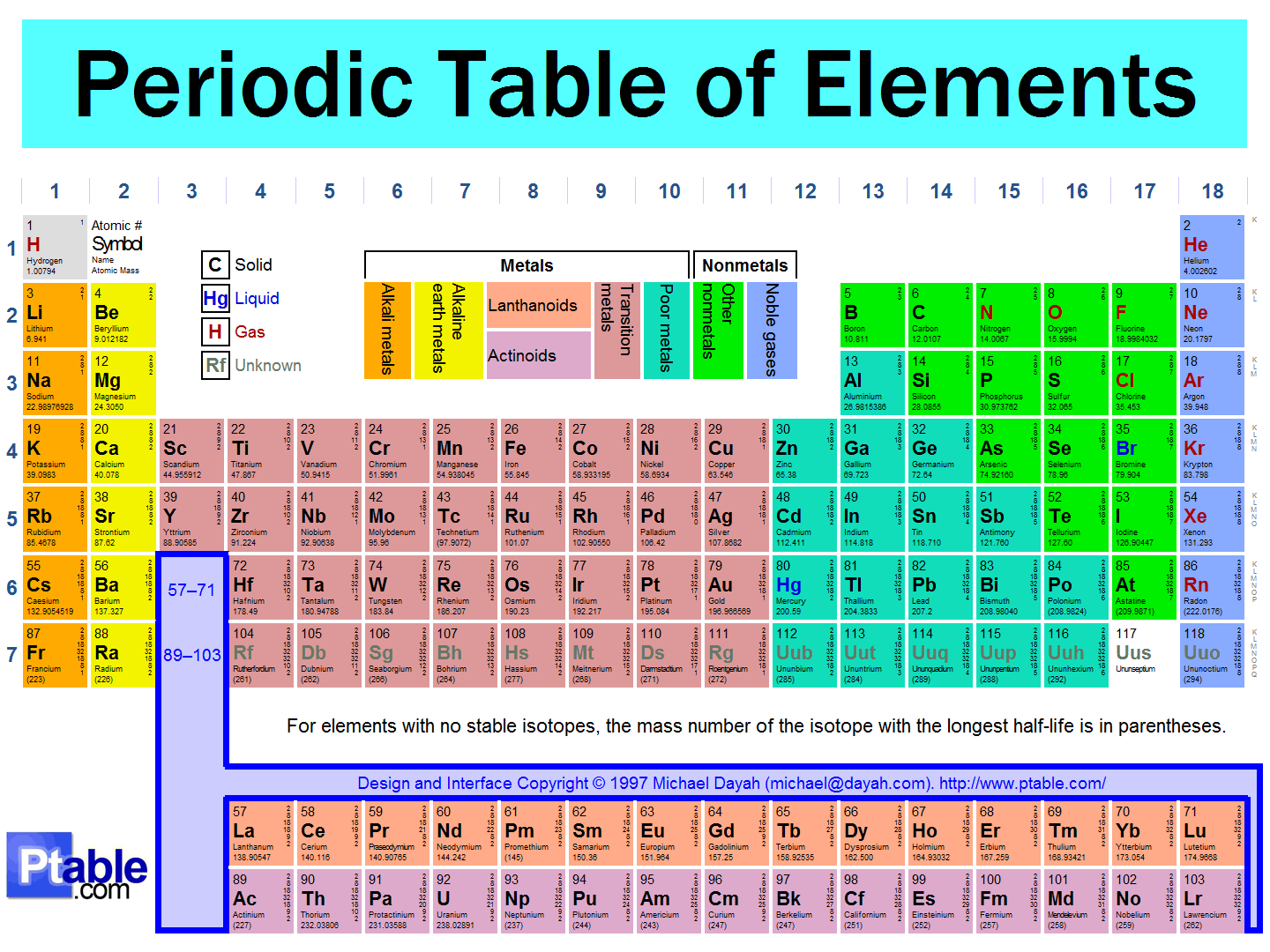
Copper, carbon, and fluorine are elements found on the periodic table. Which of the following statements about these elements at room temperature is accurate? (Use the periodic table

a)

Carbon is malleable and conducts electricity.

b)

Copper is malleable and conducts electricity.

c)

Fluorine is malleable and conducts electricity.

d)

All three elements are metals.

69.
Most of the elements on the periodic table are classified as _____.
a)
Metals
b)
Nonmetals
c)
Metalloids
d)
Periods
70.
What group does this element belong to?
a)
Group 1: Alkali metals
b)
Group 18: Noble Gases
c)
Group 2: Alkaline-Earth Metals
d)
Group 17: Halogens