
 Worksheets
Bonding & Naming Review
Total questions: 65
Worksheet time: 16hrs 15mins
What two types of atoms make a covalent bond?
2 non-metals
1 metal and 1 non-metal
2 metals
What type of bond involves the sharing of electrons between atoms?
covalent bond
ionic bond
metallic bond
transfer bond
Identify the following compound as ionic or covalent: SO2
ionic
covalent
Identify the following compound as ionic or covalent: Ca(OH)2
ionic
covalent
When naming covalent compounds,
roman numerals are needed but no prefixes required
both roman numerals or prefixes are not required
both roman numerals and prefixes must be included
prefixes are needed but roman numerals are not required
Select the correct formula for the
COVALENT COMPOUND
diphosphorus trioxide
PO
P3O2
PO2
P2O3
Select the correct formula for the
COVALENT COMPOUND
carbon tetrachloride
CCl
CCl2
C4Cl2
CCl4
Is the formula S4N4 an ionic or covalent compound?
ionic
covalent
A Metal + Nonmetal compound is a(n)...
ionic compound
covalent compound
In a(n) ________ electrons are transferred from one atom to another
ionic compound
covalent compound

How many VALENCE ELECTRONS does Chlorine have?
2
7
8
10
17

Ionic bonds are formed when electrons get
Shared between two atoms
Removed from both atoms
Transferred from one atom to another
Added to both atoms

Ionic bonds typically form between
A metal and a nonmetal
Two nonmetals
Two metals
A metalloid and a metal

What is the correct formula for Sodium Chloride?
SCl
NaCl
SC
NaCl2

Name this ionic compound: Al2O3
Dialuminum oxide
Aluminum oxygen
Oxygen Aluminide
Aluminum oxide
If you were to draw the lewis dot structure for Germanium (Ge), how many dots would you put around it?
2
4
6
8

Cations _______ electrons, becoming _______ charged.
Gain; positively (+)
Gain; negatively (-)
Lose; positively (+)
Lose; negatively (-)

Anions ____ electrons, becoming _____ charged.
Gain; positively (+)
Gain; negatively (-)
Lose; positively (+)
Lose; negatively (-)

Metals (like Na) typically _____ electrons in the formation of ionic bonds.
Gain
Lose
Keep the same

Nonmetals (like Cl) typically ____ electrons when they form ionic bonds.
Gain
Lose
Keep the same

Using the model for the formation of Scandium Fluoride (an ionic compound), write the chemical formula.
Sc3F
Sc3F3
Sc+3F-1
ScF3
Lead Chloride is an ionic compound, made up from Pb2+ ions and Cl- ions. Which is the correct formula for this compound?
PbCl3
PbCl
PbCl4
PbCl2
Magnesium Hydroxide is an ionic compound made up from Mg2+ and OH- ions. Which is its correct formula?
MgOH
MgOH2
Mg(OH)2
MgO
The correct name for Cu(CN)2 is __.
copper (I) cyanide
carbon cyanide
carbon carbonate
copper (II) cyanide
copper (I) nitride
The name of the compound (NH4)3PO4 is:
tetrammonium phosphate
ammonium phosphate
nitrogen hydrogen phosphate
ammonia phosphide
triammonium phosphate
What is the correct formula for aluminum hydroxide?
AlOH
Al2(OH)3
Al3(OH)2
Al(OH)3
Al(OH)2
In the compound CoSO4, what is the charge on cobalt?
+4
+2
-2
-1
What is the correct name for Ni2(SO4)3
Nickel (I) sulfide
Nickel (II) sulfate
Nickel (III) sulfate
Nickel (III) sulfite
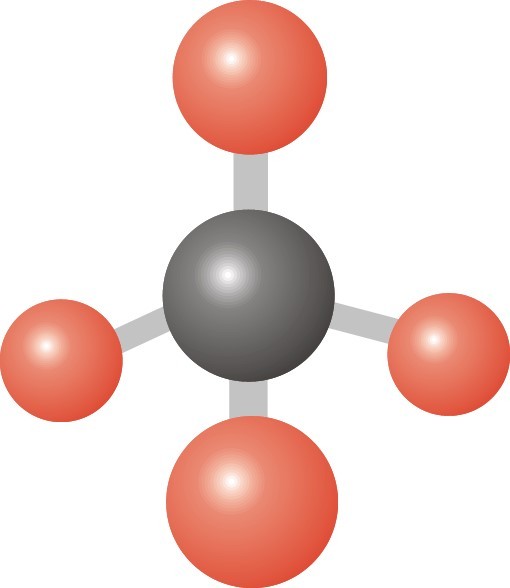
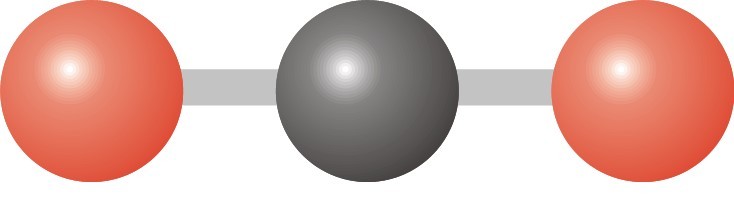
What molecular geometry would PH3 have?
Trigonal Pyramidal
Trigonal Bipyramidal
Bent
Linear

Molecules such as boron trichloride that have three bonded atoms and no unshared pairs have what shape?
trigonal planar
trigonal pyramidal
trigonal bipyramidal
tetrahedral

When naming ionic compounds with transition metals you need to include roman numerals to show the _____ of the metal..
atomic number
mass number
charge
ionization energy
Which of the following combinations would need roman numerals in the name?
potassium + fluorine
beryllium + oxygen
boron + iodine
gold + oxygen
LiBr is called
lithium bromine
lithium (I) bromine
lithium bromide
lithuim (I) bromide
Name the following ionic compound: Cs2S
cesium sulfide
cesium sulfate
cesium II sulfate
cesium II sulfide
When naming acids with poly-atomic ions, change "-ite" to:
-ate
-ic
-ous
-ite
When naming acids with poly-atomic ions, change "-ate" to:
-ate
-ic
-ous
-ite
What is the formula for Magnesium Chloride?
MgCl
Mg2Cl
MgCl2
What is the formula for Magnesium Phosphide?
Mg3P2
Mg2P3
Mg2P
Mg3P
Name the following compound: FeCl3
iron chloride
iron III chloride
iron II chloride
iron III chlorate
100.00
0.000008
How many sig figs?
3.80 x 10⁻⁴ L
5
4
3
2

Student A
Student B
Student C
Cannot be determined
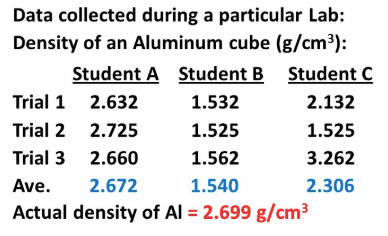
Which student is the most ACCURATE?
A
B
C
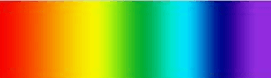
A beam of light has a wavelength of 6 x 10⁻⁷ m in air. What is the frequency of the light (c = 3x10⁸ m/s)?
5 x 10¹⁴ Hz
2 x 10¹⁴ Hz
3 x 10¹⁴ Hz
6 x 10¹⁴ Hz

