wayground logo

Free Printable Worksheets

NEW

Font size

S
M
L
XL
Worksheets

Astronomy

Total questions: 57

Worksheet time: 42mins
Name
Class
Date
1.
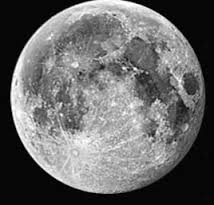
Name the moon phase
a)
First Quarter
b)
Last Quarter
c)
New Moon
d)
Full Moon
2.
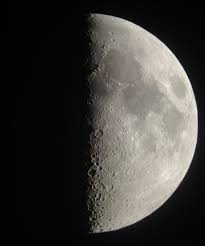
Name the moon phase
a)
First Quarter
b)
Last Quarter
c)
New Moon
d)
Full Moon
3.
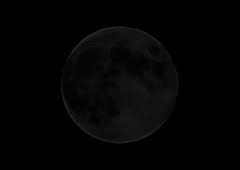
Name the moon phase
a)
First Quarter
b)
Last Quarter
c)
New Moon
d)
Full Moon
4.
Name the phase of the moon for letter a
a)
First Quarter
b)
Last Quarter
c)
Waxing Gibbous
d)
Waning Gibbous
5.
Name the phase of the moon for letter f
a)
Waning Gibbous
b)
Waxing Gibbous
c)
Waning Crescent
d)
Waxing Crescent
6.
What is illuminating the Moon?
a)
Nuclear Fusion
b)
Sunlight
c)
Mirrors
d)
Flood Lights
7.
Name the moon phase
a)
waning crescent
b)
waxing crescent
c)
waning gibbous
d)
waxing gibbous
8.

The cycle of the moon around Earth lasts about a _.

a)

day

b)

year

c)

week

d)

month

9.
How many phases does the moon go through?
a)
4
b)
8
c)
10
d)
16
10.
The moon ____________ or goes around the Earth.
a)
orbits
b)
cries
c)
climbs
11.
As the moon's shape appears to get smaller, we say that the moon is _.
a)
swelling
b)
waxing
c)
waning
d)
disappearing
12.

Phases of the moon in which the moon appears to be getting larger are referred to as _. (most amount of light)

a)

waxing

b)

waning

c)

new

d)

eclipse

13.
The phase of the moon that occurs between the sun and Earth
a)
Full moon
b)
Waxing crescent
c)
Waning Crescent
d)
New Moon
14.
What are the reasons for the season?
a)
Earth's tilt & rotation
b)
Earth's tilt & revolution
c)
Earth's rotation & revolution
d)
Earth's tilt & resolution
15.

What is a high tide?

a)

Sea pulled TOWARD the moon where Earth is CLOSEST to the moon

b)

Sea pulled AWAY from the moon where Earth is FARTHEST to the moon

c)

Sea pulled AWAY from the moon where Earth is CLOSEST to the moon

16.
Which body has the greater effect on Earth's tides?
a)
Sun
b)
Saturn
c)
Moon 
d)
Venus
17.

Wha type of tide would this arrangement of earth-moon-sun create?

a)

full moon tide

b)

new moon tide

c)

neap tide

d)

spring tide

18.
What type of tides would this arrangement of earth-moon-sun create?
a)
neap tide
b)
spring tide
c)
new moon tide
d)
full moon tide
19.
Tides are caused by
a)
strong winds that blow over ocean waters.
b)
the interaction of Earth, the moon and the sun.
c)
the shifting of the plates on the ocean floor.
d)
variations in the salinity of ocean water
20.
What causes tides?
a)
gravity
b)
wind
c)
spring
d)
neap
21.
A solar eclipse only happens during a ________ moon.
a)
New
b)
Cresent
c)
Gibbous
d)
Full
22.
In order to have an eclipse, the Moon, Sun and Earth have to be?
a)
Below each other
b)
Above each other
c)
In alignment
23.
a)
solar eclipse
b)
lunar eclipse
24.

A lunar eclipse occurs at which moon phase?

a)

quarter moon

b)

new moon

c)

crescent moon

d)

full moon

25.
The sun and all of the planets and other bodies that travel around it. 
a)
Universe 
b)
Galaxy 
c)
Star
d)
Solar System 
26.
A collection of stars, dust, and gas bound together by gravity.
a)
Nebula
b)
Galaxy 
c)
Universe
d)
Protostar
27.
The distance that light travels in one year; about 9.46 trillion kilometers.
a)
Light Year
b)
Light Kilometer 
c)
Light Second 
d)
Warp Speed
28.
Which of the following is the largest?
a)
star
b)
universe
c)
cluster
d)
galaxy
29.
What is the center of our solar system?
a)
moon
b)
earth
c)
sun
d)
Jupiter
30.
Which one takes 24 hours?
a)
rotation
b)
revolution
31.
What describes the earth going around the sun?
a)
rotation
b)
revolution
32.
Which one takes one year?
a)
rotation
b)
revolution
33.
What is the sun?
a)
a star
b)
a comet
c)
a planet
d)
an asteroid
34.
When the southern hemisphere has winter, what season does the northern hemisphere have?
a)
winter
b)
spring
c)
summer
d)
fall
35.
What season is it in the Southern Hemisphere when it is fall in the Northern Hemisphere?
a)
winter
b)
spring
c)
summer
d)
fall
36.
What would seasons be like if Earth's axis were straight up and down?
a)
Seasons would be the same.
b)
Seasons would be more extreme.
c)
There would be no seasons.
d)
Seasons would vary. 
37.

Put the following in the correct order from largest to smallest

a)

universe, solar system, milky way, sun, earth, clarence

b)

clarence, earth, sun, milky way, universe

c)

universe, milky way galaxy, solar system, sun, earth, clarence

d)

milky way, universe, solar system, sun, earth, clarence

38.
Period during rotation when Earth is facing the Sun and it is lighted
a)
rotation
b)
day
c)
night
d)
shadow
39.

______ % of the earths surface faces the sun at any given time. So ________ % experiences day while _______ % experiences night

a)

50, 50, 50

b)

100, 20, 80

c)

50, 40, 60

d)

40, 40, 40

40.

If it is 10:03 AM here, it is ____________ in China (exact opposite side of the world)

a)

10:03 AM

b)

10:03 PM

c)

12:03 PM

d)

1:00 PM

41.

Which of these have the most gravity?

a)

Sun

b)

Moon

c)

Earth

d)

Jupiter

42.

The four OUTER planets are _________

a)

large and made of gases

b)

small and rocky

43.

True or False:


The 4 inner planets are rocky.

a)

True

b)

False

44.

How many planets orbit between mars and the sun?

a)

1

b)

2

c)

3

d)

4

45.

Which date below has the most hours of daylight in Melbourne, Australia (located in the Southern Hemisphere)?

a)

December 21st

b)

September 21st

c)

May 21st

d)

April 21st

46.

About how many starts on average are in our solar system?

a)

1

b)

millions

c)

100

d)

trillions

47.

If the sun stopped shining right now, when would we notice it here on Earth?

a)

in about 8 minutes

b)

in about 8 days

c)

in about 8 months

d)

in about 1 year

48.

What causes the angle of the sun's rays to change during the year on the Northern Hemisphere of Earth?

a)

Tilt of Earths Axis

b)

How close it is to the sun

c)

The length of day

49.

If you live in the SOUTHERN hemisphere, during which months does autumn occur?

a)

December, January, February

b)

March, April, May

c)

June, July, August

50.

Why do we see the phases of the moon during a month?

a)

Because the moon revolves around the sun

b)

It depends on how many hours of daylight we had that day.

c)

It is due to our perspective as the moon revolves around earth.

51.
How many high tides does a place have each day?
a)
3
b)
4
c)
5
d)
2
52.
Tides are the cycle of rising and falling ocean water that repeats automatically every
a)
24 hours
b)
12.5 hours
c)
25 hours
d)
6.25 hours
53.

What would you expect to happen to the number of high tides if the rate of earth's rotation doubled?

a)

They would occur twice as often

b)

They would occur half as much

c)

They would occur at the same rate

54.
What do June 21 and December 21 have in common?
a)
equinox dates
b)
the moon is full
c)
solstice dates
d)
the cold fronts blow in
55.

What happens to our shadow when the sun is low in the sky?

a)

It gets shorter

b)

It gets longer

c)

It is not visible if it is sunny

56.
Which of the following best describes the tilt of the earth when it is summer in the southern hemisphere?
a)
The northern hemisphere is tilted toward the sun
b)
The northern hemisphere is tilted away from the sun
c)
The norther hemisphere is tilted neither toward or away from the sun
d)
Why are you talking about the northern hemisphere when you asked about the southern hemisphere?
57.
Which  of the following best describes the tilt of the earth during the spring and fall equinoxes?
a)
The earth is tilted away from the sun (Northern hemisphere)
b)
The earth is tilted neither toward or away from the sun (tilt is side to side)
c)
The earth is tilted toward the sun (Northern hemisphere)
d)
The earth is not tilted during spring and fall