
 Worksheets
final 18-19
Total questions: 150
Worksheet time: 6hrs 2mins
Name
Class
Date
1.
Is sugar (C12H22O11) an element or a compound?
a)
Element
b)
Compound
2.
When the nails were left outside and allowed to rust during the substance detector activity, what new substance was created?
a)
Mud
b)
Rust
c)
Grass
d)
Water
3.
Is water an element or a compound?
a)
Element
b)
Compound
4.
The properties of the elements that make up a compound are usually very similar to the compound itself.
a)
True
b)
False
5.
Water (H2O) freezing is an example of:
a)
A chemical change
b)
A physical change
6.
When we mixed milk and vinegar in the lab demonstration, a/an ______________ was created.
a)
cheese
b)
new food
c)
precipitate
d)
element
7.
Contains only one kind of atom.
a)
Element
b)
Compund
c)
Mixture
8.
Contains two or more atoms combined
a)
Elements
b)
Compounds
c)
Mixtures
9.
The air is a _________.
a)
element
b)
mixture
c)
compound
d)
energy
10.
Elements can be broken down into simpler substances.
a)
false
b)
true
c)
sometimes
11.

Examples are milk and gasoline.
a)
elements
b)
mixtures
c)
compounds
12.
Examples are diamonds (C) and Uranium (U)
a)
elements
b)
mixtures
c)
compounds
13.
Is sugar (C12H22O11) an element or a compound?
a)
Element
b)
Compound
14.
What is H2SO4
made up of?
made up of?
a)
2 hydrogen, 1 sulfur, 4 oxygen
b)
1 hydrogen, 2 sulfur, 4 oxygen
c)
2 hydrogen & 4 sodium
d)
1 hydrogen & 6 sodium
15.
An element is made up of only one kind of _____.
a)
isotope
b)
plastic
c)
atom
d)
metal
16.
In general, metals are _____.
a)
poor conductors of heat
b)
brittle
c)
poor conductors of electricity
d)
good conductors of heat
17.

Classify the picture with the correct label.
a)
Element
b)
Compound
c)
Mixture of Elements
d)
Mixture of Compounds
18.

Classify the picture with the correct label.
a)
Element
b)
Compound
c)
Mixture of Elements and Compounds
d)
Mixture of Elements
19.

Classify the picture with the correct label.
a)
Element
b)
Compound
c)
Mixture of Elements & Compounds
d)
Mixture of Compounds
20.

Classify the picture with the correct label.
a)
Compounds
b)
Mixture of Elements
c)
Mixture of Compounds
d)
Mixture of Elements & Compounds
21.

Classify the picture with the correct label.
a)
Mixture of Elements
b)
Compound
c)
Mixture of Compounds
d)
Element
22.

Classify the picture with the correct label.
a)
Element
b)
Compound
c)
Mixture of Compounds
d)
Mixture of Elements
23.
Which of the following represents an element?
a)
H2O
b)
H2
c)
NaCl
d)
CaCO3
24.
Which of the following is not a compound?
a)
HCl
b)
Cl
c)
NaCl
d)
CO2
25.
What is made up two or more elements that are chemically combined?
a)
Element
b)
Mixture
c)
Compound
d)
Solids
26.
Which of these grouping of elements could have the characteristic of luster (shiny)?
a)
Metal
b)
Nonmetal
c)
metalloids
d)
Both metals and metalloids
27.
Which of these is a property of metals?
a)
It's malleable
b)
It can't conduct electricity
c)
They are used in food
d)
It's very brittle
28.
Brittle
a)
Metal
b)
Nonmetal
29.
Good conductor of heat
a)
Metal
b)
Nonmetal
30.

Which element is a metalloid?
a)
Titanium
b)
Selenium
c)
Potassium
d)
Polonium
31.
All of the following would classify an element as a metal except?
a)
Dull
b)
Luster
c)
Malleable
d)
Hard
32.
Iron is a good conductor, malleable and magnetic. What type of element is Iron?
a)
Metal
b)
Nonmetal
c)
Metalloid
d)
Pretty
33.
A student is given a sample of an unknown substance. He is asked to determine if it is classified as a metal, a metalloid, or a nonmetal. He discovered that the unknown element conducted some heat and electricity, had a shiny luster, and broke easily. This element is most likely a
a)
metal
b)
nonmetal
c)
metalloid
d)
cannot be determined
34.
Which of the following is a property of a non-metal?
a)
Conducts electricity and heats well
b)
Can be hammered into thin sheets
c)
Is brittle and breaks easily
d)
Has a shiny, metallic luster
35.
All of the following are properties used to classify elements as metals, non-metals, and metalloids EXCEPT —
a)
texture
b)
conductivity
c)
luster
d)
malleability
36.
Which of the following correctly lists the three main groups of elements from greatest conductivity to least conductivity?
a)
Nonmetals -metalloids-metals
b)
metals-nonmetals-metalloids
c)
metalloids-metals-nonmetals
d)
metals-metalloids-nonmetals
37.
The word “luster” refers to which property of matter?
a)
The ability to conduct electrical or thermal energy
b)
Capable of being drawn out into thin wires
c)
The way a surface appears when it reflects light
d)
Suitable for being shaped by beating or rolling
38.
Silicon is a semiconductor and has properties of both metals and nonmetals. What type of element is Silicon?
a)
Metal
b)
Nonmetal
c)
Metalloid
d)
Pretty
39.
John was observing the physical properties of elements in order to classify them as either a metal, nonmetal, or metalloid. The first element was dull, brittle, and did not conduct heat. What would its classification be?
a)
metal
b)
nonmetal
c)
metalloid
40.
´Elizabeth was examining elements and their physical properties. She described an element is her science journal as having no shine, an insulator, and very brittle. What would this element be a metal, nonmetal, or metalloid?
a)
metal
b)
nonmetal
c)
metalloid
41.
If a material can easily be drawn into the shape of a wire, it is
a)
Ductile
b)
Magnetic
c)
Malleable
d)
Reactive
42.
If a substance is magnetic it is most likely a
a)
metal
b)
non-metal
43.
Which of these is a property of metals?
a)
It's malleable
b)
It can't conduct electricity
c)
They are used in food
d)
It's very brittle
44.
Which of the following is NOT a characteristic of most metals?
a)
Brittle
b)
Good conductor
c)
Ductile
d)
Malleable
45.
How do metals differ from nonmetals?
a)
metals are shiny, nonmetals are dull
b)
metals are good insulators, nonmetals are good conductors
c)
metals are powdery
d)
nonmetals are shiny
46.
At room temperature metals are ____________.
a)
plasma
b)
gases
c)
liquid
d)
solid
47.
Metals that can be used as wire are ____________.
a)
metallic
b)
shiny
c)
malleable
d)
ductile
48.
What are the three major categories of the periodic table?
a)
Alpha, Beta & Gamma
b)
Metals, Non-Metals and Metalloids
c)
Metals, Semi-metals and Metalloids
d)
Non-Metals, Semi-Metals and Metalloids
49.
Which of the following is a good conductor of heat?
a)
Metal
b)
Nonmetal
c)
Metalloid
50.
Which of these grouping of elements could have the characteristic of luster (shiny)?
a)
Metal
b)
Nonmetal
c)
metalloids
d)
Both metals and metalloids
51.
An object with which of the following densities will float on water?
a)
0.7 g/cm3
b)
1.2 g/cm3
c)
3.5 g/cm3
d)
11.4 g/cm3
52.
A block has a mass of 54g and a volume of 20cm3. What is the density of the block?
a)
74 g/cm3
b)
1080 g/cm3
c)
34 g/cm3
d)
2.7 g/cm3
53.
A can of Coke will sink in a bowl of water. A can of Diet Coke will float in a bowl of water. What does this tell you about the density of the Diet Coke?
a)
it is bigger than 1
b)
it is smaller than 1
c)
it is equal to 1
d)
it is equal to -1
54.
Why do ice cubes float in a glass of water?
a)
the ice cubes are more dense than the water
b)
the water is more dense than the ice cubes
c)
the water is more dense than the glass
d)
the ice is more dense than the glass
55.
Which property of matter is determined by dividing its mass by its volume?
a)
elasticity
b)
buoyancy
c)
density
d)
viscosity
56.
Will an object with a density of 1.01 g/cm3 float or sink?
a)
float
b)
sink
57.
A brick sinks in water while a wooden block of the same size floats. This is because the brick has a
a)
lower volume than the wooden block
b)
lower density than the wooden block
c)
higher volume than the wooden block
d)
higher density than the wooden block
58.
Will an object with a density of 0.999 sink or float in water?
a)
sink
b)
float
59.
What is the density of water?
a)
0 g/ml
b)
1 g/ml
c)
10 g/ml
d)
100 g/ml
60.
What is the density of a substance that has a mass of 30g and a volume of 6 liters?
a)
24 g/l
b)
5 g/l
c)
36 g/l
d)
180 g/l
61.
Why do some substances float on water?
a)
they are warmer than water
b)
they are cooler than water
c)
they are more dense than water
d)
they are less dense than water
62.
Which of these would be correct to put at the end of a density answer?
a)
g/cm
b)
cm3
c)
g/ml
d)
g/lb
63.
Helium balloons rise on earth because
a)
helium is less dense than air
b)
helium is more dense than air
c)
helium is cooler than air
d)
helium is warmer than air
64.
Which units of measurement are used for volume?
a)
grams
b)
centimeters
c)
grams/milliliter
d)
milliliter
65.

What is the volume of Object X?
a)
10.0 cm3
b)
15.0 cm3
c)
20.0 cm3
d)
25.0 cm3
66.

Find the volume of this piece of brass.
a)
50 g
b)
10 cm
c)
6 cm3
d)
12 cm3
67.

What is the volume of the fish?
a)
18.0 cm3
b)
6.0 cm3
c)
38.0 cm3
68.

Which box has a higher density?
a)
Box A
b)
Box B
c)
cannot be determined
d)
they are the same
69.

What kind of energy is in a moving skateboard?
a)
Potential
b)
Kinetic
70.
Energy due to motion is ____________ energy.
a)
Potential
b)
Energy
c)
Kinetic
d)
Friction
71.
The faster an object moves, the ________ kinetic energy it has.
a)
more
b)
less
c)
none of the above
d)
all of the above
72.
__________ is stored energy.
a)
Potential
b)
Kinetic
c)
None of the above
d)
All of the above
73.
Gravitational potential energy depends on the ________ and ________ of the object.
a)
Height and mass
b)
Friction and movement
c)
Mass and Movement
d)
Height and Friction
74.

What kind of energy is in a stretched rubber band?
a)
Potential
b)
Kinetic
75.
Energy can not be created or destroyed, only converted from one form to another.
a)
true
b)
false
76.
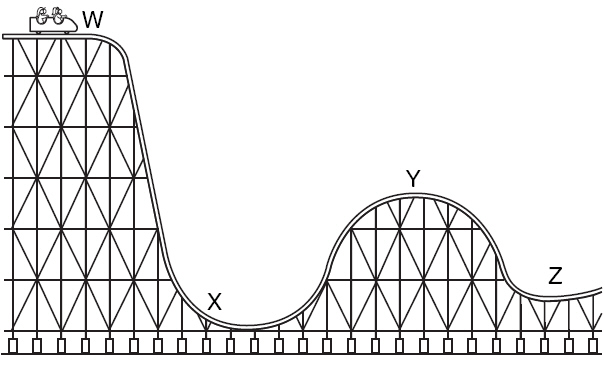
At which point is potential energy greatest?
a)
W
b)
X
c)
Y
d)
Z
77.

At which point is kinetic energy greatest?
a)
W
b)
X
c)
Y
d)
Z
78.
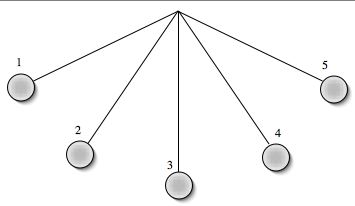
When a pendulum swings, at which point is kinetic energy highest?
a)
1
b)
2
c)
3
d)
4
79.
What is the speed of a car that travels 400 m in 20 minutes?
a)
20 miles/hr
b)
20 m/min
c)
800 m/min
d)
200 miles/hr
80.
A train travels 25 km in .5 hrs. How fast is the train going?
a)
25 miles/hr
b)
5 miles/hr
c)
125 km/hr
d)
50 km/hr
81.
What is the speed of a man who runs 10 miles in 1 hr?
a)
20 miles
b)
10 m/min
c)
10 miles/hr
d)
20 hrs
82.
What is the equation to calculate speed?
a)
speed = distance/time
b)
speed = time/distance
c)
speed = time x distance
d)
speed = speed/time
83.
Which of the following is a unit of speed ?
a)
sec
b)
mi
c)
m/s
d)
min
84.
Mr. Rudman speed walked 2 miles in 10 minutes, what is his speed?
a)
0.2 miles/min
b)
2 miles/min
c)
20 miles/min
d)
40 miles/min
85.
What is the speed of an object that travels 60 meters in 4 seconds?
a)
240 m/s
b)
15 m/s
c)
0.067 m/s
d)
15 mph
86.
What is speed?
a)
how far you go
b)
how much distance is covered over a period of time
c)
how fast you accelerate
d)
the change in the location of a object
87.
A runner races in the 100 meter dash. It takes her 10 seconds to finish. What is her average speed?
a)
10 m/s
b)
1000 m/s
c)
100 seconds
d)
10 seconds
88.
Marlon decided to visit Dallas, which is 210 miles away from Houston. His trip took him 3 hours to complete. Calculate his average speed.
a)
60 mph
b)
64 mph
c)
70 mph
d)
3 mph
89.
According to the Law of Conservation of Energy, energy cannot be _________ or ____________.
a)
destroyed, destroyed
b)
created, saved
c)
created, destroyed
d)
lost, found
90.
What is energy changing from one form to another?
a)
energy conservation
b)
energy transformation
c)
energy creation
d)
mechanical energy
91.

Which energy conversion is taking place when you put gasoline in a car?
a)
thermal -> electrical
b)
mechanical -> electrical
c)
chemical -> mechanical
d)
mechanical -> electromagnetic
92.
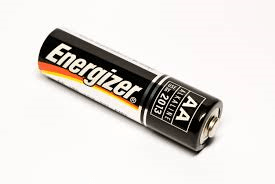
what type of energy is stored in a battery?
a)
electrical
b)
chemical
c)
thermal
d)
mechanical
93.

When you eat pizza, Chemical Energy is transferred to _____ Energy.
a)
Solar
b)
Electrical
c)
Mechanical
d)
Chemical
94.

Solar Energy is transferred to _____ Energy.
a)
Mechanical
b)
Solar
c)
Sound
d)
Electrical
95.
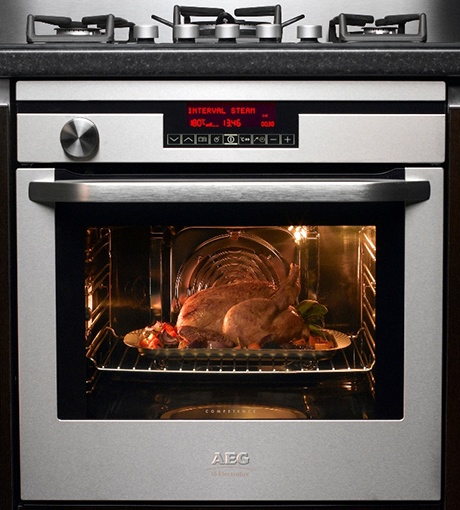
Electrical Energy is transferred to _____ Energy.
a)
Thermal
b)
Solar
c)
Electrical
d)
None
96.
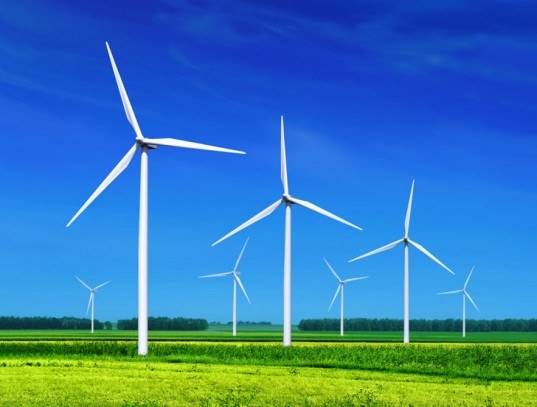
Mechanical Energy is transferred to _____ Energy.
a)
Solar
b)
Mechanical
c)
Electrical
d)
Potential
97.

The picture shows a microwave oven. As a microwave oven is operated, electrical energy is transformed into all of the following types of energy EXCEPT —
a)
solar
b)
light
c)
thermal
d)
mechanical
98.
Electrical -> Mechanical -> Sound
a)
A triple beam balance measuring an object’s mass
b)
A pencil sharpener plugged into a wall outlet
c)
A projector displaying a diagram on the screen
d)
A working flashlight used to light up a dark corner
99.
Energy you get from eating an apple
a)
nuclear energy
b)
electromagnetic energy
c)
sound energy
d)
chemical energy
100.
What energy is given off when a cell phone rings?
a)
Sound Energy
b)
Gravitational Energy
c)
Thermal Energy
d)
Nuclear Energy
101.
Which type of rock results from melting and cooling of magma?
a)
Igneous
b)
Metamorphic
c)
Sedimentary
d)
Extrusive
102.
Which type of rock forms from extreme heat and pressure?
a)
Igneous
b)
Sedimentary
c)
Organic
d)
Metamorphic
103.
A metamorphic rock changes into an igneous rock by what two processes?
a)
Melting and cooling
b)
Extreme heat and pressure
c)
Compaction and cementation
d)
Weathering and erosion
104.
Wind, water, and ice breaking down rock is called
a)
Erosion
b)
Deposition
c)
Compaction
d)
Weathering
105.
What is the MAIN way rocks are classified?
a)
Their color and shapes
b)
How they form
c)
Mineral bands
d)
Where they form
106.
True/False: Igneous rocks can only turn into metamorphic rocks.
a)
True
b)
False
107.
The process in which dissolved minerals crystallize and glue sediment together.
a)
compaction
b)
deposition
c)
organic rock
d)
cementation
108.

When sediments are pressed together tightly, this is called ____________.
a)
Compaction
b)
Cementation
c)
Weathering
d)
Erosion
109.
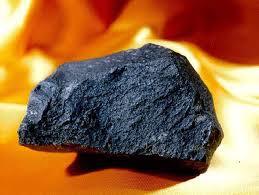
This rock was found near the mouth of a volcano. What type of rock is this?
a)
Sedimentary
b)
Igneous
c)
Metamorphic
110.
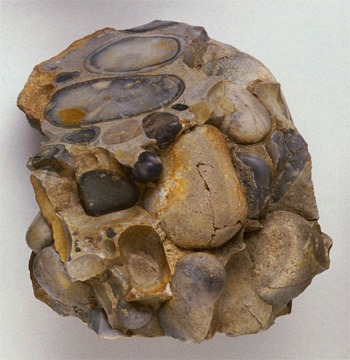
This rock was formed by smaller pieces of rock that settled at the bottom of a lake millions of years ago. What type of rock is this?
a)
Sedimentary
b)
Igneous
c)
Metamorphic
111.
What are the 3 major types of rocks?
a)
Igneous, Metamorphic, Sedimentary
b)
Metamorphic, Igneous, Cementation
c)
Brown, Red, Gray
d)
Streak, Hardness, Breakage
112.

This rock started as lava that cooled and then was heated and put under pressure over time. What type of rock is this?
a)
Sedimentar
b)
Igneous
c)
Metamorphic
113.

This rock started as molten magma. What type of rock is this?
a)
Sedimentary
b)
Igneous
c)
Metamorphic
114.

This rock is made from tiny pieces of other rocks that settled to the bottom of a valley millions of years ago. What type of rock is this?
a)
Sedimentary
b)
Igneous
c)
Metamorphic
115.

This rock was molten magma that slowly cooled under the ground. What type of rock is this?
a)
Sedimentar
b)
Igneous
c)
Metamorphic
116.

Each rock type can follow only one pathway of the rock cycle.
a)
True
b)
False
117.
Fossils are often found in ____________ because it is formed from the remains of once living things.
a)
metamorphic
b)
magma
c)
igneous
d)
sedimentary
118.
Gravity attracts all objects towards one another.
a)
True
b)
False
119.

Look at the picture. Is the force of gravity on the boy a push or a pull?
a)
Pull
b)
Push
120.
Bacteria is what kind of cell?
a)
Eukaryotic
b)
Prokaryotic
121.
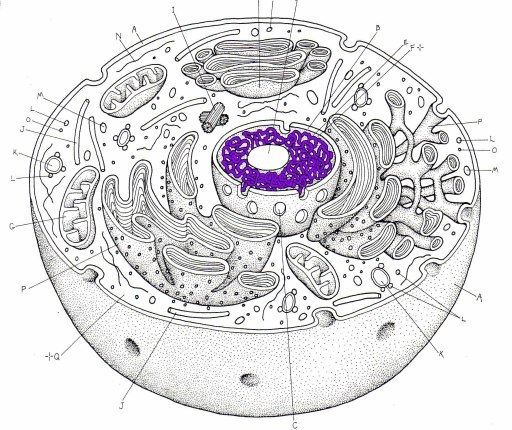
What kind of cell is this?
a)
Eukaryotic
b)
Prokaryotic
122.
Cells can only be seen with the help of a...
a)
hand lens
b)
magnifying glass
c)
3D glasses
d)
microscope
123.
All living things are made of...
a)
atoms
b)
cells
c)
bacteria
d)
plants
124.
What is unicellular?
a)
one cell
b)
many cells
c)
no nuclues
d)
DNA
125.
What is multicellular?
a)
one cell
b)
no cells
c)
many cells
d)
no nucleus
126.
All cells come from other...
a)
cells
b)
plants
c)
nucleus
d)
microscopes
127.
What type of cell has a nucleus?
a)
eukaryotic
b)
prokaryotic
128.
What type of cell does not have a nucleus?
a)
eukaryotic
b)
prokaryotic
129.
Plants and animal cells are examples of ___ cells
a)
prokaryotic cells
b)
eukaryotic cells
130.
Temperature, light, air, water, and soil are all _____ parts of the environment
a)
alive
b)
biotic
c)
abiotic
d)
living
131.
Is a deer an abiotic or biotic factor?
a)
abiotic
b)
biotic
132.
Is a weather an abiotic or biotic factor?
a)
abiotic
b)
biotic
133.
Which of the following is not an abiotic factor?
a)
sun
b)
temperature
c)
soil
d)
grass
134.
A living or once-living organisms in an ecosystem is a
a)
population
b)
biotic factor
c)
abiotic factor
d)
community
135.
Which of the following is not a biotic factor?
a)
mushroom
b)
air
c)
elephant
d)
coyote
136.
Is a fern an abiotic or biotic factor?
a)
abiotic
b)
biotic
137.
Is sunlight an abiotic or biotic factor?
a)
abiotic
b)
biotic
138.
Is a Cat considered abiotic or biotic?
a)
Abiotic
b)
Biotic
c)
Neither
139.
Is water considered abiotic or biotic?
a)
Abiotic
b)
biotic
c)
neither
140.
Bio means _________.
a)
non-living
b)
not/without
c)
life
d)
living
141.
A is the prefix that means ____________.
a)
life
b)
living
c)
not/ without
d)
biotic factor
142.

How will this object move?
a)
It won't move.
b)
It will move to the right.
c)
It will move to the left.
d)
It will move in both directions.
143.

What is the net force?
a)
30 N left
b)
25 N right
c)
5 N left
d)
55 N right
144.

What is the net force?
a)
40 N left
b)
0 N Balalnced
c)
400 N right
d)
40 N right
145.
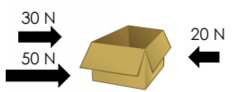
Calculate the Net Force.
a)
60N, Left
b)
40N, Right
c)
0N
d)
60N, Right
146.

Calculate the Net Force.
a)
40N, Left
b)
40N, Right
c)
0N, Balanced
d)
75N, Right
147.

What is the net force?
a)
10 N
b)
0 N
c)
25 N
d)
1 N
148.
What is the unit to MEASURE force?
a)
Kilogram
b)
Meter
c)
Pascal
d)
Newton
149.
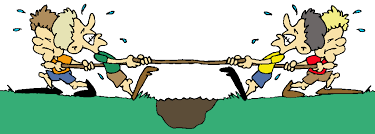
If these teams are pulling with the same amount of force what will happen?
a)
The boy in blue will win.
b)
They will not move at all.
c)
The boy in red will win.
d)
Both will fall down.
150.

This is an example of what kind of force?
a)
Balanced Force
b)
Pushing Force
c)
Gravity Force
d)
Unbalanced Force
100 %

