wayground logo

Free Printable Worksheets

Font size

S
M
L
XL
Worksheets

6th Grade Semester Review

Total questions: 80

Worksheet time: 1hrs 12mins

Name
Class
Date
1.
The Law of Conservation of Energy states that
a)
energy cannot be created nor destroyed, only transformed or transferred
b)
energy can be destroyed but not created
c)
energy can be created but not destroyed
2.
When one energy form is changed into another it is called a
a)
transformation
b)
transfer
c)
translocation
d)
transcription
3.
Energy due to motion is ____________ energy. 
a)
Potential 
b)
Energy
c)
Kinetic
d)
Friction
4.
__________ is stored energy. 
a)
Potential
b)
Kinetic
c)
None of the above 
d)
All of the above 
5.
What kind of energy is in a rock at the edge of a cliff?
a)
Potential
b)
Kinetic
6.
What kind of energy is in a moving skateboard?
a)
Potential
b)
Kinetic
7.
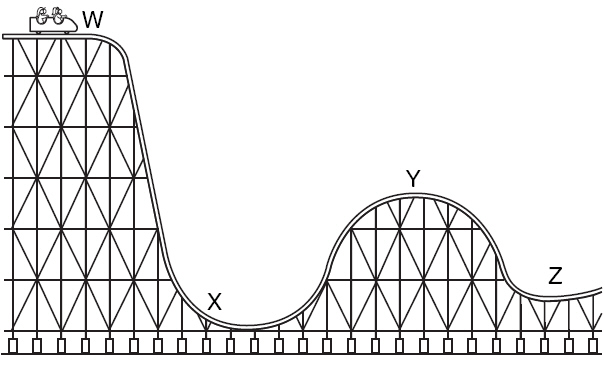
At which point is potential energy greatest?
a)
W
b)
X
c)
Y
d)
Z
8.
At which point is kinetic energy greatest? 
a)
W
b)
X
c)
Y
d)
Z
9.
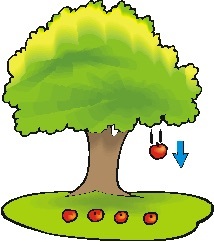
What kind of energy is represented in this picture?
a)
Thermal
b)
Potential
c)
Nuclear
d)
Mechanical
10.
What kind of energy does this device use?
a)
Chemical
b)
Electrical
c)
Thermal
d)
Chemical
11.
What kind of energy is represented in the picture?
a)
Thermal
b)
Chemical
c)
Sound
d)
Nuclear
12.
A battery converts what type of energy to another?
a)
sound to kinetic
b)
light to heat
c)
mechanical to electrical
d)
chemical to electrical
13.
Energy that comes from the nucleus of an atom. A form of potential energy.
a)
chemical energy
b)
Nuclear energy
c)
Sound energy
d)
Electrical energy
14.

This type of energy is related to the movement of light.

a)

Nuclear Energy

b)

Thermal Energy

c)

Radiant Energy

d)

Electrical Energy

15.

This type of energy is created when the nuclei of atoms are split or fused

a)

Radiant Energy

b)

Thermal Energy

c)

Nuclear Energy

d)

Mechanical Energy

16.

A spring that is pressed down has this type of energy

a)

Mechanical Energy

b)

Nuclear Energy

c)

Radiant Energy

d)

Thermal Energy

17.

Another name for Thermal Energy is...

a)

Heat energy

b)

Solar energy

c)

Thermal Energy

d)

Cold energy

18.
What is the formula to calculate speed?
a)
S = t/d
b)
S = d/t
c)
S = d x t
d)
S = t x d
19.
What is speed?
a)
how far you go
b)
how much distance is covered over a period of time
c)
how fast you accelerate
d)
the change in the location of a object
20.
What does this graph represent?
a)
Constant Speed
b)
Acceleration
c)
Deacceleration
d)
Not moving
21.
Which runner won the race?
a)
A
b)
B
c)
C
d)
It was a tie
22.
According to the graph how far does the person travel in the first 5 seconds?
a)
2 m
b)
10 m
c)
0 m
d)
5 m
23.
What is the person doing from 5 seconds to 10 seconds?
a)
Walking 
b)
Running
c)
Standing Still 
d)
Walking Fast
24.
What is happening at A?
a)
Stationary
b)
Accelerating
c)
Slower steady speed; moving away from the starting position
d)
Steady speed; returning to start position
25.
What is happening at E?
a)
Stationary
b)
Accelerating
c)
Fast steady speed; moving away from the starting position
d)
Steady speed; returning to start position
26.

A runner races in the 100 meter dash. It takes her 10 seconds to finish. What is her average speed?

a)

10 m/s

b)

1000 m/s

c)

100 seconds

d)

10 seconds

27.
What is the speed of a car that travels 400 m in 20 minutes?
a)
20 mi/hr
b)
20 m/min
c)
800 m/min
d)
200 mi/hr
28.
Which of the following is a unit of speed?
a)
km/hr
b)
hr
c)
km
d)
sec
29.
Which of the following is a unit of time?
a)
km/hr
b)
hr
c)
km
d)
mi
30.
Which of the following is a unit of distance ?
a)
miles/hr
b)
hr
c)
km
d)
min
31.
On a distance vs. time graph, the steeper the slope _____
a)
the slower the speed
b)
the faster the speed
c)
less acceleration
d)
greater decleration
32.
What type of speed does this graph represent?
a)
Constant Speed
b)
At Rest
c)
Increasing Speed
d)
Decreasing Speed
33.
During which interval is the object slowing down?
a)
A to B
b)
D to E
c)
E to F
d)
C to D
34.
What is the speed this motion?
a)
constant speed
b)
not moving
c)
increasing
d)
decreasing
35.
What is this graph showing?
a)
Constant Speed
b)
Acceleration (speeding up)
c)
Deceleration (slowing down)
d)
At Rest
36.
Calculate the net force of the object in the image shown.
a)
20N
b)
35N
c)
5N
d)
25N
37.
Which direction will the object move?
a)
Up
b)
Down
c)
Right
d)
Left
38.
What is a force?
a)
the PUSH or PULL on an object 
b)
The MOTION an object creates
c)
The objects HITTING one another
d)
Going REALLY FAST
39.
What is the unit for FORCE? 
a)
N (Newtons)
b)
lbs (pounds)
c)
g (grams)
d)
m/s (meters per second)
40.
If there are two forces going in the SAME direction, you would ...?
a)
(-) Subtract the forces
b)
(+) Add the forces
c)
Neither
d)
(x) Multiply
41.
The FORCE that PULLS things down or back to EARTH.
a)
Speed
b)
Gravity
42.
A force that results from two objects rubbing past each other.
a)
Gravity
b)
Friction
c)
Inertia
d)
Force
43.

A battery transforms:

a)

Chemical energy into electrical energy

b)

Chemical energy into kinetic energy

c)

Electrical energy into chemical energy

d)

Electrical energy into kinetic energy

44.
The picture shows a microwave oven. As a microwave oven is operated, electrical energy is transformed into all of the following types of energy EXCEPT —
a)
solar
b)
light
c)
thermal
d)
mechanical
45.
A hot air balloon has the following energy transformations__________.
a)
Thermal-Chemical-Electrical
b)
Chemical-thermal-mechanical 
c)
Thermal-Mechanical 
d)
Thermal-Chemical
46.

What type of energy transformation occurs when striking a match?

a)

light + thermal -> mechanical

b)

Chemical -> thermal + light

c)

light + thermal -> chemical

d)

thermal -> light + chemical

47.

Huge pieces of lithosphere that slowly move on the asthenosphere and consist of the crust and the rigid, uppermost part of the mantle

a)

tectonic plates

b)

North American Plate

c)

Eurasian Plate

d)

African Plate

48.
At divergent boundaries, tectonic plates...
a)
slide horizontally past each other in opposite directions
b)
move away from each other
c)
move toward each other
d)
None of the above.
49.
At convergent plate boundaries, tectonic plates move toward each other.
a)
True
b)
False
50.
At transform boundaries, tectonic plates....
a)
move toward each other
b)
slide horizontally past each other in opposite directions
c)
slide horizontally past each other in the same direction
d)
move away from each other
51.
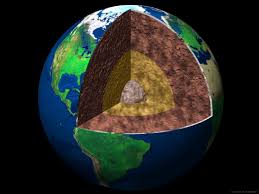
The core of the earth is _____, the mantle is ________, and the crust is _________.
a)
liquid; liquid; liquid
b)
solid; liquid; solid
c)
solid; solid; solid
d)
All of the above.
52.
Earthquakes are common at ________ boundaries.
a)
transform
b)
convergent
c)
divergent
53.
Name this boundary
a)
Convergent
b)
Divergent
c)
Transform
d)
Sergent
54.
Name the boundary
a)
divergent
b)
convergent
c)
transform
d)
sergent
55.
Name the boundary
a)
convergent
b)
transform
c)
divergent
d)
sergent
56.
Which of the following land formation occurs at a divergent continental/continental boundary?
a)
mid-ocean ridge
b)
deep ocean trench
c)
Pacific hot spot
d)
rift valley
57.
Oceanic crust is.....
a)
Younger and less dense than continental crust
b)
Thinner, younger, and more dense than continental crust
c)
older, thicker, and less dense than continental crust
d)
Bigger and younger than continental crust
58.
What was the name given to all the continents when they were joined as one super continent?
a)
Supreme Continent
b)
Eurasia
c)
Plate tectonics
d)
Pangea
59.
This area contains over 70 percent of volcanoes and 90 percent of earthquakes in the world.
a)
North American plate
b)
Ring of Fire
c)
Fiery rings
d)
African plate
60.

What was Alfred Wegener's theory called?

a)

one earth

b)

jigsaw puzzle moves

c)

continental drift

d)

none of the above

61.

The tectonic plate labeled with the letter G is the ___________ plate.

a)

Indo-Australian

b)

African

c)

Pacific

d)

South American

62.

Which meme do you think is funniest? (EXTRA CREDIT OF YOU PICK SAME AS MRS. LAND)

a)
b)
c)
d)
63.
An illustration of the major tectonic plates is provided. Which of the labeled plates in the illustration is the Eurasian Plate?
a)
A
b)
B
c)
C
d)
D
64.
Which layer of Earth is located above the outer core?
a)
crust
b)
inner core
c)
mantle
d)
lithosphere
65.
What is the top layer of the Earth's surface called? 
a)
Mantle
b)
Innercore
c)
Outercore
d)
Crust
66.
A dense ball of solid iron and nickel.
a)
crust
b)
inner core
c)
mantle 
d)
outer core
67.
Which best describes the asthenosphere?
a)
molten metal
b)
dense, solid metal ball
c)
solid that flows
d)
dry land and ocean floor
68.
Which layer of Earth is located above the outer core?
a)
crust
b)
inner core
c)
mantle
d)
lithosphere
69.
What is the rigid layer of the Earth's surface made up of the  crust and upper mantle called?
a)
asthenosphere
b)
lithosphere
c)
mesosphere
d)
continental crust
70.
Is the outer core a liquid or solid?
a)
liquid
b)
solid
71.
Temperature _____________________ as you go deeper into the earth.
a)
increases
b)
decreases
c)
goes up and down depending on the layer
d)
stays the same
72.
Pressure ______________________ as you go deeper into the Earth
a)
increases
b)
decreases 
c)
goes up or down depending on the layer
d)
stays the same
73.
A mid-ocean ridge forms from ____plates.
a)
separating
b)
volcanic
c)
sliding
d)
colliding
74.
Tremendous pushing forces cause a squeezing of rock layers in ____ mountains.
a)
fault-block
b)
folded
c)
upwarped
d)
volcanic
75.
Identify the Major Plate labeled I
a)
African Plate
b)
Antarctic Plate
c)
Pacific Plate
d)
Eurasian Plate 
76.
Identify the Major Plate labeled B
a)
African Plate
b)
Antarctic Plate
c)
Pacific Plate
d)
Eurasian Plate 
77.
Identify the Major Plate labeled N
a)
African Plate
b)
Antarctic Plate
c)
Pacific Plate
d)
Eurasian Plate 
78.
Identify the Major Plate labeled J
a)
African Plate
b)
Antarctic Plate
c)
Pacific Plate
d)
Eurasian Plate 
79.
Identify the Major Plate labeled D
a)
Indo-Australian Plate
b)
North American Plate
c)
South Americana Plate
d)
Eurasian Plate 
80.

During a warm summer day, a car became extremely hot. When a student went to open the car door, he burned his fingers. What two forms of energy were responsible for the student burning his fingers?

a)

radiation and conduction

b)

conduction and convection

c)

radiation and electricity

d)

convection and radiation