
 Worksheets
7th Grade Honors Science 1st Semester Review
Total questions: 75
Worksheet time: 6hrs 15mins
A physical change is
a change where the characteristics do not change the substance
a change where the characteristics do change the substance
a change where the chemistry changes
A new substance is formed in a physical change.
true
false
How do you know that rusting is a chemical change?
it changes color
atoms were rearranged to form a new substance
we just know
the rust
The following are examples of evidence of a chemical reaction....
ice melting into a liquid
condensation
endothermic reaction
change in color, production of gas bubbles
How many elements are in this chemical formula?
H2SO4
1
2
3
4
What is the total number of atoms in this formula? H2O2
2
4
3
Is this an element or a compound? CaSO4
Element
Compound
What is the total number of atoms in this chemical formula? C8H3NaBr12
18
12
25
24
How many elements are in this chemical formula? NaHCO3
1
2
3
4

Is this equation balanced?
Yes, everything appears the same amount on each side.
No, there are too many hydrogen on the left side.
No, there are too many oxygen on the left side.

Is this equation balanced?
Yes, everything appears the same amount on each side.
No, there are too many hydrogen on the left side.
No, there are too many oxygen on the left side.

Is this equation balanced?
Yes, everything appears the same amount on each side.
No, there are too many copper on the left side.
No, there are too many oxygen on the left side.
Identify if the following equation is unbalanced or balanced.
O3+2C→3OC
Unbalanced
Balanced

What law is best described
1st
2nd
3rd
law of motion

What law is best described
A magician pulls a tablecloth out from under dishes and glasses on a table without disturbing them.
Newton's 1st Law
Newton's 2nd Law
Newton's 3rd Law

one that causes a change in the motion of the object to which the force is applied
Action/Reaction
Unbalanced Force
Acceleration

This equation goes with which law?
Newton's first law of motion
Newton's second law of motion
Newton's third law of motion

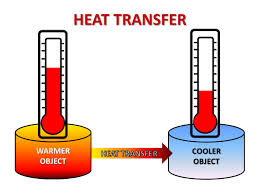
In the situation illustrated, how will heat energy move? Heat energy will be transferred from –
the hot plate to the water by conduction
the water to the hot plate by conduction.


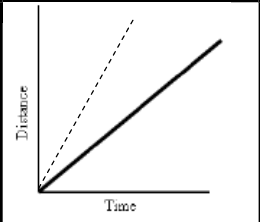
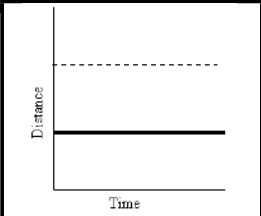
Match the description to the graph:
"The car is traveling at a constant speed."


Match the description to the graph:
"The car is coming back."


Segment A-B The bus is _________________.
at rest
returning (to original position)
moving forward
What are mixtures?
Substances that cannot be separated into their components
Pure substances that do not contain any other materials
Combinations of substances that can sometimes be separated into their components
Elements found only in a laboratory setting
What do we call substances that are not mixtures?
Compounds
Elements
Pure
Solutions
What is a pure substance?
A combination of different types of particles.
A substance that can be physically separated into simpler substances.
A substance that contains only one type of thing.
Parts of a mixture.

Based on the diagram, what type of substance is represented in item 8?
Mixture
Pure Substance
Compound
Element

Based on the diagram, what type of substance is represented in item 9?
Mixture
Pure Substance
Solution
Heterogeneous mixture

Based on the diagram, what type of substance is represented in item 10?
Mixture
Pure Substance
Solvent
Solute
What can mixtures be made from?
Only solids
Only liquids
Any combination of solids, liquids, and gases
Only gases
This is a type of mixture where one substance dissolves into another
Solution
Miscibility
Compound
Solubility
The substance that does the dissolving
Solute
Solvent
Solution
Miscibility
The substance getting dissolved
Solvent
Solute
Solution
Mixture

If I want more sugar to dissolve in water, I should stir the water
true
false

If I want more sugar to dissolve in water, I should heat the water
true
false

homogeneous mixture

You can make a solution more concentrated by adding more __________.
solution
Acids typically taste
sour
sweet
both


A student constructs a table of distances and times. Using the data, which section of the table represents the highest average speed?
Section A
Section B
Section C
Section F
A train travels 800 kilometers in 6 hours. What is the average speed of the train?
150 km/h
133 km/h
806 km/h
4,800 km/h
A train travels at a speed of 70 kilometers per hour for 3 hours, and a car travels 80 kilometers per hour for 2 hours. Which of the two vehicles travels farther?
The car travels farther because it travels 210 kilometers
The train travels farther because it travels 160 kilometers
The car travels farther because it travels at a faster speed
The train travels farther because it travels 210 kilometers
A man travels 25 kilometers in 15 minutes. A police officer stops him and writes a ticket for speeding. The posted speed limit is 80 kilometers per hour. Did the man exceed the posted speed limit?
No, he was traveling at a speed of 25 km/h
No, he was traveling at a speed less than 80 km/h
Yes, he was traveling at a speed of 100 km/h
Yes, traveling at a speed of 80 km/h is too fast for travel safety
Which change to speed would convert a speed measurement to velocity?
Adding direction
Slowing down
Speeding up
Maintaining constant speed

Which statement describes the velocity of the apple?
The apple moved a distance of 6 meters in 3 seconds
The velocity of the apple was constant at 2 m/s
The speed of the apple did not change
The apple fell in a downward motion at an average speed of 2 m/s
A car has a net force of 200 N acting on it, therefore it will _________________.
Accelerate
Move at a Constant Speed


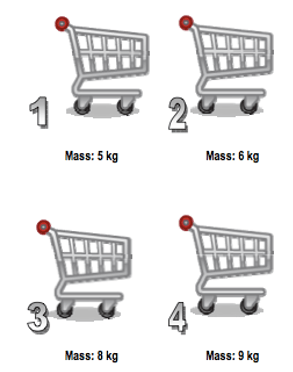

Mass = 10 kg. a = 10 ms2. Calculate the force.
10N
100N
1 N
1000N
Force = 20 N and Mass = 4 kg. Calculate the acceleration.
80 N
80 ms-2
5 ms-2
0.2 ms-2

