wayground logo

Free Printable Worksheets

Font size

S
M
L
XL
Worksheets

IPC 2019 Spring Semester Review

Total questions: 96

Worksheet time: 2hrs 48mins

Name
Class
Date
1.
Are made from a combination of 2 or more elements...
a)
Molecules
b)
Pure Substances
c)
Compounds
d)
Elements
2.
If you change a substance into a new substance...
a)
Partial Change
b)
Physical Change
c)
Chemical Change
d)
Freezing
3.
Any characteristic of a material, such as shape or size, that you can observe or attempt to observe without changing the identity of the material.
a)
physical change
b)
chemical change
c)
physical property
d)
chemical property
4.
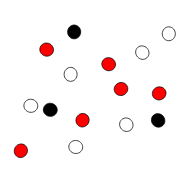
This picture represents: 
a)
Element
b)
Compound
c)
Mixture of Elements
d)
Mixture of Compounds
5.
This picture represents: 
a)
Element
b)
Compound
c)
Mixture of Elements
d)
Mixture of Compounds
6.
All matter is made up of .....
a)
Compounds
b)
Atoms
c)
Molecules
d)
Sunshine
7.
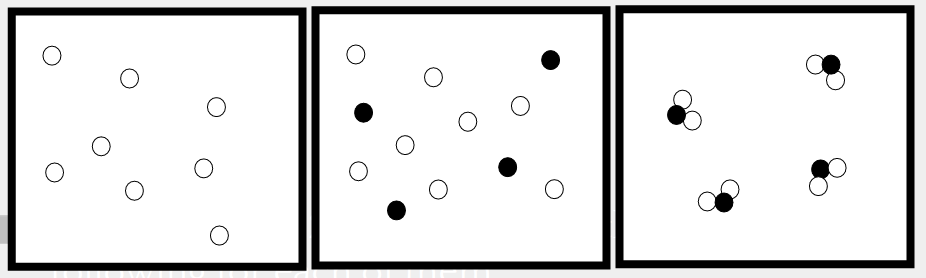
Which one of these pictures represents a pure substance? 
a)
1 and 2
b)
1 and 3
c)
2 and 3
d)
1, 2 and 3
8.
Which one of these pictures represents a mixture? 
a)
1
b)
2
c)
3
d)
1, 2 and 3
9.
What happens to the molecules in a pot of water as it is heated? 
a)
they move faster
b)
they move slower
c)
they gain potential energy
d)
they lose thermal energy
10.
Rank the states of matter from slowest to fastest particle speed.
a)
solid, liquid, gas
b)
liquid, solid, gas
c)
gas, liquid, solid
d)
solid, gas, liquid
11.
Anything that has mass and takes up space is _________.
a)
solid
b)
liquid
c)
gas
d)
matter
12.
What phase of matter has a definite shape and definite volume?
a)
solid
b)
liquid
c)
gas
d)
plasma
13.
Ionic bonds are between...
a)
Metal and Non-metal
b)
Non-metal and Non-metal
c)
Metal and Metal
14.
Covalent bonds are between...
a)
Metal and Non-metal
b)
Non-metal and Non-metal
c)
Metal and Metal
15.
What is the charge of an aluminum ion that has 13 protons and 10 electrons?
a)
1+
b)
3+
c)
2+
d)
3-
16.
When a Na atom, loses one electron, it gets a charge of _______.  
a)
-1
b)
0
c)
+1
d)
+11
17.
What is an anion?
a)
positive ion
b)
negative ion
c)
neutral atom
d)
2 neutrons taken away
19.
What is a cation?
a)
positive ion
b)
Neutral atom
c)
Two additional protons
d)
negative ion
19.
What is a cation?
a)
positive ion
b)
Neutral atom
c)
Two additional protons
d)
negative ion
20.
In a ___________change, a substance changes into a different substance.
a)
Physical
b)
Chemical
21.
Which of these is NOT a sign that a chemical change has occurred? 
a)
A loss of transparency 
b)
An unexpected color change
c)
A temperature change
d)
The formation of a precipitate
22.
How many Al atoms are in this compound?         4Al2O3
a)
2
b)
8
c)
6
d)
4
23.
How many F atoms are in this compound?
6MgF2 
a)
2
b)
6
c)
8
d)
12
24.
Which of the following IS a physical change?
a)
Getting a haircut
b)
Rusty metal
c)
sour milk
d)
A compound
25.
What is the arrow pointing to?
a)
coefficient
b)
subscript
c)
banana
d)
a number
26.
What are the arrows pointing to?
a)
coefficient
b)
subscript
c)
pineapple
d)
a number
27.
How many total hydrogen are in the reactants?
a)
1
b)
2
c)
3
d)
4
28.
Ag(NO3)2 + HCl --> HNO3 + AgCl2
What are the reactants in the above reaction?
a)
Ag(NO3)2 + HCl
b)
HNO3 + AgCl2
c)
HCl + HNO3
d)
Ag(NO3)2 + AgCl2
29.
When balanced, what are the coefficents for the following reaction:
H20 → H2 + O2
a)
2:1:2
b)
2:1:1
c)
1:1:1
d)
2:2:1
30.
Fill in the blank:
The law of conservation of mass states that matter cannot be created nor __________________.
a)
destroyed
b)
rearranged
c)
transferred
d)
changed
31.
The substances listed on the left side of a chemical equation are the
a)
Products
b)
Coefficients
c)
Precipitates
d)
Reactants
32.
Name the part in red:

H+ O2 -> H2O
a)
Coefficient
b)
Product
c)
Reactant
d)
Subscript
34.
Name the part in red:

H+ O-> H2O
a)
Coefficient
b)
Product
c)
Reactant
d)
Subscript
34.
Name the part in red:

H+ O-> H2O
a)
Coefficient
b)
Product
c)
Reactant
d)
Subscript
35.
Which number should go in the blank?
_ H2 + O2 -> 2 H2O
a)
1
b)
2
c)
3
d)
0
36.
Is the following equation balanced or unbalanced ? 
Al + O2 --> Al2O3
a)
Balanced
b)
Unbalanced
37.
Is the following equation balanced or unbalanced ? 
N2 +3 H2 --> 2NH3
a)
Balanced
b)
Unbalanced
38.
What are the coefficient used to balance the equation below?
__Ag2O →__ Ag +___O2
a)
2,4,1
b)
1,1,1
c)
2,1,2
d)
2,2,2
39.
An object with which of the following densities will float on water?
a)
0.7 g/cm3
b)
1.2 g/cm3
c)
3.5 g/cm3
d)
11.4 g/cm3
40.
A block has a mass of 54g and a volume of 20cm3.  What is the density of the block?
a)
74 g/cm3
b)
1080 g/cm3
c)
34 g/cm3
d)
2.7 g/cm3
41.
Will an object with a density of 1.01 g/cm3 float or sink?
a)
float
b)
sink
42.
What is the volume of Object X?
a)
10.0 cm3
b)
15.0 cm3
c)
20.0 cm3
d)
25.0 cm3
43.
What is the volume of 150 grams of lead if it has a density of 11.3 g/cm3?
a)
13.3 g
b)
13.3 cm3
c)
.075 g
d)
1695 cm3
44.
What is the volume of the fish?
a)
18.0 cm3
b)
6.0 cm
c)
38.0 cm3
45.
The density of this material is 2 g/cm3.
There are 24 cm3  Find the total mass.
a)
12 grams
b)
48 grams
c)
12 g/cm3
d)
48 g/cm3
46.

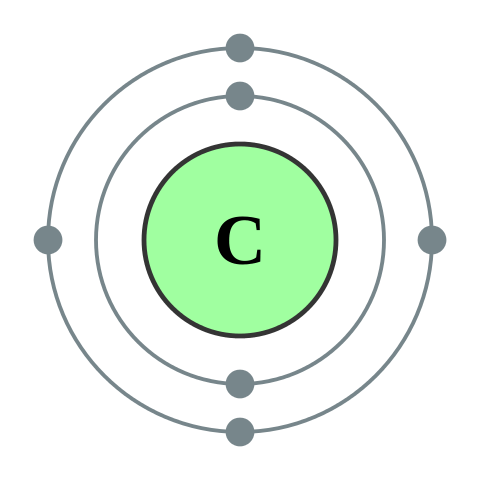
How many valence electrons does carbon have?

a)

4

b)

5

c)

6

d)

7

47.

This could be the dot diagram of

a)

Mg

b)

Cl

c)

C

d)

O

48.
How many valence electrons are in an atom of P?
a)
4
b)
5
c)
2
d)
3
49.
Which group has the greatest number of valence electrons?
a)
1
b)
14
c)
18
d)
16
50.
Barium atoms want to form...
a)
an anion
b)
a cation
c)
an onion
d)
a cuddly kitten friend
51.
Cations are...
a)
Positive
b)
Negative
c)
Neutral
d)
Purring
52.
Anions are...
a)
Positive
b)
Negative
c)
Neutral
d)
Crying
53.
An atom becomes _______ when it loses electrons.
a)
Positive
b)
Negative
c)
Neutral
d)
Invinsible
54.
Which particles change the charge in atoms when ions are formed?
a)
Protons
b)
Electrons
c)
Neutrons
d)
Kittens
55.
What is the ionic symbol for a phosphorus atom?
a)
P-3
b)
P+3
c)
P-2
d)
P+2
56.
Make sure you get enough Potassium in your diet!
a)
Huh?
b)
K
c)
I <3 bananas
d)
Sure
57.

What is the mass number?

a)

The sum of the protons and neutrons

b)

The average of the isotopes that exist in nature

c)

The sum of the protons and electrons

d)

The difference between the mass and atomic number

58.

The total number of protons, and the identity of an elements is...

a)

atomic mass

b)

mass number

c)

electrons

d)

atomic number

59.

A positively charged ion

a)

Anion

b)

Cation

c)

Proton

60.

All atoms of the same element have the same number of...

a)

Electrons

b)

Neutrons

c)

Protons

61.

Mn2+

a)

cation

b)

anion

62.

what is the biggest group on the table

a)

metals

b)

nonmetals

c)

metaloids

d)

halogens

63.

how many rows are on the table

a)

4

b)

5

c)

6

d)

7

64.

what is the name of group number 2

a)

transition metals

b)

halogens

c)

metaloids

d)

alkaline earth

65.

what group number are the halogens

a)

18

b)

1

c)

2

d)

17

66.

what group number are the noble gases

a)

17

b)

18

c)

14

d)

15

67.

what is the small group of elements called that include C,N,O

a)

metals

b)

nonmetals

c)

metaloids

d)

noble gases

68.
The atomic number tells you what?
a)
number of electrons
b)
number of protons
c)
number of neutrons
d)
both electrons and protons in an atom.
69.
The atoms along the staircase are called 
a)
metals
b)
nonmetals
c)
metalloids
d)
noble gases
70.
How many valence electrons are represented here?
a)
7
b)
5
c)
2
d)
8
71.
Choose the particle that has no charge.
a)
nucleus
b)
neutron
c)
proton
d)
electron
72.
Which particle has a positive charge?
a)
electron
b)
orbital
c)
proton
d)
neutron
73.
Which letter represents a proton?
a)
A
b)
B
c)
C
d)
D
74.
Which letter represents a neutron?
a)
A
b)
B
c)
C
d)
D
75.
Which letter represents an electron?
a)
A
b)
B
c)
C
d)
D
76.
Which letter represents the nucleus?
a)
A
b)
B
c)
D
d)
E
77.
What is the element name of the atom pictured? 
a)
Fluorine
b)
Neon
c)
Argon
d)
Potassium
78.
What is the number of protons that the element in this image contain?
a)
14
b)
7
c)
15
d)
18
79.
Blue Color: Chemical or Physical Property
a)
Chemical Property
b)
Physical Property
80.
Flammability (burns): Chemical or Physical Property
a)
Chemical Property
b)
Physical Property
81.
Which of the following tells you that a chemical change may have occurred?
a)
Change Shape
b)
Melting
c)
Vaporizing
d)
Change in color
82.
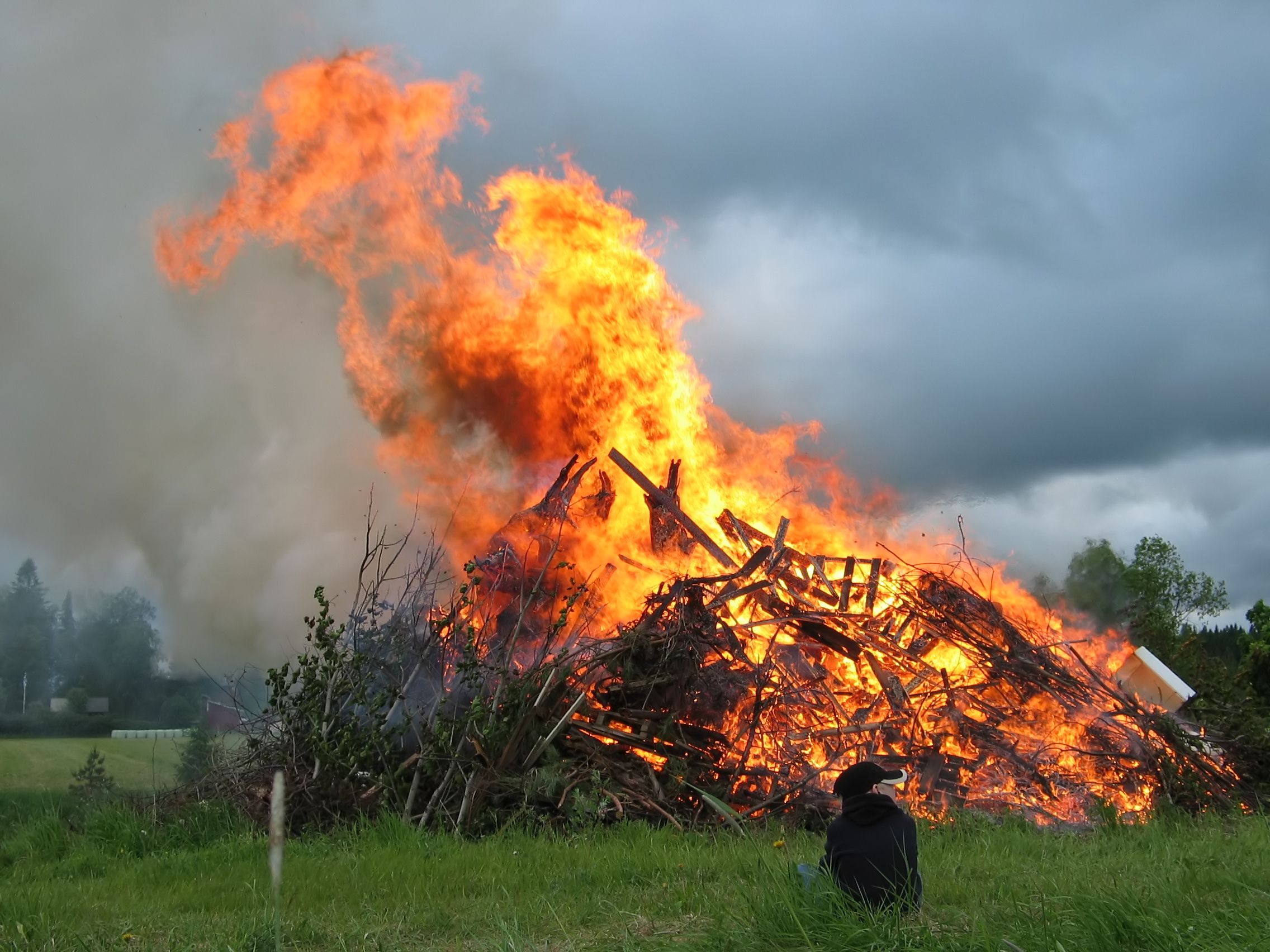
Is wood burning a physical or chemical change?
a)
Physical 
b)
Chemical
83.
Is Gatorade powder dissolving in water physical or chemical change?
a)
Physical 
b)
Chemical
84.
Is sharpening a pencil a physical or chemical change?
a)
Physical 
b)
Chemical
85.

Which of the following is not a clue that a chemical reaction has taken place?

a)

Changing size

b)

Changing color

c)

A gas being formed

d)

Formation of a precipitate

86.
Which of the following IS a clue that a chemical change has occurred? 
a)
State of matter change
b)
Size Change
c)
Change in temperature
d)
Shape change
87.

How much KNO3 solute is saturated at 40 degrees?

a)

75

b)

55

c)

65

d)

85

88.

At what temperature can you fully dissolve 140g of NaNO3?

a)

62

b)

73

c)

81

d)

You cannot determine this

89.

What type of a solution is 100g KNO3 at 40ºC in 100g H2O?

a)

Saturated

b)

Unsaturated

c)

Supersaturated

90.

What type of a solution is 260g sugar at 50ºC in 100g H2O?

a)

Saturated

b)

Unsaturated

c)

Supersaturated

91.

What type of a solution is 25g NaCl at 70ºC in 100g H2O?

a)

Saturated

b)

Unsaturated

c)

Supersaturated

93.

What type of a solution is 55g KCl at 70ºC in 100g H2O?

a)

Saturated

b)

Unsaturated

c)

Supersaturated

93.

What type of a solution is 55g KCl at 70ºC in 100g H2O?

a)

Saturated

b)

Unsaturated

c)

Supersaturated

94.

What type of a solution is 60g NaNO3 at 40ºC in 100g H2O?

a)

Saturated

b)

Unsaturated

c)

Supersaturated

95.

Which solute is MOST likely a gas?

a)

KNO3

b)

NaNO3

c)

KCl

d)

Ce2(SO4)3

96.

At what temperature can you fully dissolve 120g of NaBr?

a)

70

b)

20

c)

100

d)

You cannot determine this