wayground logo

Free Printable Worksheets

Font size

S
M
L
XL
Worksheets

8Th Grade Final Reiew

Total questions: 189

Worksheet time: 2hrs 19mins

Name
Class
Date
1.
Which best describes a fossil that helps determine the relative age of a rock layer?
a)
trace fossil
b)
index fossil
c)
radioactive fossil
d)
unconformity fossil
2.
By which method have scientists determined that the Earth is about 4.5 billion years old?
a)
plate tectonics
b)
relative dating
c)
radioactive dating
d)
law of superposition
3.
Which characteristic of carbon-14 dating helps scientists determine the approximate time a species became extinct?
a)
Carbon-14 is not present in more recent fossils
b)
Carbon-14 increases at a constant rate over time
c)
Carbon-14 decreases at a constant rate over time
d)
Carbon-14 can only be found in fossils of a certain period
4.
The index fossil of a type of trilobite is discovered in layer A of a set of rock layers found at three different sites of a field investigation. Which conclusion can be made about the rocks in layer A at all three sites?
a)
The rocks are all different ages
b)
The rocks are all about the same age
c)
The rocks were formed from melting magma
d)
The rocks were formed during a catastrophic event
5.
Which type of rock replaces bone and other hard organic materials to create rock molds of fossils?
a)
metamorphic
b)
sedimentary
c)
extrusive igneous
6.
Which statement best describes the Law of Superposition?
a)
Each sedimentary layer of rock represents 1,000 years of Earth's age, much like the rings of a tree.
b)
In undisturbed layers of sedimentary rocks, the upper rock layers are older than the lower rock layers.
c)
In undisturbed layers of sedimentary rock, the lowest layers contain the older rocks.
d)
Rocks that form near volcanoes are older than surrounding rock.
7.
Where can the oldest layer be found?
a)
The top layer
b)
The middle layer
c)
They are all the same age
d)
The bottom layer
8.
Which layer is the oldest?
a)
3
b)
4
c)
1
d)
5
9.
The longest Era was...
a)
Precambrian
b)
Paleozoic
c)
Mesozoic
d)
Cenozoic
10.
The Precambrian is the ___________ time span in Earth's history.
a)
youngest
b)
latest
c)
earliest
d)
middle
11.
Current scientific evidence shows that the Earth is estimated to be: 
a)
Less than 1 millions years old
b)
Between 3 and 4 billion years old
c)
More than 4 billions years old
d)
Less than 2 billion years old
12.
Which of the following correctly lists the layers in order from oldest to youngest?
a)
A, B, C, D, E
b)
E, B, C, D, A
c)
E, D, C, B, A
d)
C, B, A, D, E
13.
__________________is the time it takes for half of the radioactive atoms in an element to decay.
a)
dating range
b)
half life
14.
The age of a rock compared to the ages of other rocks is the rock's
a)
absolute age
b)
geologic age
c)
sedimentary age
d)
relative age
15.

The Mesozoic Era was known as . . .

a)

the age of reptiles

b)

the age of mammals

c)

the age of plants

d)

the age of birds

16.

What PERIOD (not Era) are WE living in right now?

a)

Jurassic Period

b)

Mesozoic Era

c)

Cambrian Period

d)

Quaternary Period

17.

Quaternary and Tertiary Periods both occurred during the . . .

a)

Precambrian Time

b)

Paleozoic Era

c)

Mosozoic Era

d)

Cenozoic Era

18.

Which Periods occurred during the Mesozoic Era?

a)

Quaternary and Tertiary

b)

Carboniferous, Triassic, Cambrian, and Silurian

c)

Cretaceous, Jurassic, and Triassic

d)

Devonian, Ordovician, Permian, and Carboniferous

19.

Time on earth from the most recent to the oldest, in order, are . . .

a)

Precambrian Time, Paleozoic Era, Mesozoic Era, and Cenozoic Era

b)

Cenozoic Era, Paleozoic Era, Mesozoic Era, and Precambrian Time

c)

Cretaceous Period, Jurassic Period, Cambrian Period, and Tertiary Period

d)

Cenozoic Era, Mesozoic Era, Paleozoic Era, and Precambrian Time

20.

Which time frame, below, is known as the Age of Invertebrates?

a)

Ceonzoic Era

b)

Mesozoic Era

c)

Paleozoic Era

d)

Precambrian Time

21.
Modern mammals was during this era:
a)
Cenozoic
b)
Mesozoic
c)
Paleozoic
22.
Age of fish was during this era:
a)
Cenozoic
b)
Mesozoic
c)
Paleozoic
23.
______ lived through most of the Mesozoic era:
a)
Dinosaurs 
b)
Fish 
c)
Mammals
24.
The earliest part of Earth's history is called the:
a)
Cenozoic
b)
Cambrian
c)
Holocene
d)
Precambrian
25.
_________ is a cavity or impression left behind in rock when an organism's buried remains are dissolved. The shape of the organism's exterior can be seen in the walls and floor of the cavity.
a)
Mold
b)
Cast
c)
Trace
d)
Index
26.
________ is a mold that has been filled in with sediments which hardened and took the shape of the cavity.
a)
Cast
b)
Mold
c)
Trace
d)
Carbon film
27.
When permineralization and replacement both occur in a fossil, the fossil is said to be
a)
Petrified
b)
Cast
c)
Mold
d)
Preserved
28.
Each of the three eras can be divided into ____
a)
Periods
b)
Eons
29.
Millions of years ago when the world's landmasses were fused together at the beginning of the Mesozoic it was called
a)
Rhodinia
b)
Laurencia
c)
Nebraska
d)
Pangaea
30.
How long ago did the Cenozoic Era start ?
a)
45 million years ago
b)
65 million years ago
c)
34 million years ago 
d)
75 million years ago 
31.
Principle that states in a sequence of undisturbed rocks, the oldest rocks are on the bottom and the rocks become progressively younger toward the top 
a)
superposition 
b)
uniformitarianism
c)
half-life
32.
Gaps in rock records made when agents of erosion remove existing rock layers 
a)
fossils
b)
unconformities
c)
permineralized remains
33.

Fossil of thin layer of carbon atoms and molecules

a)

petrified

b)

carbon film

c)

trace fossil

d)

preserved remains

34.

Formed when original material in skeletal remains are replaced by minerals

a)

preserved remains

b)

Trace Fossils

c)

petrified fossils

d)

mold

35.
Remains, imprints or traces of once-living organisms
a)
water
b)
superposition
c)
fossils 
36.
Fossils of species that existed for  short periods and were widespread 
a)
trace fossils 
b)
index fossils 
c)
original remains 
37.

Scientist who studies fossils

a)

Botonist

b)

Geologist

c)

Paleontologist

d)

Seismologist

38.

Dying out of many species on Earth within a short period of time

a)

Petrified

b)

catastrophism

c)

uncomformity

d)

mass extinction

39.

Surface where rock has eroded away, producing a break in the rock record

a)

correlation

b)

inclusion

c)

superposition

d)

unconformity

40.
How does the law of crosscutting explain the age of a fault?
a)
The fault is younger than the rocks above it.
b)
The fault is younger than the rocks it cuts through.
c)
The fault is older than the rocks above it.
d)
The fault is older than the rocks it cuts through.
41.
Which of the following terms identifies a species that has disappeared from Earth?
a)
Endangered
b)
Limited
c)
Extinct
d)
Threatned
42.
If a rock layer has an intrusion, what does the Cross-Cutting law state about the intrusion?
a)
the intrusion is older than the surround rock layers
b)
the intrusion is younger than the surrounding rock layers
43.
What type of disturbed rock layer is show in the picture?
a)
tilting
b)
instrusion
c)
folding
d)
fault
44.
Which part of an organism is least likely to be fossilized?
a)
shell
b)
bones
c)
soft tissue
d)
hard wood
45.
What is lava that hardens on the surface called?
a)
intrusion
b)
extrusion
c)
pipe
d)
magma chamber
46.
What forms when magma cools and hardens inside igneous rock?
a)
extrusion
b)
intrusion
c)
vent
d)
lava flow
47.
What causes tectonic plates to move along the Earth's surface?
a)
wind
b)
ocean currents
c)
convection in the mantle
d)
expansion of the Earth
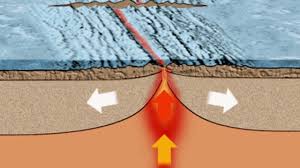
48.
What type of boundary occurs when two plates move away from each other?
a)
transform
b)
subduction
c)
convergent
d)
divergent
49.
What forms at a divergent boundary between two oceanic plates?
a)
rift valley
b)
mountain
c)
mid-ocean ridge
d)
trench
50.
What type of boundary occurs when two plates move toward each other?
a)
convergent
b)
divergent
c)
transform
d)
lateral
51.
A rift valley occurs at a ____________ boundary.
a)
divergent
b)
convergent
c)
transform
d)
horizontal
52.
What is the process in which hot molten rock rises, then cools and sinks back to the core?
a)
plate tectonics
b)
continental drift
c)
convection
d)
divergence
53.
Mountains form at a ___________ boundary.
a)
transform
b)
divergent
c)
convergent
d)
subduction
54.
What type of boundary occurs when two plates slide past each other?
a)
divergent
b)
transform
c)
lateral
d)
convergent
55.
A fault forms at a _________ boundary.
a)
transform
b)
divergent
c)
horizontal
d)
convergent
56.
What type of boundary is shown at A?
a)
transform
b)
convergent
c)
divergent
d)
subduction
57.
What is happening at point B?
a)
subduction
b)
a divergent boundary
c)
convection
d)
an earthquake
58.
A German scientist Alfred Wegener was the first to hypothesize that ...........
a)
Continents were once joined
b)
The sea floor is spreading
c)
Continents are moving
d)
The Earth's magnetic pole flips
59.
Pangaea was an ancient supercontinent made up of...
a)
America, Greenland, and Europe.
b)
Antarctica, India, and America.
c)
all of Earth’s continents.
d)
South Africa, India, Australia, and South America.
60.

What is the correct order (starting from the surface) of Earth’s layers?

a)

crust, outer core, inner core, mantle

b)

mantle, outer core, inner core, crust

c)

crust, mantle, outer core, inner core

d)

outer core, inner core, crust, mantle

61.

In sea-floor spreading, molten material rises from the mantle and erupts

a)

along the edges of all the continents.

b)

along mid-ocean ridges.

c)

in deep-ocean trenches.

d)

at the north and south poles.

62.

Scientists think that convection currents flow in Earth’s

a)

continents.

b)

mantle.

c)

lithosphere.

d)

inner core.

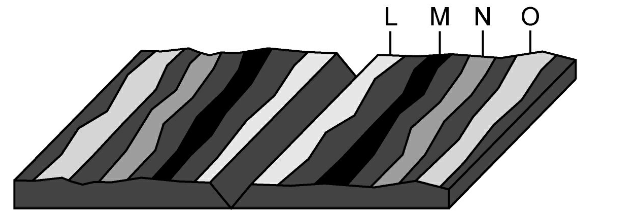
63.
Where would the oldest rock be found?
a)
L
b)
M
c)
N
d)
O
64.
How is it possible for new crust to be formed without increasing the surface area of the Earth?
a)
Crust is destroyed at the same time it is created
b)
New crust is underwater where it sinks
c)
New crust breaks more easily than old crust
65.
What are the two types of crust
a)
continental and oceanic
b)
ocean and upper
c)
lower and upper
d)
pizza and subway
66.
What did scientists use to map the oceans floor?
a)
Echo-location
b)
Sonar
c)
Space Shuttles
d)
Animals
67.
What was the name of the supercontinent?
a)
The world
b)
Pangea
c)
Land
d)
Chick-Fil-A
68.
What was Wegener's hypothesis called?
a)
The Pangea 
b)
Moving Continents 
c)
The Continental Drift
d)
Techtonic Plates
69.
What evidence helped Wegener support his theory?
a)
Climate
b)
 Fossils
c)
Land Features
d)
All of the Above
70.
What evidence helps scientists show how sea floor spreading occurs?
a)
Ocean Floor Material
b)
Magnetic Stripes
c)
Drilling Samples
d)
All of the Above
71.
The deepest part of the ocean; long, narrow ditches
a)
Tectonic plates
b)
Trenches
c)
Divergent boundary
d)
Continental shelves
72.
Water on earth can be found in the form of _____. 
a)
Water Vapor 
b)
Liquid Water 
c)
Ice 
d)
All of the Above
73.
What percent of the water is salt water? 
a)
97% 
b)
45% 
c)
3%
d)
70%
74.
Almost all of the water that is fresh, and NOT frozen, can be found _______. 
a)
high in the sky, 
b)
in the sewer system. 
c)
in Antarctica. 
d)
underground. 
75.
What is an underground layer of rock or soil filled with water called?
a)
Aquifer
b)
Spring
c)
Well
d)
Reservoir
76.
What is the water that fills the cracks and spaces in underground soil and rock layers called?
a)
Groundwater
b)
Water Table
c)
Precipitation
d)
Snow
77.
How much of the Earth is fresh water? 
a)
97%
b)
45%
c)
3%
d)
70%
78.

A diagram of the water cycle is shown.


Evaporation occurs because energy is transferred from which source?

a)

the sea

b)

the sun

c)

the trees

d)

the wind

79.

Which process of the water cycle transports water from plants to clouds?

a)

precipitation

b)

transpiration

c)

condensation

d)

Sublimation

80.

Water that evaporates from lakes and streams condenses into clouds and later falls as rain. The property of water that is demonstrated is the ability to...

a)

act as a universal solvent.

b)

change from a liquid to a gas.

c)

boil at a high temperature.

d)

absorb large amounts of energy.

81.

Condensation in the water cycle can best be described as the result of water vapor...

a)

rising into the atmosphere, cooling and changing into a liquid form.

b)

rising into the atmosphere, warming and changing into a gaseous form.

c)

changing from a liquid form into a solid and forming snow.

d)

changing from a gas form into a solid and forming hail.

82.

In the diagram, transpiration is represented by which numbered area?

a)

1

b)

2

c)

3

d)

4

83.

Which process is occurring at the arrow labeled 4?

a)

evaporation

b)

precipitation

c)

transpiration

d)

condensation

84.

Which word BEST describes SALINITY? (a synonym)

a)

water

b)

fresh

c)

ocean

d)

salt

85.

Where is most of Earth's water located?

a)

polar ice caps

b)

groundwater

c)

oceans

d)

atmosphere

86.

Where do humans get most of the water they use?

a)

rivers and lakes

b)

polar ice caps

c)

water vapor

d)

groundwater

87.

Through the process of ______, water sticks to the insides of a tree.

a)

cohesion

b)

adhesion

c)

polarity

d)

density

88.

Surface tension on water (where even a spider can crawl) is called ________.

a)

cohesion

b)

adhesion

c)

polarity

d)

density

89.
How many Hydrogen atoms does a single water molecule have?
a)
1
b)
2
c)
3
d)
4
90.
What does "polar" mean?
a)
A molecule is cold
b)
A molecule has ionic bonds
c)
A molecule has covalent bonds
d)
A molecule has areas of positive and negative charge
91.

Surface tension is the property of water in which...

a)

water molecules at the surface tend to stick together.

b)

water spills easily.

c)

water tends to be see-through.

92.

Describe COHESION.

a)

Water molecules attracted to other substances.

b)

Water molecules climbing upwards against the force of gravity.

c)

Water molecules dissolving many substances because of its polarity.

d)

Water molecules attracted to other water molecules.

93.
What is represented at point 1?
a)
wave height
b)
wavelength
c)
crest
d)
trough
94.
What is represented at point 2?
a)
wave height
b)
wavelength
c)
crest
d)
trough
95.
What is represented at point 3?
a)
wave height
b)
wavelength
c)
crest
d)
trough
96.
Many people believe that ocean waves move water.  However, ocean waves really transfer ______.
a)
wind
b)
sand
c)
energy
d)
pressure
97.
What is the periodic rise and fall of the water level in the oceans?
a)
Tide
b)
Tidal range
c)
Spring Tide
d)
Neap Tide
98.
What is the increased tide that occurs two times in a month at the new and full moons?
a)
Tidal range
b)
Spring Tide
c)
Neap Tide
d)
Tide
99.
What is the difference between levels of ocean water at high and low tide?
a)
Tide
b)
Tidal range
c)
Spring tide
d)
Neap tide
100.
What is a tide of minimum range that occurs during the 1st and 3rd quarters of the moon?
a)
Tide
b)
Tidal range
c)
Spring tide
d)
Neap tide
101.
The bulge of water on the side of the Earth closest to the moon produces ___________.
a)
high tide
b)
low tide
c)
neap tide
d)
spring tide
102.
Tides are the cycle of rising and falling ocean water that repeats automatically every
a)
24 hours
b)
12.5 hours
c)
25 hours
d)
6.25 hours
103.
Which body has the greater effect on Earth's tides?
a)
Sun
b)
Saturn
c)
Moon 
d)
Venus
104.
What type of tide would this arrangement of earth-moon-sun create?
a)
full moon tide
b)
new moon tide
c)
neap tide
d)
spring tide
105.
What causes tides?
a)
gravity
b)
wind
c)
spring
d)
neap
106.
How many times per month does a spring tide occur?
a)
Once
b)
twice
c)
three times
d)
it changes every month
107.
Currents that are far beneath the surface
a)
deep ocean currents
b)
surface currents
c)
current
d)
global winds
108.
The way Earth's rotation makes the winds curve
a)
Coriolis Effect
b)
Cuticle Effect
c)
Revolution
d)
rotation
109.
Water travels in definite paths around the ocean called
a)
Highways
b)
Currents
c)
Rivers
d)
Streams
110.
Currents that occur at or near the surface of the ocean are called 
a)
Deep Currents
b)
Convection Currents
c)
Surface Currents
d)
Wave Currents
111.
The deflection of currents due to Earth's rotation is called the
a)
Rotation Effect
b)
Current Effect
c)
Coriolis Effect
d)
Deflection Effect
112.
What is the process where cold, deep water rises to the surface with nutrients?
a)
Upwelling
b)
Downwelling
c)
Swelling
d)
Tides
113.
Ocean currents bring warm water from the equator towards Earth's
a)
Southern Hemisphere
b)
Continents
c)
Equator
d)
Poles
114.
Currents release heat energy and this can affect an area's
a)
Oxygen
b)
Climate
c)
Upwelling
d)
Sunlight
115.
What causes surface currents north and south of the equator to move in different directions? 
a)
Gases in the ocean
b)
The rotation of the Earth
c)
Temperature differences
d)
Continental deflection
116.

______ causes deep ocean currents

a)

The Coriolis Effect

b)

gravity

c)

wind

d)

density differences

117.
The average temperature in Atlanta in June is 25o C, but the average temperature in December is 7o C. Why is the average temperature in Atlanta higher in June than in December?
a)
The Sun is hotter during June than it is during December.
b)
Earth is closer to the Sun in June than it is during December.
c)
Earth's axis is tilted so that Atlanta gets more direct sunlight in June than in December.
d)
The atmosphere in Atlanta absorbs more heat from sunlight in June than in December.
118.
Which statement describes why the Earth has seasons?
a)
Its axis is titled as it revolves around the sun.
b)
The distance changes as it revolves around the sun.
c)
The moon revolves around it.
d)
The sun's axis is tilted.
119.
Which is the warmest climate zone?
a)
Arctic Zone
b)
Temperate Zone
c)
Tropical Zone
d)
Intermediate Zone
120.
Which of the following is typical of a tropical climate?
a)
cold, dry air
b)
cool, moist air
c)
hot, dry air
d)
warm, moist air
121.
_______ affects weather because the further north or south you go from the Equator, the less solar energy (heat).
a)
altitude
b)
latitude
c)
sunlight
d)
atmosphere
122.
______ is the average pattern for weather over a long period of time.
a)
climate
b)
weather
c)
forecast
d)
sunlight
123.
Earth is unevenly heated due to its?
a)
oceans and moon
b)
tilt and shape
c)
gravity and clouds
d)
climate and weather
124.
The boundary between two air masses that meet is called?
a)
front
b)
back
c)
side
d)
air mass
125.
What are the 3 major climate zones in order from equator to the poles?
a)
polar, temperate, tropical
b)
tropical, temperate, polar
c)
temperate, polar, tropical
126.
What are the two main factors that determine the climate of an area?
a)
precipitation and humidity
b)
temperature and air pressure
c)
wind conditions and humidity
d)
temperature and precipitation
127.
The biggest factor in determining climate is?
a)
elevation
b)
an ocean
c)
latitude
d)
mountain
128.
A polar climate is?
a)
warm and cool
b)
consistently moderate
c)
consistently cool
d)
consistently warm
129.
A temperate climate is?
a)
consistently cool
b)
consistently warm
c)
consistently moderate
d)
warm and cool
130.
Which climate zone do we live in?
a)
Temperate
b)
Tropical
c)
Polar
d)
Savannas
131.
_____ climate is described as cold all year long and located in high latitudes.
a)
Polar
b)
Continental
c)
Dry
d)
Highland
132.
This front occurs when a warm air mass meets a cold air mass and stops.
a)
occluded front
b)
warm front
c)
stationary front
d)
cold front
133.

This front can cause tornadoes when a warm air mass collides with a cold air mass and is quickly forced upward.

a)

occluded front

b)

stationary front

c)

warm front

d)

cold front

134.
This front occurs when 3 air masses meet up forcing the warm air upward.
a)
occluded front
b)
stationary front
c)
warm front
d)
cold front
135.
Which air mass is forced upward at a front?
a)
cold air mass
b)
warm air mass
136.
Which of the following is not a factor that affects climate? 
a)
latitude
b)
longitude
c)
oceans
d)
mountains
137.
What will the weather be in a couple of days in Minneapolis?
a)
sunny and warmer
b)
sunny and colder
c)
rainy and warmer
d)
rainy and colder
138.
What front is occurring between Denver and St. Louis?
a)
occluded front
b)
warm front
c)
cold front
d)
stationary front
139.
Where would you expect to see nice weather?
a)
low pressure area
b)
high pressure area
140.
What is happening in our atmosphere at a certain time and place.
a)
weather 
b)
front
c)
climate
d)
zone
141.

This front occurs when a warm air mass catches up to a cold air mass and over takes it.

a)

cold front

b)

occluded front

c)

warm front

d)

stationary front

142.

What does this symbol represent?

a)

warm front

b)

cold front

c)

isobar

d)

millibar

143.

What symbol does this represent?

a)

warm front

b)

cold front

c)

isobar

d)

millibar

144.

Lines on a weather map that connect areas of equal pressure.

a)

warm front

b)

cold front

c)

isobar

d)

millibar

e)

barometer

145.
Increased carbon dioxide may cause global warming by trapping more ____________ in the atmosphere.
a)
water
b)
gases
c)
heat
d)
water vapor
146.
During cold periods called _____________________, large parts of Earth's surface was covered with sheets of ice.
a)
glaciers
b)
Ice Ages
147.
Scientists observe the thickness of a tree's _________ to learn about past climate conditions.
a)
rings
b)
branches
c)
roots
d)
bark
148.

The closer you live to the ocean, the more likely your climate will be a...

a)

marine climate

b)

tropical climate

c)

continental climate

d)

subtropical climate

149.

The closer you live away from an ocean, the more likely your climate will be a...

a)

marine climate

b)

tropical climate

c)

continental climate

d)

subtropical climate

150.

Clues to ancient climates were like come from...

a)

ice cores

b)

fossil tree rings

c)

plant pollens

d)

all of the above

151.

Streams of water called ocean ____________ move warm or cold water, warming the nearby land.

a)

sun spots

b)

currents

c)

carbon dioxide

d)

air masses

152.

Which zones are polar zones?

a)

Zones A and B

b)

Zones A and E

c)

Zones E and D

d)

Zones A, E, and C

153.

Which zones are temperate zones?

a)

Zones B and C

b)

Zones B, C, and D

c)

Zones, D and C

d)

Zones D and B

154.

Which zone is the tropical zone?

a)

Zone B

b)

Zone C

c)

Zone D

d)

Zone E

155.
Which term describes when the Earth spins on its axis.
a)
Rotation
b)
Revolution
c)
Kepler's Laws
d)
Precession
156.
Which term describes the time it takes for Earth to complete one circle around the sun.
a)
Rotation
b)
Revolution
c)
Kepler's 1st Law
d)
Barycenter
157.
Lasts 365 days
a)
Rotation
b)
Revolution
c)
Nutation
d)
Precession
158.
Lasts 24 hours
a)
Rotation
b)
Revolution
c)
Precession 
d)
Barycenter
159.
What keeps the Earth and other planets in orbit?
a)
The sun
b)
Gravity
c)
Earth's magnetic field
d)
tides
160.

When day and night are equal, Earth's axis is not tilted toward nor away from the Sun. What is this called?

a)

solstice

b)

summer

c)

eclipse

d)

equinox

161.

Earth's _____________ is tilted, this is part of the reason we have seasons.

a)

axis

b)

side

c)

oval

d)

pole

162.

What is the shortest day of the year in the northern hemisphere?

a)

March equinox

b)

June solstice

c)

December solstice

d)

September equinox

163.

Which definition explains what a solstice is?

a)

When Earth's axis is not pointed toward or away from the Sun.

b)

When the Earth's axis is pointed most toward or away from the Sun.

c)

When the Sun moves.

d)

When we don't see any light for 6 months.

164.

At position C, which hemisphere would have winter?

a)

Northern hemisphere

b)

Southern hemisphere

165.

At position A, which hemisphere would have summer?

a)

Northern hemisphere

b)

Southern hemisphere

166.

At position D in the Northern hemisphere it would be _____?

a)

Summer

b)

Winter

c)

Spring

d)

Fall

167.
On two days each year, around June 21 and December 21, it is either the longest or shortest days of the year. Each of these days is known as a __________
a)
equinox
b)
solstice
c)
vacation
d)
day
168.

Which definition explains what an equinox is?

a)

When Earth's axis is not pointed toward or away from the Sun.

b)

When the Earth's axis is pointed most toward or away from the Sun.

c)

When the Sun moves.

d)

When we don't see any light for 6 months.

169.
Changes in the moon's appearance are
a)
phases
b)
eclipses
c)
stages
d)
cycle
170.
What causes the moon's phases
a)
Where you are standing on Earth
b)
the amt of sunlight reflected onto the moon from the sun
c)
The tilt of Earth
d)
how fast the moon is moving
171.
Define Waxing
a)
Moon is increasing and light part appears to be growing
b)
Completely illuminated
c)
dark side is facing earth
d)
Moon is decreasing and light part appears to be shrinking
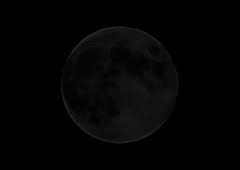
172.
Define New Moon
a)
None of moon is visible from Earth
b)
All of moon visible from Earth
c)
Moon is 1/2 visible from Earth
d)
Moon is more than Half Visible from Earth
173.
Define Full Moon
a)
None of moon is visible
b)
Half moon phase is visible
c)
Complete moon face is visible
d)
Less Than half of moon is visible
174.
Define Quarter Moon
a)
None of moon visible
b)
Less than Half the moon is visible
c)
More than half of moon is visible
d)
Half of the moon is visible
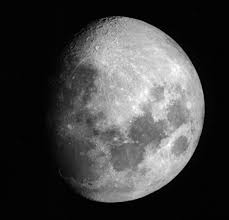
175.
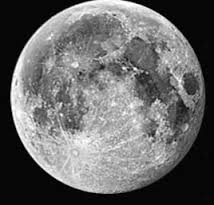
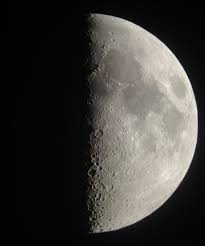
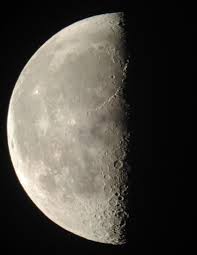
Name this moon phase
a)
Waxing Gibbous
b)
Waxing Crescent
c)
Waning Crescent
d)
Waning Gibbous
176.
Name this moon phase
a)
Waning Crescent
b)
Waxing Crescent
c)
Waning Gibbous
d)
Waxing Gibbous
177.
The phase of the moon that occurs between the sun and Earth
a)
Full moon
b)
Waxing crescent
c)
Waning Crescent
d)
New Moon
178.
Name this moon phase
a)
waning crescent
b)
waxing crescent
c)
waning gibbous
d)
waxing gibbous
179.
Name this moon phase
a)
First Quarter
b)
Last Quarter
c)
New Moon
d)
Full Moon
180.
Name this moon phase
a)
First Quarter
b)
Last Quarter
c)
New Moon
d)
Full Moon
181.
Name this moon phase
a)
First Quarter
b)
Last Quarter
c)
New Moon
d)
Full Moon
182.
Name this moon phase
a)
First Quarter
b)
Last Quarter
c)
New Moon
d)
Full Moon
183.
What is the difference between a gibbous moon and a crescent moon?
a)
The gibbous shows more than half of the bright side of the moon.
b)
The crescent shows more than half of the bright side of the moon.
c)
The gibbous shows less than half of the bright side of the moon. 
d)
There is no difference
184.
The cycle of the moon lasts about a _.
a)
day
b)
year
c)
week
d)
month
185.
The surface of this planet appears red due to rusting iron in the rocks.
a)
Mercury
b)
Mars
c)
Pluto
d)
Venus
186.
This is the largest planet in the solar system.
a)
Saturn
b)
Jupiter
c)
Uranus
d)
Venus
187.
This is the smallest planet in the solar system
a)
Mercury
b)
Venus
c)
Earth
d)
Mars
188.
Scientists have been able to find no atmosphere around this planet because it has little gravity and is closest to the sun.
a)
Mars
b)
Venus
c)
Mercury
d)
Earth
189.
This gas giant has a large storm in its atmosphere known as The Red Spot
a)
Jupiter
b)
Saturn
c)
Uranus
d)
Neptune