wayground logo

Free Printable Worksheets

Font size

S
M
L
XL
Worksheets

Revision 1

Total questions: 82

Worksheet time: 1hrs 4mins

Name
Class
Date
1.
What force brings the pencil down?
a)
Applied
b)
Magnetic
c)
Normal
d)
Gravitational
2.
Balanced forces do not change the objects speed or 
a)
direction
b)
distance 
c)
time
d)
mass
3.
What is the net force?
a)
5000 N right
b)
4000 N right
c)
40 N left
d)
4000 N left
4.
What is the net force in this picture?
a)
50 Newtons to the right
b)
950 Newtons to the right
c)
950 Newtons to the left
d)
50 Newtons to the left
5.
Which one is balanced?
a)
top
b)
bottom
c)
both
6.

When a pendulum swings, at which point is potential energy at its greatest? (6.8A)

a)

1

b)

2

c)

3

d)

4

7.

Is this an example of a balanced or unbalanced force?

a)

Balanced force

b)

Unbalanced force

c)

I don't know

8.

In this force diagram, which arrow is representing Friction?

a)

A

b)

B

c)

C

d)

D

9.

What is it?

a)

Light

b)

Heavy

c)

Friction

d)

Push

10.
Levi is wanting to light a bulb.  What does he need to get the bulb to light?
a)
A battery and a paper clip
b)
A battery and a wire
c)
A paper clip and a wire
d)
A switch and a wire
11.
A series circuit has ____ path(s) that the electric current can take. 
a)
One
b)
Two 
c)
Three 
d)
Four
12.
Which statement is true?
a)
The light bulb will light up because the  circuit is complete.
b)
The light bulb will light up because the  circuit is broken.
c)
The light bulb will not light up because the  circuit is complete.
d)
The light bulb will not light up because the  circuit is broken.
13.
The force that pushes the electricity through a circuit is called...
a)
resistance
b)
voltage
c)
current
d)
switch
14.
The flow of electricity through a conductor is called...
a)
resistance
b)
voltage
c)
current
d)
source of electric current
15.
The best conductors for electricity are made of...
a)
wood
b)
plastic
c)
rubber
d)
metal
16.
This measures the speed of the current in a circuit
a)
voltage
b)
ammeter
c)
switch
d)
resistance
17.
What slows down the flow of electricity in a circuit?
a)
resistance
b)
voltage
c)
current
d)
source of electric current
18.
Which circuit (s) are parallel?
a)
A
b)
A and B
c)
B and C
d)
C
19.
Which one will still function if one light bulb goes out?
a)
A-Series
b)
B-Parallel
c)
A-Parallel
d)
B-Seriese
20.

What is a material that resists, or does NOT allow, energy to flow through?

a)

circuit

b)

insulator

c)

series

d)

conductor

21.

When a circuit is closed, the load is _____________?

a)

On

b)

Off

22.

Which is NOT a good conductor?

a)

silver

b)

copper

c)

iron

d)

plastic

23.
Energy of motion is which type of energy?
a)
Potential
b)
Kinetic
c)
Sound
d)
Gravitational
24.
What kind of energy is represented in this picture?
a)
Thermal
b)
Potential
c)
Nuclear
d)
Mechanical
25.
What kind of energy does this device use?
a)
Chemical
b)
Electrical
c)
Thermal
d)
Chemical
26.
What kind of energy is represented in the picture?
a)
Thermal
b)
Chemical
c)
Sound
d)
Nuclear
27.
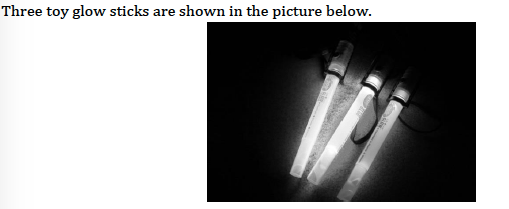
The glow sticks produce light for a short amount of time. The light from the glow stick is a conversion from what to what?
a)
thermal to light
b)
gravitational to potential
c)
radiant to electrical
d)
chemical to light
28.
On a roller coaster, where is maximum potential energy?
a)
At the bottom of a big hill
b)
When going around a corner
c)
When going upside down
d)
At the top of a big hill
29.
On a roller coaster, where is maximum kinetic energy?
a)
At the bottom of a big hill
b)
When going around a corner
c)
When going upside down
d)
At the top of a big hill
30.
Energy that is stored in bonds between atoms is:
a)
Mechanical energy
b)
Chemical energy
c)
Kinetic energy
d)
Nuclear energy
31.
Energy that comes from the nucleus of an atom. A form of potential energy.
a)
chemical energy
b)
Nuclear energy
c)
Sound energy
d)
Electrical energy
32.
According to which law of energy, energy can't be created or destroyed?
a)
First law of motion
b)
The law of tacos
c)
Laws of Energy
d)
law of conservation of energy
33.
The ability to do work is
a)
power
b)
energy
c)
thermal
d)
kinetic
34.
Heat energy is also called
a)
electrical energy
b)
chemical energy
c)
light energy
d)
thermal energy
35.
Sound energy needs a
a)
medium
b)
vacuum
c)
chemical
d)
light
36.
What type of energy includes both kinetic and potential energy?
a)
mechanical energy
b)
chemical energy
c)
heat energy
d)
sound energy
37.
Stored energy is called ______ energy.
a)
Kinetic
b)
Potential
c)
Pacific
d)
Safe
38.

Steam is an example of _____________energy.

a)

light

b)

thermal

c)

sound

d)

electrical

39.

Potential energy depends on ____________ & ______________.

a)

mass, speed

b)

mass, position

c)

speed, position

d)

mass, weight

40.

Kinetic energy depends on _____________ & _____________.

a)

mass, speed

b)

mass, position

c)

mass, weight

d)

speed, distance

41.

A windmill is an example of ________________energy.

a)

thermal

b)

mechanical

c)

light

d)

electrical

42.

When energy changes from one form to another, we call it a _______________.

a)

transformation

b)

creation

c)

expiration

d)

compilation

43.

what muscle is on the BACK of your upper arm?

a)

Trapezius

b)

Biceps

c)

Gastrocnemius

d)

Triceps

44.
Skeletal muscles are attached to _________.
a)
organs
b)
heart
c)
bones
d)
lungs
45.
tissue that connects bone to bone
a)
ligament
b)
tendon
c)
tissue
d)
muscle
46.
What kind of muscle do you move on purpose?
a)
voluntary
b)
involuntary
c)
cardiac
d)
heart
47.

Muscles pull on _______ to help you move.

a)

Body parts

b)

Other muscles

c)

Bones

48.

One muscle _______ and the other _______.

a)

works, works harder

b)

works, relaxes

49.

Muscles in your body move in _________.

a)

points

b)

their own way

c)

pairs

50.

__________ muscles you do not control.

a)

Voluntary

b)

Involuntary

51.

_________ muscles are controlled by you.

a)

Involuntary

b)

Voluntary

52.

Your heart is a/an ________________ muscle.

a)

Voluntary

b)

Involuntary

53.

Arms and legs are _______ muscles.

a)

Voluntary

b)

Involuntary

54.

Is this movement voluntary or involuntary ? Pumping blood through your body

a)

Voluntary

b)

Involuntary

55.

Is this action voluntary or involuntary? Riding a bike

a)

Voluntary

b)

Involuntary

56.
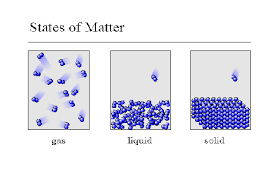
Which state of matter has tightly packed molecules?
a)
solid
b)
liquid
c)
gas
57.
Define a liquid.
a)
Indefinite shape, indefinite volume
b)
Definite shape, definite volume
c)
Found in stars
d)
Definite volume, indefinite shape
58.
Particles (molecules) in a ______________________ have more energy than the other states of matter.
a)
gas
b)
solid
c)
liquid
59.
At higher temperatures
a)
particles in an object have less energy
b)
particles in an object move faster
c)
a gas contracts
60.
What is happening when my ice cream changes from a solid to a liquid?
a)
freezing
b)
melting
c)
burning
d)
evaporation
61.
Particles of a liquid
a)
are tightly packed together and stay in a fixed position.
b)
have no viscosity.
c)
decrease in volume with increasing temperature.
d)
are free to move around one another but still touch.
62.
What term describes a solid changing to a gas?
a)
Deposition
b)
Sublimation
c)
Evaporation
d)
Freezing
63.
Which has a greater distance between particles?
a)
Solid
b)
Liquid
64.
The teacher heats a pot of water. Once the water reaches 100°C, which point has the water reached?
a)
Boiling
b)
Melting
c)
Freezing
d)
Evaporating
65.
Particles have energy and _________ stop moving
a)
rarely
b)
always
c)
never
d)
sometimes
66.
Matter changes state when...
a)
energy is added or removed
b)
energy is added
c)
energy is removed
d)
there is no energy
67.
As molecules gain energy, they move _____ and spread apart, and vise versa.
a)
faster
b)
slower
c)
less
d)
inside
68.
As molecules bump into each other, they push each other ________ until they are equally spread out. 
a)
together
b)
apart
69.
As temperature decreases, the molecules collide more, move faster, and spread out. 
a)
true
b)
false
70.
What state is a substance in if the temperature of a substance is between its melting point and its boiling point?
a)
solid
b)
liquid
c)
gas
d)
plasma
71.
The liquid in the thermometer rises when it is placed in the hot water because ___________. 
a)
it gains heat from the hot water and expands.
b)
loses heat from the hot water and contracts. 
c)
the surrounding air is too warm. 
d)
the liquid is boiling. 
72.
What does “high concentration area” mean?
a)
Spread out
b)
Tightly packed together
c)
Uncrowded
d)
Spacious
73.
When particles move from areas of high concentration to areas less concentrated, this has taken place.
a)
diffusion
b)
mitosis
c)
endocytosis
d)
photosynthesis
74.
In general what is the most dense form of matter?
a)
solid
b)
liquid
c)
gas
d)
plasmas
75.

Something that goes from liquid to gas is...

a)

Evaporation

b)

Melting

c)

Freezing

d)

Sublimation

76.

When something goes from gas to liquid, it is called...

a)

Evaporation

b)

Condensation

c)

Deposition

d)

Freezing

77.

Which of the following sentences are true about solids?

a)

Solids are rigid, have a fixed shape but not a fixed volume

b)

Solids are not rigid, have a fixed shape and no fixed volume

c)

Solids are rigid, have a fixed shape and a fixed volume

78.
Number 2 represents a ________
a)
solid
b)
liquid
c)
gas
d)
plasma
79.
Particles in a _____________ are tightly packed together.
a)
solid
b)
liquid
c)
gas
d)
plasma
80.
Particles in a _________ take the shape of the container.
a)
solid
b)
liquid
c)
gas
d)
plasma
81.
As particles are exposed to warmer temperatures they __________
a)
speed up
b)
slow down
c)
stay the same
d)
vibrate
82.
As particles are exposed to colder temperatures they _____
a)
speed up
b)
slow down
c)
stay the same
d)
become ions