wayground logo

Free Printable Worksheets

Font size

S
M
L
XL
Worksheets

Genetics/Adaptations 7th Grade - End of Unit

Total questions: 82

Worksheet time: 1hrs 2mins

Name
Class
Date
1.
Which organisms are most likely to survive?
a)
the best adapted
b)
the fastest
c)
the strongest
d)
the most domesticated (tamed)
2.
Survival of the Fittest and Evolution were proposed by what scientist?
a)
Charles Darwin
b)
Albert Einstein
c)
Steven Hawking
d)
Isaac Newton
3.

This means the better adapted organisms survive to pass traits along to offspring.

a)

Evolution

b)

Natural Selection

c)

Extinction

d)

Artifical Selection

4.
What was the name of the ship Darwin traveled the world on?
a)
HMS Beagle
b)
SS Beagle
c)
HMS Bugle
d)
SS Bugle
5.

What are the most studied animals in the Galapagos?

a)

Finches

b)

Tortoises

c)

Turtles

d)

Lizards

6.
What is the advantage of having different shaped beaks?
a)
To look different from other species.
b)
To be able to eat the food readily available in the environment.
c)
To protect itself against predators.
d)
To protect itself against prey.
7.
Why are advantageous traits more likely to be passed onto offspring?
a)
Because they are more likely to survive and reproduce.
b)
Because they come from dominant alleles.
c)
Because they come from recessive alleles.
d)
Because the trait is an acquired phenotype.
8.
The purpose of selective breeding is to 
a)
Get bigger animals
b)
get smaller animals
c)
create animals with desirable traits
d)
create animals with bad traits
9.
Genotype refers to the ...
a)
physical expression of the genes
b)
the possible combination of alleles in a gene
c)
whether an allele is dominant or recessive
d)
how an organism will appear
10.
Which of the following is a phenotype?
a)
BB
b)
Bb
c)
bb
d)
Blue eyes
11.
What is a phenotype
a)
The genetic make up (code)
b)
The physical trait
12.
having two of the same genes for the trait (sometimes called purebred).
a)
homozygous
b)
hetrozygous
c)
protein
d)
chromosome
13.
having two different genes for a trait (sometimes called hybrid).
a)
protein
b)
homozygous
c)
heterozygous
d)
genotype
14.
Magda is a tall, 11 year old drummer. She has a scar on her right cheek. She is good at swimming. Which of her traits did Magda most likely inherit?
a)
height
b)
the scar
c)
ability to swim
d)
ability to play drums
15.
An allele whose trait only shows up when no dominant allele is present.
a)
hidden allele
b)
dominant allele
c)
recessive allele
d)
present allele
16.
Scientific study of how traits are passed to offspring through genes
a)
Heredity
b)
Genetics
c)
Inheritance
d)
Allele
17.
Alternate form of a gene for a single trait; may be dominant or recessive
a)
Heredity
b)
Genetics
c)
Inheritance
d)
Allele
18.
An allele whose trait always shows up in the organism when the allele is present
a)
Gene
b)
Pedigree
c)
Punnett Square
d)
Dominant
19.
A chart that shows all the possible combinations of alleles that can result from a genetic cross
a)
Gene
b)
Pedigree
c)
Punnett Square
d)
Dominant
20.
An organism’s physical appearance, or visible traits
a)
Recessive
b)
Genotype
c)
Phenotype
d)
Heterozygous
21.
An organism’s genetic makeup, or allele combinations
a)
Recessive
b)
Genotype
c)
Phenotype
d)
Heterozygous
22.
Process by which humans cross organisms to produce offspring with certain desirable traits
a)
Homozygous
b)
Selective Breeding
c)
Mutation
d)
Carrier
23.
Having two identical alleles for a given trait, either both dominant or both recessive
a)
Homozygous
b)
Selective Breeding
c)
Mutation
d)
Carrier
24.
Which of the following genotypes is homozygous recessive?
a)
RR
b)
Rr
c)
rr
d)
None of the Above
25.
Brown (B) is dominant over white (b). Which genotype is a purebred for brown fur?
a)
BB
b)
Bb
c)
bb
d)
All of the above
26.
If something is heterozygous, it is also...
a)
purebred
b)
hybrid
c)
dominant
d)
recessive
27.
True/False: Different genotypes can code for the same phenotype.
a)
True
b)
False
28.
This image shows a...
a)
Punnett Square
b)
Phenotype
c)
Genotype
d)
Dominant allele
29.
What does a Punnett Square help you do?
a)
Determine the ratio of phenotypes
b)
Determine the ratio of genotypes
c)
Predict possible traits the offspring will have
d)
All of the above
30.
Another word for homozygous is...
a)
purebred
b)
hybrid
c)
heterozygous
d)
dominant
31.
 Dominant alleles are-
a)
capital
b)
lowercase
c)
both
d)
neither
32.
 Recessive alleles are-
a)
capital
b)
lowercase
c)
both
d)
neither
33.
Which is the correct phenotype for this organism?
a)
BB
b)
blue
c)
green
d)
bb
34.
What is the genotype for this organism?
(E= 3 eyes, e= 1 eye)
a)
EE
b)
Ee
c)
ee
d)
EE or Ee
35.
If green is dominant over purple, then what is the genotype for this individual?
a)
Purple
b)
Green
c)
GG
d)
gg
36.
Which represents the genotype of a homozygous condition?
a)
Bb
b)
BC
c)
bb
d)
bc
37.
If the four existing children in a family are all sons, what chance would there be that the next child would also be a son?
a)
75%
b)
50%
c)
25%
d)
20%
38.

How many alleles does a human have for a genotype?

a)

1

b)

2

c)

3

d)

4

39.
G = green, g = yellow
The genotype for a yellow plant is...
a)
GG
b)
Gg
c)
gg
d)
all of the choices result in yellow
40.
Which of the following is an example of a genotype?
a)
Bb
b)
brown fur
c)
b
d)
gene
41.
How many parents does asexual reproduction involve?
a)
one 
b)
two
c)
three
d)
four
42.
The offspring from asexually reproduced organisms are?
a)
Different than their parents
b)
Identical to parents
c)
Like a combination from both parents
d)
A different species
43.
If two organisms reproduce sexually, then their offspring will exhibit a genetic makeup that is -
a)
identical to only one parent
b)
identical to all of its siblings
c)
a unique combination of traits
d)
the recessive traits of each parent
44.
Prokaryotes (bacteria) reproduce asexually via -
a)
spore formation
b)
bud creation
c)
vegetative propagation
d)
binary fission
45.
All of the offspring of an organism have the same genetic material, which is identical to the parent organism. From this, we can conclude that this organism -
a)
makes its own food
b)
is unicellular
c)
live in a marine habitat
d)
reproduces asexually
46.
When comparing the offspring of sexually and asexually reproducing organisms, we would expect the genetic material (DNA) of the sexually reproducing organism to -
a)
contain fewer mutations
b)
be lesser in quantity
c)
be simpler overall
d)
show more variation
47.
The genetic material of an offspring of sexually reproducing organisms is best described as–
a)
identical to that of the other offspring
b)
a copy of the genetic material of the mother
c)
a copy of the genetic material of the father
d)
genes from both parents, in unique combinations
48.
Is the following asexual or sexual reproduction?
A labradoodle is a type of dog that is crossed between a labradoor retriever and a poodle.  The labradoodle puppy takes on the traits of both of its parents.  Female dogs have a pregnancy period of almost 70 days.
a)
Sexual
b)
Asexual
49.
 A white cat had a litter of kittens that were orange, grey, and black and white spotted. Is this the result of sexual or asexual reproduction? And how would you characterize the offspring listed above?
a)
Sexual reproduction with uniform offspring
b)
Asexual reproduction with diverse offspring
c)
Sexual reproduction with diverse offspring
d)
Asexual reproduction with uniform offspring
50.
In sexual reproduction the female produces ___ cells.
a)
Female
b)
Quack
c)
Egg
d)
Sperm
51.
In sexual reproduction the male produces ___ cells.
a)
Malex
b)
Quack
c)
Egg
d)
Sperm
52.
Which of the following is a disadvantage for sexual reproduction?
a)
a lot of time and energy is required for making gametes and finding mates
b)
offspring can be produced more quickly than by asexual means
c)
the genetic diversity makes organisms respond differently to environmental changes
d)
the offspring are genetically different
53.
Tongue rolling, earlobes, dimples, and freckles are all examples of....
a)
Purebreds
b)
Genotypes
c)
Traits
d)
Pedigrees
54.
What is a segment of DNA called?
a)
Chromosome
b)
gene
c)
dominant trait
d)
nucleus
55.
What are the major structures in the nucleus that are made of DNA called?
a)
gene
b)
DNA
c)
chromosome
d)
mitochondria
56.
Evidence shows that the wolf is the ancestor to all of the breeds of dogs shown below. How did this variation arise in a relatively short period of time?
a)
A.  Genetic manipulation
b)
Natural selection
c)
Random chance
d)
Selective breeding
57.
Pairs of genes that control the same trait are known as
a)
alleles
b)
gametes
c)
hybrids
d)
loci
58.
Passing of traits from one generation to the next
a)
Heredity
b)
Genetics
c)
Inheritance
d)
Allele
59.
A dichotomous key for trees is provided. Hikers found a tree that has large brown cones and single sharp needles. What species of tree have the hikers found?
a)
Juniper
b)
Pine
c)
Spruce
d)
Fir
60.
Which of the following characteristics will most likely be helpful in identifying a butterfly using a dichotomous key?
a)
Migrates north every spring
b)
hangs on branches
c)
flutters wings fast on hot days
d)
Wings have long extensions
61.
A dichotomous key for insects is given. To what order does an insect with two pairs of scaly wings belong?
a)
Coleoptera
b)
Heteroptera
c)
Diptera
d)
Lepidoptera
62.
The theory of evolution by natural selection means that what is changing over time?
a)
The inherited traits of a population.
b)
The acquired traits of a population.
c)
Hair color and eye color
d)
Attractive features.
63.

What word describes a trait that helps an organism survive in its environment?

a)

natural selection

b)

mutation

c)

camouflage

d)

adaptation

64.
Do organisms "decide" to evolve and change?
a)
Yes, they know they need to change to survive 
b)
No, they change because of natural selection
65.
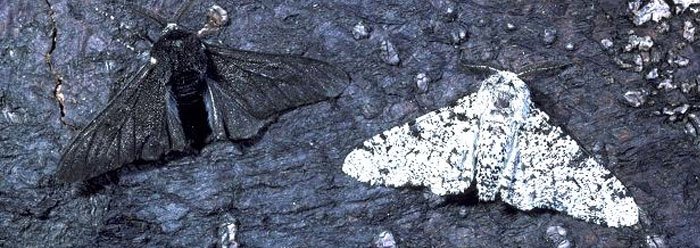
The trees these moths used to live on were white, but have been covered in soot from coal factories. Which moth will be more successful in this environment?
a)
Dark moth
b)
Light moth
c)
Both will be equally successful
d)
Neither will be successful
66.

Selective breeding is where ___________ decides which traits should be passed on

a)

Nature

b)

A human

c)

Your dog

d)

The illuminati

67.

Natural selection is where ___________ decides which traits should be passed on

a)

Nature

b)

A human

c)

Your dog

d)

The illuminati

68.

Xylem tubes transport..

a)

Water

b)

Mineral ions

c)

Food substances (e.g. sucrose)

69.
This is a period of deep sleep that occurs in some animals when outside temperatures are cold: ______
a)
hibernation
b)
migration
70.

What is the vascular tissue in plants called in which food moves through?

a)

root cap

b)

root hair

c)

phloem

d)

chloropyll

71.

What do the vacuoles in this picture convey?

a)

Low Turgor Pressure

b)

Medium Turgor Pressure

c)

High Turgor Pressure

d)

All of these are correct

72.

Which plant would be stiff and rigid?

a)

A

b)

B

73.

What is the force inside the central vacuole called?

a)

The Force

b)

Turgor Pressure

c)

Water Pressure

d)

Thigmotropism

74.

Poison Ivy growing on a tree by touch.

a)

Geotropism

b)

Phototropism

c)

Thigmotropism

d)

Hydrotropism

75.

A plant growing in response to the sunlight.

a)

Geotropism

b)

Phototropism

c)

Thigmotropism

d)

Hydrotropism

76.

Roots of a tree growing towards the water line of a house.

a)

Geotropism

b)

Phototropism

c)

Thigmotropism

d)

Hydrotropism

77.

The root of a plant growing down.

a)

Positive Geotropism

b)

Negative Geotropism

c)

Thigmotropism

d)

Hydrotropism

78.
When a plant grows toward a stimuli it is known as:
a)
Positive
b)
Negative
79.
When a plant grows away from a stimuli it is called:
a)
Positive 
b)
Negative
80.
When the plant responds to light, it is known as:
a)
Phototropism
b)
Geotropism
c)
Thigmotropism
d)
Hydrotropism
81.
What type of tropism response to gravity?
a)
Hydrotropism
b)
Phototropism
c)
Thigmotropism
d)
Geotropism
82.
What term refers to a plant growing or moving away from a stimulus?
a)
Touch
b)
Tropism
c)
Dormancy
d)
Development