wayground logo

Free Printable Worksheets

NEW

Font size

S
M
L
XL
Worksheets

CELL DIVISION, CHROMOSOMES, MITOSIS, AND MEIOSIS

Total questions: 80

Worksheet time: 1hrs 25mins

Name
Class
Date
1.

DNA stands for

a)

detolnucleus alkaline

b)

deoxyribonucleic acid

c)

deoxygenated acid

d)

denitrogenated

2.

Genes are organised into larger structures called

a)

DNA

b)

genotypes

c)

phenotypes

d)

chromosomes

3.

Cell division for making new cells for replacement, growth and repair is called

a)

mitosis

b)

meosis

c)

fertilization

d)

interphase

4.

Cell division called _______ is used in the production of sex cells

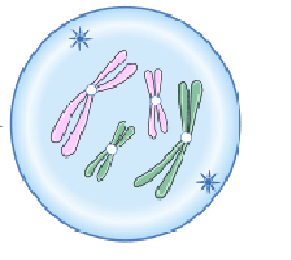
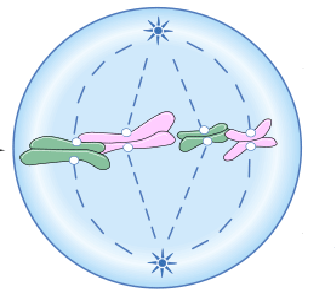
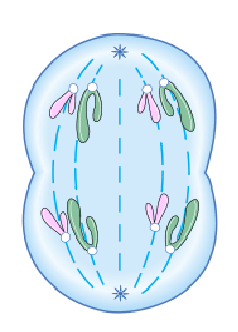
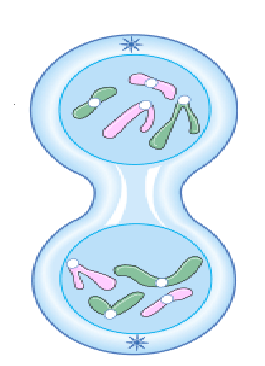
a)

mitosis

b)

meiosis

c)

fertilization

d)

interphase

5.

Healthy humans have ______ chromosomes

a)

23

b)

42

c)

46

d)

92

6.

Human sex cells contain ______ chromosomes

a)

23

b)

42

c)

46

d)

92

7.

Strands of DNA are in the shape of

a)

a straight line

b)

a circle

c)

a mobeius strip

d)

a double helix

8.

Which of the following happens in both mitosis and meiosis

a)

DNA rearranges itself into chromosomes

b)

the chromosomes duplicate

c)

occurs in gametes

d)

the daughter cells are identical

9.
What is a chromatid?
a)
One half of a chromosome
b)
Condensed chromatin
c)
Handle for spindle fibers
d)
Forms spindle fibers
10.
What are chromosomes?
a)
The control center
b)
Condensed chromatin
c)
Handle for spindle fibers
d)
Microtubules
11.
What are spindle fibers?
a)
One half of a chromosome
b)
Condensed chromatin
c)
Kinetechores
d)
Protein structures that separate chromosomes
12.
What is a kinetechore?
a)
One half of a chromosome
b)
Condensed chromatin
c)
Handle for the spindle fiber
d)
Protein structures that divide chromosomes
13.
What is the function of microtubules during mitosis?
a)
They form spindle fibers
b)
They form kinetochores
c)
They anchor spindle fibers
d)
They form during cytokinesis
14.
What is a cleavage furrow?
a)
One half of a chromosome
b)
handle for spindle fibers
c)
Forms at the beginning of Cytokinesis
d)
pulls chromosomes apart
15.
What happens during Interphase?
a)
Mitosis and Meiosis
b)
Growth and DNA synthesis
c)
DNA synthesis and mitosis
d)
Growth and mitosis
16.
In which phase of mitosis does this occur:
Chromatids move to opposite sides of the cell.
a)
Interphase
b)
Prophase 
c)
Metaphase 
d)
Anaphase
17.
In which phase of the cell cycle does this occur:
The cytoplasm divides.
a)
Interphase
b)
Anaphase
c)
Cytokinesis
d)
Telophase
18.
In which phase of the cell cycle does this occur:
The chromosomes line - up along the middle of the cell.
a)
Cytokinesis
b)
Telophase
c)
Metaphase
d)
Anaphase
19.
In which phase of the cell cycle does this occur:
The chromatin condenses and chromosomes become visible.
a)
Anaphase
b)
Telophase
c)
Metaphase
d)
Prophase
20.
In which phase of the cell cycle does this occur:
A nuclear membrane reforms around the chromosomes.
a)
Prophase
b)
Interphase
c)
Anaphase 
d)
Telophase
21.
In which phase of the cell cycle does this occur:
The nuclear membrane dissolves.
a)
Prometaphase
b)
Metaphase
c)
Anaphase
d)
Telophase
22.
The cells produced via meiosis are called:
a)
sex cells
b)
somatic cells
c)
body cells
d)
skin cells
23.
If a body cell in a butterfly contains 24 chromosomes, a butterfly egg would contain
a)
3
b)
6
c)
12
d)
24
24.
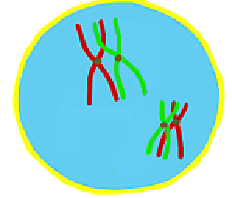
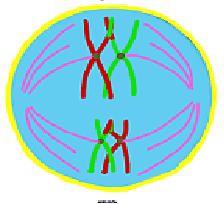
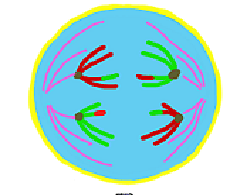
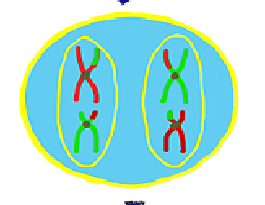
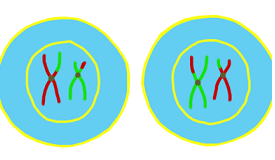
This picture shows which process? 
a)
mitosis
b)
meiosis
c)
the cell cycle
25.

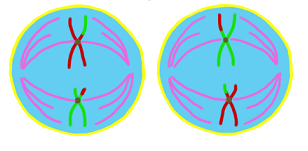
Which process does the picture show and what type of cells are produced?

a)

mitosis, gametes

b)

mitosis, body cells

c)

meiosis, gametes

d)

meiosis, body cells

26.
A male shark has 40 chromosomes in each of its sex cells. How many would be present in its body cells?
a)
20
b)
40
c)
80
d)
160
27.
Fruit fly body cells have 8 chromosomes. After mitosis, you would expect a resulting fruit fly daughter cell to have ...
a)
16 chromosomes.
b)
46 chromosomes.
c)
8 chromosomes.
d)
4 chromosomes.
28.
When you start with 1 cell, at the end of mitosis, how many identical cells will you have?
a)
1
b)
2
c)
3
d)
4
29.
In which type of cells will mitosis occur?
a)
egg cells
b)
sperm cells
c)
jail cells
d)
Body cells except the sperm and egg cells
30.
When a cell divides in mitosis, what do we call the 2 new cells?
a)
mother cells
b)
father cells
c)
daughter cells
d)
son cells
31.
Before cells can divide, what must be copied?
a)
mitochondria
b)
cytoplasm
c)
DNA
d)
Cell Wall
32.
The cells produced via meiosis are called:
a)
sex cells (gametes)
b)
somatic cells
c)
body cells
d)
skin cells
33.
After meiosis is complete how many cells will there be?
a)
1
b)
2
c)
3
d)
4
34.
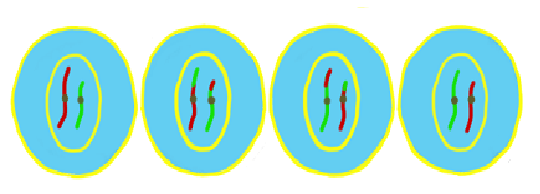
What phase of mitosis is occuring in the picture?
a)
Prophase
b)
Metaphase
c)
Cytokinesis
d)
Telophase
35.
What is the first phase of Mitosis?
a)
Prophase
b)
Metaphase
c)
Anaphase
d)
Telophase
36.
In which phase does the cell spend most of it's life?
a)
Interphase
b)
Nuclear Division
c)
Telophase
d)
Mitosis
37.
Why do we need meiosis?
a)
To double the number of chromosomes going into sex cells
b)
To halve the number of chromosomes going into sex cells
c)
To triple the number of chromosomes going into sex cells
d)
To not change the number of chromosomes going into sex cells
38.
A human zygote should have _____ chromosomes inside.
a)
46
b)
23
c)
92
d)
64
39.
During what stage does the G1, S and G2 phases happen?
a)
Interphase
b)
M phase
c)
Mitosis
d)
Cytokinesis
40.
During what phase of the cell cycle is DNA replicated?
a)
G1 phase
b)
S phase
c)
G2 phase
d)
M phase
41.
Why would it be important to replicate DNA before a cell divides in mitosis or meiosis?
a)
In order for genetic information to be transferred into daughter cells.
b)
In order for the cell to be able to increase in size.
c)
In order for the DNA to be contained in the nucleus.
d)
In order for the cell to re-order the DNA sequencing in the new cells.
42.

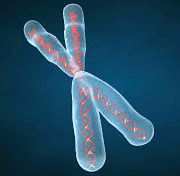
In the following structure, the circled item is a

a)

chromosome

b)

chromatid

c)

centromere

d)

chromatin

43.
Structure (b) is a ____.
a)
chromosome
b)
chromatid
c)
centromere
44.
What phase of mitosis is pictured?
a)
Metaphase
b)
Telophase
c)
Prophase
d)
Anaphase
45.
In which type of cells will mitosis occur?
a)
egg cells
b)
sperm cells
c)
jail cells
d)
Body cells except the sperm and egg cells
46.
How many daughter cells are produced from meiosis ?
a)
10
b)
6
c)
4
d)
2
47.

What phase am I?

a)

Interphase

b)

Prophase

c)

Metaphase

d)

Anaphase

e)

Telophase

48.

What phase am I?

a)

Interphase

b)

Prophase

c)

Metaphase

d)

Anaphase

e)

Telophase

49.

What phase am I?

a)

Interphase

b)

Prophase

c)

Metaphase

d)

Anaphase

e)

Telophase

50.

What phase am I?

a)

Interphase

b)

Prophase

c)

Metaphase

d)

Anaphase

e)

Telophase

51.

When the cells completely split it is call what?

a)

Telophase

b)

Cytokinesis

c)

Anaphase

52.

what phase am I?

a)

Prophase 1

b)

Metaphase 1

c)

Anaphase 1

d)

Telophase 1

e)

Cytokinesis

53.

what phase am I?

a)

Prophase 1

b)

Metaphase 1

c)

Anaphase 1

d)

Telophase 1

e)

Cytokinesis

54.

what phase am I?

a)

Prophase 1

b)

Metaphase 1

c)

Anaphase 1

d)

Telophase 1

e)

Cytokinesis

55.

what phase am I?

a)

Prophase 1

b)

Metaphase 1

c)

Anaphase 1

d)

Telophase 1

e)

Cytokinesis

56.

At the end of Meiosis 2 the cytokinesis creates what?

a)

2 diploid cells

b)

2 haploid cells

c)

4 diploid cells

d)

4 haploid cells

57.

what phase am I?

a)

Prophase II

b)

Metaphase II

c)

Anaphase II

d)

Telophase II

e)

Cytokinesis

58.

what phase am I?

a)

Prophase II

b)

Metaphase II

c)

Anaphase II

d)

Telophase II

e)

Cytokinesis

59.

what phase am I?

a)

Prophase II

b)

Metaphase II

c)

Anaphase II

d)

Telophase II

e)

Cytokinesis

60.
If a regular cell had 30 chromosomes, how many chromosomes would be found in the gametes?
a)
30
b)
15
c)
10
d)
60
61.
The haploid number of human chromosomes is
a)
11
b)
12
c)
23
d)
46
62.
The diploid number of human chromosomes is
a)
23
b)
46
c)
92
63.
What is the function of mitosis?
a)
genetic diversity though sexual reproduction
b)
cell reproduction and general growth and repair
64.
The sea star will regenerate an arm if needed.  What cellular process is directly responsible for this regeneration?
a)
meiosis
b)
transpiration
c)
mitosis
d)
respiration
65.
_________ is a series of stages that lead to the cell making more cells.
a)
Cell party
b)
Cell phone
c)
Cell cycle
d)
Cell bicycle
66.
________ is a process during which the nucleus and cellular contents duplicate and then divide, producing two identical cells
a)
Myoasis
b)
Mitosis
c)
My Toesies
d)
Meiosis
67.
________ is a reproductive process in which the nucleus divides and four sex cells form
a)
Myoasis
b)
Mitosis
c)
My Toesies
d)
Meiosis
68.
_________ is the female gamete of reproductive cell
a)
Egg
b)
Sperm
c)
Zygote
d)
Oval
69.
_______ is the male gamete or reproductive cell
a)
Ovum
b)
Egg
c)
Sperm
d)
Chromosomes
70.
________ are reproductive cells (sperm and egg/ovum)
a)
Gametes
b)
Games
c)
Reproductive cells
d)
Ham meats
71.
________ is any change in a sequence of DNA
a)
Mutation
b)
Meosis
c)
Apoptosis
d)
Mitosis
72.
Prokaryotes reproduce via
a)
binary fission
b)
mitosis
c)
meiosis
d)
cellular reproduction
73.
What are the 5 steps of the cell cycle?
a)
1. Cytokinesis 
2. Mitosis
3. G1
4. G2
5. S
b)
1. G1
2. G2
3. S
4. Mitosis
5. Cytokinesis
c)
1. S
2. G1
3. Mitosis
4. G2
5. Cytokinesis
d)
1. G1
2. S
3. G2
4. Mitosis
5. Cytokinesis
74.
Before a cell can ever divide
a)
the cell must have a nucleus
b)
the cell must be healthy
c)
the cell's DNA must be copied
d)
the cell must be fully grown
75.
Step one in Mitosis is
a)
metaphase
b)
interphase
c)
prophase
d)
telophase
76.
During prophase
a)
chromosomes line up at the cell's equator
b)
nuclear envelope reappears at each end of the cell
c)
chromosomes are pulled apart into chromatids towards opposite ends of the cell
d)
chromosomes become visible and the nuclear envelope dissolves
77.
Step two in mitosis is
a)
metaphase
b)
anaphase
c)
telophase
d)
prophase
78.
What occurs during telophase?
a)
the cell splits in half
b)
two nuclei are formed at opposite poles of the cell
c)
the chromatids begin to pull apart
d)
nuclear envelope disappears 
79.
Mitosis and meiosis are the same process.
a)
True
b)
False
80.
What holds two chromosomes together?
a)
centromere
b)
chromatid
c)
DNA bonds
d)
velcro