
 Worksheets
Biology Category 1 STAAR Review
Total questions: 80
Worksheet time: 1hrs 19mins
Name
Class
Date
1.
The chemical reaction that breaks down a molecule by adding water is
a)
Dehydration Synthesis
b)
Hydrophobia
c)
Hydrolysis
d)
Dehydration
2.
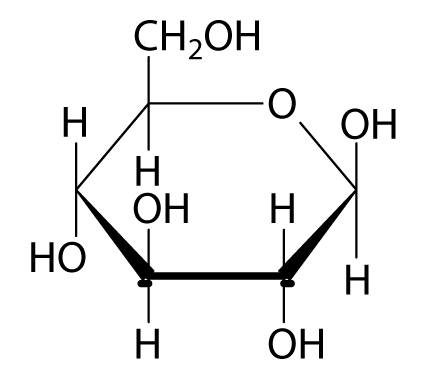
Identify the biomolecule
a)
Carbohydrate
b)
Lipid
c)
Protein
d)
Nucleic Acid
3.
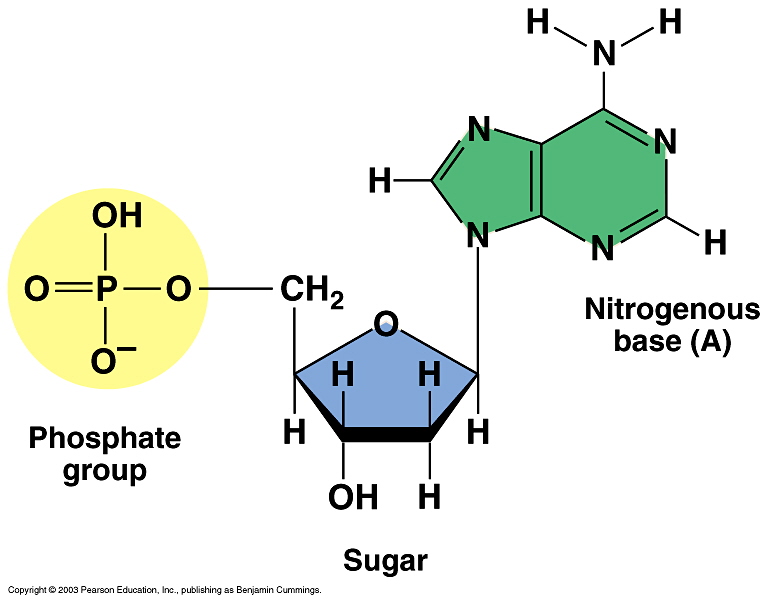
Identify the biomolecule
a)
Lipid
b)
Protein
c)
Carbohydrate
d)
Nucleic Acid
4.
Which biomolecule is the key source of energy?
a)
Lipid
b)
Protein
c)
Carbohydrate
d)
Nucleic Acid
5.
A monomer is ...
a)
a single atom
b)
a building block for polymers
c)
a single element
d)
is an inorganic molecule
6.
What is the monomer for a protein?
a)
Monosaccharide
b)
Triglyceride
c)
Amino Acid
d)
Nucleotide
7.
The process that builds molecules by removing water to bind them together is
a)
Hydrolysis
b)
Protein Synthesis
c)
Dehydration Synthesis
d)
Lysis
8.
What is the functions of lipids?
a)
Quick source of energy
b)
Builds muscles, skin, enzymes
c)
Stores genetic information
d)
Stores energy, insulation, protection
9.
Which of the following is an example of a nucleic acid?
a)
Glucose
b)
Phospholipid
c)
Enzymes
d)
DNA
10.

Identify the biomolecule
a)
monosaccharide
b)
disaccharide
c)
polysaccharide
d)
glycogen
11.

Identify the biomolecule
a)
Protein
b)
Lipid
c)
Carbohydrate
d)
Nucleic Acid
12.
What is the function of a nucleic acid?
a)
Stores genetic information
b)
Stores energy
c)
Quick source of energy
d)
Builds structures
13.

This biomolecule would be used for
a)
Building enzymes
b)
Storing energy
c)
Key source of energy
d)
Storing genetic information
14.
Lipids are made of
a)
monosaccharides
b)
amino acids
c)
glycerol and 3 fatty acids
d)
nucleotides
15.
What does the word organic mean?
a)
has nitrogen
b)
has sulfur
c)
has carbon
d)
has oxygen
16.
Nucleotides are monomer for
a)
Nucleic Acids
b)
Proteins
c)
Carbohydrates
d)
Lipids
17.
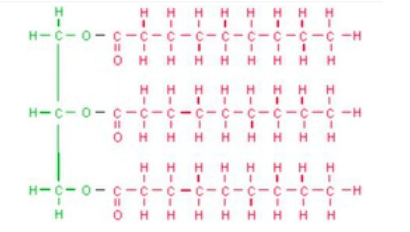
Which biomolecule is this a picture of?
a)
Protein
b)
Nucleic Acid
c)
Lipid
d)
Carbohydrate
18.
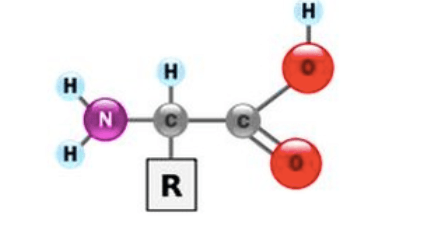
Which biomolecule is this a picture of?
a)
Protein
b)
Nucleic Acid
c)
Lipid
d)
Carbohydrate
19.
Which biomolecule is also known as enzymes?
a)
Carbohydrate
b)
Lipid
c)
Nucleic Acid
d)
Protein
20.
Which biomolecule contains pastas and breads?
a)
Lipid
b)
Protein
c)
Nucleic Acid
d)
Carbohydrate
21.
Which biomolecule is made of nucleotides and contain you DNA?
a)
Carbohydrate
b)
Lipids
c)
Protein
d)
Nucleic Acid
22.
Which biomolecule helps form muscles?
a)
Nucleic Acid
b)
Carbohydrate
c)
Protein
d)
Lipids
23.
Which biomolecule is responsible for insulation and energy storage?
a)
Protein
b)
Nucleic Acid
c)
Lipid
d)
Carbohydrate
24.
Which biomolecule has sugars and starches?
a)
Lipids
b)
Proteins
c)
Carbohydrates
d)
Nucleic Acid
25.
Which biomolecule is made of amino acids?
a)
Nucleic Acid
b)
Carbohydrate
c)
Protein
d)
Lipid
26.
Which biomolecule is your main source of energy?
a)
Nucleic Acid
b)
Protein
c)
Lipid
d)
Carbohydrate
27.
Which biomolecule contains fats, oils, and waxes?
a)
Proteins
b)
Nucleic Acid
c)
Lipids
d)
Carbohydrate
28.
Which biomolecule includes fats, such as triglycerides, oils, waxes, and steroids (cholesterol); insoluble in water; provides energy storage, insulation, part of cell membrane, and hormones
a)
Nucleic Acid
b)
Lipids
c)
Carbohydrate
d)
Protein
29.
Which biomolecule contains Deoxyribonucleic acid; a sequence of bases that makes hereditary code; Ribonucleic acid; translate hereditary code into proteins that determine how the cell will function under various conditions; provides storage and retrieval of information; encode genes, gene expression, helps make proteins
a)
Nucleic Acid
b)
Lipid
c)
Carbohydrate
d)
Protein
30.
four most common elements that make up all living things are carbon, hydrogen,
a)
nitrogen, and iron.
b)
oxygen, and nitrogen.
c)
calcium, and phosphorus.
d)
oxygen, and iron.
31.
A biomolecule that insulates and protects organs is ____.
a)
Lipids
b)
Nucleic Acid
c)
Carbohydrates
d)
Proteins
32.
Which is NOT a function for Lipids?
a)
Long term Energy Storage
b)
Chubify
c)
Insulation
d)
Cell Membrane
33.
True or False: Enzymes are substrate specific
a)
True
b)
False
34.
What is the shape of DNA?
a)
Double Helix
b)
Chain-link Fence
c)
Rocky Road
d)
Jamaican Twister
35.
What is a substance called if it speeds up a chemical reaction?
a)
reusable
b)
catalyst
c)
specific
d)
fragile
36.
Each enzyme only has 1 substrate that will fit its active site. What is this called?
a)
reusablility
b)
denaturation
c)
specificity
d)
fragility
37.
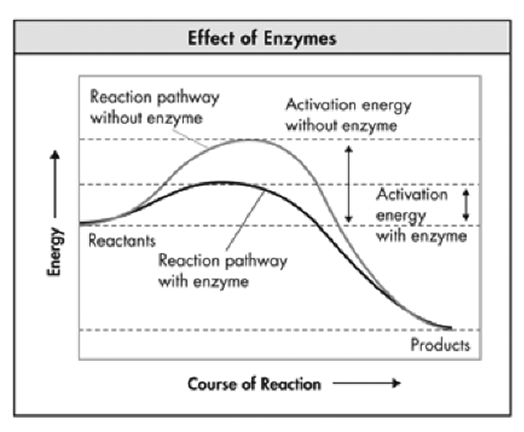
The graph shows how enzymes affect reactions in cells. Which statement best summarizes the information shown in the graph?
a)
Enzymes increase the energy of the reactants.
b)
Enzymes decrease the energy level of the products.
c)
Enzyme decrease the activation energy of the reaction.
d)
Enzymes reverse the direction of the reaction.
38.
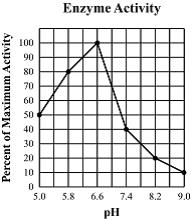
Which of the following conclusions can be drawn from this graph?
a)
The optimum pH of the enzyme is 6.6.
b)
The optimum pH of the enzyme is 5.8
c)
The enzyme’s activity increases as pH increases 5.0 to 9.0
d)
The enzyme’s activity is greater around pH of 8.0 .
39.
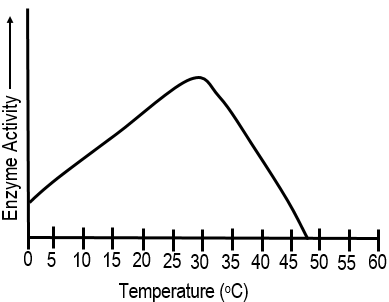
Based on the graph, what is the optimal temperature for this enzyme?
a)
15oC
b)
40oC
c)
30oC
d)
35oC
40.
Any substance that is acted upon by an enzyme is called a(n)?
a)
Coenzyme
b)
Substrate
c)
Vitamin
d)
Polypeptide
41.
Enzymes are...
a)
nucleic acids
b)
proteins
c)
lipids
d)
carbohydrates
42.
What is the function of an enzyme?
a)
enzymes break themselves into small pieces
b)
enzymes slow down chemical reactions
c)
enzymes speed up chemical reactions
d)
enzymes combine products to form reactants
43.
Which of these is NOT true?
a)
Enzymes can denature (change shape) when the temperature gets too high.
b)
Enzymes can only be used once in a chemical reaction.
c)
Extreme pH can denature enzymes.
d)
Enzymes speed up chemical reactions.
44.
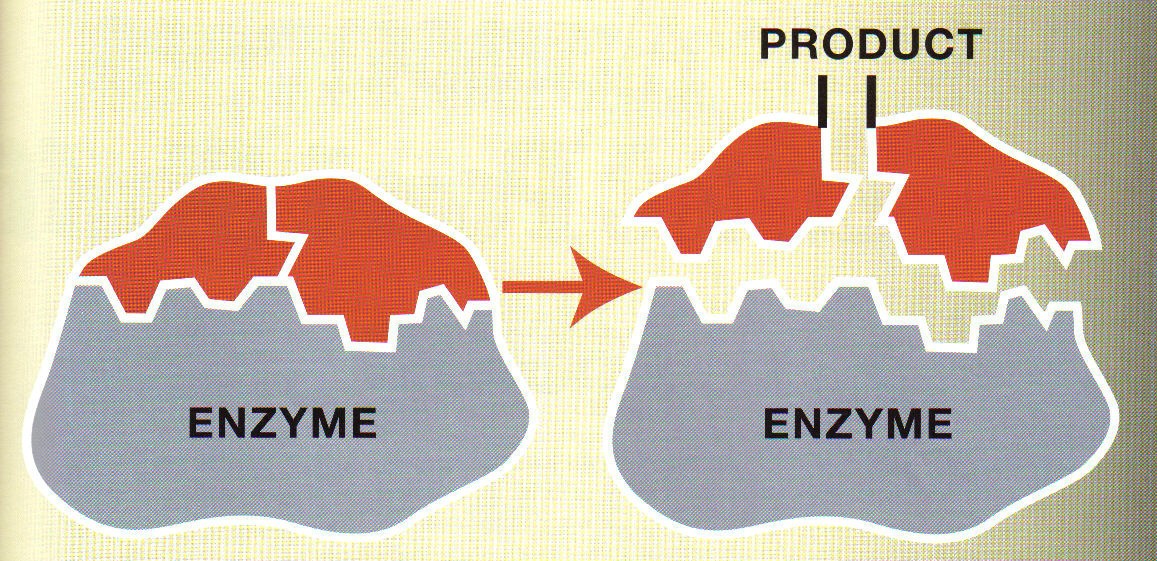
Enzymes speed up reaction rates by changing...
a)
Activation Energy
b)
pH
c)
Hydrogen Bonds
d)
Kinetic Energy
45.
How do enzymes speed up chemical reaction?
a)
Increasing activation energy
b)
Decreasing activation energy
c)
Increasing deactivation energy
d)
Decreasing deactivation energy
46.
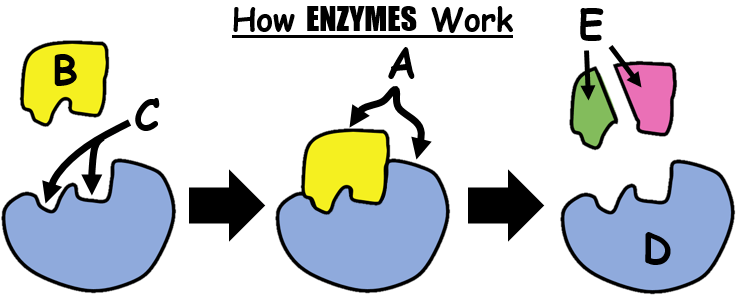
Letter D...
a)
active site
b)
enzyme
c)
substrate
d)
products
47.
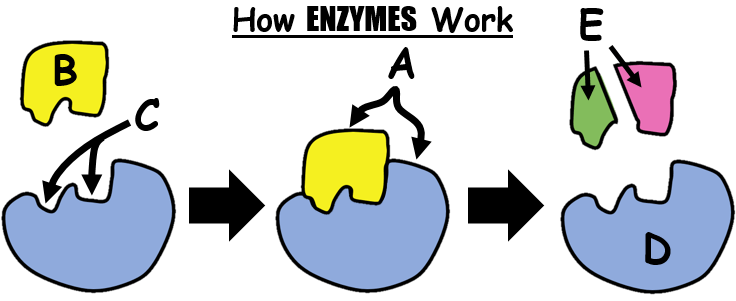
Letter B...
a)
active site
b)
enzyme
c)
substrate
d)
products
48.
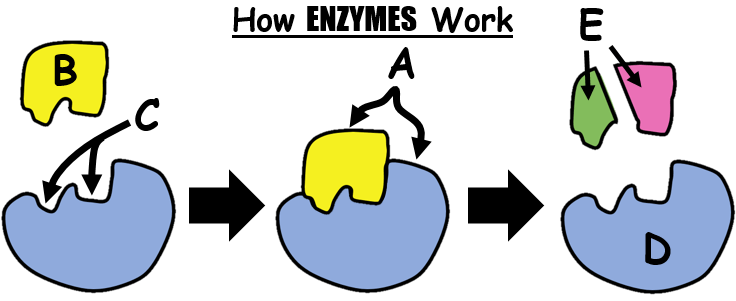
Letter E...
a)
active site
b)
enzyme
c)
substrate
d)
products
49.
1. What organelle is responsible for letting things in and out of the cell?
a)
Cell membrane
b)
Mitochondria
50.
what organelle controls the cell.
a)
Lysosome
b)
Nucleus
c)
Nucleolus
d)
Chromosomes
51.
This type of cell needs a cell wall and chloroplasts
a)
Plant cell
b)
Animal Cell
c)
Bacteria
52.
Bacteria cells are this type of cell.
a)
Eukaryote
b)
Prokaryote
53.
The powerhouse of the cell is the...It converts energy from food into energy the cell can use
a)
Mitochondrion
b)
Golgi body
c)
Nucleus
d)
Ribosomes
54.
This cell part is in ALL cells. It is the gel-like substance that provides cell shape.
a)
Chloroplasts
b)
Chromosomes
c)
Cytoplasm
d)
Mitochondria
55.
Plants perform photosynthesis through this organelle. It captures energy from the sun and uses it to produce food for the cell.
a)
Chlorophyll
b)
Chloroplasts
c)
Mitochondria
d)
Golgi Apparatus
56.
This structure is only in plant cells. It is outside of the cell membrane and adds more support/structure to the plant.
a)
Cell membrane
b)
Cell Nucleus
c)
Cell Wall
d)
Endoplasmic Reticulum
57.
Which organism listed below is a prokaryote?
a)
dog
b)
human
c)
sunflower
d)
bacterial cell
58.
Which organelle makes proteins?
a)
ribosomes
b)
nucleus
c)
mitochondria
d)
chloroplast
59.
This organelle protects/holds the DNA
a)
Mitochondria
b)
Chloroplasts
c)
Nucleolus
d)
Nucleus
60.
This organelle's function is to make protein.
a)
Rough E.R.
b)
Smooth E.R.
c)
Ribosome
d)
Nucleus
61.
This cellular structure helps organisms maintain homeostasis by controlling what substances may enter or leave cells.
a)
vacuole
b)
nucleus
c)
cell membrane
d)
cell wall
62.
A cell in a hypotonic solution will
a)
swell
b)
shrink
c)
stay the same size
d)
impossible to tell
63.
A cell in an isotonic solution will
a)
swell
b)
shrink
c)
stay the same size
d)
impossible to tell
64.
True or false, diffusion is passive.
a)
True
b)
False
65.
Diffusion is the movement of molecules from an area of _____ concentration to an ______ concentration
a)
High, low
b)
Low, high
c)
Low, low,
d)
High, high
66.
In diffusion, particles move down a _______ ________
a)
Concentrate gradient
b)
Conceited gradient
c)
Concentration gradient
d)
Concentrated orange juice
67.
When both inside and outside of a cell have the same amount of water it is said that the cell has reached a state of ___________.
a)
osmosis
b)
equilibrium
c)
diffusion
d)
hypertonic
68.
Does passive transport require energy?
a)
Yes
b)
No
69.

This diagram shows the cell cycle.
Which of the following activities occur in the S phase?
Which of the following activities occur in the S phase?
a)
Replication of the DNA
b)
Growth of the cell
c)
Formation of the mitotic spindle
d)
Breakdown of the nuclear membrane
70.
A scientist treats a cell with a chemical that destroys the ribosomes. As a result, which cell process will be stopped?
a)
Osmosis
b)
Protein Synthesis
c)
Photosynthesis
d)
Cellular Respiration
71.
Which is the most likely function of a group of cells that contain a high number of chloroplasts?
a)
Respiration
b)
Transpiration
c)
Photosynthesis
d)
Fermentation
72.

This diagram shows the cell cycle.
Which of the following activities occur in the G1 phase?
Which of the following activities occur in the G1 phase?
a)
Replication of the DNA
b)
Growth of the cell
c)
Formation of the mitotic spindle
d)
Breakdown of the nuclear membrane
73.

a)
Prophase
b)
Anaphase
c)
Telophase
d)
Interphase
74.
Some peeled pieces of apple were placed in distilled water and some in very salty water. The cells in the apple pieces will…
a)
Lose water in both solutions
b)
Gain water in both solutions
c)
Lose water in the distilled water and gain water in the salty water
d)
Gain water in the distilled water and lose water in the salty water
75.
What is one way that a lysogenic infection differs from a lytic infection?
a)
A lysogenic virus does not act on bacteria as a lytic virus does.
b)
A lysogenic virus can remain in the host DNA for a longer period without becoming active.
c)
A lysogenic virus contains RNA instead of DNA.
d)
A lysogenic virus directs the production of new viruses right away.
76.
Which cell part is present in eukaryotic cells, but not in prokaryotic cells?
a)
cell membrane
b)
ribosomes
c)
cytoplasm
d)
nucleus
77.
Which of the following is a possible result of a disruption in the cell cycle?
a)
cancer
b)
photosynthesis
c)
cellular respiration
d)
protein synthesis
78.
Which of the following is the only characteristic shared by living cells and viruses?
a)
the presence of carbohydrates
b)
the ability to reproduce
c)
the presence of the nucleic acid
d)
a cell membrane
79.

This cell is undergoing mitosis. What stage of mitosis is shown?
a)
prophase
b)
metaphase
c)
anaphase
d)
telophase
80.
How do photosynthesis and cellular respiration differ?
a)
photosynthesis uses food and cellular respiration produces food
b)
photosynthesis gives off oxygen and cellular respiration uses oxygen
c)
phtosynthesis uses oxygen and cellular respiration uses carbon dioxide
d)
phtotsynthesis breaks down carbohydrates and cellular respiration produces carbohydrates
100 %

