wayground logo

Free Printable Worksheets

NEW

Font size

S
M
L
XL
Worksheets

Biology pma review

Total questions: 75

Worksheet time: 1hrs 9mins

Name
Class
Date
1.
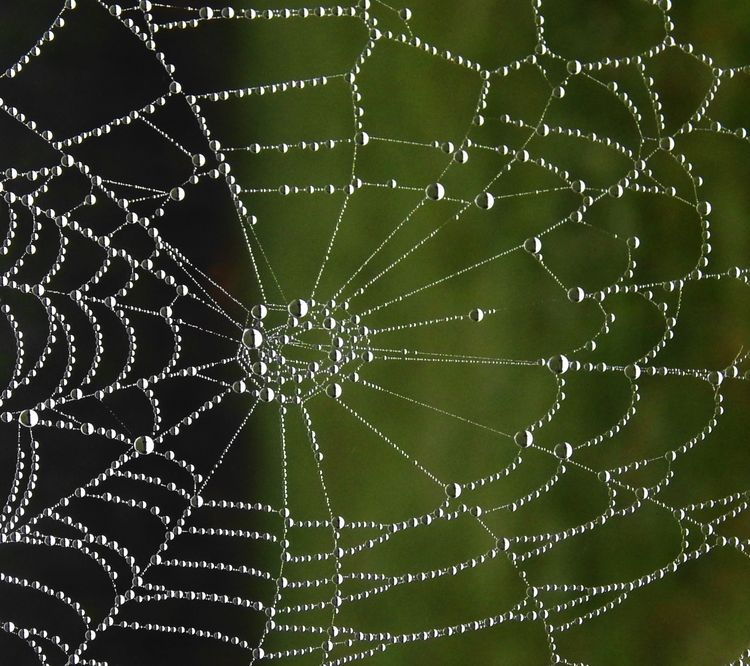
A water strider can skate along the top of a pond because:
a)
covalent bonds result in water cohesion
b)
hydrogen bonds result in water cohesion (surface tension)
c)
water striders have adapted to take advantage of water cohesion
d)
low surface tension of water
2.
What word describes when water is attracted to other substances?
a)
cohesion
b)
adhesion
c)
capillary action
d)
surface tension
3.
Why can water have no net charge but have slight charges in different parts of the molecule?
a)
The oxygen end is slightly negative and the hydrogen end is slightly positive
b)
The hydrogen end is slightly negative and the oxygen end is slightly positive
c)
The hydrogen and oxygen ends change in polarity
d)
Because it is hydrophobic
4.
The attraction that causes water and other liquids to form drops on thin films is called ________________. This is also water’s ability to be attraction to other water molecules.
a)
adhesion
b)
capillary action
c)
cohesion
d)
surface tension
5.
Water is polar because...
a)
The unequal sharing of electrons gives the water molecule a slight negative charge near its oxygen atom and a slight positive charge near its hydrogen atoms.
b)
The molecule has two poles, at which the it is colder than other regions of the molecule.
c)
The unequal sharing of electrons gives the water molecule a slight negative charge near its hydrogen atoms and a slight positive charge near its oxygen atom.
d)
The water molecule is neutral.
6.
Why does ice float?
a)
As water freezes, it expands and its density decreases.
b)
As water freezes, it takes up more hydrogen from the atmosphere, causing it to have a greater buoyancy.
c)
As water freezes, air becomes trapped between the hydrogen bonds of water molecules.
d)
As water freezes, it takes up more oxygen from the atmosphere, causing it to have a greater buoyancy.
7.
Which end of the water molecule has a slightly positive charge?
a)
the oxygen end
b)
the hydrogen end
c)
both ends are slightly positive
d)
neither end is positive
8.
Which types of compounds dissolve easily in water?
a)
Polar and Nonpolar
b)
Polar and Ionic
c)
Nonpolar and Ionic
d)
Covalent and Nonpolar
9.
What property of water helps to moderate earth's temperature?
a)
adhesion
b)
chohesion
c)
Specific heat capacity
d)
Latent heat of vaporization
10.
At one point in time, many people thought disease was caused by fate or by incorrect behavior. Following the invention of the microscope, bacteria were discovered. After this, a new theory of what causes disease arose that was known as the germ theory.  Why was the original theory modified? 
a)
It quickly became obvious that germs cause disease.
b)
The person who invented the microscope became ill.
c)
New evidence prompted revision to the original ideas.
d)
The proponents of the germ theory had political power.
11.
Newton’s third law of motion states that for every action there is an equal and opposite reaction. How does this law differ from a theory?
a)
A theory explains a set of well tested observations; a law describes a pattern in nature.
b)
Laws can be changed with the addition of new evidence but theories cannot.
c)
A law explains a pattern in nature in more detail than a theory. 
d)
Theories are based on more evidence than laws.
12.
Why is it important that scientists modify scientific theories when important new information is discovered?
a)
to confuse other scientists
b)
to keep the theory interesting and fresh
c)
to keep the theory as accurate and effective as possible
d)
to make sure the general public does not understand the theory
13.
 A biologist is investigating the effects of growth hormone on the rate of metamorphosis in butterflies. Which of the following methods of investigation would work best for the biologist investigating any possible effects?
a)
models
b)
controlled experiments
c)
systematic observations
d)
random sampling of populations
14.
The factor in an experiment that will be changed. 
a)
dependent variable
b)
independent variable
c)
controlled variable
d)
inferences 
15.
A series of steps used by scientists to solve a problem or answer a question. 
a)
scientific method
b)
recipe
c)
data collection
d)
metric system
16.
Things that stay the same throughout the whole experiment are called
a)
controls
b)
conclusions
c)
independent variables
d)
constants
17.
A possible explanation to a problem or question that has not yet been tested. 
a)
data
b)
theory
c)
hypothesis
d)
fact
18.
The factors in an experiment that can be changed. 
a)
variables
b)
quantitative data
c)
hypothesis
d)
steps
19.
This variable is the actual data collected during the experiment. 
a)
independent variable
b)
dependent variable
c)
control group
d)
data group
20.

Which organelle is responsible making food (Glucose) using sunlight?

a)

Cell Membrane

b)

Nucleus

c)

Chloroplast

d)

Mitochondria

21.

Which organelle stores water for use in photosynthesis?

a)

Chloroplast

b)

Cell Membrane

c)

Vacuole

d)

Nucleus

22.

How does most of the water needed by the plant get into its leaves?

a)

It enters through the stomata

b)

The roots absorb it and then it travels up the stem

c)

It's made during a chemical reaction in the leaf

d)

The flowers capture water and deliver it to the leaves

23.
Why do plants conduct photosynthesis?
a)
To make light
b)
To make mitochondria
c)
To make glucose
d)
To release carbon dioxide
24.
How does carbon dioxide get into the leaves of a plant?
a)
It's absorbed by the roots
b)
It's made in a chemical reaction in the stem
c)
It enters through the stomata
d)
It goes through the flowers
25.
Which choice correctly shows the gases that enter and exit plants during photosynthesis?
a)
Enter: Oxygen
Exit: Carbon dioxide
b)
Enter: Water vapor
Exit: Glucose
c)
Enter: Carbon dioxide
Exit: Oxygen
d)
Enter: Light
Exit: Water vapor
26.

Which of the following is the correct equation for PHOTOSYNTHESIS?

a)

light + carbon dioxide + water --> glucose + oxygen

b)

carbon dioxide + sugar + water --> oxygen + light

c)

oxygen + light + water --> carbon dioxide + sugar

d)

carbon dioxide + oxygen + water --> Light+ Sugar

27.
What is the correct equation for cellular respiration?
a)
6O2 + C6H12O6 -> 6CO2 + 6H2O + Energy
b)
6O2 + C6H12O6 + Energy -> 6CO2 + 6H2O
c)
6CO2 + 6H2O -> 6O2 + C6H12O6 + Energy
d)
6CO2 + 6H2O + Energy -> 6O2 + C6H12O6
28.
Cellular Respiration's goal is to
a)
make water
b)
make ATP
c)
make glucose
d)
make  oxygen
29.

Which of the following organelles is responsible for cellular respiration?

a)

Mitochondria

b)

Nucleus

c)

Endoplasmic Reticulum

d)

Ribosome

30.

How can energy from the sun be transferred to animals?

a)

The sun's energy is transformed into food by plants, animals eat plants as food so that they can transform that food into energy.

b)

Plants produced energy through photosynthesis, animals that eat that energy can produce food.

c)

Plants transformed energy of the sun into gases that animals can breath in to use as energy through respiration.

d)

Animals are able to use energy from the sun by eating the plants that provides energy for the animals.

31.
Which of the following decreases the activation energy necessary to initiate the chemical change within the body?
a)
nucleotides
b)
enzymes
c)
amino acids
d)
fatty acids
32.
What are the building blocks of proteins?
a)
amino acid
b)
fatty acid
c)
nucleotide
d)
lipid
33.
What are the single sugars that are the building blocks of carbohydrates?
a)
monosaccharides
b)
disaccharides
c)
polysaccharides
d)
amino acid
34.
Why are lipids insoluble in water?  
a)
lipids are polar
b)
lipids are non-polar
c)
lipids have a negative charge
d)
lipids are building blocks of protiens
35.
Which of the four major biological macromolecules can be easily identified by the nitrogen base and phosphate found in its structure?
a)
carbohydrate
b)
lipid
c)
protein
d)
nucleic acid
36.
a)
Frontal Lobe
b)
Brain Stem
c)
Cerebellum
d)
Occipital Lobe
37.
a)
Cerebellum
b)
Brain Stem
c)
Occipital Lobe
d)
Temporal Lobe
38.
a)
Frontal Lobe
b)
Parietal Lobe
c)
Temporal Lobe
d)
Occipital Lobe
39.
a)
Frontal Lobe
b)
Parietal Lobe
c)
Occiptal Lobe
d)
Temporal Lobe
40.
A fertilized egg undergoes several stages before it is successfully implanted. The diagram below shows these stages as the fertilized egg travels through the female reproductive system. In which of the following structures of the female human reproductive system is the blastocyst implanted during normal human 
a)
ovary
b)
uterus
c)
vagina
d)
amniotic sac
41.
Which of the following is true of a zygote?
a)
It forms into a blastocyst
b)
It is an unfertilized egg
c)
It produces haploid male gametophytes
d)
It is made up of only one cell
42.
Below is a diagram of the male reproductive system. Which structure is represented by the letter D? 
a)
scrotum
b)
testes
c)
prostrate gland
d)
epididymus
43.
Abnormalities present in the cells that line the uterus may prevent the production of offspring by directly interfering with which process? 
a)
 the development of the embryo
b)
the differentiation of gametes into zygotes
c)
the secretion of estrogen by the ovary
d)
the production and release of egg cells
44.
The diagram below represents a stage in the development of a fetus. A major function of structure X is to
a)
produce gametes by meiosis
b)
protect the fetus from physical injury
c)
 exchange materials between the mother and the fetus
d)
store food to provide the fetus with nutrients
45.

What is the function of antibodies within the immune system?

a)

Antibodies kill off any antigen that enters the body.

b)

Antibodies are only made when you are given a vaccination for specific antigens.

c)

Antibodies bind to specific antigens to flag for destruction.

d)

Antibodies are part of an external defense mechanism.

46.

How do T cells differ from B cells?

a)

T cells fight pathogens by killing pathogens directly, while B cells fight pathogens by making antibodies.

b)

T cells only make memory cells, and B cells only make antigens

c)

T cells fight pathogens by making antibodies, while B cells fight pathogens by killing pathogens directly.

d)

T cells can only fight off pathogens the body has encountered once, and B cells can fight off any pathogen the body comes across.

47.

Which of the following statements is TRUE about someone's immune system that has allergies?

a)

Body cells are dividing at an uncontrolled rate.

b)

The body is reacting to foreign antigens that are not dangerous to most people.

c)

T cells and B cells in the body cannot be activated.

d)

The body is mistaking its own cells for foreign antigens.

48.
An individual belonging to a specific species
a)
Biotic
b)
Community
c)
Organism
d)
Reptile
49.
The living part of an ecosystem
a)
Biotic
b)
Abiotic
c)
Mother Earth
d)
Flowers
50.
What is a producer?
a)
an organism that gets energy from eating other organisms
b)
an organisms that uses sunlight to make its own food
c)
an organism that gets energy from eating dead organisms, non-living material or waste
d)
an organism that uses chemical energy to make its own food
51.
The shrew provides energy for the _______?
a)
cricket
b)
grasshopper
c)
frog
d)
snake
52.
what did Charles Darwin observe in finch populations of the Galapagos Islands off the coast of South America?
a)
different species on different islands
b)
all species on one of the islands
c)
identical species on all the islands
d)
the same species as North America
53.
Mutations are important because they bring about
a)
death of the organism in which they develop
b)
genetic variation needed for a population to evolve
c)
benefits for the individual, not for the population
d)
Hardey-Weinberg equilibrium within a population
54.
What is the process in which humans breed organisms for certain traits?
a)
natural selection
b)
inheritance
c)
artificial selection
d)
descent withOUT modification
55.
Some organisms that share a common ancestor have features that have different functions, but similar structures.  These are known as
a)
vestigial structures
b)
analogous structures
c)
homologous structures
d)
fossil structures
56.
What increases genetic variation when animals move from one population to another
a)
genetic drift
b)
sexual selection
c)
bottleneck effect
d)
gene flow
57.
The gradual change in species over time is...
a)
Evolution
b)
Nucleotide 
c)
Adaptation
d)
Natural Selection
58.

What type of evidence is shown in the image above?

a)

Fossils

b)

Vestigial structures

c)

Homologous Structures

d)

DNA

59.

What type of evidence are shown in the picture above?

a)

Fossils

b)

Embryology

c)

Homologous Structures

d)

Vestigial Structures

60.
The theory that organisms best adapted to their environment are more likely to survive and reproduce.
"Survival of the fittest."
a)
Natural selection
b)
Adaptation
c)
Extinction
d)
Fossil
61.
What species of hominid are we?
a)
Homo Sapien
b)
Homo Neanderthalensis
c)
Sahalenthropis Tchadensis
d)
Homo Erectus
62.
Fossils, similar body shape, and similar DNA are all evidence that evolution has taken place on our planet. What is the fourth piece of evidence?
G
M
T
Text-to-speech function is limited to 200 characters
Options : History : Help : FeedbackClose
a)
Similarities in hair color
b)
Similar interests
c)
Similarities in early development
d)
Similar hunting patterns
63.
What is another way hominids have evolved over the last 7 million years? 
a)
walked on 4 legs
b)
bigger jaw
c)
larger brain
64.
What is one way hominids have evolved over the last 7 million years? 
a)
smaller brain
b)
flatter face
c)
shorter
d)
larger teeth
65.
Which of the following organisms are LEAST closely related?
a)
organisms that share a domain
b)
organisms that share a family 
c)
organisms that share a genus 
d)
organisms that share a species 
66.
The scientific name for an organism is made from the:
a)
class and family name
b)
genus and species name
c)
domain and kingdom name
d)
kingdom and phylum name
67.
The 8 levels of classification, most broad to most specific.
a)
Domain, Genus, Family, Order, Class, Phylum, Kingdom, Species
b)
Domain, Species, Kingdom, Genus, Phylum, Family, Class, Order
c)
Domain, Kingdom, Phylum, Class, Order, Family, Genus, Species
d)
Order, Kingdom, Species, Domain, Phylum, Family, Class, Genus
68.
Cells that do not have a true nucleus are called....
a)
eukaryote
b)
prokaryote
c)
unicellular
d)
multicellular
69.
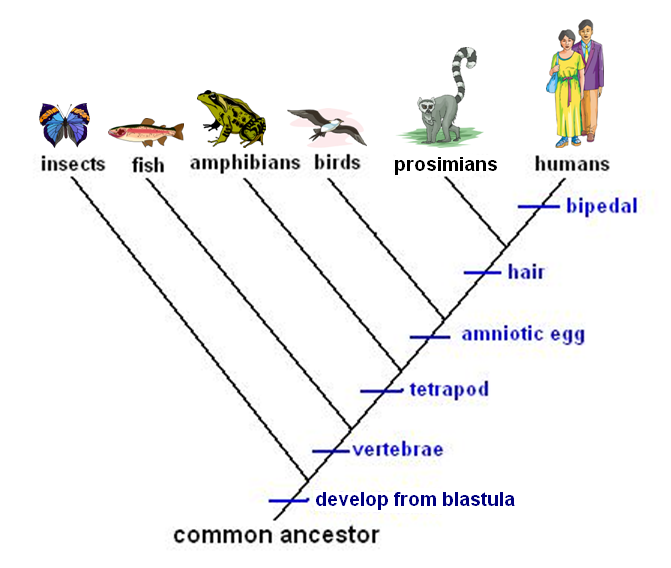
Which organisms pictured on the cladogram have hair?
a)
prosimians only
b)
prosimians and humans
c)
humans only
d)
prosimians and birds
70.
Molecule 3 is synthesized in 
a)
ribosomes
b)
chloroplasts
c)
the cell membrane
d)
the nucleus
71.
Which of the following statements is true?
a)
DNA is single-stranded
b)
RNA is single-stranded
c)
DNA contains uracil
d)
RNA contains deoxyribose
72.

What is the order for Protein Synthesis?

a)

Transcription -> Translation -> Protein

b)

Translation - > Transcription -> Protein

c)

Protein -> Transcription -> Translation

d)

Translation -> Protein -> Transcription

73.
What is the template for mRNA?
a)
DNA
b)
tRNA
c)
rRNA
d)
proteins
74.

Which is a concern of scientists when genetically modifying plants?

a)

Plants will pass on diseases to animals.

b)

There will be a decrease in biodiversity.

c)

Plants will have a longer growing season.

d)

There will be a decrease in revenue for pesticide manufacturers.

75.

Bacteria cells can be used to produce insulin for the treatment of diabetes in humans. Which best explains how the bacteria cells are able to produce insulin for humans?

a)

The bacteria have been grown on a petri dish containing insulin.

b)

The bacteria have been genetically engineered to contain the DNA needed to produce insulin.

c)

The bacteria have been exposed to radioactivity to create mutant strains capable of producing insulin.

d)

The bacteria have been grown on a petri dish containing sugar; the bacteria produce insulin in response to the sugar.