
 Worksheets
Classwork on asexual reproduction
Total questions: 80
Worksheet time: 42mins
Which of the following are involved in asexual reproduction?
fertilization
meiosis
sperm
zygote
none of these are involved in sexual reproduction
How does the DNA of the offspring formed from asexual reproduction compare to the parent?
none of the DNA is transferred to the offspring
half of the DNA is transferred to the offspring
the DNA of the offspring is identical to the DNA of the parent
none of these are correct
Cell division in prokaryotes that forms two genetically identical cells.
cloning
budding
fission
regeneration
vegetative reproduction
Which types of organisms typically reproduce by fission?
hydra
bacteria
planaria
plants
all of these
When a new organism grows by mitosis and cell division on the body of its parent.
budding
fission
regeneration
vegetative reproduction
mitotic cell division
Occurs when an animal offspring grows from a piece of its parent.
fission
budding
mitotic cell division
regeneration
vegetative
An organism that typically reproduces through vegetative reproduction.
raspberries
strawberries
potatoes
none of these
all of these
Which of these is NOT an advantage of asexual reproduction.
Enables organisms to reproduce without a mate
Requires less time and energy
Results in little genetic variation
Enables organisms to produce large amounts of offspring
Enables plants to spread and colonize an area in a short period of time
Which of these IS a disadvantage of asexual reproduction?
Results in too much genetic variation in a population
Requires less time
Enables organisms to produce large amounts of offspring
Results in little genetic variation within a population
Requires less energy
The prefix a- in the term asexual means
one
alike or identical
above
without
During asexual reproduction in a certain organism, a new organism begins to form on the adult's body. Eventually, when the new organism is large enough, it breaks off from the adult and lives separately. This type of reproduction is known as
parthenogenesis.
binary fission.
budding.
regeneration/fragmentation.
Which of the following is an example of binary fission?
An unfertilized egg develops into a worker or drone in a bee hive.
A starfish is cut into two pieces. Each piece forms into a whole starfish.
A seed from an apple germinates.
A bacterial cell undergoes mitosis.

What type of reproduction is happening in this hydra?
binary fission
parthenogenesis
fragmentation/regeneration
vegetative propagation
Which of the following is not an example of vegetative propagation?
I wrap some bean seeds in moist paper towels. After a few days, the seeds have sprouted.
I go to my pantry and find that there are several sprouts growing out of a potato.
I cut a stem from a rose bush and put it in some water. It forms roots, so I then replant it in my yard.
A strawberry plant sends out horizontal stems that take root and grow into whole new plants.
Some organisms can reproduce both sexually and asexually.
True
False
A hydra reproduces when an outgrowth, or bud, forms and continues to develop until it falls off of the parent. This is an example of:
Binary Fission
Sporulation
Budding
Vegetative Propagation

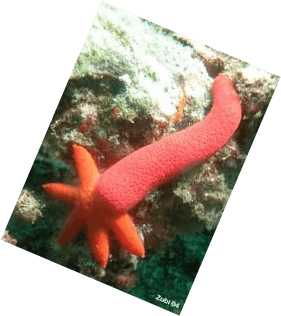
Fishermen work hard to catch and remove all the starfish that get into their favorite shell fishing beds and the “underwater farms” where they raise clams and oysters. In the past, they put the starfish into their boats, cut them up with knives, and then throw the pieces of starfish overboard. They thought this would kill the starfish. What they did not know was that each piece of starfish will grow into a whole new animal.

Which is a type of Asexual Reproduction
Sexual
Binary fission
Cells
organism
A planarian is a non-parasitic flatworm. If a planarian was injured by a predator, it could re-grow its body parts. If the body parts were not eaten by the predator, the part could re-grow into a whole new planarian as well.
Cutting the roots from a carrot and allowing it to grow into a newly formed daughter carrot is called __________.
Vegetative Reproduction
Cloning
Binary Fission
Plants vs. Zombies

This is an example of asexual reproduction by...
budding
binary fission
sporulation
vegetative propagation

Which of the following statements are true about asexual reproduction? (chose all that apply)
Asexual reproduction requires only one parent.
The offspring in asexual reproduction are clones of the parent.
The offspring in asexual reproduction are produced by mitosis.
The offspring in asexual reproduction are produced by meiosis.
Many plants reproduce asexual. Which of the following is not a form of plant asexual reproduction?
Underground roots tubers or bulbs that can grow into new plants.
Binary Fission
Plant runners like the spider plant, and many berries
Budding
All forms of asexual reproduction use _________________ to grow new cells and organisms.
mitosis
meiosis
What do budding, binary fission and spore formation have in common ?
They require two parents
They require only one parent cell
They produce only one daughter cell
They are all forms of sexual reproduction
Which of the following methods do bacteria that cause tooth decay and cavities reproduce?
Budding
Binary fission
Spore formation
Vegetative reproduction
What are the end products of binary fission?
Two independent daughter cells that are identical to each other
One daughter cell that is genetically different from the parent
Two independent daughter cells that are different from each other
Two daughter cells that are genetically different from the parent cell
Yeast reproduce by
Budding
Binary fission
Spore formation
Vegetative reproduction
During budding, what is usually formed?
A bud from the daughter cell
New DNA from the parent cell
An outgrowth from the parent organism
New stems and roots
Which method does mould use to produce more mould on a piece of cheese or bread?
Budding
Binary fission
Spore formation
Vegetative reproduction
Asexual reproduction requires
Only one parent to produce offspring
Two parents to produce offspring
A combination of parents to produce offspring
Two clones to produce offspring
Bacteria reproduce by
Budding
Binary fission
Spore formation
Vegetative reproduction
A certain strain of bacteria doubles every 20 minutes. If 2 bacterial cells are placed in a beaker with food. How many bacterial cells would you expect in 40 minutes?
4
6
8
10
A certain strain of bacteria doubles every 20 minutes. If 2 bacterial cells are placed in a beaker with food. How many bacterial cells would you expect in 60 minutes?
8
16
32
64

Is this the result of sexual or asexual reproduction?
And how would you characterize the offspring listed above?

All of the offspring of an organism have the same genetic material, which is identical to the parent organism. From this, we can conclude that this organism -
makes its own food
is unicellular
live in a marine habitat
reproduces asexually
How many parents are involved with sexual reproduction?
none
1
2
4
Why do cells divide? Mark all the apply.
to repair damaged cells
to stop cancer cells
to replace old or dead cells
growth of organism
What cells undergo mitosis? Click all that apply.
blood cells
bone cells
human sperm cells
human egg cells

Joining separate plant parts together so that they form a union and grow together to make one plant is:
layering
grafting
cuttings
sexual propagation
what is called to the vegitative buds of potato.
ears
noses
eyes
hairs
Bryophyllum reproduces by
Roots
Stem
Leaves
Flower
Which of these best describes the process of budding?
asexual reproduction resulting in the formation of new organisms from outgrowths of mature organisms
sexual reproduction resulting in the nucleus of two cells uniting to form a new organism
asexual reproduction resulting in the formation of a spore that grows into a new organism
sexual reproduction resulting in a sex cell dividing evenly to form two identical daughter cells
Carrots reproduce from
Stem
Leaves
Root
Methods of vegetative propagation
artificial
natural
both artificial and natural
______________ used for vegetative propagation.
root
stem , root and leaves
stem
Cutting is used in ____________________________.
sugarcane
rose
both rose and sugarcane
The roots of this plant can give rise to a new baby plant.
Bryophyllum
Sweet potato
Sugarcane
The stem of this plant can become a new plant.
Potato
Sugarcane
Ginger
All of theses
The leaves of this plant produces buds in their margin which grows into a new plant.
Sugarcane
Lotus
Bryophyllum
Tulsi
In this method two different varieties of plants are joined and tied with a wet cloth.
Stem cutting
Layering
Grafting
In grafting the upper part is known as-
Stock
Scion
Parent plant
Which of these correctly describes layering?
Lower branches are bent and buried under the soil, and the tip is kept above the soil.
Stems are cut and planted into the soil.
Two different plants are joined at the stem with a cloth.
A stolon or runner is what?
A stem that runs along or just under the ground and roots as it goes.
A German Christmas cake.
Something that has been pinched
Plants that grow in the leaf axils or margins.
What is layering?
Placing layers of plants on top of each other
Breaking off stem pieces and planting them.
Pegging down pieces of stem and waiting for them to root.
Taking small pieces of root and putting them in a seed tray.

Paramecium reproduce by.....
Budding
Binary Fission
Vegetative Propagation
Regeneration

