wayground logo

Free Printable Worksheets

NEW

Font size

S
M
L
XL
Worksheets

AB6: Sky Science

Total questions: 25

Worksheet time: 50mins

Name
Class
Date
1.
A large space rock that floats around in space. Can be found in the belt between the terrestrial and gaseous planets.
a)
A meteorite
b)
An Asteroid
c)
A comet
d)
A satellite
2.
A group of stars that form a picture if you really squint at it and use your imagination
a)
A constellation
b)
A galaxy
c)
A universe
d)
A solar system
3.
A circular path around a planet or a star. 
a)
Light Year
b)
Trajectory
c)
Rotation
d)
Orbit
4.
The layer of gas and oxygen that surrounds the Earth and is held there by gravity. 
a)
Orbit
b)
Satellite
c)
Atmosphere
d)
Pollution
5.
An object that orbits a planet. Example. The moon.
a)
Satellite
b)
Comet
c)
Asteroid
6.
A shooting star that enters our atmosphere.
a)
A comet
b)
An asteroid
c)
A meteor
d)
A meteorite
7.
A giant ball of ice and dust that comes from outer space. It appears to have a tail as it gets closer to the sun.
a)
A meteorite
b)
A satellite
c)
A comet
d)
An asteroid
8.

The moon makes a complete revolution around Earth approximately once each

a)

day

b)

week

c)

year

d)

month

9.

In order to safely view the sun, a person should...

a)

view the sun while wearing sunglasses

b)

place a piece of dark paper over the lens of a telescope

c)

view an image of the sun projected onto a piece of paper

d)

place a piece of coloured glass over the lens of a telescope

10.

The gibbous moons are labelled...

a)

I and II

b)

I and IV

c)

II and III

d)

III and IV

11.

If the position marked W on the diagram above represents the constellation Cepheus in June, then the position marked Y represents the constellation Cepheus in

a)

March

b)

May

c)

September

d)

December

12.

Which of the following rows shows the phases of the moon that would be seen on day 14 and day 21?

a)
b)
c)
d)
13.

Which of the following diagrams shows the orientation of Earth when it is summer in Canada?

a)
b)
c)
d)
14.

Paul wanted to investigate the movement of the Sun over the course of a day. He used a sundial to measure the length of a shadow once every hour from sunrise to sunset.


Which of the following variables must be kept the same in order to obtain reliable data from this activity?

a)

Type of sundial and location of sundial

b)

Length of shadow and location of sundial

c)

Type of sundial and times at which measurements were taken

d)

Length of shadow and the times at which measurements were taken

15.

One similarity between asteroids and ___________ is that both ___________ light

a)

stars, emit

b)

stars, reflect

c)

comets, emit

d)

comets, reflect

16.

Which of the following statements can be made based on this chart?

a)

Mercury is the closest planet to Venus

b)

Earth is the coldest of the inner planets

c)

Mars has the shortest day of the inner planets

d)

Venus is the closest planet in diameter to earth

17.

How long will it take for Earth to rotate so that X position is directly facing the sun?

a)

6 hours

b)

8 hours

c)

12 hours

d)

18 hours

18.

Which diagram represents the phase of the Moon seen from Earth when the Moon is directly between Earth and the Sun?

a)

A

b)

B

c)

C

d)

D

19.
What is the name of the largest stars?
a)
Protostars
b)
Supergiants
c)
Red Giants
d)
Dwarf Stars
20.
As the earth rotates on its axis, the constellations and stars in them appear to _________.  
a)
move across the sky
b)
stand still in the sky
c)
move around each other
d)
rotate
21.
How does night and day occur?
a)
The Earth rotates on its axis in front of the sun
b)
The Earth revolves on its axis in front of the sun
22.
What causes the different seasons in a year?
a)
The position the Earth is tilted as it moves around the sun
b)
The position the Sun and Moon are in during 1 year
23.
As the moon's shape appears to get smaller, we say that the moon is _.
a)
swelling
b)
waxing
c)
waning
d)
disappearing
24.
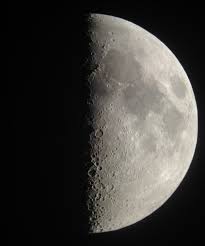
Name the moon phase
a)
waning crescent
b)
first quarter
c)
waning gibbous
d)
waxing gibbous
25.
Name the moon phase
a)
First Quarter
b)
Waxing Crescent
c)
New Moon
d)
Full Moon