wayground logo

Free Printable Worksheets

Font size

S
M
L
XL
Worksheets

SNC1P1 Exam - June 2019

Total questions: 125

Worksheet time: 2hrs 38mins

Name
Class
Date
1.
This sphere contains all life on Earth
a)
Geosphere
b)
Hydrosphere
c)
Atmosphere
d)
Biosphere
2.
Geosphere is another name for...
a)
Atmosphere
b)
Biosphere
c)
Lithosphere
d)
Hydrosphere
3.
Each Sphere is independent and not affected by things that happen in other spheres. 
a)
True
b)
False
4.
Water 
a)
Biotic 
b)
Abiotic 
5.
pH value 
a)
Biotic 
b)
Abiotic 
6.
An ecosystem is made up of all the ________________ and _________________ factors in an area.
a)
species and organisms
b)
abiotic and species
c)
biotic and species
d)
abiotic and biotic
7.
What is NOT a sustainable practice?
a)
recycling
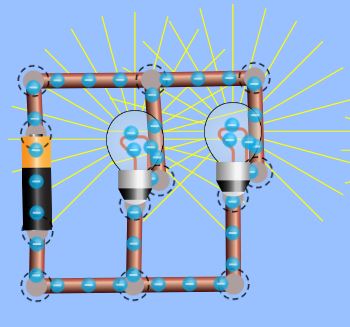
b)
reducing
c)
reusing
d)
buying 
8.
Which of the following sources of energy is renewable?
a)
coal
b)
wind
c)
gas
d)
fuel
9.

What is the source of energy for photosynthesis?

a)

carbohydrates-chemical

b)

sunlight-radiant

c)

heat-thermal

d)

television-electrical

10.
What are the products (what's made) during photosynthesis?
a)
glucose and oxygen
b)
water, light, and carbon dioxide
11.

In which organelle (part of the cell) does photosynthesis take place?

a)

mitochondria

b)

chloroplast

c)

nucleus

d)

cell membrane

12.
What molecule absorbs sunlight for photosynthesis?
a)
chloroplast
b)
thylakoid
c)
grana
d)
chlorophyll
13.
What are organisms that use other organisms for food in order to gain energy?
a)
decomposers
b)
producers
c)
herbivores
d)
consumers
14.
Where do producers get their energy?
a)
the ground
b)
other animals
c)
decomposers
d)
The Sun
15.

Humans are...

a)

Omnivores

b)

Peepivores

c)

Herbivores

d)

Carnivores

16.

An organism that lives by breaking apart dead organic matter into simpler parts is...

a)

scavenger

b)

consumer

c)

decomposer

d)

carnivore

17.
A third-level consumer has to be which type?
a)
Carnivore.
b)
Decomposer.
c)
Producer.
d)
Herbivore.
18.
In a food web, arrows point at:
a)
who gets energy.
b)
who gets eaten.
19.

Which level has the most energy available?

a)

producer

b)

primary consumer

c)

secondary consumer

d)

tertiary consumer

20.
How much energy is available to be passed on to the next trophic level in an ecosystem?
a)
100%
b)
10%
c)
50%
d)
75%
21.
An organism that eats dead plants or animals is a/an
a)
consumer
b)
scavenger
c)
decomposer
d)
predator
22.

What is it called when plants give off water vapor as a waste product?

a)

condensation

b)

evaporation

c)

sublimation

d)

transpiration

23.
The water cycle has no start or end
a)
true
b)
false
24.
The water cycle is also known as ..........
a)
Hypertonic Solution
b)
Hydrological Cycle
c)
Hyperlogical Cycle
d)
None of these
25.
What does not produce carbon dioxide?
a)
Photosynthesis
b)
Burning Fossil Fuels
c)
Animal respiration
d)
Plants decaying
26.
During decomposition, carbon moves from ______ to ________.
a)
sky;animal
b)
plant;animal
c)
animal;plant
d)
animal;sky
27.
If the animal population decreased, the amount of carbon would _____.
a)
Stay the same
b)
Increase
c)
Decrease
28.
How nitrogen is "fixed" into useable form for plants
a)
only through action of bacteria
b)
only through lightning
c)
through action of bacteria & lightning
d)
through photosynthesis
29.

Nitrogen fixing bacteria, lives in nodules on the root of a plant called

a)

Broccoli

b)

Legumes

c)

Beats

d)

Carrots

30.
What converts nitrogen gas into a useable form for plants and animals?
a)
bacteria
b)
fungi
c)
rain
d)
car exhaust 
31.

Which of the following would INCREASE the carrying capacity of an ecosystem?

a)

increase in predators

b)

disease

c)

increase in available food

d)

drought

32.
Which of the following is an EXAMPLE of a limiting factor?
a)
Water
b)
the color of the sky
c)
Migration
d)
Thick fur
33.

A relationship between two species where one benefits while the other is harmed.

a)

Mutualism

b)

Commensalism

c)

Parasitism

d)

Naturalism

34.

What best describes the relationship between bees and plants.

a)

mutualism

b)

parasitism

c)

neutralism

d)

commensalism

35.

A tapeworm and a cat have this type of relationship.

a)

mutualism

b)

parasitism

c)

commensalism

d)

competition

36.

An organism's ability to survive and reproduce under a range of environmental conditions is known as

a)

niche

b)

habitat

c)

tolerance

d)

symbiosis

37.

What is the name given to lichen or algae after a primary succession?

a)

pioneer species

b)

volunteer species

c)

founder species

d)

conqueror species

38.

the process by which a new community forms where no community lived before

a)

resource

b)

invasive (non- native) species

c)

primary succession

d)

competition

39.
What is one difference between primary and secondary succession?
a)
primary is slow and secondary is rapid
b)
secondary begins with lichens and primary begins on newly exposed surfaces
c)
secondary begins on soil and primary begins on newly exposed surfaces
d)
primary modifies the environment and secondary does not
40.
Where are many biodiversity hotspots located? 
a)
deserts
b)
tropical rain forests
c)
polar ice regions
d)
rocks
41.
Why do the populations of invasive species grow so quickly? 
a)
Invasive Species are native to an area. 
b)
Invasive species are prey to many animals.
c)
Invasive species have no predators.
d)
Invasive species keep the ecosystems in equilibrium.
42.

What type of biological molecules can be disrupted by pollution?

a)

hormones

b)

carbohydrates

c)

neurotransmitters

43.

Atoms contain charged particles called:

a)

Protons, neutrons and electrons

b)

Protons and electrons

c)

Protons and neutrons

d)

Electrons and neutrons

44.

The charge of an electron is:

a)

Positive.

b)

Negative.

c)

Electrons have no charge

45.

Two like charges:

a)

neutralize each other.

b)

repel each other.

c)

must be neutrons.

d)

attract each other.

46.
If a substance has a higher number of electrons than protons on its surface, what type of charge does it have?
a)
A positive charge.
b)
A negative charge.
c)
A neutral charge
d)
No charge at all
47.
When objects have equal numbers of positive and negative charges, they are
a)
positively charged
b)
negatively charged
c)
electrically neutral
d)
unbalanced
48.
If a negatively charged rod touches a conductor, the conductor will be charged by what method? 
a)
Friction
b)
Conduction
c)
Induction
d)
Convection
49.
An object becomes positively charged by
a)
losing protons
b)
gaining electrons
c)
losing electrons
d)
gaining protons
50.

Charging by contact results in both objects having the same charge.

a)

True

b)

False

51.
Transferring a charge without touching is ___
a)
conduction
b)
induction
c)
grounding 
d)
Newtons 3rd law
52.

Your hair sticking up after removing your toque is an example of charging by induction.

a)

True

b)

False

53.
This is the symbol for a _____?
a)
an AC current source
b)
a DC current source
c)
a battery
d)
a single cell
54.
This type of circuit only has one path for current to flow. 
a)
series
b)
parallel
c)
combination
d)
split
55.
Which best describes a parallel circuit?
a)
Electricity flows along one pathway.
b)
The flow of electricity comes from one source. 
c)
Electricity flows along more than one pathway. 
d)
The flow of electricity comes from more than one source. 
56.

In a parallel circuit if one of the light bulbs burns out the rest _________.

a)

stop the flow of electricity

b)

can still light up

c)

will go out

d)

of the light bulbs burn out also

57.
Which is NOT an insulator.
a)
Wool
b)
Plastic
c)
Copper
d)
Glass
58.

Salt Water

a)

Insulator

b)

Conductor

59.
This is the circuit symbol for ...
a)
an AC current source
b)
a DC current source
c)
an ammeter
d)
a voltmeter
60.

What is the following symbol represent?

a)

Wire

b)

Resistor

c)

Battery

d)

Switch

61.

The following schematic symbol represents a ...

a)

push switch

b)

diode

c)

circuit breaker

d)

fuse

62.
Does this statement best describe a parallel or a series circuit.
 
When more light bulbs are added they all remain bright. 
a)
Parallel circuit
b)
Series circuit
63.
A term used to describe the number of electrons moving past a fixed point in a conductor in one second is called________.
a)
Amperage
b)
Molecule
c)
Current
d)
Ohms
64.
The actual flow of electrons is called _______.
a)
Molecule
b)
Magnetism
c)
Current
d)
Electrica
65.
Current is...
a)
moving protons
b)
moving electrons
c)
measured in volts
d)
measured in ohms
66.
Assuming the lamps are identical, what is the current running though each lamp?
a)
3 A
b)
2 A
c)
1 A
d)
0 A
67.
What is the rule for voltage in a parallel circuit?
a)
stays the same
b)
adds up
c)
inverse of the sum of the reciprocals
68.
The difference in electrical potential energy between two places is called
a)
resistance
b)
friction
c)
induction
d)
voltage
69.

Adding more bulbs to a series circuit will make each bulb burn less brightly.

a)

True

b)

False

70.
The voltage across each bulb is 9V.  What is the voltage across the cell?
a)
4.5
b)
9
c)
18
d)
27
71.
A primary cell is 
a)
a rechargeable battery
b)
a non-rechargeable battery
c)
a flow of electricity
d)
device that stops the flow of electricity
72.
Fuel cells produce
a)
Fossil Fuels
b)
Hydrogen gas
c)
Electricity
d)
Gasoline
73.
2 different metals that lose or gain electrons in a battery (zinc and copper
a)
wet cells
b)
dry cells
c)
electrolytes
d)
electrodes
74.
liquid in a battery that allows electrons to move from one metal to the other (fruit juice, vinegar)
a)
Wet Cells
b)
Dry Cells
c)
Electrolyte
d)
Electrodes
75.
a type of cell that contains solid or pastelike electrolytes
a)
Wet Cells
b)
Dry Cells
c)
Electrolytes
d)
Electrodes
76.

The electricity generated from the power plant is

a)

Alternating Current

b)

Direct Current

c)

Delayed Current

d)

Alternating Voltage

77.

How is electricity measured and billed by the power company?

a)

watts

b)

kilowatts

c)

watt hours

d)

kilowatt hours

78.

which type of renewable energy is currently creating the most electricity generation?

a)

geothermal

b)

hydroelectric

c)

solar

d)

wind

79.

Which of the following are the most energy efficient light bulbs?

a)

incandescent

b)

compact florescent

c)

LED

d)

halogen

80.

which of the following is the least energy efficient light bulbs?

a)

incandescent

b)

compact fluorescent

c)

LED

d)

halogen

81.

if a tractor trailer truck is 20% efficient, what happened to the other 80%

a)

energy is destroyed

b)

energy is lost as heat

c)

the 80% is still in the gas tank

d)

energy is converted into matter

82.
Where does geothermal energy come from?
a)
The Earth's atmosphere
b)
The Earth's asthenosphere
c)
The Earth's crust
d)
The Earth's troposphere
83.

Which state of matter has molecules that slide past each other but stay close together? They do not form a regular pattern.

a)

solid

b)

liquid

c)

gas

84.
Which has a stronger Inter molecular Forces?
a)
gas
b)
Liquid
85.
What is the change of state from a gas to a liquid called?
a)
melting
b)
evaporation
c)
condensation
d)
sublimation
86.
What is the change of state from a solid straight to a gas called?
a)
melting
b)
evaporating
c)
freezing
d)
sublimation
87.
As particles are exposed to colder temperatures they _____
a)
speed up
b)
slow down
c)
stay the same
d)
become ions
88.
A combination that can be separated by physical processes is a .....
a)
Pure Substance
b)
Glucose
c)
Element
d)
Mixture
89.

Substance with atoms that are all alike.

a)

element

b)

compound

c)

homogeneous mixture

d)

heterogeneous mixture

90.
a)
beaker
b)
erlenmeyer flask
c)
graduated cylinder
d)
test tube
91.

Burning Logs

a)

Physical Change

b)

Chemical Change

92.
Water freezing
a)
Physical Change
b)
Chemical Change
93.
Which of the following is a sign that a chemical reaction has occurred?
a)
change in shape
b)
melting
c)
formation of a gas
d)
dissolving
94.
Which of the following is a chemical property of water?
a)
Reacts with pure sodium
b)
Boils at 100 oC
c)
Is liquid at room temperature
d)
Has a density of 1 gm/mL
95.
What is the density of water?
a)
1 mL
b)
1 gram
c)
1 g/cm3
d)
All of the above
96.
An object has a density of 3 g/cm3. When submerged in water, the object will ___________.
a)
float
b)
sink
c)
float halfway in the water
d)
float then sink
97.

Which of the following is a characteristic property?

a)

volume

b)

mass

c)

melting point

d)

weight

98.
Jack has a rock. The rock has a mass of 14g and a volume of 2cm3. What is the density of the rock?
a)
7 mL
b)
7 g/cm3
c)
28 g/cm3
d)
1/7 g/cm3
99.
This is a measurement of the amount of matter, or 'stuff', in an object or substance.
a)
volume
b)
density
c)
mass
d)
length
100.
What is the measuring unit for mass?
a)
centimeter 
b)
millimeter 
c)
grams 
d)
pounds
101.

Which metal has the greatest density?

a)

Metal A

b)

Metal B

c)

Metal C

d)

There is no way to tell from the graph

102.

Which subatomic particle has no electric charge?

a)

the proton

b)

the neutron

c)

the electron

d)

the photon

103.
How did Rutherford discover the proton?
a)
Cathode tube ray experiment
b)
Gold Foil Experiment
c)
Planetary Model
d)
Plum Pudding Model
104.

The middle of the atom, which contains protons and neutrons, is called _____

a)

the shell

b)

the nucleus

c)

the cell

d)

the control center

105.

number of neutrons = _____

a)

atomic number - mass number

b)

isotope number - atomic weight

c)

mass number - atomic weight

d)

mass number - atomic number

106.

In the Bohr model of the atom, what is the maximum number of electrons in the second shell?

a)

2

b)

6

c)

8

d)

18

107.

Which subatomic particle has a relative charge of +1?

a)

the proton

b)

the neutron

c)

the electron

d)

the photon

108.

If you want to know which atom an element is, then count the _____

a)

protons

b)

neutrons

c)

electrons

d)

nucleons

109.
An atom has a mass of 54 while is atomic number is 32.  How many electrons does it have?
a)
22
b)
32
c)
54
d)
0
110.
An atom has a mass of 54 while is atomic number is 32.  How many neutrons does it have?
a)
22
b)
32
c)
54
d)
86
111.
If a material can easily be drawn into the shape of a wire, it is
a)
Ductile
b)
Magnetic
c)
Malleable
d)
Reactive
112.

Which two families on the periodic table react aggressively?

a)

noble gases and alkali metals

b)

alkali metals and halogens

c)

noble gases and halogens

d)

metals and halogens

113.
Each column in the periodic table is called a 
a)
period
b)
group
c)
cluster
d)
unit
114.
Elements on the left side of the periodic table are 
a)
metals
b)
nonmetals
c)
metalloids
d)
noble gases
115.
The atoms along the staircase are called 
a)
metals
b)
nonmetals
c)
metalloids
d)
noble gases
116.
Which group of the periodic table is composed of inert (not reactive)  gases?
a)
alkali metals
b)
alkaline earth metals
c)
halogens
d)
noble gases
117.
Which is a halogen?
a)
Helium
b)
Chlorine
c)
Oxygen
d)
Neptune
118.
Which is an alkali metal?
a)
Magnesium
b)
Iron
c)
Sodium
d)
Europium
119.
A horizontal row of elements in the periodic table.
a)
column
b)
group
c)
period
120.
In the modern periodic table elements are arranged by:
a)
atomic mass
b)
atomic number
c)
valence electrons
d)
number of isotopes
121.
What period and group is Silver (Ag)? 
a)
Period 2, Group 1
b)
Period 3, Group 16
c)
Period 5, Group 11
d)
Period 2, 14
122.
Silicon is a semiconductor and has properties of both metals and nonmetals. What type of element is Silicon? 
a)
Metal
b)
Nonmetal
c)
Metalloid
d)
Pretty
123.

Which of the following is not a compound?

a)

HCl

b)

Cl2

c)

NaCl

d)

CO2

124.

How many Oxygen atoms are in H2O?

a)

1

b)

2

c)

0

d)

4

125.
How many atoms are there TOTAL in:
H2SO4
a)
6
b)
5
c)
7
d)
3