
 Worksheets
Term 1 Review - Rocks, WED, Glaciers
Total questions: 121
Worksheet time: 2hrs 31mins

This image shows water expanding as it freezes in cracks in rock. This is known as ice wedging. It is a (a) force and a form of (b) weathering and erosion.
Match the following...
Weathering
When rocks and land are broken down due to forces such as gravity, wind, water, and ice
Erosion
When rocks and sediment are moved elsewhere by water, ice, wind, or gravity
Deposition
When features are built up on Earth's surface by sediment, tectonic plates, or volcanoes
Sand dunes form as a result of...
Recycling of crust at subduction zones
Erosion and deposition by wind
Freezing and thawing rock
Erosion and deposition by water
Sandy beaches are built up through the process of...
Deposition
Convection
Weathering
Destructive forces
The destructive force caused by the chemical reactions of water, oxygen, carbon, and other chemicals in the presence of moisture and heat is known as...
Mechanical weathering
Photosynthesis
Chemical weathering
Chemical reaction
The deposition of sediment at the mouth of a river is a constructive force known as a...
Delta
Shore
Beach
Pond

A type of chemical weathering in which a substance combines with oxygen, as when iron oxidizes, forming rust.
Acid rain
Oxidation
Reaction to water
Exfoliation

The image above depicts the effects of chemical weathering breaking down limestone. Which type of chemical weathering causes this reaction?
Acid rain
Oxidation
Exfoliation
Abrasion

The tallest sand dunes in North America are found in Great Sand Dunes National Park and Preserve in Colorado. Which of the following agents is most likely responsible for the formation of the sand dunes?
Wind
Water
Ice
Gravity

_____________ is the dropping off/ depositing of rocks.
Metamorphosis
Deposition
Weathering
Erosion

________________ is the breaking off and/ or disintegration of larger rocks into smaller rocks.
Erosion
Weathering
Deposition
Lotic
Match the process to its definition.
Weathering
Landforms are broken down into sediment
Erosion
Sediment is carried away from its starting place
Deposition
Sediment is dropped in a new location
vinegar reacts with chalk which creates bubbles of CO2
a rock cracks at night when the temp drops below freezing
a glacier is MOVING a boulder that's trapped in ice
a mudflow is SLIDING DOWN the side of a mountain
a pile of sediment is dropped at the end of a glacier
a rock formation grows down from the ceiling in an underground cave

A root that cracks a rock as it grows is an example of
(a)
Chemical Weathering
What part of the diagram shows deposition?

Why is frost action an effective form of weathering?
Water dissolves many minerals.
Water cools the surroundings.
Water expands when it freezes.

The reaction between limestone and acid rain is an example of __________.
physical weathering
chemical weathering
erosion
deposition

Rust is an example of ____________________ weathering.
mechanical
biological
chemical
physical
Select the two spots where sediment is being deposited as opposed to being eroded

What agent of erosion created this landscape feature?
Stream
Glacier
Wind
Wave

The shape of this valley (u-shaped) indicates....
It was eroded by a stream
It was eroded by a glacier
It was eroded by wind
It was eroded by mass movement

What agent of erosion deposited this giant boulder (erratic)?
Stream
Glacier
Wind
Wave

a meander that was cut off from the river
Oxbow lake
floodplain
cutbank
channel

________ is the process that picks up and moves weathered rocks.
Deposition
Landslide
Weathering
Erosion

Rain washing away soil from a hillside is an example of (a)
erosion
deposition
weathering

A sharp, pyramid shaped peak formed by glacial erosion
Horn
Arete
Cirque
Erratic

Identify the landform in the picture created by a glacier.
arete
cirque
kettle lake
moraine

Identify the glacial landform the man is standing on.
Ice field
Ablation zone
Moraine

This image is an example of a...
Glacial valley
Fjord
Drumlin

Poorly graded (unsorted) rock material deposited directly by a glacier.
glacial drift
stratified drift
Glacial till
glacier

Massive boulders that are transported sediment are called...
Erratics
Drumlins
Kettles
Outwash

Massive amounts of sediment pushed along the end of the glacier is called...
End or Terminal Moraine
Outwash plain
Kettle lakes
erratic
The process in which a glacier scrapes underlying rock is?
Convection
Plucking
Abrasion
Deposition

What is the name for this large glacial boulder that does not match the surrounding sediments?
A drumlin
An erratic
A moraine
A kettle lake
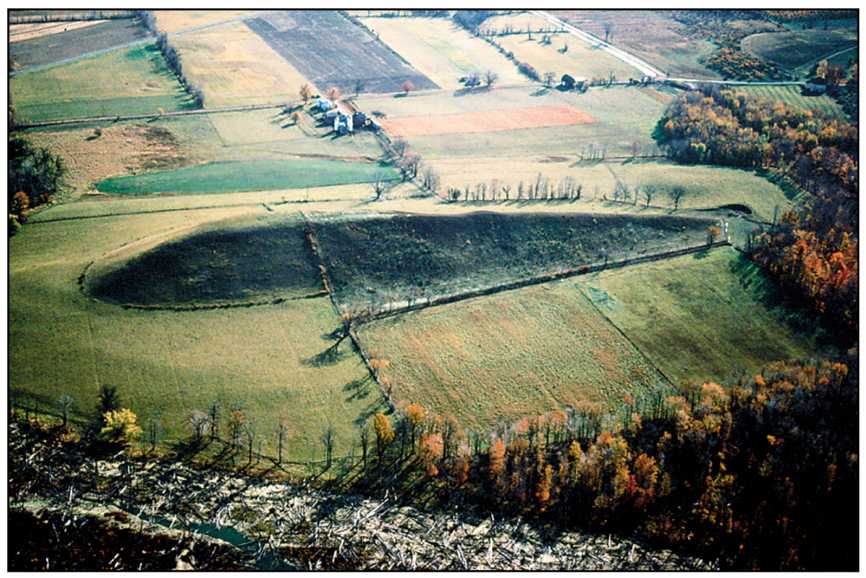

What are jagged ridges that form on mountains called?
U-shaped valleys
cirques
aretes
horns
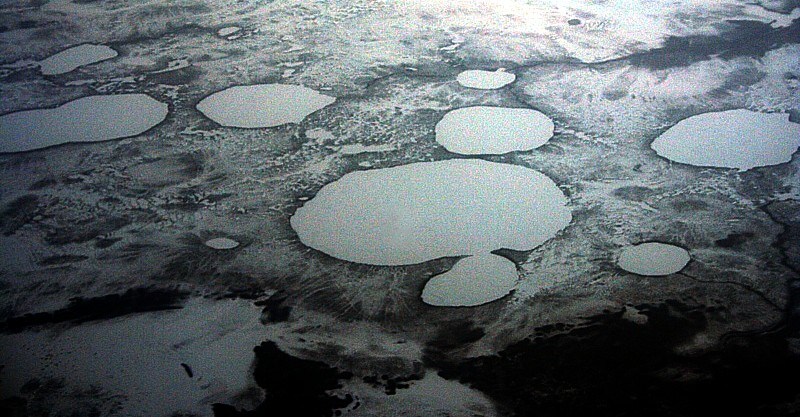
A _____ are depressions formed as stranded ice blocks melt in till.
erratics
eskers
kettles
drumlin

What is this image representing?
Abrasion
Plucking
Freeze Thaw
Deposition


What are these features? These are created when glaciers travel over rock and scratch them with the sediment that has been picked up.
Drumlins
Kettles
Striations
U Shape Valley

U shape valleys are created by....
Glaciers
Rivers

The glacial feature saw here ...
Are moraines
Is an erratic
Is an esker
Are kettle lakes

The glacial feature seen here...
is a lateral moraine.
are striations.
is a kame.
are drumlins.

The feature shows that a glacier has passed through this area, carving out the bottom of the valley.
V-Shape Valley
Narrow Valley
U-Shaped Valley
Arete

Here is a...
esker
drumlin
kame
kettle lake

The long winding hill here is a...
striation
kame
drumlin
esker

This long narrow hill runs from Lansing Michigan to Mason Michigan. It is called the Mason...
Hill
Esker
Striation
Erratic

The large area in front of this glacier is called ...
the tidal zone.
ground moraine.
the outwash plain.
a drumlin field.

This guy is standing on a ridge of till that was found at the foot of a melting glacier. This is...
Ground Moraine.
A Field Moraine.
A Terminal Moraine.
A Boundary Moraine.

This is a picture of ...
a kettle lake.
a hanging valley.
an outwash plain.
a glacial wall.

This glacial feature reveals the direction of the ancient glacier that passes through this area. This is ...
A lateral moraine.
An esker.
A striation.
A Drumlin.

This glacial feature is difficult to see in this picture, yet the long tapered hills are still visible. This feature is...
a group of eskers.
a drumlin field.
a series of moraines.
an outwash plain.

The glacial feature seen here ...
are kettle lakes.
are kames.
is an outwash plain.
is an esker.

These scratches in the exposed bedrock of the Keweenaw Peninsula in Michigan are evidence of a passing glacier. These scratches are called...
lacerations.
nicks.
striations.
erratics.

This is a picture of a glacial feature seen in Canada. You are looking at...
Drumlins
An outwash plain.
end moraines.
Eskers.

Seen here is a feature of mountain glaciers. When two glaciers weather away two sides of a mountain it creates a ...
Horn
Arete
Cirque
Outwash Plain

This rock formed when bits of other rocks became pressed into a solid. What type of rock is it?
Clastic Sedimentary Rock
Foliated Metamorphic Rock
Chemical Sedimentary Rock
Non-foliated metamorphic rock

This rock was formed when lava cooled below the surfac of the Earth. What specific type of rock is it?
Intrusive Igneous Rock
Extrusive Igneous Rock
Foliated Metamorphic Rock
Clastic Sedimentary Rock

This rock formed when lava cooled very quickly on Earth's surface. What specific type of rock is it?
Extrusive Igneous Rock-Glassy
Intrusive Igneous Rock- Coarse Grained
Extrusive Igneous Rock- Fine grained
Intrusive Igneous rock- Glassy
Which of these are NOT terms used to describe igneous rocks?
Foliated or Non-foliated
Felsic or Mafic
Intrusive or Extrusive
Coarse grained, fine grained, or glassy
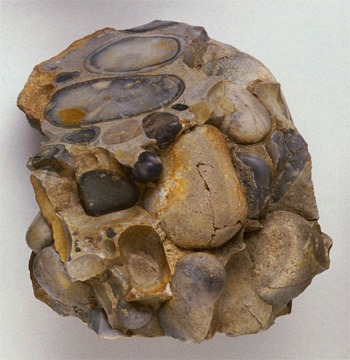
This rock was formed by smaller pieces of rock that settled along the bottom of a river and cemented together. What type of rock is this?
Clastic sedimentary
Chemical sedimentary
Organic sedimentary
Biochemical sedimentary
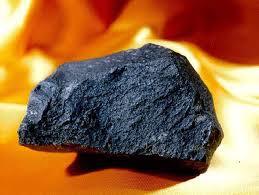
This rock was formed after erupted lava cooled down. What type of rock is this?
Intrusive Igneous, mafic
Extrusive Igneous, mafic
Intrusive Igneous, felsic
Extrusive igneous, felsic

Which of these is the correct description of this metamorphic rock?
Foliated
Non-foliated
Mafic
Felsic
Which of the following processes are involved in creating metamorphic rocks?
Weathering
Erosion
Heat and pressure
Compaction

________________ igneous rocks are dense, heavy, dark-colored rocks that form from cooled lava or magma.
Foliated
Felsic
Organic
Mafic

___________________ igneous rocks are light-colored rocks made from cooling lava or magma.
Felsic
Mafic
Inorganic
Foliated


Describe the rock that is pictured:
Intrusive, fine grained rock
Extrusive, fine grained rock
Intrusive, coarse grained rock
Extrusive, coarse grained rock

Which of these could be the identity of this rock?
Pumice (Igneous)
Granite (Igneous)
Coquina (sedimentary)
Marble (Metamorphic)

Which texture best describes this rock?
porphyritic
nonfoliated
foliated
clastic
What is texture determined by?
Color
Erosion
The size, shape, and pattern of its grains
The look of it
What is the difference between magma and lava?
Magma forms rock and lava doen't
Lava forms rocks and magma doesn't
Magma is inside of the Earth and Lava is on the surface
Lava is inside of the Earth and Magma is on the surface
They are the same thing
Which texture matches the following situation?
Cooled very slowly.
coarse texture
fine texture
glassy texture
porous texture
This type of igneous rock formed beneath Earth's surface
Intrusive
Extrusive
Mafic
Basaltic
(a) is the creation of small pieces of rock through physical or chemical means.
(b) is the moving of sediments from their original position.
(c) is the settling out of sediments.
(d) is the process by which sediment is squeezed and glued together into a new rock.
(a) Created from the cooling and solidification of magma or lava.
(b) Created from the deposition of sediments in layers over long periods of time, it often contains fossils.
(c) Existing rock is subjected to very high heat and pressure, usually underground.
Shale, limestone, and conglomerate rocks are examples of what type of rock?
Metamorphic
Sedimentary
Igneous
Magma
(a) refers to molten rock underground. When magma erupts from the ground on Earth's surface, we call it (b) .
(a) rocks makeup 90% of Earth's crust.
(a) Created from the cooling and solidification of magma or lava.
(b) Created from the deposition of sediments in layers over long periods of time, it often contains fossils.
(c) Existing rock is subjected to very high heat and pressure, usually underground.
(a) is the creation of small pieces of rock through physical or chemical means.
(b) is the moving of sediments from their original position.
(c) is the settling out of sediments.
(d) is the process by which sediment is squeezed and glued together into a new rock.
Shale, limestone, and conglomerate rocks are examples of what type of rock?
Metamorphic
Sedimentary
Igneous
Magma
(a) refers to molten rock underground. When magma erupts from the ground on Earth's surface, we call it (b) .

Using the picture above to answer the following question.
When magma cools, what type of rock is formed?
Metamorphic Rock
Sedimentary Rock
Compacting and Cementing
Igneous Rock

When heat and pressure is added to a sedimentary rock what type of rock is formed?
Sedimentary Rock
Metamorphic Rock
Igneous Rock
Melting Rock
What geological processes that lead to the creation of sedimentary rocks
erosion
weathering
dissolution
precipitation
What are three key characteristics that help you identify igneous, sedimentary and metamorphic rocks.
Crystals
Fossils
Holes across the surface
Ribbonlike layers
Igneous rocks are (a) meaning that they are formed from the cooling and solidification of molten (melted) rock.
Who first developed the concept of the rock cycle?
Matthew Rivera
James Hutton
Thomas Malthus
Barrack Obama

According to this diagram, igneous rock can form into sedimentary rock by ______ way(s).
one
two
three
no
Click on the part of the rock cycle that represents a MAGMA.
Click on the part of the rock cycle that represents a SEDIMENT.
Click on the part of the rock cycle that represents an IGNEOUS ROCK.
Click on the part of the rock cycle that represents a SEDIMENTARY ROCK.
Click on the part of the rock cycle that represents a METAMORPHIC ROCK.
Which is the process that breaks up rock on Earth’s surface?
deposition
melting
compaction
weathering
Geologists have classified rocks into three major groups of rocks which are:
inorganic, organic and chemical rocks
igneous, sedimentary and metamorphic rocks
metamorphic, chemical and non chemical rocks
sedimentary, inorganic and igneous rocks
A rock that forms from many small fragments of other rocks is a(n)
igneous rock
metamorphic rock
sedimentary rock
extrusive rock
The process by which metamorphic rock changes to igneous rock begins with
melting
erosion
deposition
crystallization
Which rock cycle process causes many sedimentary rocks to have visible layers?
eruption
intrusion
crystallization
deposition
What is underground molten rock?
Lava
Magma
Soil
Intrusive
What is aboveground molten rock?
Extrusive
Magma
Lava
Sedimentary

Granite is an example of...
Igneous
Metamorphic
Sedimentary

Coal is an example of...
Igneous
Sedimentary
Metamorphic
This is a natural solid that is made of one or more minerals.
Mineral
Fossil
Rock
Sediment
This is the continuous process of rock changing from one type to another.
Igneous rocks
Sedimentary rocks
Metamorphic rocks
Rock Cycle
Which of the following lists the steps an igneous rock undergoes in order to become a sedimentary rock, in the correct order?
Deposition, erosion, melting, cooling
Erosion, weathering, eruption, cooling
Dissolving, deposition, cooling, fracture
Weathering, erosion, deposition, cementation
Limestone is a sedimentary rock. During the rock cycle, limestone is changed into marble, a metamorphic rock. The processes that act on limestone and change it into marble are
weather and erosion
heat and pressure
compacting and cementing
melting, cooling, and hardening

According to the diagram, what process is shown by letter B?
compaction & cementation
weather & erosion
heat & pressure
melting
According to the diagram, what process is shown by letter A?
extrusion
erosion
crystallization
intrusion

