Wayground logo

Free Printable Worksheets

Font size

S
M
L
XL
Worksheets

All year quiz

Total questions: 179

Worksheet time: 5hrs 55mins

Name
Class
Date
1.
The political order under feudalism was dependent upon the relationship between lords and their vassals.  The responsibility of the vassal included
a)
the promise to spread the Christian faith to their lands
b)
an oath of loyalty and a pledge of military service
c)
an agreement to keep lower classes under control
d)
the payment of taxes to the king or queen of the country
2.
Which of the following groups DID NOT make up the social structure of feudalism?
a)
Knights
b)
King/Queen
c)
Middle class
d)
Serfs
3.
Which of the following statements accurately describes feudalism?
a)
Under feudalism, kings gave land to nobles in exchange for their military service.
b)
Feudalism served to spread Christianity throughout Western Europe.
c)
Feudalism began as a way to protect those on pilgrimages to Jerusalem.
d)
The rise of feudalism marked the end of the Medieval Age.
4.
In the system of feudalism, who farmed the land?
a)
monarchs
b)
serfs
c)
lords
d)
knights
5.
What process was developed by those who worked the land on manors?
a)
Mercantilism
b)
Triangular Trade
c)
Three-Field system
d)
Subsistence Farming
6.
How did feudalism affect the lives of the nobility?
a)
Lords and knights were loyal to monarchs and provided protection.
b)
The monarchs established guilds to help serfs work the land.
c)
Monarchs were not allowed to build their own manor houses.
d)
The system elevated the serfs to a level equal to lords and knights.
7.
How did feudalism affect the lives of the nobility?
a)
Lords and knights were loyal to monarchs and provided protection.
b)
The monarchs established guilds to help serfs work the land.
c)
Monarchs were not allowed to build their own manor houses.
d)
The system elevated the serfs to a level equal to lords and knights.
8.
Who were the Vikings?
a)
people conquered by the Romans
b)
pirates from northern France
c)
warriors from Scandinavia
d)
servants to the Normans
9.
Which of the following is true about the Magna Carta?
a)
It demanded that lord's provide military service to the king.
b)
It was signed before the civil war in England.
c)
It contained 63 clauses and limited the power of the king.
d)
It gave the king more money and power.
10.
What was the purpose of the Crusades?
a)
Ceremony acknowledging the achievement of completing 12 years of education
b)
Expel Martin Luther from the Catholic Church
c)
Unite all of Europe as one Christian kingdom
d)
Retake the city of Jerusalem (Holy Lands)
11.
What was the purpose of the Crusades?
a)
Ceremony acknowledging the achievement of completing 12 years of education
b)
Expel Martin Luther from the Catholic Church
c)
Unite all of Europe as one Christian kingdom
d)
Retake the city of Jerusalem (Holy Lands)
12.
A widespread disease, or epidemic, spread by fleas on rats through Europe during the Middle Ages was known as:
a)
The Black Death/The Plague
b)
The Voice
c)
The Spanish Flu
d)
The Common Cold
13.
The Black Death was spread by which of the following methods?
a)
Kissing!
b)
By sharing a cup
c)
It was air born
d)
Fleas on rats
14.
Who attempted to reestablish education, became sole ruler of his kingdom, and was eventually crowned emperor by Pope Leo III?
a)
Charles de Gaulle
b)
Charlie Brown
c)
Charlemagne
d)
Charles Barkley
15.
Who is a religious person who devotes their life to Christianity?
a)
Mercenary
b)
Monk/nun
c)
Mission Viejo
d)
Mission Impossible
16.
A king or queen who is a supreme ruler is called a ____________.
a)
Top Dog
b)
Missionary
c)
Butterfly
d)
Monarch
17.
A rapid spread of a disease over a wide area is called a/an ___________.
a)
Germ
b)
Flu
c)
Fleas on rats
d)
Epidemic
18.
How did Viking ships allow them to make successful raids on European towns?
a)
They were the first to have gasoline-powered engines
b)
They were larger than other ships and could carry more men
c)
They were able to cross the open sea and sail up rivers
d)
They were equipped with long range cannons
19.
A form of government led by a king or queen where one leader passes down power to their offspring is called what?
a)
Mercenary
b)
Monarchy
c)
Missionary
d)
Momentum
20.
Which best describes the influence of the Church during the Middle Ages?
a)
A child from almost every family became a monk or nun in the Church
b)
The Church encouraged people of other religions to settle in Europe
c)
Church officials and kings worked separately to govern countries
d)
Daily life in villages and towns revolved around the Church
21.
What religion studies from the Quran and the holy teachings of Allah?
a)
Christianity
b)
Islam
c)
Monotheism
d)
Judaism
22.
Marco Polo traveled along a vast trade network that connected Europe & Asia called the:
a)
North American Free Trade Agreement
b)
Caravan Route
c)
Trans-Siberian Partnership
d)
Silk Road
23.

Who did most of the peasants work for during the Middle Ages?

a)

The local lord

b)

The king

c)

A farming company

d)

The government

e)

A union

24.

What word below best describes life in the cities?

a)

Clean

b)

Easy

c)

Crowded

d)

Healthy

e)

Quiet

25.

True or False: Most people during the Middle Ages lived in nice comfortable castles with many rooms.

a)

TRUE

b)

FALSE

26.
What is a monarch?
a)
Another word for a king
b)
Another word for worker
c)
Another word for Knight
d)
Another word for crazy
27.
In the Feudal system, who were warriors trained to fight on horseback?
a)
Knights
b)
Lords
c)
Serfs
d)
Monarchs
28.
Who was the leader of the Catholic Church?
a)
Pilgrimage
b)
Commerce
c)
Pope
d)
Monastery
29.
What is feudalism?
a)
Where the Church would run everything
b)
Giving outsiders a home
c)
A safe haven for the Plague
d)
Exchange of service for food and protection
30.
In the Feudal system who owned all of the land?
a)
Knights
b)
Serfs
c)
Monarchs
d)
Lords
31.

Which of the following is true about feudalism?

a)

It was designed to promote political and economic equality

b)

It was controlled by the powerful middle class

c)

It was intended to provide opportunities for social mobility

d)

It was based on reciprocal obligations and allegiances

32.

Universities arose from what medieval community?

a)

Libraries

b)

Monateries

c)

Guilds

d)

Manrs

33.
What does the word "Renaissance" mean?
a)
Rebirth
b)
Stagnation
c)
Traditional
d)
A Latin term for art
34.
What provided the major economic support for the Renaissance?
a)
wealthy patrons
b)
church officials
c)
government grants
d)
kings competing for prestige
35.
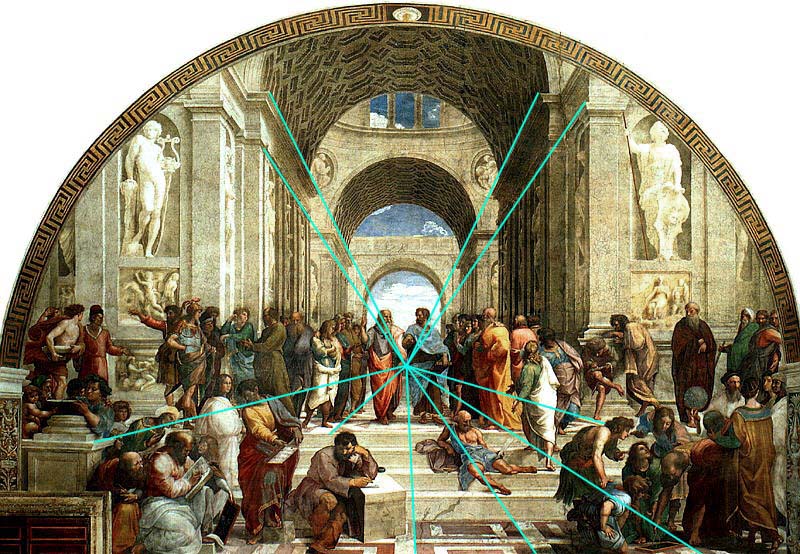
What is the artistic technique that is used to show depth and distance on a flat surface?
a)
realism
b)
perspective
c)
idealism
d)
distancism
36.
Which of the following is associated with Humanism?
a)
the ideas of the middle ages
b)
the ideas of Greece & Rome
c)
the ideas of ancient China
d)
the ideas of ancient India
37.
Where did the Renaissance begin?
a)
Italy
b)
France
c)
England
d)
Germany
38.
Which of the following is NOT a reason why the Renaissance began in Italy?
a)
Wealthy Italian patrons supported the arts
b)
Cultural diffusion encouraged curiosity and spread Arab and African ideas
c)
The Black Plague did not hit Italy as a result of the Alps 
d)
Renewed interest in the cultures of Ancient Greece and Rome
39.
What was the Renaissance a "rebirth" of?
a)
Religion
b)
Classical culture
c)
Life (after the black death)
d)
Middle Ages
40.
During the Renaissance, why was Florence significant?
a)
Birthplace and symbol of the Renaissance
b)
Birthplace of Michelangelo
c)
The last place the Black Plague hit
d)
Home of all of the significant artists and sculptors 
41.
The Medici Family...
a)
Were the first mafia family to live in Italy
b)
Were the most famous painters in Florence
c)
Were the family of Mona Lisa
d)
Were patrons of the arts in Florence
42.
Which of the following was NOT a pillar of the Renaissance?
a)
Individualism
b)
Humanism
c)
Mannerism
d)
Secularism
43.
Why does the Renaissance take longer to spread to the northern parts of Europe?
a)
It did not take longer
b)
Northern Europeans did not embrace the ideas of the Renaissance
c)
The Alps separated Italy from the rest of Europe, making it harder to spread ideas
d)
The Black Death started in Northern Europe
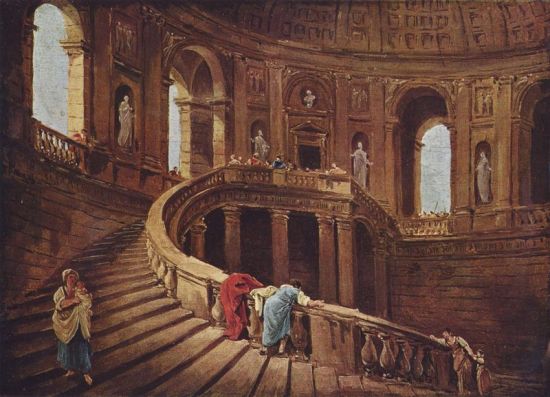
44.
a)
Classical Art
b)
Middle Ages Art
c)
Renaissance Art
d)
Islamic Art
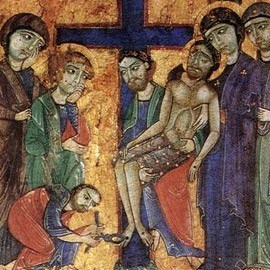
45.
a)
Classical Art
b)
Middle Ages Art
c)
Renaissance Art
d)
Islamic Art
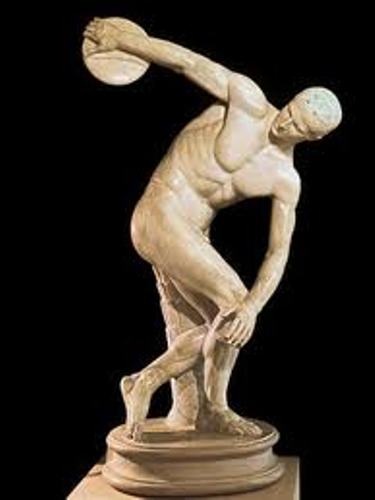
46.
a)
Classical Age Art
b)
Middle Ages Art
c)
Renaissance Art
d)
Islamic Art
47.
Which of the following is NOT a characteristic of Renaissance art?
a)
Perspective
b)
Incorporation of nature
c)
Flat/2-D
d)
Realistic/3-D
48.
Which of the following is a synonym best used to describe the word "secular"
a)
Worldly
b)
Religious
c)
Chivalry
d)
Rebirth
49.
Northern Humanists like Erasmus were most commonly known for what?
a)
Interest in the arts
b)
Interest in religious and social reform
c)
Interest in the cause of the Black Death
d)
Interest in the printing press
50.
What is one way that Medieval and Renaissance artists differ?
a)
Renaissance art focuses more on religion
b)
Medieval artists were more realistic
c)
Renaissance artist turned to Roman and Greek works for inspiration
d)
They are the same
51.
Humanism...
a)
emphasized the Bible
b)
leads to happier lives
c)
encourages people to learn Latin and Greek
d)
focuses on the potential of humans to achieve 
52.
Which of these would be valued most by a Renaissance thinker who emphasized individualism?
a)
a nation's strength 
b)
a family's ancestors
c)
a person's achievements
d)
an army's success in battle
53.
Which of the following most accurately characterizes the Renaissance?
a)
the spread of democracy
b)
the outburst of creativity 
c)
a growth of religious belief
d)
a decline in learning 
54.
Which of the following is associated with classical learning?
a)
the ideas of the middle ages
b)
the ideas of Greece & Rome
c)
the ideas of ancient China
d)
the ideas of ancient India
55.

___________ were interested in studying the culture of classical Greek and Roman civilizations.

a)

humanists

b)

patron

c)

apprentice

56.

This was NOT a feature of Renaissance art

a)

Realism

b)

Balance

c)

Perspective

d)

Abstraction

57.

He came up with the "heliocentric" model of the solar system, where the earth orbits the sun

a)

Your teacher (he’s so cool)

b)

Copernicus

c)

Brahe

d)

Kepler

58.

The Renaissance occurred right after what time period?

a)

Roman Empire

b)

World War I

c)

The American Revolution

d)

The Middle Ages

59.

He developed the movable type printing press

a)

Gutenberg

b)

Shakespeare

c)

Petrarch

d)

Dante

60.
humanism
a)
Revival of the study of classical texts and emphasis on the individual
b)
the study of language
c)
that the influence of the church should be confined to the church
61.
Perspective is a technique based on
a)
algebra
b)
geometry
c)
simple mathematics
d)
none of these
62.
a government ruled by a few powerful people
a)
autocracy
b)
oligarchy
c)
theocracy
d)
democracy
63.
a system that creates and enforces laws, makes decisions and maintains control
a)
theocracy
b)
democracy
c)
government
d)
anarchy
64.
a government controlled by one person, who usually takes power by force rather than inheriting it
a)
autocracy
b)
oligarchy
c)
monarchy
d)
dictatorship
65.
absence of law or government; chaos, disorder
a)
anarchy
b)
theocracy
c)
autocracy
d)
junta
66.
a system of government in which religious leaders rule a country in the name of God or a god
a)
autocracy
b)
oligarhy
c)
democracy
d)
theocracy
67.
a system of government in which citizens elect representatives, or leaders, to make decisions about laws for all the people
a)
democracy
b)
direct democracy
c)
representative democracy
d)
oligarchy
68.
all voters in a community meet in one place to make laws and decide what actions to take
a)
democracy
b)
representative democracy
c)
direct democracy
d)
constitutional monarchy
69.
a form of government in which the king/queen's power is limited and authority to tax and make new laws resides in an elected body
a)
oligarchy
b)
constitutional monarchy
c)
direct democracy
d)
anarchy
70.
Independence; the power to act independently without getting permission from a higher authority
a)
population
b)
territory
c)
sovereignty
d)
government
71.
a body of people
a)
population
b)
territory
c)
sovereignty
d)
government
72.
a defined living space; borders
a)
population
b)
territory
c)
sovereignty
d)
government
73.
an organization that makes and enforces laws
a)
population
b)
territory
c)
sovereignty
d)
government
74.
the rulebook is one way that some sovereign states limit the power of government
a)
rule of law
b)
separation of power
c)
constitution
d)
consent of the governed
75.
permission granted to governments by the people
a)
rule of law
b)
separation of power
c)
rights of the minority
d)
consent of the governed
76.
there are 3 branches of government; the legislative, the executive and the judicial
a)
rule of law
b)
consent of the governed
c)
separation of power
d)
constitution
77.

What defines a democracy?

a)

Total control of citizens by the government

b)

Control of people's political activities but NOT their personal life

c)

Each individual has the freedom to develop their own ideas and vote for their government

78.

What defines a totalitarian system?

a)

Total control of citizens by the government

b)

Control of people's political activities but NOT their personal life

c)

Each individual has the freedom to develop their own ideas and vote for their government

79.

Which best describes conservative on the political spectrum?

a)

A person who likes and works for change

b)

A person who sees value in both and follows the middle of the road

c)

A person who likes and wants things to stay the same

80.

A state of lawlessness or political disorder caused by the absence or collapse of governmental authority describes

a)

pluralism

b)

coercion

c)

political gridlock

d)

anarchy

81.
Rousseau
a)
He did not feel that people were equal and he also agreed on slavery
b)
Free but everyone is in chains. Wrote the social contract. People have rights in the government.
c)
He did not feel that people were equal and he also agreed on slavery
82.
Divine right theory
a)
 right of a sovereign to rule as set forth by the theory of government that holds that a monarch receives the right to rule directly from God and not from the people.
b)
Act by individuals agree to form a government. Government are established by the people.
c)
Act by individuals agree to form a government. Government are established by the citizans 
83.
Social Contract Theory
a)
Free but everyone is in chains. Wrote the social contract. People have rights in the government.
b)
Act by individuals agree to form a government. Government are established by the people.
84.
Absolute Monarchy
a)
Citizens have power
b)
 one ruler has supreme authority 
c)
yippiee
85.
Absolute Monarchy
a)
Citizens have power
b)
 one ruler has supreme authority 
c)
yippiee
86.
Dictatorship 
a)
absolute control by the state or a governing branch of a highlycentralized institution.
b)
a ruler with total power over a country, typically one who has obtained power by force
c)
 one ruler has supreme authority 
87.
Representative Democracy
a)
 one ruler has supreme authority 
b)
democracy founded on the principle of elected officials representing a group of people, as opposed to direct democracy
88.
Direct Democracy
a)
a form of government in which all power is vested in a few persons orin a dominant class or clique; 
b)
 one ruler has supreme authority 
c)
people decide
89.
Constitutional Monarchy
a)
a monarch acts as head of state within the parameters of a written 
b)
a form of government in which all power is vested in a few persons orin a dominant class or clique; 
90.
Federal
a)
state governed as a single power in which the central government is ultimately supreme and any administrative divisions exercise only the powers that the central government chooses to delegate
b)
a form of government in which all power is vested in a few persons orin a dominant class or clique; 
c)
divides up power between a strong national government and smaller local governments
91.
Purposes of government
a)
 one ruler has supreme authority 
b)
Maintaining social order,providing public safety, providing national security, making economic decisions, providing the general welfare, protecting the environment 
c)
Free but everyone is in chains. Wrote the social contract. People have rights in the government.
92.
What is the branch of government that includes the head of government
a)
Executive
b)
Chancellor
c)
Dictator
d)
King or Queen
93.
An autocratic type of government where the king or queen has complete control; passed down through bloodline
a)
Dictator
b)
Autocracy
c)
Hitler
d)
Absolute Monarchy
94.
Law-making body branch of government
a)
legislative
b)
senate
c)
executive
d)
house of represenitives
95.
A set of laws that define and often limit a government's power
a)
Constitution
b)
Empire
c)
State
d)
Government
96.

The economic system best suited for a dictator is a

a)

Traditional economy

b)

Market economy

c)

Mixed economy

d)

Command economy

97.

A prime minister is the chief executive of

a)

presidential government

b)

federal government

c)

confederate government

d)

parliamentary government

98.

A government in which people vote for representatives

a)

republic

b)

dictatorship

c)

constitutional monarchy

d)

absolute monarchy

99.

Is there a difference between a constitutional monarchy and an absolute monarchy?

a)

Yes

b)

No

100.
Prices are determined by supply and demand. People can own private property in this system. The government doesn't do ANYTHING with the economy in this system. It is also called capitalism.
a)
Traditional
b)
Market
c)
Command
d)
Mixed
101.
The government controls the production and distribution of EVERYTHING. The government sets the prices for everything. There is NO such thing as private property in this system. It is also called communism.
a)
Traditional
b)
Market
c)
Command
d)
Mixed
102.
The government has SOME control over the production and distribution of goods, but there is still private property. Most prices are controlled by supply and demand. This is a MIXTURE of two other economic systems.
a)
Traditional
b)
Market
c)
Command
d)
Mixed
103.
Monarchs (kings and queens) are LIMITED and work with elected representatives in this form of government.
a)
Anarchy
b)
Constitutional Monarchy
c)
Military Dictatorship
d)
Representative Democracy
104.

system in which priests or imans rule in the name of a god or gods

a)

Socialism

b)

Theocracy

c)

Democracy

105.
—Population density is the number of people that live in a region divided by the number of 
a)
square centimeters in the region
b)
—square miles or kilometers in the region.
106.
—Capitalism is called a free-market economy because 
a)
—producers compete freely for consumers' business.
b)
 the central government owns most businesses.
c)
 it does not rely on competition
107.
Amount of money a government requires its people to pay that is used to pay for goods and services provided by the government.
a)
Representation
b)
Boycott
c)
Taxes
d)
Tyranny
108.
(Fill in the blanks) In an autocracy, there is/are _____ leader(s). The citizens have very ____ roles.
a)
Five, Few
b)
One, Few
c)
Nine, Many
d)
One, Many
109.

In a democratic government type, what do the citizens have that most government types do not?

a)

Shelters

b)

personal freedoms

c)

Food

d)

A leader

110.
The four types of economic systems are: 
a)
Traditional, Command, Mixed, & Market
b)
Traditional, Command, Combined, & Market
c)
Communism, Capitalism, Free Market, and Macroeconomics
d)
Microeconomics, Macroeconomics, Individual, and Traditional.
111.
What type of economy do most countries in the world have?
a)
Market economy
b)
Command economy
c)
Traditional economy
d)
Mixed economy
112.
In the economy of the Bushmen of the Kalahari Desert the people follow the examples of their ancestors.  This is what kind of economy? 
a)
Traditional 
b)
Market 
c)
Command 
d)
Centrally planned 
113.
The Country of North Korea has a dictator that makes all of the economic decisions. What type of economy is this?
a)
Traditional 
b)
Market 
c)
Command 
d)
Centrally Planned 
114.
In this type of economy, the individual decides who to sell their products to.  
a)
Traditional 
b)
Mixed 
c)
Market
d)
Command
115.
If there are only 100 televisions on sale and 200 people want to buy TV's, that is a problem of ____. 
a)
desire
b)
demand
c)
supply
d)
scarcity
116.

Which of the following is NOT a factor of economic growth?

a)

natural resources

b)

human capital

c)

entrepreneurs

d)

capital humans

e)

capital goods

117.

Gifts of nature are called _______________________.

a)

entrepreneur

b)

natural resources

c)

capital goods

d)

human capital

118.

Machinery, tools, and trucks to transport goods are examples of which of the four factors of economic growth?

a)

human capital

b)

natural resources

c)

entrepreneur

d)

capital goods

119.

A person who takes the risk and starts up a company is known as a __________________.

a)

human capitalist

b)

capital goods

c)

entrepreneur

d)

natural resource

120.
A tariff is when a _______ is put on an imported good
a)
Tax
b)
Limit
c)
Block
121.
In 2010, China placed a tax on imported American poultry of up to 105.4%. This is an example of a
a)
Tariff
b)
Market
c)
Embargo
d)
Quota
122.
A tariff....
a)
Encourages people to buy goods made from their country.
b)
Increases trade between other countries.
c)
Stops trade completely.
d)
Only placed to encourage democracy.
123.
China’s most favored nation trading status will be taken away if congress and the President agree that the Chinese Government  is guilty of human rights abuses. All Chinese imports will experience a sharp increase in taxes if China is no longer considered a most favored nation.
a)
Tarriff
b)
Quota
c)
Embargo
d)
Subsidies
124.
Suffrage means the right to _______________.
a)
own a firearm
b)
vote in political elections
c)
practice your religion
d)
free speech
125.

The three economic questions are "What to produce, How to produce, and...."

a)

When to produce

b)

Which to produce

c)

For Whom to produce

126.
Using someone else's work to help you without their permission is:
a)
plagiarism
b)
periodical
c)
research
d)
cite
127.

a prejudice for or against something

a)

bias

b)

discrimination

c)

opinion

d)

point of view

128.

an individual's personal view or perspective on something

a)

point of view

b)

opinion

c)

bias

d)

fact

129.

a piece of evidence that can be proven true or false

a)

opinion

b)

bias

c)

fact

d)

point of view

130.

to put information into your own words

a)

quote

b)

paraphrase

c)

plagiarize

d)

summarize

131.

What type of research? You want to know whether music helps improve math scores.

a)

Formal

b)

Informal

132.

The following is considered what type of research: You ask your mother about the best soap to use.

a)

Informal

b)

Formal

133.

The Columbian Exchange is best defined as

a)

Exchange of plants, animals, disease, and technology between the rest of the world following Columbus's voyage

b)

The relationship between people in different parts of the world

c)

The story of how Columbus came to North America

d)

Everything Columbus brought back to Spain after his first voyage

134.
A period of cultural and biological exchanges between the New and Old World was known as
a)
Civil War
b)
Columbian Exchange
c)
Columbus Voyage
d)
Spanish Inquisition
135.
What group of people suffered the most during the Columbian Exchange?
a)
Animals
b)
Explorers
c)
Native Americans
d)
Europeans
136.
Due to the new goods that were brought over, the Columbian Exchange also led to this terrible practice....
a)
War
b)
Removal of Native Americans
c)
Diseases
d)
Slave trade
137.
Which three continents were part of the triangle trade?
a)
France, Africa, the Americas
b)
The Americas, Europe, Africa
c)
Australia, Antartica, Africa
d)
Africa, Europe, Middle East
138.

In what way did the introduction of the horse effect the way Native Americans lived?

a)

improved diet

b)

it had no effect

c)

made moving and hunting easier

d)

provided them with another food source

139.

What is the most significant way that the Columbian Exchange has affected our lives today?

a)

We now have access to goods from around the world.

b)

Pizza

c)

We have to be careful not to catch smallpox

d)

We celebrate Columbus Day at school

140.
What cause many Native Americans to die during the time of the Columbian Exchange?
a)
Diseases
b)
Spoiled Food
c)
Spoiled Meat
d)
War with Europeans
141.
What's the BEST definition of the Columbian Exchange?
a)
The trading of goods and resources between the New World and the Old World.
b)
Everyone from Columbia has to exchange presents.
c)
It was the worst event in the history of the world - there was no good that came from it.
d)
We want to honor Columbus because he discovered America.
142.
When did the Columbian Exchange take place?
a)
Before 1492
b)
During the European Dark Ages
c)
After WW2
d)
After 1492
143.
Are Triangular Trade and the Columbian Exchange synonyms?
a)
Yes
b)
No
144.
Why did Europeans travel to Africa and the Caribbean?
a)
Looking for food
b)
To find slaves
c)
They wanted to new place to live
145.
The Atlantic Slave Trade was a result of exploration and colonization?
a)
True 
b)
False
146.
What two hemispheres of the world were involved in the Columbian Exchange?
a)
Northern and Western
b)
Southern and Northern
c)
Eastern and Northern
d)
Eastern and Western
147.
What is an epidemic?
a)
An outbreak of disease that spreads quickly
b)
The top layer of your skin
c)
The problems caused by poor nutrition
d)
Germs that are shared among people
148.

Which was an economic development in Caribbean countries during early European colonial rule?

a)

Employment was limited to Spanish-speaking citizens

b)

Scarcity of labor led to the importation of African slaves

c)

Plantations were owned in common by two or three villages

d)

Machine production generally replaced manual labor

149.
What was a MAIN cause of the U.S. entering WWI?
a)
sinking of the Maine
b)
Russia dropping an atomic bomb
c)
sinking of the Lusitania
d)
Japan dropping an atomic bomb
150.
What was the name of the contract that ended WWI?
a)
Treaty of Versailles
b)
Treaty of France
c)
Treat of Paris
d)
Treaty of Milan
151.
Who was made to pay reparations after WWI.
a)
Austria Hungary
b)
Serbia
c)
Russia
d)
Germany
152.
In what way did alliances cause WWI?
a)
Countries that had alliances were more likely to provoke wars
b)
Countries who were under threat were more likely to leave alliances
c)
Small, regional disputes became magnified when allies were caled upon to assist
d)
Small, regional disputes were quickly settled through negotiations with allies
153.
In what way did Nationalism cause World War I?
a)
Small countries wanted to become a part of something bigger, so tried to become part of bigger nations
b)
Large countries wanted to share their culture with smaller ones, leading to invasions
c)
Countries wanted to be seen as strong and independent, so refused to work with other nations
d)
Countries wanted to be seen as powerful, so tried to diminate others, and resist being dominated themselves.
154.
Which event sparked World War I?
a)
the German-French dispute over Alsace-Lorraine
b)
Russia’s quest for a warm water port
c)
assassination of the heir to the Austro-Hungarian throne
d)
sinking of the Lusitania
155.
Imperialism caused
a)
increased efforts to solve problems between countries
b)
decreased competition between countries
c)
increased competition between countries
d)
decreased tension between countries
156.
Which of the following was an effect of nationalism in Europe in the early 1900s?
a)
Britain made and alliance with France.
b)
Austria feared increasing rebellion among its diverse subjects. 
c)
Germany sought additional colonial territories.
d)
Belgium stayed neutral
157.
Which of the following is the best explanation for Russia's entrance into World War I?
a)
Russia wanted to punish Serbia for encouraging terrorism. 
b)
Russia stood by it's one dependable ally, Austria-Hungary
c)
Russia wanted to defend the Slavic peoples in Serbia. 
d)
Russia hated Great Britain
158.
Who was supposed to receive the Zimmerman telegram?
a)
Mexico
b)
United States
c)
Germany
d)
Russia
159.

What were the 4 causes to WW1?

a)

Alliances

b)

Militarism

c)

Imperialism

d)

Manifest Destiny

e)

Nationalism

160.

This was known as countries competing for colonies...

a)

imperialism

b)

nationalism

c)

militarism

161.

This was known as a defense agreement between nations..

a)

imperialism

b)

nationalism

c)

alliance

162.

Who were the Allies (Triple Entente)?

a)

France

b)

Germany

c)

Great Britain

d)

Russia

163.

World War One was known as the...

a)

war of all wars

b)

war to end all wars

c)

splendid little war

164.

A massive build-up of arms and armies is

a)

militarism

b)

imperialism

c)

alliances

d)

colonialism

165.
In which country did the Industrial Revolution begin?
a)
The United States
b)
England
c)
France
d)
Germany
166.
What had to occur before the Industrial Revolution could take place?
a)
The Economic Revolution
b)
The Glorious Revolution
c)
The Agricultural Revolution
d)
The French Revolution
167.
Which 2 natural resources were the backbone of the Industrial Revolution?
a)
wood and peat
b)
oil and natural gas
c)
coal and iron
d)
cotton and tobacco
168.
Which innovation  allowed factories to be built anywhere?
a)
flying shuttle
b)
spinning jenny
c)
cotton gin
d)
steam engine
169.
What is the movement of people from rural to urban areas called?
a)
ruralization
b)
colonization
c)
inflation
d)
urbanization
170.
The system in which the government owns and controls the means of production, such as mines and factories, is called?
a)
fascism
b)
socialism
c)
capitalism
d)
mercantilism
171.
Who designed the first efficient steam engine?
a)
James Hargreaves
b)
John Kay
c)
Richard Arkwright
d)
James Watt
172.
Which of the following was NOT associated with early factory working conditions?
a)
Low wages
b)
Safe working conditions
c)
Dangerous working conditions
d)
Widespread pollution
173.
Which of the following was NOT associated with early factory working conditions?
a)
Low wages
b)
Safe working conditions
c)
Dangerous working conditions
d)
Widespread pollution
174.
What product was first made using machines in factories?
a)
Steel
b)
textiles
c)
locomotives
d)
flying shuttles
175.
Which of the following groups would most likely benefit from the socialist ideas of Karl Marx?
a)
Entrepreneurs
b)
Factory Workers
c)
Large Business Corporations
d)
Factory Managers
176.
How did railroads impact the prices of goods & services?
a)
Made them more expensive & harder to ship
b)
made them cheaper & easier to ship
c)
Gave people a way of transportation
177.
Stocks are
a)
Shares in a business
b)
owning a whole business
178.
How did the Industrial Revolution affect the cities?
a)
Made the crime rate decrease
b)
Led to an increase in farm workers
c)
Make the cities cleaner and safer
d)
Led to an increase in population in the cities
179.
What is a free enterprise system?
a)
Making goods cheaper to increase sales and profits
b)
Making goods more expensive to decrease sales and profits
c)
Making better goods by having the government oversee companies
d)
Having labor unions helping out workers