wayground logo

Free Printable Worksheets

NEW

Font size

S
M
L
XL
Worksheets

Regents Review

Total questions: 80

Worksheet time: 2hrs 51mins
Name
Class
Date
1.
Which structures are found in every living cell?
a)
cell membrane and cytoplasm
b)
chloroplasts and mitochondria
c)
a cell wall and nucleus
d)
chloroplasts and cell wall
2.
Which cell structure is found in plant and animals cells and controls what can come into or leave a cell?
a)
cell membrane
b)
cytoplasm
c)
nucleus
d)
vacuole
3.
What is the function of the cell nucleus found in both plant and animal cells?
a)
to produce energy
b)
to control cell activity
c)
to remove waste products
d)
to allow molecules to enter the cell
4.
Cell organelles that are responsible for digesting food, worn out organelles and other cellular wastes are called ___________________.
a)
Mitochondria
b)
Vacuoles
c)
Lysosomes
d)
Chlororplasts
5.
What is one basic function of the vacuoles?
a)
circulating oxygen
b)
producing food
c)
controlling cell processes
d)
storing water
6.
Chloroplasts in plant cells allow the plant to perform a function that animal cells cannot do.  What is the main function of the chloroplasts found in plant cells?
a)
to absorb light energy and manufacture food
b)
to remove waste materials by active transport
c)
to manufacture chemical energy from food
d)
to control the shape of the cell
7.
All cells need energy to function.  Which cell organelle is responsible for producing energy in the cell?
a)
chloroplasts
b)
mitochondria
c)
nucleus
d)
vacuoles
8.
What is the function of a cell wall?
a)
to protect and support the cell
b)
to perform different functions in each cell
c)
to prevent water from passing through it
d)
to prevent oxygen from entering the cell
9.
In what part of the plant cell does the process of photosynthesis take place?
a)
nucleus
b)
mitochondria
c)
chloroplasts
d)
vacuoles
10.
 Starch and water molecules in potato cells are stored in what organelle?
a)
mitochondria
b)
nucleus
c)
cell wall
d)
vacuole
11.
Cells with a nucleus and membrane-bound organelles are called ____________________.
a)
prokaryotes
b)
eukaryotes
c)
bacteria
d)
protists
12.
Which of the following is not part of the cell theory?
a)
cells must contain DNA 
b)
all living things are made from cells
c)
cells can only come from other cells
d)
cells are the basic unit of life
13.
Who was the first  person to see cells under the microscope and give them their name?
a)
Mattias Schleiden
b)
Robert Hooke
c)
Theordor Schwann
d)
Anton van Leeuwenhoek
14.
All living things are made up of...
a)
cells
b)
cell tissues
c)
organ
d)
organ systems
15.
All cells come from___________ cells.
a)
pregnant
b)
pre-existing
c)
paternal
d)
pin size
16.
Rocks are not living because
a)
they never move
b)
they aren't needed for humans
c)
they are not made of cells
d)
they don't break down
17.
An organism made of one cell is called
a)
unicellular organism
b)
multicellular organism
18.
A gel-like fluid in which many different organelles are found.
a)
cell membrane
b)
nucleus
c)
organelle
d)
cytoplasm
19.
A tiny cell structure that carries out a specific function within a cell.
a)
organelle
b)
cell
c)
nucleus
d)
ribosomes
20.
A Jawa notices that his beloved pet desert rat, who has brown fur, just had several rat babies, some of which had white fur and some which had brown fur. Brown fur is the dominant trait. This means his rat must have what genotype?
a)
Homozygous Dominant
b)
Heterozygous
c)
Homozygous Recessive
21.
Identify the homozygous dominant genotype:
a)
FF
b)
Ff
c)
ff
22.
What phenotype would result from crossing a homozygous dominant purple-flowered pea plant with a homozygous recessive white-flowered pea plant?
a)
Pp
b)
Purple
c)
White
d)
PP and pp
23.
T - tall and t = short
In the punnett square below, what belongs in the missing square
a)
tt
b)
Tt
c)
Bb
d)
TT
24.
How many generations are shown in this pedigree?
a)
1
b)
2
c)
3
d)
4
25.
How many boys did the mother and father from the first generation have?
a)
2
b)
4
c)
5
d)
6
26.
How many kids did the mother and father from the first generation have?
a)
2
b)
4
c)
5
d)
6
27.
How many people in this whole pedigree have the trait/disease?
a)
2
b)
3
c)
4
d)
6
28.
What do half colored symbols represent?
a)
The individual is a carrier.
b)
The individual expresses the trait.
c)
The individual has both recessive alleles.
d)
The individual has both dominant alleles.
29.
In a pedigree, what shape represents a male?
a)
circle
b)
square
c)
triangle
d)
diamond
30.
What is a phenotype?
a)
The expression of a trait; physical appearance.
b)
refers to the genetic makeup of an individual
c)
An organism that has the same genes for a trait (ex. TT or tt)
d)
the passing of traits from parent to offspring
31.
What does heterozygous mean?
a)
An organism that has the same genes for a trait (TT or tt)
b)
An organism that has different genes for a trait (Tt)
c)
When neither gene is fully dominant; offspring is a mixture of both
d)
the different forms of a trait (hair color--> brown, blonde, red
32.
An allele whose trait only shows up when no dominant allele is present.
a)
hidden allele
b)
dominant allele
c)
recessive allele
d)
present allele
33.
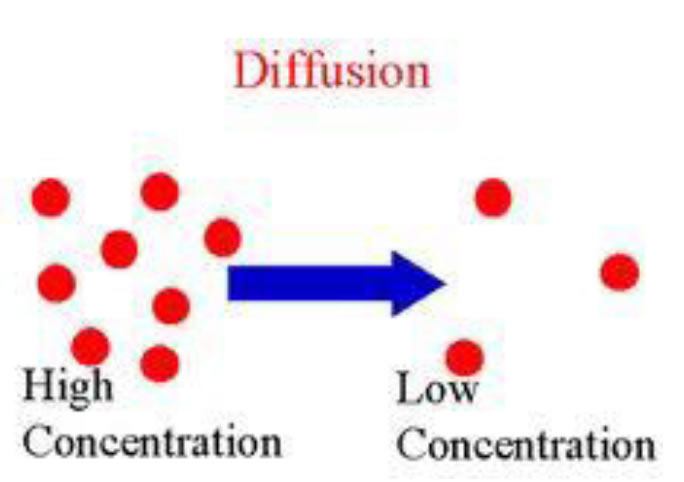
Movement of particles from high to low concentration. 
a)
Passive Transport
b)
Active Transport
34.
Osmosis is a form of ______________. 
a)
Passive Transport
b)
Active Transport
35.
Osmosis is the movement of _____ across a membrane.
a)
food
b)
energy
c)
oxygen
d)
water
36.
This picture represents what type of cell transport?
a)
endocytosis
b)
exocytosis
c)
osmosis
d)
passive transport
37.
This picture represents which type of cellular transport?
a)
passive transport
b)
endocytosis
c)
exocytosis
d)
osmosis
38.
Which is true about active transport?
a)
It requires energy
b)
it does not require energy
c)
It moves substances down the concentration gradient
d)
it moves material from high to low concentration
39.
Passive transport requires no
a)
concentration gradients
b)
osmosis
c)
motion
d)
energy
40.
A cell in a hypotonic solution will
a)
swell
b)
shrink 
c)
stay the same size
d)
impossible to tell
41.
This type of endocytosis is used by the cell to take in large molecules or tiny organisms. 
a)
Pinocytosis 
b)
Protein pumps
c)
Phagocytosis
d)
Exocytosis
42.
What are the products of aerobic respiration?
a)
Glucose and oxygen
b)
Carbon dioxide and water
c)
Lactic acid
d)
Carbon monoxide
43.
The mitochondria is responsible for ...
a)
photosynthesis
b)
anaerobic respiration
c)
aerobic respiration
d)
fermentation
44.
Aerobic respiration is different from anaerobic respiration in that aerobic respiration needs...
a)
chlorophyll
b)
carbon dioxide
c)
glucose
d)
oxygen
45.
In which way are photosynthesis and cellular respiration different?
a)
Cellular respiration stores ATP, while photosynthesis releases ATP.
b)
Cellular respiration produces oxygen, while photosynthesis uses oxygen.
c)
Photosynthesis releases energy, while cellular respiration stores energy.
d)
Photosynthesis used carbon dioxide, while cellular respiration produces carbon dioxide.
46.
Cellular Respiration's goal is to
a)
make water
b)
make ATP
c)
make glucose
d)
make  oxygen
47.
What is cellular respiration?
a)
the breakdown of glucose  to release ATP
b)
the breakdown of glucose to release NADH
c)
the breakdown of glucose to release FADH
d)
the breakdown of glucose to release carbon
48.
Which organelle performs PHOTOSYNTHESIS?
a)
Chloroplast
b)
Mitochondria
49.
Where does aerobic respiration occur?
a)
glucose molecule
b)
mitochondria
c)
cytoplasm
d)
chloroplast
50.
What process occurs when light energy is captured in autotrophs and converted into sugar?
a)
Photosynthesis
b)
Cellular Respiration
51.
Which organisms perform Photosynthesis?
a)
Only Autotrophs
b)
Only Heterotrophs
c)
Autotrophs and Heterotrophs
52.
Which gas is removed from the atmosphere during photosynthesis?
a)
hydrogen
b)
oxygen
c)
nitrogen
d)
carbon dioxide
53.
What are the products of photosynthesis?
a)
water and carbon dioxide
b)
oxygen and glucose
c)
oxygen and carbon dioxide
d)
oxygen and water
54.
Which type of fermentation occurs in muscles?
a)
Alcoholic 
b)
Lactic acid
55.
This system transports essentials and removes wastes to and from the cells of the body.
a)
circulatory
b)
respiratory
c)
skeletal
d)
integumentary
56.
This system supplies the body with oxygen and rids it of carbon dioxide.
a)
circulatory
b)
respiratory
c)
muscular
d)
nervous
57.
This system provides a framework for the body.
a)
muscular
b)
integumentary
c)
skeletal
d)
excretory
58.
This system processes food to provide the body with nutrients. 
a)
digestive
b)
excretory
c)
endocrine
d)
circulatory
59.
This system receives and proccesses information.
a)
respiratory
b)
immune
c)
nervous
d)
endocrine
60.
This system allows for movement of the body.
a)
skeletal
b)
nervous
c)
muscular
d)
integumentary
61.
This system secretes chemical messages (hormones) to different parts of the body.
a)
excretory
b)
endocrine
c)
digestive
d)
immune
62.

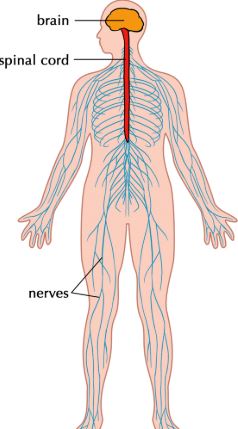
What system is pictured?

a)

Skeletal

b)

Circulatory

c)

Nervous

d)

Muscular

63.

Which two body systems are working together to make this type of physical movement from the basketball player?

a)

Circulatory and Excretory

b)

Skeletal and Muscular

c)

Nervous and Digestive

d)

Respiratory and Skeletal

64.

What system eliminates non solid waste from the body?

a)

Integumentary

b)

Digestive

c)

Excretory

d)

Respiratory

65.

What is the function of the system pictured?

a)

Helps pumps your blood through out your body.

b)

Helps move and protect your body.

c)

Helps take in oxygen and remove carbon dioxide.

d)

Helps maintain body your temperature.

66.

What system gathers information and responds to that information? Ex: Touching something that is hot and quickly pulling your hand away.

a)

Skeletal

b)

Muscular

c)

Integumentary

d)

Nervous

67.

Which system provides shape and support, enables you to move, and stores minerals

a)

Skeletal

b)

Muscular

c)

Integumentary

d)

Respiratory

68.

How does the cardiovascular system and the respiratory system work together?

a)

The cardiovascular system allows the body to have energy while the respiratory system makes cells

b)

The cardiovascular system transports oxygen around the body while the respiratory system gives the body oxygen

c)

The cardiovascular system makes cells while the respiratory system moves them where they are suppose to go

d)

The cardiovascular system transports nutrients around the body while the respiratory system brings oxygen into the body

69.

The muscular organ that pumps blood through out your body is your

a)

Arteries

b)

Diaphragm

c)

Heart

d)

Larynx

70.

All your body systems work together to maintain a stable environment which is called __________________.

a)

Hydration

b)

Regular

c)

Gucci

d)

Homeostasis

71.
A mode of reproduction in which an organism arises from two organisms and inherits half of its DNA from each parent
a)
Sexual Reproduction
b)
Asexual Reproduction
c)
Cloning
d)
Fragmentation
72.
What is a characteristic of sexual reproduction?
a)
diverse offspring
b)
identical offspring
c)
faster than asexual reproduction
d)
requires no energy
73.
All of the offspring of an organism have the same genetic material, which is identical to the parent organism?
a)
makes its own food
b)
goes away
c)
live in a marine habitat
d)
reproduces asexually
74.
Compare & Contrast
 Sexual VS Asexual
a)
both only require one parent
b)
sexual creates diverse offspring, and asexual makes uniform
c)
sexual reproduction have larger populations
d)
both require no special cells
75.
If two organisms reproduce sexually, then their offspring will exhibit a genetic makeup that is -
a)
identical to only one parent
b)
identical to all of its siblings
c)
a unique combination of traits
d)
the recessive traits of each parent
76.
In sexual reproduction the male produces ___ cells.
a)
Malex
b)
Quack
c)
Egg
d)
Sperm
77.
In sexual reproduction the female produces ___ cells.
a)
Femalex
b)
Quack
c)
Egg
d)
Sperm
78.
A mode of reproduction by which an organism arises from a single organism and inherit the identical genes of that parent
a)
Asexual Reproduction
b)
Sexual Reproduction
c)
Genetic Variation
d)
Alleles
79.
which of the following does not occur by mitosis?
a)
growth
b)
production of gametes
c)
repair
d)
development in the embryo
80.
A male shark has 40 chromosomes in each of its sex cells. How many would be present in its body cells?
a)
20
b)
40
c)
80
d)
160