wayground logo

Free Printable Worksheets

Font size

S
M
L
XL
Worksheets

Science 4º Primary

Total questions: 149

Worksheet time: 1hrs 19mins

Name
Class
Date
1.

An ecosystem includes all the living and ... in a specific area and the interaction that occurs between them.

a)

non-living things

b)

habitat

c)

composers

d)

fauna

2.

All the animal life in an ecosystem is called the

a)

fauna

b)

flora

c)

community

d)

deserts

3.

Organisms of the same species that live in the same area are called a

a)

population

b)

community

c)

ecosystems

d)

forest

4.

When populations interact with each other, they form a

a)

community

b)

primary consumers

c)

consumers

d)

producers

5.

... are the driest and hottest ecosystems on Earth.

a)

Deserts

b)

Forests

c)

Grasslands

d)

Marine

6.

... ecosystems can be made up of deciduous or evergreen trees.

a)

Forest

b)

Deserts

c)

Grasslands

d)

Marine

7.

... are dominated by large areas of grass and are found in areas where there isn’t enough rain for trees to grow.

a)

Grasslands

b)

Deserts

c)

Forests

d)

Marine

8.

The largest ecosystem on Earth is the ...

a)

ocean

b)

grassland

c)

forest

d)

desert

9.

... reefs are one of the most diverse ecosystems on Earth and are home to about 25% of all marine life

a)

Coral

b)

Marine

c)

Habitat

d)

Forest

10.

Cities and towns are examples of ...

a)

urban ecosystems

b)

ocean ecosystems

c)

grasslands ecosystems

d)

forest ecosystems

11.

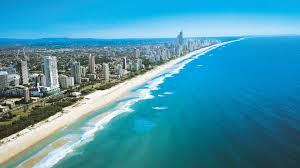
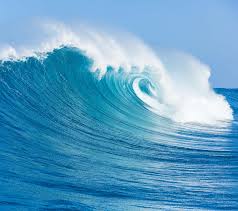
Identify the ecosystem in the picture

a)

Urban

b)

Marine

c)

Forest

d)

Desert

12.

Identify the ecosystem in the picture

a)

Marine

b)

Urban

c)

Forest

d)

Desert

13.

Identify the ecosystem in the picture

a)

Forest

b)

Desert

c)

Grassland

d)

Marine

14.

Identify the ecosystem in the picture

a)

Desert

b)

Grassland

c)

Marine

d)

Urban

15.

Identify the ecosystem in the picture

a)

Grassland

b)

Marine

c)

Desert

d)

Forest

16.

The natural home of a living thing.

a)

Habitat

b)

Fauna

c)

Protists

d)

Population

17.

These living things obtain their energy by eating other living things.

a)

Consumers

b)

Producers

18.

These living things use energy from the Sun to make their own food.

a)

Producers

b)

Consumers

19.

Animals and plants can’t live on the shoreline

a)

False

b)

True

20.

Urban ecosystems only have man-made elements

a)

False

b)

True

21.

Coral reefs are one of the most diverse ecosystems

a)

True

b)

False

22.

Which Living things go to desert ecosystem?

a)

Cacti and scorpions

b)

Zebras and lions

c)

Crabs and scorpions

d)

Deciduous trees and fungi

23.

Which Living things go to the urban ecosystem?

a)

Pigeons and rats

b)

Zebras and lions

c)

Cacti and scorpions

d)

Crabs and seaweed.

24.

Which Living things go to forest ecosystem?

a)

Zebras and lions

b)

Crabs and seaweed

c)

Cacti and scorpions

d)

Pigeons and rats

25.

Vertebrates are animals that...

a)

have winds

b)

lay eggs

c)

have bones

d)

mother gives birth

26.

The most extensive stage of the past is ...

a)

Neolithic

b)

Palaeolithic

c)

Copper age

27.

Prehistory is divided into...

a)

Ancient Age, Middle Ages and Contemporary Age.

b)

Past, present and future.

c)

Paleolithic, Neolithic and Metal Age.

28.

With the appearance of the human being began ...

a)

The Paleolithic.

b)

The Neolithic.

c)

The age of metals.

29.

Humans became farmers in ...

a)

The Paleolithic.

b)

The Neolithic.

c)

The age of metals.

30.

In the Palaeolithic, it was invented ...

a)

Fire

b)

Wheel

c)

Ceramic

31.

In the Paleolithic, human beings lived ...

a)

In villages.

b)

In caves

c)

In towns.

32.

In the Age of Metals, objects with ...

a)

Iron, bronze and copper.

b)

Stone and wood

c)

Silex

33.

In the Neolithic, human beings were ...

a)

Nomads

b)

Citizens

c)

Sedentary

34.

... studies the historical period before the Middle Ages.

a)

An ancient historian

b)

An archeologist

c)

Palaeontologist

35.

... studies and writes about the past.

a)

A historian

b)

A palaeontologist

c)

Archaeologist

36.

An _________________ keeps important documents and historical records safe.

a)

archivist

b)

historian

c)

geologist

37.

A ________________ studies rocks, minerals and the Earth’s surface.

a)

geologist

b)

palaeontologist

c)

historian

38.

A _________________ studies fossils.

a)

palaeontologist

b)

archaeologist

c)

historian

39.

The beginning of sedentary life

a)

Neollithic

b)

Palaeolithic

c)

Mesolithic

40.

The beginning of human history.

a)

Palaeolithic

b)

Mesolithic

c)

Neolithic

41.

The transition period of the Stone Age.

a)

Mesolithic

b)

Palaeolithic

c)

Neolithic

42.

People learnt to use fire.

a)

Palaeolithic

b)

Mesolithic

c)

Neolithic

43.

People cultivated crops and domesticated animals.

a)

Neolithic

b)

Palaeolithic

c)

Copper age

44.

Housing was temporary. People lived in caves.

a)

Palaeolithic

b)

Mesolithic

c)

Neolithic

45.

Farming tools were invented.

a)

Palaeolithic

b)

Bronce age

c)

Neolithic

46.

Stone, bone and wood were used to make simple tools.

a)

Palaeolithic

b)

Neolithic

c)

Mesolithic

47.
People who follow herds of animals and have no permanent homes are called ____________.
a)
nomads 
b)
fishermen 
c)
merchants 
d)
domestication
48.
Which of the following is the period before writing was developed?
a)
the Neolithic Age
b)
archaeology
c)
ancient times
d)
prehistory
49.
According to the  timeline, when did the Neolithic era begin?
a)
8000 B.C.
b)
4,000 B.C.
c)
14,000 B.C.
d)
10,000 B.C.
50.
What does prehistory mean?
a)
Before man
b)
Before writing
c)
Before farming
d)
Before language
51.

In the Palaeolithic Period, humans were...

a)

Sedentary

b)

Ugly

c)

Nomads

d)

Sedentary and nomads

52.

When humans became sedentary in the Neolithic Period, they live in...

a)

Villages

b)

Towns

c)

cities

d)

Hotels

53.

When did Prehistory end?

a)

when hominids appeared

b)

When fire was discovered

c)

When writing was invented

d)

When Christ was born

54.
What are the products of photosynthesis?
a)
water and carbon dioxide
b)
oxygen and glucose
c)
oxygen and carbon dioxide
d)
oxygen and water
55.
Which gas is removed from the atmosphere during photosynthesis?
a)
hydrogen
b)
oxygen
c)
nitrogen
d)
carbon dioxide
56.
What molecule absorbs sunlight for photosynthesis?
a)
chloroplast
b)
thylakoid
c)
grana
d)
chlorophyll
57.
Which statement about photosynthesis is correct?
a)
Plants get the energy they need for photosynthesis from water.
b)
Plants get the energy they need for photosynthesis from soil.
c)
Plants get the energy they need for photosynthesis from sunlight.
d)
Plants do not require energy to perform photosynthesis.
58.
A student is collecting the gas given off from a plant in bright sunlight at a temperature of 27°C. The gas being collected is probably ________.
a)
oxygen
b)
carbon dioxide
c)
ATP
d)
glucose
59.
The main source of energy for all life comes from ____.
a)
the Earth
b)
the moon
c)
the sun
d)
the food we eat/make
60.
Which of the following is not needed for photosynthesis to occur?
a)
sunlight
b)
carbon dioxide
c)
water
d)
oxygen
61.
Why do we eat food?
a)
to provide energy/fuel
b)
to eliminate waste products
c)
to prevent diseases
d)
to kill pathogens
62.
Plants need ________ for photosynthesis
a)
oxygen
b)
soil
c)
carbon dioxide
d)
sugar
63.
What are the states of matter?
a)
solid, liquid, and juice
b)
solid and liquid
c)
solid and gas
d)
solid, liquid, and gas
64.

A type of matter that can be found on earth as a solid, liquid, and gas

a)

gold

b)

water

c)

oxygen

d)

rock

65.
A description of objects that can be measured and observed.
a)
gas
b)
mustangs
c)
physical properties
d)
melting point
66.
Which of the following is a part of the water cycle?
a)
evaporation
b)
condensation
c)
precipitation
d)
all of the above
67.
If you saw a glass of water and later the water was gone what happened to the water? Remember that your in the science lab.
a)
Ms. Klenk was very thirsty and drank the water.
b)
evaporation
c)
precipitation
d)
solubility
68.
A physical property can be observed with your
a)
Eyes
b)
Ears
c)
Tastes
d)
All of the above
69.
Cutting an orange is a physical change.
a)
True
b)
False
70.
What causes a change in the state of matter?
a)
physical properties
b)
chemical energy
c)
temperature
71.
Which change can occur when  you add heat energy to water?
a)
The water can change from a liquid to a solid
b)
The water can change from a gas to a liquid
c)
The water can change from a liquid to a gas
d)
The water can change from a solid to a liquid
72.
Changing the way matter looks without changing it into NEW matter is a:
a)
Chemical change
b)
Physical change
c)
Energy change
d)
BOTH a chemical and a physical change
73.
Which of the following could be a characteristic that changes in matter during a PHYSICAL CHANGE?
a)
Size
b)
State
c)
Texture
d)
All of the above
74.
Chopping wood is an example of a:
a)
Physical change
b)
Chemical change
75.
Water freezing to ice is an example of a:
a)
Physical change
b)
Chemical change
76.
Burning wood to ash is an example of a:
a)
Physical change
b)
Chemical change
77.
Smashing a piece of candy into smaller pieces is an example of a:
a)
Physical change
b)
Chemical change
78.
Something that takes up space and has mass.
a)
volume
b)
matter
c)
mass
d)
density
79.
The amount of space something takes up
a)
density
b)
volume
c)
mass
d)
matter
80.
A physical change does not need energy to occur.
a)
True
b)
False
81.
A watermelon has more matter than a grape, so it has more
a)
mass
b)
eat
c)
solid
d)
greater
82.
You can measure ______ with grams.
a)
mass
b)
volume
c)
conductivity
d)
melting point
83.

All metals are -

a)

conductors

b)

magnetic

c)

insulators

d)

soluble

84.

Mass is -

a)

the amount of matter in an object

b)

the density of a material

c)

the amount of force a material has

d)

the concentration of matter in an object.

85.

A material that is an insulator will -

a)

allow energy to travel

b)

stop or slow down energy

86.

A material that is an conductor will -

a)

allow energy to travel

b)

stop or slow down energy

87.

Mass is the amount of space that an object occupies.

a)

True

b)

False

88.

We measure mass in grams.

a)

True

b)

False

89.

We calculate density by dividing the mass of an object by its volume.

a)

True

b)

False

90.

Iron has a lower density than water.

a)

True

b)

False

91.

Everything that takes up space and has mass is -

a)

volume

b)

mass

c)

matter

d)

magnetic

92.
Water that falls to the ground from the atmosphere. 
a)
Temperature
b)
Humidity
c)
Wind
d)
Precipitation
93.
We use a thermometer to measure this. 
a)
Temperature
b)
Humidity
c)
Wind
d)
Precipitation
94.
It describes how much water vapour is present in the air. 
a)
Temperature
b)
Humidity
c)
Wind
d)
Precipitation
95.
It is moving air and its speed can be measured using an anemometer. 
a)
Temperature
b)
Humidity
c)
Wind
d)
Precipitation
96.
It can be measured in Celsius / Centigrade or Fahrenheit degrees. 
a)
Temperature
b)
Humidity
c)
Wind
d)
Precipitation
97.
To measure this, we use a rain gauge. 
a)
Temperature
b)
Humidity
c)
Wind
d)
Precipitation
98.
A measure of how hot or cold the air is. 
a)
Temperature
b)
Humidity
c)
Wind
d)
Precipitation
99.
We use a hygrometer to measure this.
a)
Temperature
b)
Humidity
c)
Wind
d)
PRecipitation
100.
It´s a measure of how hot or cold the air is.  Thermometer   
a)
Thermometer
b)
Hygrometer
c)
Anemometer
d)
Rain gauge
101.
___________ describes how much water vapor is in the air.   
a)
Humidity
b)
Rain
c)
Snow
d)
Wind
102.
We use this to measure humidity.
a)
Hygrometer
b)
Anemometer
c)
Rain gauge
d)
Thermometer
103.
We use a _____________________ to measure precipitation.
a)
Rain gauge
b)
Thermometer
c)
Hygrometer
d)
Anemometer
104.
Mediterranean climates have ________________ temperatures in the summer. 
a)
High
b)
Low
c)
Medium
105.
Mediterranean climates have _______________ winters.
a)
Mild
b)
Cold
c)
Hot
106.
Mountain climates have _________________ temperatures in summer. 
a)
Mild
b)
Cold
c)
Hot
107.
We split ______________ into three main categories: polar, tropical and temperate. 
a)
Climate
b)
Weather
108.
Water, air and heat from the Sun work together to make _______________. 
a)
Weather
b)
Climate
109.
Oceanic climates are _______________.
a)
Mild
b)
Hot
c)
Sunny
110.
What body system makes your body move? 
a)
Circulatory
b)
Respiratory
c)
Skeletal
d)
Muscular
111.
What body system removes the waste from your body? 
a)
Circulatory
b)
Excretory
c)
Digestive
d)
Respiratory
112.
What body system consists of the kidneys?
a)
Circulatory
b)
Excretory
c)
Digestive
d)
Muscular
113.
What body system consists of the heart?
a)
Excretory
b)
Digestive
c)
Circulatory
d)
Respiratory
114.

My spinal cord send _________ between my brain and the nerves in my body.

a)

Memories

b)

Blood

c)

Waste

d)

Messages

115.
My heart is a _________, that pumps blood through the body. 
a)
Cell
b)
Tissue
c)
Muscle
d)
Bone
116.
The air I breathe in goes down my trachea to my ______?
a)
Heart
b)
Lungs
c)
Brain
d)
Stomach
117.
My small and large ___________ break down the food so my body can use it for energy.
a)
Intestines
b)
Kidneys
c)
Stomach
d)
Bladder
118.

I breathe out gas called ___________ that my body does not need.

a)

Oxygen

b)

Carbon Monoxide

c)

Carbon Dioxide

d)

Hydrogen Peroxide

119.
The food I eat goes down my esophagus to my __________.
a)
Bladder
b)
Kidney
c)
Stomach
d)
Big Toe
120.

The ____________ is where babies develop and grow.

a)

uterus

b)

brain

c)

heart

d)

mouth

121.

The ____________ is the control centre of our body.

a)

brain

b)

nose

c)

skin

d)

heart

122.

Our ___________ is the organ of smell

a)

Nose

b)

Eyes

c)

Ears

d)

Tongue

123.

Our ___________ is the organ of taste

a)

Tongue

b)

Skin

c)

Eyes

d)

Nose

124.

Our _____________ are the organs of sight.

a)

Eyes

b)

Ears

c)

Nose

d)

Skin

125.

... system

a)

Respiratory

b)

Digestive

c)

Nervous

d)

Excretory

126.

... system

a)

Circulatory

b)

Respiratory

c)

Nervous

d)

Digestive

127.

... system

a)

Nervous

b)

Digestive

c)

Reproductive

d)

Respiratory

128.

... system

a)

Digestive

b)

Nervous

c)

Respiratory

d)

Excretory

129.

The skeleton has three parts: the ...., the torso and the limbs

a)

Skull

b)

Elbows

c)

Joints

d)

Organs

130.

Name

a)

Ribs

b)

Femur

c)

Vertebrae

d)

Skull

131.

Name

a)

Vertebrae

b)

Femur

c)

Skull

d)

Pelvis

132.

Three vital functions.

a)

Nutrition, interaction, reproduction.

b)

Nutrition, hearing, lungs.

c)

Interaction, skeletal, excretory

d)

Circulatory, reproduction, organs.

133.

Our body is formed by...

a)

Cells

b)

Water

c)

Muscles

d)

Organs

134.
The waste called Urea, travels down tubes called ureters to my ________. 
a)
Gall Bladder
b)
Kidney
c)
Bladder
d)
Stomach
135.
What is this landform?
a)
mountain
b)
glacier
c)
bay
d)
canyon
136.
What is this landform?
a)
city
b)
coast
c)
bay
d)
river
137.
What is this landform?
a)
mountain
b)
canyon
c)
coast
d)
cliff
138.
What is this landform?
a)
ocean
b)
bay
c)
coast
d)
river
139.
What is this landform
a)
valley
b)
mountain
c)
hill
d)
glacier
140.
What is this landform?
a)
valley
b)
hills
c)
river
d)
lake
141.
What is a landscape?
a)
the overall appearance of an area
b)
a land that is scaped
c)
the area of land
d)
A place that has great aesthetics
142.
What is a landform?
a)
the overall appearance of a placae
b)
a streestcape
c)
a natural feature of the earths surface
d)
a human feature on the earths surface
143.
What type of landform is in the picture?
a)
glaciers
b)
hills
c)
mountains
d)
plateau
144.
A natural feature of the earth's surface, for example a mountain, valley, lowland or volcano
a)
Landscape
b)
Place
c)
Landform
d)
Dreaming
145.
What is the definition of a landform?
a)
natural geographic feature or shape that appears on the Earth’s surface 
b)
human made feature or shape that appears on the Earth’s surface 
146.
The Sahara is what type of landscape? 
a)
Desert
b)
Coastal
c)
Karst
d)
Human
147.
Physical landscapes are created by
a)
nature
b)
humans
148.
Cultural landscapes are created by
a)
humans
b)
natural
149.
The Himalayas are what type of landscape?
a)
Mountain
b)
Human
c)
Coastal
d)
Karst