wayground logo

Free Printable Worksheets

NEW

Font size

S
M
L
XL
Worksheets

Life Science Final Exam Review Quiz

Total questions: 65

Worksheet time: 1hrs 21mins
Name
Class
Date
1.
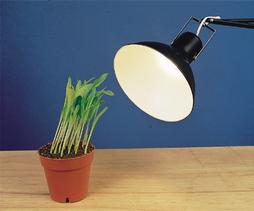
A plant growing towards the light is an example of 
a)
reproduction.
b)
responding to a stimuli.
c)
metabolism.
d)
homeostasis.
2.
What is an adaptation?
a)
A feature or behavior that helps an animal survive.
b)
The food that an animal eats.
c)
How energy moves in a food web.
d)
How animals evolve throughout time.
3.
The dismissal bell rings and you pack up your belongings. In this scenario, what is the stimulus?
a)
The bell ringing
b)
You packing up your belongings
c)
More information is needed
4.
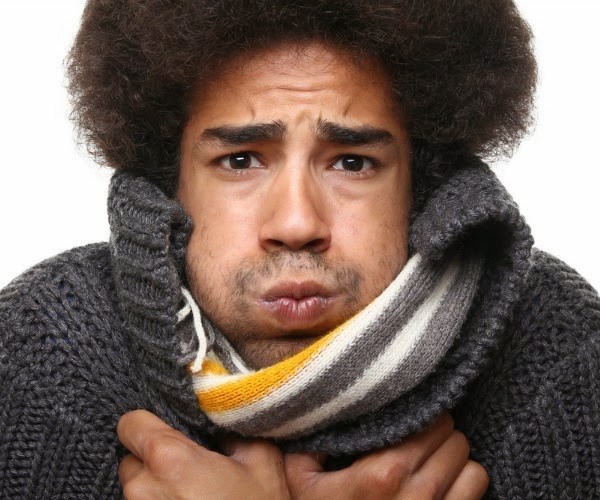
The image seen here is of a person shivering due to cold temperature. This is an example of an organism maintaining ________________ in action!
a)
Homeostasis
b)
Adaptations
c)
Evolution
d)
Development
5.
The process whereby an organism produces more of its own kind
a)
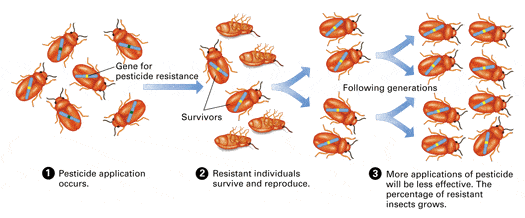
development
b)
adaptation
c)
homeostasis
d)
reproduction
6.
Which is the most complex of the choices below?
a)
cell
b)
tissue
c)
organ
d)
organ system
7.
What is the most basic unit of life?
a)
cell
b)
tissue
c)
organ
d)
organ system
8.
How do consumers get the energy they need to survive?
a)
photosynthesis
b)
eating other organisms
c)
decomposing dead materials
d)
chemosynthesis
9.
A _____ is something in the environment that causes an organism to respond.
a)
stimulus
b)
response
c)
cause
d)
effect
10.
Which of these statements is true about plants?
a)
they are producers
b)
they need water and carbon dioxide
c)
they need sunlight
d)
all of these statements are true
11.
What is another word for producer?
a)
autotroph
b)
heterotroph
c)
consumer
d)
decomposer
12.
What is another word for consumer?
a)
autotroph
b)
heterotroph
c)
producer
d)
decomposer
13.
If you move the slide left while viewing, in which direction will it appear to move?
a)
right 
b)
left
c)
up 
d)
down
14.
Which part of the microscope controls the amount of light available?
a)
coarse adjustment knob
b)
diaphragm
c)
objective lens
d)
revolving nosepiece
15.
What is part 1?
a)
eye piece
b)
body tube
c)
arm
d)
coarse adjust
16.
The ________ of the microscope would show you the MOST zoomed in image, or the SMALLEST field of view.
a)
low power objective
b)
medium power objective
c)
high power objective
d)
stage
17.
What will be the total magnification if ocular lens is 10X and objective lens is 4X?
a)
4X
b)
40X
c)
10X
d)
100X
18.
What organelle of the cell produces energy?
a)
Mitochondria 
b)
Golgi Body 
c)
Vesicle 
d)
Vacuole 
19.
Molecules using simple diffusion move from 
a)
high to low concentrations 
b)
low to high concentrations 
c)
no concentrations  
d)
both concentrations  
20.
Osmosis is the movement of... 
a)
salt 
b)
sugar 
c)
water 
d)
none of these 
21.
The diagram below represents a cell and some molecules in its environment. Which molecule would require the use of energy in order to be brought into the cell?
a)
1
b)
2
c)
3
d)
4
22.
The diffusion of water across a selectively permeable membrane is called 
a)
active transport
b)
facilitated diffusion
c)
osmosis
d)
phagocytosis
23.
Two brown eyed parents (Bb) have a baby. What is the chance the baby is blue eyed?
a)
0 %
b)
25%
c)
50%
d)
75%
24.
An allele whose trait only shows up when no dominant allele is present.
a)
hidden allele
b)
dominant allele
c)
recessive allele
d)
present allele
25.
If green is dominant over purple, then what is the genotype for this individual?
a)
Purple
b)
Green
c)
GG
d)
gg
26.
Which is the correct phenotype for this organism?
a)
BB
b)
blue
c)
green
d)
bb
27.
Females-XX; MalesXY.  A couple has 4 girls.  What is the chance the next child will be a boy?
a)
75%
b)
100%
c)
25%
d)
50%
28.
If "T" is the allele for tall and "t" is the allele for short, then Tt would produce?
a)
tall
b)
short
c)
medium
d)
not enough info
29.
G = green, g = yellow
The genotype for a yellow plant is...
a)
GG
b)
Gg
c)
gg
d)
all of the choices result in yellow
30.
Which of these traits can a tree NOT pass to its offspring
a)
the shape of its leaves
b)
roots that grow toward the water
c)
a trunk scared by lightning 
d)
the kind of seed it forms 
31.
What would the ratio for genotypes be for this Punnett Square?
a)
2Bb:2bb
b)
2BB:2Bb
c)
1BB:2Bb:1bb
d)
4Bb
32.
The sex of a child is determined by
a)
whether the father's sperm contains an x or y chromosome
b)
whether the mother's egg contains an x or y chromosome
c)
the age of the parents
33.
Hemophilia is recessive diseases carried on the X chromosome. Can a male be a carrier of the disease?
a)
Yes
b)
No
c)
Maybe
34.
Males are more likely to suffer from a sex-linked disease or disorder because
a)
males are the weaker sex
b)
males have less DNA
c)
males have 1 X chromosome, so the disorder is more likely to be expressed
35.
How many PAIRS of chromosomes do humans have?
a)
23
b)
46
c)
1
d)
2
36.
How many generations are shown in this pedigree?
a)
1
b)
2
c)
3
d)
4
37.
How many kids did the mother and father from the first generation have?
a)
2
b)
4
c)
5
d)
6
38.
In the second generation-how many people are carriers of the trait?
a)
2
b)
3
c)
5
d)
6
39.
DNA is inside your cells. What part of the cell is the DNA inside of?
a)
cell membrane
b)
cytoplasm
c)
nucleus
40.
Which sentence is FALSE?
a)
All organisms have 23 pairs of DNA.
b)
Chromosomes are made of genes.
c)
DNA is made out of 4 chemicals: adenine, cytosine, thymine, guanine
d)
DNA is the recipe for life.
41.
The yellow part of this picture is DNA. What do you think the turquoise part around it is?
a)
chromosome
b)
gene
c)
DNA
d)
ACTG
42.

Asexual reproduction like mitosis produces

a)

Two offspring cells with the same genetic material as the parent cell.

b)

Two offspring cells with half genetic material as the parent cell.

c)

Four offspring cells with the same genetic material as the parent cell.

d)

Four offspring cells with half the genetic material as the parent cell.
43.
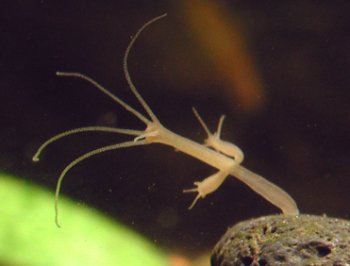
This is when a new organism grows by cell division on the body of its parent. The bud, or offspring is identical to the parent. The bud, when large enough, can break off of the parent and live on its own.  Examples of this include yeast, hydra and potatoes.
 
a)
Regeneration
b)
Vegetative propagation
c)
Fission
d)
Budding
44.
a)
budding
b)
binary fission
c)
sporulation
d)
regeneration
45.
Fruit fly body cells have 8 chromosomes. After mitosis, you would expect a resulting fruit fly daughter cell to have ...
a)
16 chromosomes.
b)
46 chromosomes.
c)
8 chromosomes.
d)
4 chromosomes.
46.
In which type of cells will mitosis occur?
a)
egg cells
b)
sperm cells
c)
jail cells
d)
Body cells except the sperm and egg cells
47.
How many daughter cells are produced from meiosis ?
a)
10
b)
6
c)
4
d)
2
48.
Most of the cells in the human body are produced by
a)
mitosis
b)
meiosis
49.
Why do we need meiosis?
a)
To double the number of chromosomes going into sex cells
b)
To halve the number of chromosomes going into sex cells
c)
To triple the number of chromosomes going into sex cells
d)
To not change the number of chromosomes going into sex cells
50.
The diagram above shows a human cell. What type of cell is this? 
a)
A reproductive cell (sex cell) made from mitosis 
b)
A body cell made from mitosis 
c)
A body cell made from meiosis 
d)
A reproductive cell (sex cell) made from meiosis
51.
This picture shows which process? 
a)
mitosis
b)
meiosis
c)
the cell cycle
52.

Tristen is testing how different substances added to water affect the rate of germination of bean seeds. He plants several beans and waters them all with different mixes. Which of the following is the control in his experiment?

a)

seed watered with saltwater

b)

seed watered with plain water

c)

seed watered with sugar water

d)

seed watered with vinegar water

53.

What happens during metamorphosis?

a)

The larva goes through big changes to become an adult.

b)

The larva eats a lot and sheds its skin as it grows bigger.

c)

The adult lays eggs on leaves, branches, and other places.

d)

The adult uses camouflage to hide and hunt in its habitat.

54.
The similarities of the bones in the diagram provide evidence that---
a)
The organisms shown lived in the same natural envionrment
b)
The organisms shown may have developed from a common ancestor
c)
The organisms shown have the same genetic diseases
d)
All vertebrate species have identical forelimbs
55.
The diagram shows fossils in different rock layers. Which of these statements about the age of these fossils is most likely correct?
a)
Fossil A and C are the same age
b)
Fossil B is older than fossil C
c)
Fossils A is older than fossil B
d)
Fossil D is older than fossil C
56.
What process is being shown in this image?
a)
Variation
b)
Natural Selection
c)
Selective Breeding
d)
Homeostasis
57.

A species is defined as:

a)

a group of organisms that are extremely different.

b)

a group of organisms that have similar characteristics and always live in the same place.

c)

a group of organisms with similar characteristics and can reproduce to make fertile offspring.

d)

any two organisms to make a hybrid.

58.

What statement is true regarding why natural selection can be easily seen in insects and bacteria?

a)

Natural selection only occurs in prokaryotic cells

b)

Insects and bacteria can reproduce faster than more complex organisms and pass on selected traits quicker

c)

Insects were the first multi-cellular organism to live on land

d)

Bacteria have directly evolved from insect traits.

59.
Which organism is MOST closely related to the common chimpanzee?
a)
grey wolf
b)
human
c)
monarch butterfly
d)
tiger snake
60.
If two species share the same class, they also share the same ______.
a)
phylum
b)
order
c)
genus
d)
species
61.
Organisms that belong to the same _________ share the MOST DNA.
a)
family
b)
kingdom
c)
genus
d)
species
62.
To what specific taxon would you assign this organism?
a)
Class Insecta
b)
Order Scorpiones
c)
Order Araneae
d)
Order Amblypygi
63.

(Taxonomy) The scientific name for a lion is Panthera leo, what is the genus?

a)

lion

b)

Panthera

c)

leo

64.
Examples are mushrooms and yeast
a)
Fungi
b)
Protista
Protista
c)
Plantae
d)
Animalia
65.
This organism is best classified as...
a)
prokaryotic, unicellular, and heterotrophic
b)
eukaryotic, unicellular, heterotrophic
c)
eukaryotic, unicellular, autotrophic
d)
prokaryotic, unicellular, autotrophic