
 Worksheets
RSS Chem Quiz 2
Total questions: 56
Worksheet time: 2hrs 4mins
Name
Class
Date
1.
Conduction can only occur between two objects when –
a)
one object is less dense than the other.
b)
both objects are in physical contact with each other.
c)
one of the objects is made of a metal.
d)
both objects are exactly the same temperature.
2.

In the situation illustrated, how will heat energy move? Heat energy will be transferred from –
a)
the water to the hot plate by convection.
b)
the water to the hot plate by conduction.
c)
the hot plate to the water by convection.
d)
the hot plate to the water by conduction.
3.

Which container allowed the most transfer of thermal energy from the water to the environment?
a)
Glass
b)
Wood
c)
Paper
d)
Plastic
4.
Energy is transferred as heat between two objects of ___________ temperatures.
a)
differing
b)
same
5.
As the kinetic energy of the molecules in a substance increases, the temperature of the substance __________.
a)
increases
b)
decreases
6.
The measure of average kinetic energy of all the particles within an object is called ____________.
a)
temperature
b)
conduction
c)
radiation
d)
heat
7.
What is temperature?
a)
The measure of coldness
b)
The measure of the kinetic energy or movement of atoms.
c)
The space an object takes.
8.
Heat is a flow of energy caused by
a)
specific heat
b)
density differences in solids
c)
temperature differences
d)
thermal expansion
9.
If the particles of two substances have the same average kinetic energy, then___.
a)
the specific heats of the substances are identical
b)
the particles will not react chemically
c)
the substances have equal thermal energies
d)
the substances have equal temperatures
10.
The symbol for specific heat is .......
a)
c
b)
Q
c)
m
d)
t
11.
What is the formula to calculate heat energy required to raise the temperature of any substance?
a)
Q=mc∆t
b)
Q=mc
c)
Q= ½mv
d)
m=QC
12.
The specific heat of platinum is 0.133 J/g°C. How much heat(Q) is released when a 10 g piece of platinum cools from 100°C to 50°C?
a)
66.5 J
b)
665 J
c)
0.0266 J
d)
0.665 J
13.
20 g of water. specific heat of water is 4.18 J/g°C. temperature changes from 25° C to 20° C, how much heat energy (Q) moves from the water to the surroundings?
a)
418 J
b)
209 J
c)
83 J
d)
4.18 J
14.
The specific heat(c) of copper is 0.39 J/g °C. What is the temperature change(∆t) when 100 Joules of heat(Q) is added to 20 grams?
a)
12.82 °C
b)
24.12°C
c)
1.95 °C
d)
5128 °C
15.
A pot of 2400g of water at a temperature of 25˚C is heated on a stove until the water boils (100˚C). The specific heat of water is 4.18 J/(g˚C).
Determine the heat energy needed to heat the water in the pot to boiling.
Determine the heat energy needed to heat the water in the pot to boiling.
a)
133.76J
b)
43,062.2J
c)
752,400J
d)
1,003,200J
16.
The temperature of an unknown piece of metal with a mass of 30.00 g changes from 25.0 °C to 35.0 °C when the metal absorbs 350.0 J of energy. What is the specific heat of the metal?
a)
1.17 J/g°C
b)
-1.17 J/g°C
c)
0.857 J/g°C
d)
-0.857 J/g°C
17.
What is the formula to calculate heat energy required to raise the temperature of any substance?
a)
Q=mc∆t
b)
Q=mc
c)
Q= ½mv
d)
m=QC
18.
When water is heated from 10°C to 15°C What is the change in temperature?
a)
10 °C
b)
5 °C
c)
15 °C
d)
25 °C
19.
When a piece of aluminum foil is taken out of the oven and cools from 100°C to 50°C.
What is the change in temperature?
What is the change in temperature?
a)
50°C
b)
0°C
c)
100°C
d)
150°C
20.
How many calories are required to boil 75 grams of water?
(not in sig figs) Hf = 80.0 cal/g, Hv = 560.0 cal/g, SH = 1.00 cal/g ºC
(not in sig figs) Hf = 80.0 cal/g, Hv = 560.0 cal/g, SH = 1.00 cal/g ºC
a)
6,000 cal
b)
3,360,000 cal
c)
42,000 cal
d)
7.46 cal
21.
If a 8.50g ice cube at -10o C sits out on the counter, completely melts, and then warms to room temperature (25o C) how much energy did the ice cube absorb? Use C = 2.108 J/goC for ice, C = 4.184 J/goC for water, and Hf = 334 J/g.
a)
179.18 J
b)
2839 J
c)
889.1 J
d)
3907.3 J
22.
How much energy is required to completely boil away 150g of 10o C water? Use C = 4.184 J/goC for water, and Hv = 2260 J/g.
a)
56,484 J
b)
339,000 J
c)
395,484 J
d)
385,484 J
23.
Water in the ice maker of a refrigerator has a mass of 0.4 kg and temperature of 22oC. What is the temperature of the water after 33 600 J of energy has been removed from it?
(Specific heat capacity of water = 4200 J kg-1 oC-1)
(Specific heat capacity of water = 4200 J kg-1 oC-1)
a)
20oC
b)
2oC
c)
0.2oC
d)
22oC
24.
Two cups contain coffee at 85oC and milk at 35oC respectively. The specific heat capacity of milk is 1.5 times the specific heat capacity of coffee. The mass of coffee is twice the mass of milk. If the drinks are mixed together, what is the final temperature of the mixture?
a)
63.57oC
b)
54.26oC
c)
72.34oC
d)
66.28oC
25.

Diagram above shows a container of Baskin Robbin ice cream bought at the Aeon supermarket. The purchase of that ice cream comes together with few cubes of dry ice. Name the process of dry ice changing from solid to gas.
a)
Freezing
b)
Solidification
c)
Sublimation
d)
Vaporization
26.
The change from a gas to a liquid is called
a)
condensation
b)
evaporation
c)
sublimation
d)
deposition
27.
How do you make matter change state?
a)
Add energy to it
b)
Take energy away from it
c)
Both of these
28.
What is the boiling point of water?
a)
212°C
b)
100°C
c)
32°C
d)
0°C
29.
A substance's melting point is the same as its
a)
freezing point.
b)
condensation point.
c)
boiling point.
30.
Gases have...
a)
A definite shape and volume
b)
A definite shape but no definite volume
c)
No definite shape but a definite volume
d)
No definite shape or volume
31.
What is the variable for this number 22.4 L
a)
P
b)
T
c)
n
d)
V
32.
What is the variable for this number 32oC
a)
P
b)
T
c)
n
d)
V
33.
What is the variable for this number 9.10 atm
a)
P
b)
T
c)
n
d)
V
34.
What is the variable for this number 122 K
a)
P
b)
T
c)
n
d)
V
35.

A 7.50 liter sealed jar at 18 °C contains 0.125 moles of oxygen and 0.125 moles of nitrogen gas. What is the pressure in the container?
a)
7.38 atm
b)
0.796 atm
c)
0.684 atm
d)
0.398 atm
36.
If 22.5L of nitrogen at 0.98 atm is compressed to 0.95 atm, what is the new volume?
a)
23.2L
b)
21.8L
c)
24.2L
d)
20.6L
37.
196L of air at 1.0atm is compressed to 26.0L. What is the new pressure?
a)
7.54 atm
b)
8.54 atm
c)
6.54 atm
d)
0.13 atm
38.
If 6L of gas at 293K is compressed to 4L, what is the new temperature?
a)
195K
b)
439.5K
c)
0.082K
d)
12.2K
39.
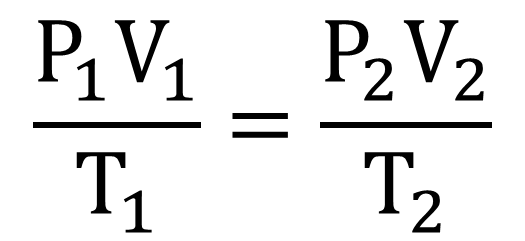
A gas is heated from 263K to 298K. The volume is increased from 24.0L to 35.0L. If the original pressure was 1.00 atm, what is the new pressure?
a)
0.78 atm
b)
1.65 atm
c)
1.28 atm
d)
0.61 atm
40.
A weather balloon has a volume of 105L at 0.97 atm when the temperature is 318K. What is the volume at 293K and 1.05 atm?
a)
89.4 L
b)
0.32 L
c)
93.8 L
d)
3.13 L
41.
Blue Color: Chemical or Physical Property
a)
Chemical Property
b)
Physical Property
42.
Density: Chemical or Physical Property
a)
Chemical Property
b)
Physical Property
43.
Flammability (burns): Chemical or Physical Property
a)
Chemical Property
b)
Physical Property
44.
Solubility (dissolves): Chemical or Physical Property
a)
Chemical Property
b)
Physical Property
45.
Reacts with Acid: Chemical or Physical Property
a)
Chemical Property
b)
Physical Property
46.
Brittleness: Chemical or Physical Property
a)
Chemical Property
b)
Physical Property
47.
Evidence of Chemical Change.
a)
New Substance
b)
Size change
c)
State change
d)
Mixture
48.
Evidence of a physical change.
a)
New substance
b)
Shape Change
c)
Light produced
d)
Gas released.
49.
Water boiling is a _______ change.
a)
Physical Change
b)
Chemical Change
50.
Fireworks Exploding are a ________ change.
a)
Physical Change
b)
Chemical Change
51.
How many valence electrons are in an atom of Se?
a)
2
b)
8
c)
6
d)
5
52.
How many valence electrons are in an atom of Ba?
a)
2
b)
8
c)
4
d)
1
53.
How many valence electrons are found in atoms of aluminum?
a)
6
b)
3
c)
13
d)
16
54.
How many valence electrons are found in atoms of group 15?
a)
4
b)
5
c)
2
d)
3
55.

a)
2
b)
8
c)
3
d)
13
56.

a)
2
b)
3
c)
5
100 %

