wayground logo

Free Printable Worksheets

NEW

Font size

S
M
L
XL
Worksheets

Physical Science Pre-Exam

Total questions: 70

Worksheet time: 2hrs 30mins

Name
Class
Date
1.

Melissa shot a model rocket 360m into the air. It took the rocket 4s to fly that far. What was its average speed?

a)

0.01 m/s2

b)

360 m/s2

c)

90 m/s2

d)

4 m/s2

2.

The formula acceleration=net force/mass applies to:

a)

Newton's first law of motion

b)

Newton's second law of motion

c)

Newton's third law of motion

d)

None of the above.

3.

Which of the following has more inertia?

a)

toy car

b)

bowling ball

c)

feather

d)

tennis ball

4.

Newton's first law of motion is also known as:

a)

Law of inertia

b)

centripetal force

c)

action/reaction law

d)

acceleration law

5.

You push a 100 N car 5 m. How much work was done?

a)

200 J

b)

10 J

c)

400 J

d)

20 J

6.

When forces are balanced, the net force is __________ .

a)

zero

b)

one

7.

When ____________ forces act on an object, they make the object move.

a)

unbalanced

b)

balanced

8.

Opposite poles of magnets ________ each other.

a)

repel

b)

attract

c)

push

9.

Ryan has 2 boxes. One weighs 5 pounds. The other weighs 50 pounds. If he pushes on the boxes with the same amount of force, what will happen?

a)

The 5lb box will move more easily.

b)

The 50lb box will move more easily.

c)

The boxes will move at the same speed.

10.
The __________ variable is the one that is manipulated; it's what I change.
a)
independent
b)
dependent
c)
constant
d)
control
11.
The __________ variable is the one that is measured; it "depends" on the change that we made.
a)
independent
b)
dependent
c)
constant
d)
control
12.
The factors in an experiment that must remain the same in order to isolate the independent variable.
a)
Control
b)
Constant
c)
Testable questions
d)
Test subjects
13.
The group used for comparison.
a)
Control
b)
Constant
c)
Testable question
d)
Test subjects
14.
Convert 0.25 m to mm
a)
25
b)
2.5
c)
250
d)
0.025
15.
There are ___ millimeters(mm) in 2.7 centimeters (cm)
a)
270 mm
b)
.27 mm
c)
27 mm
d)
.027 mm
16.
convert 0.08 km to m
a)
80
b)
8
c)
0.8
d)
800
17.

Anything that takes up space and has mass

a)

matter

b)

shape

c)

texture

d)

property

18.
This part of the experiment serves as a basis of comparison; the one variable being tested has been omitted. 
a)
experimental group
b)
control group
c)
data
d)
variables
19.
A possible explanation to a problem that has not yet been tested. 
a)
data
b)
theory
c)
hypothesis
d)
fact
20.
What step does every scientific experiment begin with?
a)
hypothesis
b)
question/problem
c)
procedures
d)
conclusion
21.
The summary at the end of an experiment that explains the results. 
a)
conclusion
b)
procedures
c)
materials
d)
responding variable
22.
Testing a hypothesis often involves a(n):
a)
answer
b)
experiment
c)
problem
d)
safety check
23.
On what axis should the independent variable always be?
a)
X
b)
Y
24.
An experiment is performed on plants to see how different liquids affect plant growth. Each plant in the experiment is given a different liquid; water, apple juice, or milk. Each plant has the same amount of soil, sunlight, and listens to the same music. In this investigation, the independent variable is ...
a)
The type of plant
b)
The amount of sunlight
c)
The type of music
d)
The type of liquid
25.
Which is NOT a step in the scientific method?
a)
Make observation
b)
Form a theory
c)
Collect data
d)
Form a hypothesis
26.
What is the amount of space an object takes?
a)
mass
b)
density
c)
volume
d)
weight
27.
The International System of Units is of
a)
complicated
b)
metric
c)
English system
d)
make believe
28.
_____________ measures volume
a)
meter
b)
liter
c)
gram
d)
celcius
29.
The metric abbreviation for millimeter is
a)
cm
b)
mm
c)
dm
d)
m
30.
_____________ measures mass
a)
meter
b)
liter
c)
gram
d)
Celsius
31.
_____________ measures temperature
a)
meter
b)
liter
c)
gram
d)
Celsius
32.
The metric abbreviation for milliliter is
a)
m
b)
mL
c)
dm
d)
m
33.
Which of these best completes the conversions below?
1 kg = ? g
1 m  = ? cm
a)
1 kg = 1000 g
1 m  = 100 cm
b)
1 kg = 0.001 g
1 m  = 0.01 cm
c)
1 kg = 100 g
1 m  = 10 cm
d)
1 kg = 0.01 g
  1 m = 0.001 cm
34.

How many students take the bus to school?

a)

35

b)

20

c)

10

d)

15

35.
What type of graph is this?
a)
Bar Graph
b)
Line Plot
c)
Pictograph
d)
Tally Chart
36.
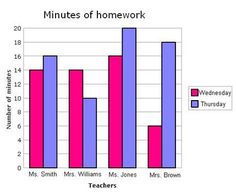
Which day had more minutes of homework?
a)
Wednesday
b)
Thursday
c)
Friday
d)
Ms. Jones
37.

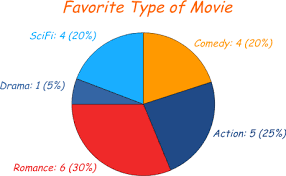
What type of graph is shown?

a)

pie chart

b)

line plot

c)

double line graph

d)

line graph

38.

What type of graph is shown?

a)

pictograph

b)

stem and leaf

c)

pie chart

d)

histogram

39.
What is a force?
a)
a push or pull
b)
speed or acceleration 
c)
potential or kinetic energy
d)
balanced or unbalanced force
40.
Force is measured in....
a)
Galileos 
b)
Newtons
c)
Di Vincis
d)
Einsteins 
41.
What pulls a ball back to earth?
a)
Gas
b)
Gravity
c)
Friction
d)
Molecules
42.

If a magician pulls a table cloth from under a table of dishes, what should happen based on Newton's 1st law?

a)

The dishes will stay in place on the table.

b)

The dishes will fall to the ground.

c)

The dishes will accelerate and then slow down.

43.

It is much more difficult to move a dresser full of clothes than an empty dresser. Why?

a)

An object in motion stays in motion.

b)

It takes more force to move an object with more mass.

c)

It takes more friction to move the empty dresser.

44.
A change in velocity over time is
a)
Scalar
b)
Speed
c)
Acceleration
d)
Motion
45.
Why does a rolling ball stop?
a)
Gravity
b)
Friction
c)
Waterfalls
d)
Sand
46.
Which term means speed with a direction?
a)
Speeding
b)
Acceleration
c)
Velocity
d)
Gravity
47.
The correct equation for acceleration is?
a)
a = d/t
b)
a = s/vf
c)
a = vf - v/ t
d)
p = m/v
48.
The Standard Units for Speed is ?
a)
m/s (meters per second)
b)
ms (meters times seconds)
c)
mskg (meters times seconds kilograms)
d)
m/s*kg (meters per second kilograms)
49.
Before his unfortunate accident, the kid on the trampoline was experiencing which one of Newton's laws?
a)
Second Law (f = ma)
b)
First Law (Inertia)
c)
Third Law (Action-Reaction)
d)
Fourth Law ( THERE IS NO 4TH LAW BRO!)
50.

What is motion?

a)

A change in position.

b)

A change in force.

51.
Calculate the net force of the object in the image shown.
a)
20N
b)
35N
c)
5N
d)
25N
52.
What is the net force of this object?
a)
0N
b)
50N
c)
25N
d)
5N
53.
Energy of motion is which type of energy?
a)
Potential
b)
Kinetic
c)
Sound
d)
Gravitational
54.
What kind of energy is represented in this picture?
a)
Thermal
b)
Potential
c)
Nuclear
d)
Mechanical
55.
What kind of energy is represented in the picture?
a)
Thermal
b)
Chemical
c)
Sound
d)
Nuclear
56.
According to which law of energy, energy can't be created or destroyed?
a)
First law of motion
b)
The law of tacos
c)
Laws of Energy
d)
law of conservation of energy
57.
The ability to do work is
a)
power
b)
energy
c)
thermal
d)
kinetic
58.
Stored energy is called ______ energy.
a)
Kinetic
b)
Potential
c)
Pacific
d)
Safe
59.
_________________________ is a measure of the average kinetic energy of the particles in a material.
a)
thermal
b)
friction
c)
temperature
d)
expansion
60.
Thermal energy always moves from ____________ objects to ______________ objects.
a)
cooler, warmer
b)
warmer, cooler
c)
faster, slower
d)
slower, faster
61.
A material with a(n) ___________ specific heat can absorb a great deal of thermal energy without a great change in temperature.
a)
High
b)
Low
62.

Water has a specific heat of 4184 J/KgºC. Wood has a specific heat of 1760 J/KgºC. What material needs more energy to raise the temperature 1ºC

a)

Wood

b)

Water

c)

Both are the same

d)

I don't know

63.
How does the speed of the particle in a substance relate to the temperature of the substance?
a)
helps to determine the amount of average kinetic energy, which helps to determine temperature.
b)
there is no relationship between the two
c)
helps to determine if a relationship even exists between the two
d)
all of the above
64.

what splits things apart?

a)

lever

b)

wedge

c)

wheel and axle

d)

screw

65.

What is the formula for work?

a)

force + distance

b)

force x distance

c)

work - force x 8

d)

distance x work

66.
What is a machine that is made of two simple machines?
a)
Pulley
b)
Compound Machine
c)
Lever
67.
A ramp is an example of a(n)
a)
inclined plane
b)
fulcrum
c)
force
d)
lever
68.
The kind of heat transfer that travels through space in electromagnetic waves is ______________________.
a)
insulation.
b)
Radiation
c)
Conduction
d)
Convection
69.
The type of heat transfer that happens through direct contact of molecules or particles with each other is ___________________.
a)
Convection
b)
Conduction
c)
Radiation
d)
insulation.
70.
Which of the following is NOT a conductor?
a)
oven mitt
b)
curling iron
c)
iron skillet
d)
copper pipe