wayground logo

Free Printable Worksheets

Font size

S
M
L
XL
Worksheets

Unit 1

Total questions: 137

Worksheet time: 7hrs 7mins

Name
Class
Date
1.
What does the atomic mass tell you? 
a)
Basically,the number of electrons and protons
b)
The number of neutrons
c)
Basically, the number of protons and neutrons
d)
The number of protons.
2.
An atom of the element with atomic number 6 always has _____.
a)
six protons in its nucleus
b)
an atomic mass of six
c)
more than six neutrons
d)
six electron clouds
3.

How many electrons does Barium (Ba) have?

a)

13

b)

2

c)

71

d)

56

4.

What is the ionic charge of Phosphorus (P)?

a)

+5

b)

-3

c)

+3

d)

-5

5.

How many neutrons does Bromine (Br) have?

a)

35

b)

80

c)

45

d)

7

6.

What is group name of the most reactive metals?

a)

Noble gases

b)

Halogens

c)

Alkali metals

d)

Alkaline earth metals

7.

Why are halogens so reactive?

a)

They want to get rid of their only valance electron

b)

They only need one more electron

c)

They are non reactive, they have a full shell

8.

Which element conducts electricity the best?

a)

Silicon

b)

Fluorine

c)

silver

d)

Arsenic

9.
Elements which are shiny, conduct electricity and heat are called
a)
metal
b)
nonmetal
c)
metalloid
d)
nonexistent
10.
How many neutrons are in a Gold atom?
a)
79
b)
196
c)
118
d)
275
11.
How many electrons does a Copper atom have?
a)
63
b)
29
c)
92
d)
34
12.

What is the relative atomic mass?

a)

the number of protons and neutrons relative to carbon-12

b)

the weighted average mass of the isotopic masses relative to carbon-12

c)

the number of protons and neutrons

d)

the number of protons and electrons

13.
Which of the following will have a higher electronegativity than arsenic (As)?
a)
Carbon (C)
b)
Neon (Ne)
c)
Antimony (Sb)
d)
Germanium (Ge)
14.
As atoms of elements in group 16 are considered in order from top to bottom, the electronegativity of each successive element....
a)
decreases
b)
increases
c)
remains the same
d)
none of the above
15.
As you move down the periodic table atoms get bigger.  This is because ____________.
a)
The atoms have more mass.
b)
The atoms have more protons.
c)
The atoms have more energy levels
d)
The atoms have more neutrons
16.
As you move across the periodic table atoms tend to get smaller because, ______________.
a)
the atoms have more mass.
b)
the atoms have less mass
c)
the atoms have more protons.
d)
the atoms have less electrons.
17.
Electronegativity is...
a)
the ability of an atom to attract/ accept electrons
b)
the ability of an atom to lose electrons
c)
the energy required to remove an electron from a specific atom
d)
how easy it is to make friends. 
18.
Ionization energy is...
a)
the energy required to add an electron to a specific atom
b)
how much energy it takes to remove an electron from an atom
c)
the energy required to shield the outer electrons from the nucleus
d)
a measure of the ability of an atom to attract electrons
19.
The atom with the largest atomic radius in Group 18 is - 
a)
Ar
b)
He
c)
Kr
d)
Rn
20.
Metals have the largest - 
a)
atomic radius and electronegativity
b)
electronegativity and ionization energy
c)
atomic radius only
d)
ionization energy and atomic radius
21.
Which statement correctly and completely identifies a trend?
a)
Atomic radius decreases across a period and increases down a group.
b)
Electronegativity decreases across a period and decreases down a group.
c)
Ionization energy increases across a period and increases down a group.
d)
Ionic radius increases across a period and increases down a group.
22.
Electronegativity __________ from left to right within a period and __________ from top to bottom within a group.
a)
decreases, increases 
b)
increases, increases
c)
increases, decreases 
d)
stays the same, increases
23.
Atomic radius generally increases as we move __________.  
a)
down a group and from right to left across a period 
b)
up a group and from left to right across a period 
c)
down a group and from left to right across a period 
d)
up a group and from right to left across a period 
24.

Which element would have the same number of energy levels or orbitals as Zinc?

a)

Cadmium

b)

Krypton

c)

Silver

d)

Tin

25.

Rank the following from lowest ioniziation energy to highest ionization energy: C, P, S, As

a)

C, P, S, As

b)

As, C, P, S

c)

P, S, As, C

d)

C, As, P, S

26.

Rank the following in order of increasing reactivity: Ge, K, Br, Ca (lowest to highest reactivity)

a)

Ge, K, Br, Ca

b)

K, Br, Ge, Ca

c)

Br, Ge, Ca, K

d)

Br, Ca, Ge, K

27.
What atom matches this electron configuration?
1s2s2p3s2
a)
Neon
b)
Magnesium
c)
Aluminum
d)
Potassium
28.
Which is the electron configuration for an oxygen atom?
a)
1s22s22p63s23p64s2
b)
1s22s22p4
c)
1s22s22p6
d)
1s22s22p63s23p6
29.
What is this element? 
1s22s22p63s23p6
4s23d104p6
a)
Argon
b)
Krypton
c)
Selenium
d)
Bromide
30.
What atom matches this electron configuration?
[Xe] 6s2 4f14 5d9
a)
Mercury
b)
Gold
c)
Platinum
d)
Thallium
31.
What is the shorthand electron configuration for Sulfur atom?
a)
[Ar] 3p4
b)
[He] 3s23p4
c)
[Ne] 3s23p4
d)
[Na] 3s23p3
32.
What element has the valence shell configuration
3s2 3p2
a)
Al
b)
B
c)
Si
d)
Ga
33.
How many valence electrons does phosphorus have?
a)
5
b)
2
c)
8
d)
15
34.
Which element is pictured?
a)
neon
b)
fluorine
c)
magnesium
d)
argon
35.
Electron arrangement that uses arrows
a)
Electron configuration
b)
Shorthand configuration
c)
Lewis dot structure
d)
Orbital diagram
36.
Which electron configuration belongs to Chlorine (Cl)?
a)
1s2s2p3s3p5
b)
1s2s2p3s3p6
c)
1s2s2p3s3p7
37.
There are 4 different types of subshells s,p,d,f
a)
true
b)
false
38.
Which electron configuration belongs to Copper (Cu)?
a)
1s2 2s2 2p6 3s2 3p6 4s2 3d8
b)
1s2 2s2 2p6 3s2 3p6 4s2 3d9
c)
1s2 2s2 2p6 3s2 3p6 4s2 3d10
39.
Identify the Electron Configuration for Aluminum (Al)
a)
1s2s2p3s3p1
b)
1s2s2p3s3p3
c)
1s2s2p3s4p1
40.
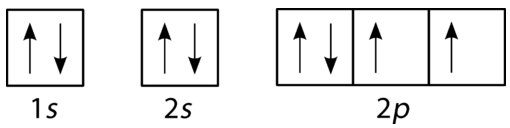
This orbital diagram represents:  
a)
C
b)
B
c)
N
d)
O
41.
What is incorrect about this orbital diagram?
a)
Both arrows in the 2p box should be pointing up
b)
There is nothing incorrect with this diagram
c)
In the there should only be 1 orbital in the first 2p box and one in the 2nd 2p box
d)
All the arrows should be pointing up.
42.
This orbital diagram represents:  
a)
C
b)
B
c)
N
d)
O
43.
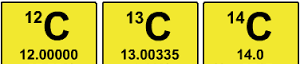
What do these isotopes of carbon all have in common?
a)
neutrons & mass number
b)
atomic number and neutrons
c)
atomic number and electrons
d)
protons, atomic number, and mass number
44.
What quantities vary between isotopes of an element?
a)
protons, electrons, and atomic mass
b)
protons, electrons, and atomic number
c)
neutrons and electrons
d)
neutrons and atomic mass
45.
How many neutrons in C-14?
a)
6
b)
7
c)
14
d)
8
46.
If X is the symbol for an element, which of the following two symbols represent    isotopes of the same element?     I. 7735X  II. 7733X  III. 8137X  IV. 8135 X
a)
I and II
b)
III and IV
c)
I and IV
d)
I and III
47.
Four isotopes of lead include lead-204, lead-206, lead-207, and lead-208.  The average atomic mass of lead is 207.2.  Which isotope of lead is likely to be the most abundant.
a)
204
b)
206
c)
207
d)
208
48.
An atom is electrically neutral when
a)
protons and neutrons are the same
b)
protons and electrons are the same
c)
neutrons and electrons are the same
d)
neutrons balance the protons and electrons
49.
If the number of electrons in an atom changes you make a(n) __________________.
a)
ion
b)
isotope
c)
new element
d)
isomer
50.
Ions are: 
a)
atoms with a positive or negative charge
b)
atoms with no charge
c)
atoms with ONLY a positive charge
d)
atoms with ONLY a negative charge
51.

The atomic mass of an element depends upon the ___.

a)

relative abundance of protons in that element

b)

mass and relative abundance of each isotope of that element

c)

mass of each isotope of that element

d)

mass of each electron in that element

52.
24.1% of all the isotopes of a an element have a mass of 75.23 amu, 48.7% have a mass of 74.61 amu, and 27.2% have a mass of 75.20 amu.
What is the average mass of this element?
a)
74.92 amu
b)
24.97 amu
c)
75.01 amu
d)
74.51 amu
53.
24.1% of all the isotopes of a an element have a mass of 75.23 amu, 48.7% have a mass of 74.61 amu, and 27.2% have a mass of 75.20 amu.
How many protons does this element have?

a)
32
b)
33
c)
34
d)
no way to know
54.
An element with 4.35% have a mass of 49.9461 amu, 83.79% have amass of 51.9405 amu, 9.50% have a mass of 52.9407 amu, and 2.36% have a mass of 53.9389amu.
a)
51.99 amu
b)
52.19 amu
c)
53.45 amu
d)
17.33 amu
55.
4.35% of all X atoms have a mass of 39.946 amu. 83.79% have a mass of 41.941 amu, 9.50% have a mass of 42.941 amu, and 2.36% have a mass of 43.939 amu. What is the average atomic mass of atom X?
a)
41.97 amu
b)
42.19 amu
c)
10.43 amu
d)
40.04 amu
56.
An isotope has three forms.  30% have a mass of 4 amu, 20% have a mass of 5 amu and 50% have a mass of 3 amu.  Average atomic mass will be closest to
a)
2 amu
b)
3 amu
c)
4 amu
d)
5 amu
57.
Calculate the average atomic mass of silver.
a)
106.38649amu
b)
111.91896amu
c)
107.8677amu
d)
121
58.
An element has two naturally occurring isotopes. One is 10.013 amu and is 19.9% abundant. The other is 11.01 amu and is 80.1% abundant. What is the average atomic mass? What element is it?
a)
9.012, Beryllium
b)
12.011, Carbon
c)
6.941, Lithium
d)
10.812, Boron
59.
Atom 1 has Mass=12  Protons=6
Atom 2 has Mass= 14 Electrons=6
Are these atoms isotopes of each other or different elements?
a)
Different Elements - Mg & Si
b)
Different Elements - Ar & Ca
c)
Isotopes of Carbon
d)
Isotopes of Magnesium
60.
Which type of bond has an equal sharing of electrons?
a)
Polar Covalent 
b)
Non Polar Covalent
c)
Ionic
d)
Metallic
61.
Which type of bond has an unequal sharing of electrons?
a)
Polar Covalent 
b)
Non Polar Covalent
c)
Ionic
d)
Metallic
62.
Which type of bond has a transfer of an electron from on atom to another?
a)
Polar Covalent 
b)
Non Polar Covalent
c)
Ionic
d)
Metallic
63.
All chemical bonds involve two atoms sharing electrons.
a)
True
b)
False
64.
Bonds that form between two metals are called ______________ bonds.
a)
ionic 
b)
covalent
c)
metallic
d)
pervasive
65.
If an atom loses two electrons what charge will it have?
a)
+ 2
b)
 - 2
c)
+1
d)
-1
66.
If an atom gains one electron what charge will it have?
a)
-2
b)
-1
c)
+1
67.
When electrons are shared unequally a/an ___________ bond is formed 
a)
ionic 
b)
hydrogen
c)
polar covalent 
68.

This is a correct dot diagram for nitrogen (N)

a)

true

b)

false

69.
What is the shape of this molecule?
a)
Linear
b)
Bent
c)
Tetrahedral
d)
Trigonal pyramidal
70.
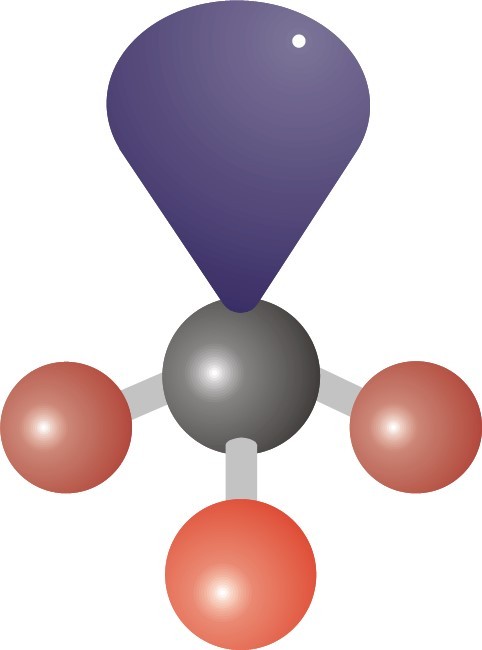
What is the shape of this molecule?
a)
Linear
b)
bent
c)
tetrahedral
d)
trigonal planar
71.
What is the shape of this molecule?
a)
Linear
b)
Bent
c)
Tetrahedral
d)
Trigonal Pyramidal
72.
What is the shape of this molecule?
a)
Linear
b)
Bent
c)
Tetrahedral
d)
Trigonal Pyramidal
73.
What is the shape of this molecule?
a)
Linear
b)
Bent
c)
Tetrahedral
d)
Trigonal Planar
74.
Which of the following is the correct Lewis structure for the compound PBr3?
a)
structure A
b)
structure B
c)
structure C
d)
structure D
75.
Which of the following is the correct Lewis dot structure for the molecule fluorine (F2)?
a)
A
b)
B
c)
C
d)
D
76.
Which of the following is the correct Lewis structure for CH2O?
a)
Option A
b)
Option B
c)
Option C
d)
Option D
77.
Who could this be?
a)
H2O
b)
NH3
c)
CO2
d)
CH4
78.

Which compound would have a high melting point?

a)

CaCl2

b)

CO2

c)

PI3

d)

SO3

79.
Which substance would be a poor conductor?
a)
NaCl (s)
b)
CO
c)
Both CO and NaCl(s)
d)
NaCl(aq)
80.
What is the formula for lithium oxide?
a)
LiO
b)
LiO2
c)
Li2O
d)
Li2O3
81.

Which of the following is NOT a property of ionic compounds?

a)

They conduct electricity when molten

b)

They conduct electricity when in solution

c)

They have high boiling points

d)

They are insoluble in water

82.

Ionic compounds can conduct when molten or dissolved because ...

a)

There are strong electrostatic attractions present

b)

The ions are free to move and conduct

c)

Ions can vibrate

d)

There is a metal present

83.

Ionic compounds have very high melting and boiling points because of the number of strong bonds/attractions

a)

True

b)

False

84.
What are the steps of operation in the mass spectrometer?
a)
Accelerate, Deflect,Ionize, Detect
b)
Deflect,Ionize, Accelerate, Detect
c)
Ionize, Accelerate, Deflect, Detect
d)
Detect, Accelerate, Deflect, Ionize
85.
What do the peaks on the mass spectrum represent?
a)
anions
b)
different isotopes
c)
atoms with differing numbers of electrons
d)
numbers of electrons
86.
What do the heights of the peaks represent in the mass spectrum?
a)
number of isotopes
b)
relative abundance of each isotope
c)
average atomic mass
d)
charge:mass ratio
87.
How many isotopes are shown in this mass spectrum?
a)
1
b)
84
c)
86
d)
4
88.
What do you expect the molar mass to be for this element?
a)
91.4 g/mol
b)
90.0 g/mol
c)
4 g/mol
d)
50. g/mol
89.
Based on the mass spectrum, which isotope of chlorine is most abundant?
a)
35Cl
b)
37Cl
c)
70Cl
d)
72Cl
90.
What is the average atomic mass for this element?
a)
10 amu
b)
10.8 amu
c)
19.9 amu
d)
11 amu
91.

When heated, electrons are ____________.

a)

annoyed

b)

irritated

c)

excited

d)

angered

92.
If electrons gain energy they 
a)
move up one or more shells
b)
more down one or more shells
93.
Absorption of energy by an electron results in 
a)
it moving from the ground to an excited state
b)
it moving from an excited to the ground state
c)
the emission of a photon
d)
it moving from an excited to the ground state and the emission of a photon
94.

What happens to the electron in the excited state?

a)

Returns to ground state and release energy

b)

Returns to grounded state and absorbs energy

c)

Returns to grounded state and absorbs and releases energy

d)

Returns to the next lower orbital

95.
Which type of shell has electrons with the most energy?
a)
furtherst away from the nucleus
b)
 closest to the nucleus
c)
middle shells
96.
For an electron to change from ground state to an excited stated it must...
a)
Absorb energy
b)
Release energy
97.
True or False: Electrons can exist in between energy levels.
a)
TRUE
b)
FALSE
98.
This picture is an example of a(n)...
a)
absorption spectrum
b)
emission spectrum
c)
continuous spectrum
d)
black body spectrum
99.
Which drawing represents the process by which an emission line is formed?
a)
A
b)
B
c)
C
d)
D
100.
Which drawing represents the process by which an absorption line is formed?
a)
A
b)
B
c)
C
d)
D
101.
Temperature is a measure of average [blank] energy of individual atoms.
a)
heat
b)
potential
c)
mechanical
d)
kinetic
102.
ΔH value in an endothermic reaction is a positive number.
a)
True
b)
False
103.
What type of reaction is shown in the reaction pathway?
a)
endothermic reaction
b)
exothermic reaction
104.
As 120 g of hot milk cools in a mug, it transfers 20, 000 J of heat to the environment. What is the temperature change of the milk? The specific heat of milk is 2.6 J/g·°C. (Q=mcΔT)
a)
64 °C
b)
1.56 °C
c)
640 °C
d)
cannot be determined
105.
If 100 g of aluminum at 145ºC gains 6,800 J of heat, what is the final temperature (Tfinal) of the aluminum? Aluminum has a specific heat of 0.897 J/gºC. (Q=mcΔT)
a)
-69°C
b)
0.52°C
c)
221°C
106.
A  100ml of water is heated by the burning of a biscuit.If he ΔT=200C and the change in mass of the biscuit, Δm =1.35g.Find the enthalpy of the biscuit in kJ/g. (Q=mcΔT)
a)
6.19
b)
61.9
c)
6193
d)
8360
107.
A  200ml of water is heated by the burning of a biscuit.If he ΔT=45.60C and the change in mass of the biscuit, Δm =5.35g.Find the enthalpy of the biscuit in kJ/g. (Q=mcΔT)
a)
7126
b)
71.3
c)
7.13
d)
38.12
108.
A student calculates the heat of combustion of a biscuit from an experiment to be 28.5kJ /g. The packet suggest that the heat of combustion is 3020kJ/100g. What is the percentage efficiency experimental data
a)
0.94%
b)
9.4
c)
94%
d)
16%
109.

When 1.0 mole of ZnO(s) decomposes,

ZnO(s) ---> Zn(s) + 1/2 O2(g) , enthalpy change is +348 kJ/mol.

What does this tell you about the formation of ZnO (s)?

a)

the formation of ZnO (s) is endothermic

b)

the formation of ZnO (s) is exothermic

c)

the formation of ZnO (s) does not require energy

d)

the formation of ZnO (s) absorbs heat.

110.
Describe the energy change that takes place when bonds are broken. 
a)
a) Energy is given out 
b)
b) Energy is taken in 
c)
c) Energy is taken in and then given out 
d)
d) Energy is given out and then taken in
111.
Describe the energy change that takes place when a chemical reaction occurs.
a)
a) Energy is given out
b)
b) Energy is taken in
c)
c) Energy is taken in and then given out
d)
d) Energy is given out and then taken in
112.
Which statement is true regarding endothermic reactions?
a)
a) Temperature change is positive and enthalpy change is positive
b)
b) Temperature change is positive and enthalpy change is negative
c)
c) Temperature change is negative and enthalpy change is positive
d)
d) Temperature change is negative and enthalpy change is negative
113.
In this Lewis structure, the symbol above F means...
a)
electrons are being transferred to Fluorine
b)
electrons are less attracted to F than H
c)
electrons are more attracted to F than H
d)
Fluorine has formed a cation
114.
This is an example of a __________ bond.
a)
non-polar covalent
b)
polar covalent
c)
ionic
d)
metallic
115.
Partial charges like the ones shown here are called:
a)
dipoles
b)
deltas
c)
ions
d)
magnetic poles
116.
Which molecule contains bonds with a GREATER polarity?
a)
HCl
b)
CCl4
117.

Which compound would have a high melting point?

a)

CaCl2

b)

CO2

c)

PI3

d)

SO3

118.
Which of the following shows the correct way to balance the chemical equation?
Fe + O2 -> Fe2O3
a)
4Fe + 3O2 -> 2Fe2O3
b)
2 Fe + 3O2 -> Fe2O6
c)
4 Fe + O6 -> 2Fe2O3
d)
None of the options are correctly balanced.
119.
Is the following equation balanced?
2C2H2 + 5O2 --> 4CO2 + 2H2O
a)
yes
b)
no
120.
Balance this equation
_Al +_HCl --> _H+_AlCl3
a)
2, 6, 3, 2
b)
it is already balanced
c)
4, 12, 3, 4
d)
2, 1, 4, 5
121.
Balance this equation-
__P+ __O--> __P2O3
a)
it is already balanced
b)
2, 1, 3
c)
1, 2, 3
d)
1, 3, 2
122.
What is the molar mass of C2H4O2?
a)
40g
b)
50g
c)
60g
d)
68g
123.
What would be the mass of 1.5mol H2O
a)
20
b)
27
c)
32
d)
40
124.
What is the mass of 0.75 moles of (NH4)3PO4?
a)
101.75 g
b)
121.75 g
c)
111.75 g
d)
131.75 g
125.
If I need 20.4 moles of sodium chloride, how much should I weigh out?
a)
0.549 g
b)
112 g
c)
1192 g
d)
5077 g
126.
How many molecules are in 32.4 grams of phosphorous pentoxide?
a)
1.76 x 10²³ molecules
b)
0.29 moles
c)
1.76 x 10²² molecules
d)
0.29 molecules
127.
What is the molecular formula if the empirical formula is C2H5 and the molecular molar mass is 58.14 g/mol?
a)
C2H5
b)
C4H10
c)
C1H2.5
d)
C4H8
128.
Find the percent composition of N2S2.
a)
N: 69.6%  S: 30.4%
b)
N:36% S: 75.6%
c)
N: 96.6% S: 3.4%
d)
N: 30.4% S: 69.6%
129.
Find the percent composition of Mg in Mg3(PO4)2.
   

a)
27.75% Mg
b)
23.57% Mg
c)
48.68% Mg
d)
13.45% Mg
130.
How many moles of (NH4)2O are present in 74.9 g?
a)
3,907.0  moles
b)
1.44 moles
c)
8.67x10²³moles
d)
0.79 moles
131.
How many atoms of carbon are in 6.00g of carbon?
a)
1.20x1024atoms C
b)
6.02x10²³atoms C
c)
3.01x10²³atoms C
d)
1.50x10²³atoms C
132.
What is the percent composition by mass of sulfur in the compound MgSO4 (gram formula mass = 120 g/mol)?
a)
20%
b)
27%
c)
46%
d)
53%
133.
Which one is empirical?
a)
H2O2
b)
C2H6O12
c)
CaCl2
d)
N2O8
134.
How many moles of H in 32g of methane (CH4).  M(CH4) = 16
a)
32/16
b)
32 x 16
c)
32 /16 x 4
d)
32/16  x 4
135.
How many atoms of H in 4.5g of H2O?  M(H2O) =18 ?
a)
4.5 / 18
b)
18/4.5 x 6 x 1023
c)
0.25 x 6 x 1023
136.
In 53g of Na2CO3 (M(Na2CO3) = 106,  M(O) =16), what is the mass of O?
a)
53 /106
b)
53/106 x 16
c)
53 /106 x 3 x 16
137.
How many molecules of of methane are there if there are 24 x 1023 atoms of H? (MCH4 = 16)
a)
4
b)
1
c)
24 x 1023 / 16