wayground logo

Free Printable Worksheets

Font size

S
M
L
XL
Worksheets

A&P First Three Weeks Test Review 2019

Total questions: 50

Worksheet time: 37mins

Name
Class
Date
1.
The maintenance of an organism’s internal environment is called:
a)
compensating
b)
homeostasis
c)
balancing
d)
routine
2.
What are all of the chemical reactions that occur within an
organism referred to?
a)
Enzymes
b)
Macromolecules
c)
Metabolism
d)
Activation Energy
3.
A chemical reaction that builds a larger molecule from two smaller molecules
a)
catabolic
b)
anabolic
4.
A chemical reaction in which a larger molecule is broken down into smaller molecules
a)
catabolic
b)
anabolic
5.
The uterus can be found in this cavity
a)
thoracic
b)
pleural
c)
pelvic
d)
mediastinum
6.

Body cavity that contains the heart and lungs

a)

abdominal

b)

thoracic

c)

pelvic

d)

pleural

7.

Body cavity that holds the brain

a)

abdominal

b)

thoracic

c)

pelvic

d)

cranial

8.

Body cavity that houses the spinal cord

a)

abdominal

b)

spinal

c)

pelvic

d)

cranial

9.

Which body cavities are located in the ventral side of the body?

a)

cranial and spinal

b)

thoracic, abdominal, pelvic

c)

thoracic and dorsal cavities

d)

cranial, abdominal and pelvic

10.
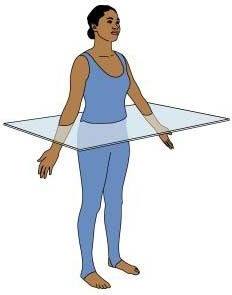
Divides body into top and bottom portions (superior-head; inferior-feat)
a)
Medial Plane
b)
Sagittal
c)
Proximal 
d)
Transverse Plane
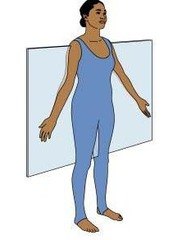
11.
Which plane is this?
a)
sagittal
b)
transverse
c)
coronal / frontal
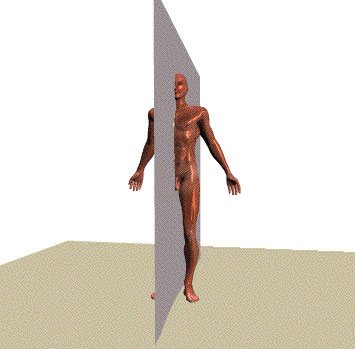
12.
What is this plane?
a)
sagittal
b)
transverse
c)
coronal / frontal
13.

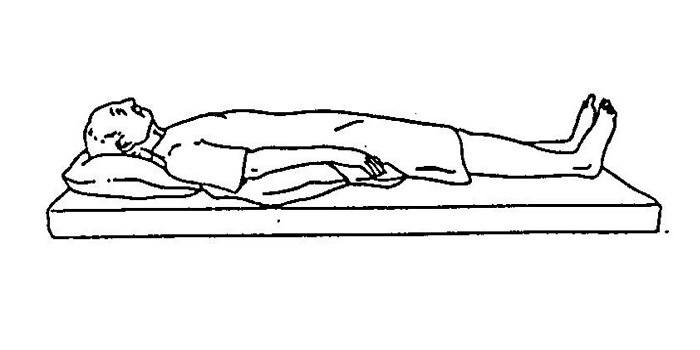
What is anatomical position?

a)
b)
c)
d)
14.

The shoulder is _____ to the elbow.

a)

proximal

b)

dorsal

c)

distal

d)

ventral

15.

The cranial cavity is _____ to the thoracic cavity.

a)

inferior

b)

anterior

c)

peripheral

d)

superior

16.

The pinky finger is ______ to the thumb in anatomical position.

a)

posterior

b)

superior

c)

lateral

d)

medial

17.

_______ means towards the side of the body.

a)

distal

b)

proximal

c)

medial

d)

lateral

18.

The diaphragm seperates which two body cavities?

a)

pelvic

b)

abdominal

c)

thoracic

d)

cranial

19.
What organelle of the cell produces energy?
a)
Mitochondria 
b)
Golgi Body 
c)
Vesicle 
d)
Vacuole 
20.
What kind of transport does not require energy?
a)
Active 
b)
Vacuole 
c)
Passive 
d)
Na/K Pump 
21.
What structure of the cell forms a frame that holds the cell up in the cytoplasm?
a)
centrioles 
b)
cell wall 
c)
flagella 
d)
cytoskeleton 
22.
What is facilitated diffusion?
a)
Transport that uses proteins to help move molecules across the membrane. 
b)
Movements of substances through a membrane. 
c)
When molecules spread from High to Low concentration on their own. 
d)
When pressure pushes something through a membrane. 
23.
What macromolecules help to make the cell membrane? 
a)
Proteins 
b)
Carbohydrates 
c)
Phospholipids 
d)
All of the above 
24.
What are the 2 parts of a phospholipid? 
a)
Hydrophobic head, hydrophilic tails 
b)
Hydrophobic heads, hydrophobic tails 
c)
Hydrophilic heads, hydrophobic tails 
d)
Hydrophilic heads, hydrophilic tails 
25.
Active transport does not require energy.
a)
True 
b)
False 
26.
Which of the following is correct about the Golgi? 
a)
Digests waste materials 
b)
Protection and Support 
c)
Modifies and packages molecules 
d)
cellular movement 
27.
Which of the following is a type of muscle tissue
a)
Skeletal 
b)
Cardiac
c)
Smooth
d)
All of the above
28.
This type of muscle tissue is found in the walls of hollow organs such as the stomach, and blood vessels 
a)
Skeletal
b)
Cardiac
c)
Smooth
d)
All of the above
29.

What are the 3 basic shapes of Epithelial Cells? (Select all that apply)

a)

Cuboidal

b)

Columnar

c)

Orbital

d)

Squamous

30.

Ciliated columnar cells can be found in

a)

the respiratory tract and fallopian tubes

b)

endocrine glands and microtubules

c)

cavity linings

d)

cystic ducts and hepatic ducts

31.

Connective tissue

a)

connects organs, tissues, cartilage, and bone

b)

absorbs and protects

c)

aids in movement

d)

secrete

32.

Fat is stored in vesicles within cells that compose __________ tissue.

a)

bone

b)

loose connective

c)

adipose

d)

reticular connective tissue

33.

Which is not a type of fiber found in connective tissue?

a)

microfibers

b)

collagen fibers

c)

elastic fibers

d)

reticular fibers

34.

Cuboidal cells are found in

a)

glands

b)

ducts

c)

tubules

d)

cavity linings

35.

What structure is #3?

a)

mitochondria

b)

chloroplast

c)

Golgi apparatus

d)

vacuole

36.

What structure is #12?

a)

mitochondria

b)

chloroplast

c)

Golgi apparatus

d)

vacuole

37.

What structure is #2?

a)

cytoplasm

b)

cell membrane

c)

cell wall

d)

nucleus

38.

What structure is #11?

a)

rough ER

b)

smooth ER

c)

Golgi Apparatus

d)

mitochondria

39.

What structure is #7?

a)

rough ER

b)

smooth ER

c)

Golgi Apparatus

d)

mitochondria

40.

What structure is #7?

a)

rough ER

b)

smooth ER

c)

Golgi Apparatus

d)

mitochondria

41.

What structure is #6?

a)

rough ER

b)

smooth ER

c)

Golgi Apparatus

d)

lysosome

42.

What structure is #12?

a)

DNA

b)

nucleus

c)

nucleolus

d)

lysosome

43.
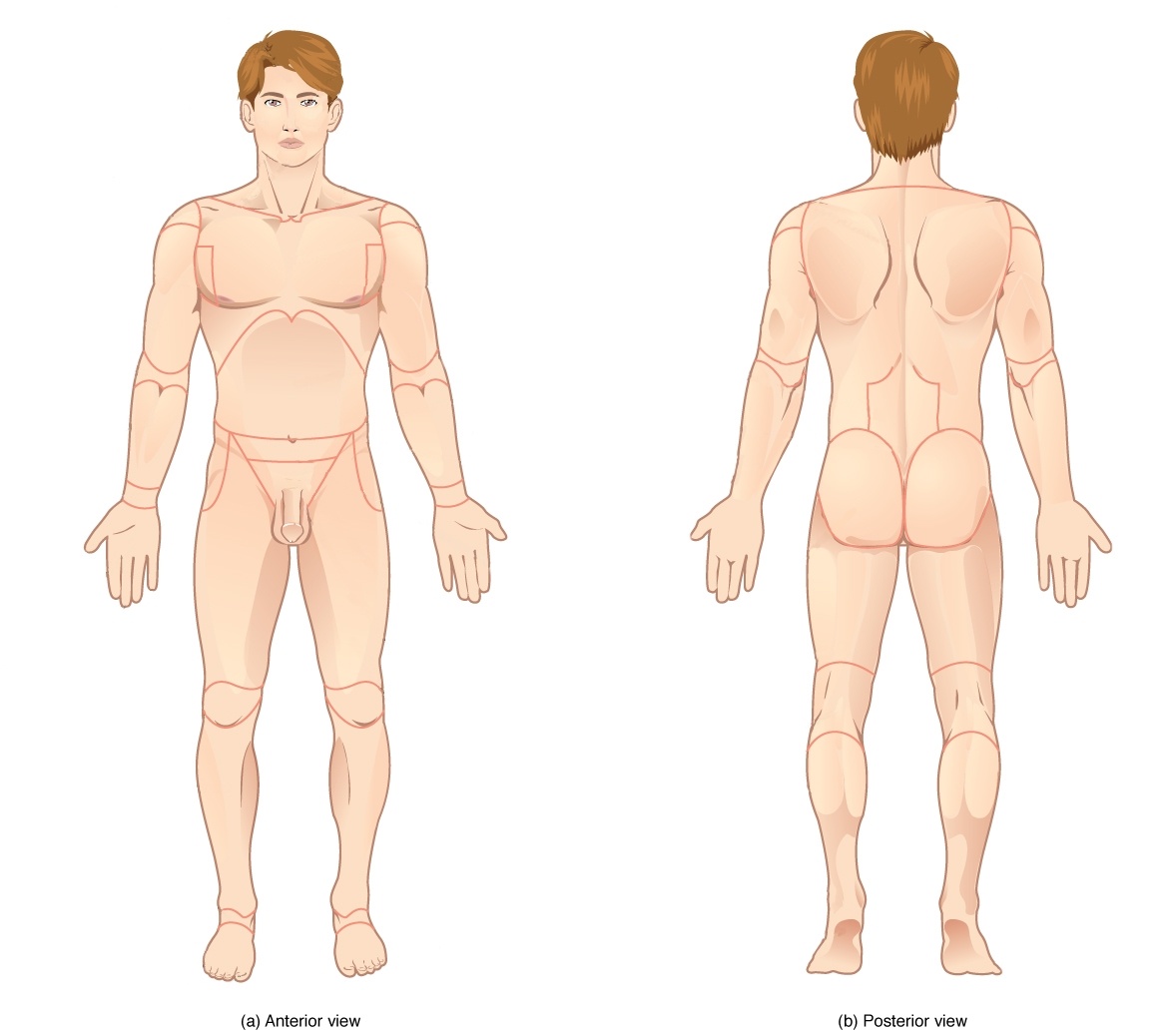
Front of the knee
a)
Popiteal
b)
Patellar
c)
Plantar
d)
Cervical
44.
Shoulder Area
a)
Deltoid
b)
Acrominal
c)
Cephalic
d)
Popiteal
45.
Heel Area
a)
Plantar
b)
Popiteal
c)
Patellar
d)
Calcaneal
46.
Head Region
a)
Acrominal
b)
Cephalic
c)
Cervical
d)
Occipital
47.
Sole of Foot
a)
Paterllar
b)
Popiteal
c)
Plantar
d)
Tarsal
48.
Area behind the knee
a)
Patellar
b)
Popiteal
c)
Cephalic
d)
Cervical
49.
Neck Area
a)
Cephalic
b)
Calcaneal
c)
Cervical
d)
Popiteal
50.

Arm

a)

Brachial

b)

Acrominal

c)

Cephalic

d)

Popiteal