
NEW
Font size
S
M
L
XL
 Worksheets
Covalent Bonding
Total questions: 40
Worksheet time: 31mins
Name
Class
Date
1.
What two types of atoms make a covalent bond?
a)
2 Nonmetals
b)
1 Nonmetal and 1 Metal
c)
2 Metals
d)
2 Noble Gases
2.
How are covalent bonds explained?
a)
When one atom takes the other atom's electron
b)
When the atom shares an electron with an another atom
c)
When the two nucleus merge
d)
When the neutrons leave the nucleus
3.
In chemical compounds, covalent bonds form when
a)
the electronegativity difference between two atoms is very large.
b)
electrons are completely transferred between two metals.
c)
pairs of electrons are shared between two nonmetal atoms.
d)
two nonmetal atoms are attracted to each other by opposite charges.
4.
What region of the periodic table contains atoms that form covalent bonds?
a)
the left side
b)
the middle
c)
the right side
d)
top left
5.
Is carbon considered a metal or a non-metal?
a)
metal
b)
nonmetal
c)
other
6.
Are the atoms more stable when they are bonded together or when they are apart?
a)
Bonded Together
b)
Apart
7.
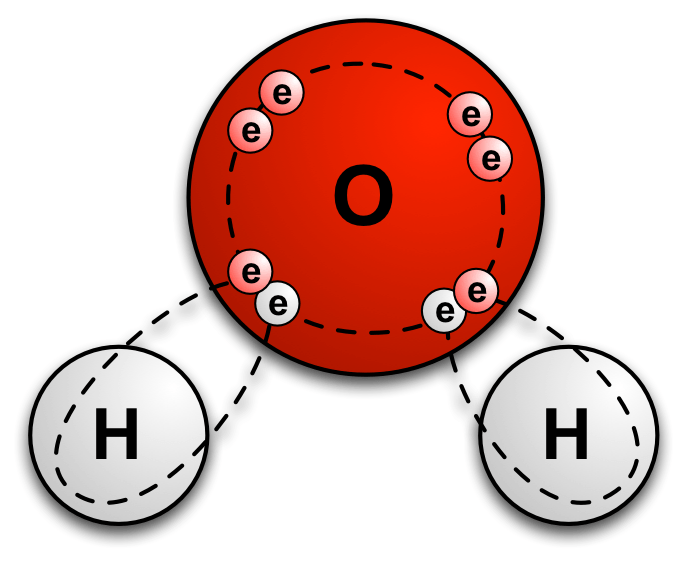
What would you name this molecule?
a)
SNa3
b)
H3O
c)
NaCl
d)
H2O
8.
The desire for an element to have 8 atoms around it is called
a)
Octet Rule
b)
Resonance
c)
Ionization energy
d)
Electronegativity
9.
How many Valence Electrons are on Oxygen
a)
2
b)
7
c)
6
d)
1
10.
Which of the following elements wants to bond 3 times
a)
Oxygen
b)
Phosphorous
c)
Fluorine
d)
Germanium
11.
Which of the following is a Diatomic Molecule
a)
K2
b)
C2
c)
S2
d)
N2
12.

What is the name of this Compound
a)
P2O5
b)
Phosphorous PentaOxide
c)
Diphosphorous pentaoxide
d)
Phosphourous Oxide
13.

What is the formula for this Compound
a)
PCl
b)
PCL5
c)
PCl5
d)
Phosphorous Penta Chloride
14.
A polar bond is one that
a)
Has an electronegativity difference greater than 0.7
b)
Has an electronegativity difference greater than 0.5
c)
Has an electronegativity difference less that 0.5
d)
Has an electronegativity difference less than 0.7
15.
Which of these would be covalently bonded
a)
Fr and K
b)
Sc and O
c)
F and Cl
d)
He and Pt
16.
How many valence electrons does nitrogen have?
a)
3
b)
2
c)
5
d)
1
17.
What can be generalized about covalent bonds?
a)
Electrons will be exchanged.
b)
Electrons will be transferred.
c)
Electrons will be given and taken.
d)
Electrons will be shared.
18.
What is it called if there are three-pairs of electrons being shared?
a)
Triple bond
b)
Bond length
c)
Tribond
d)
Chocolate Mousse
19.

Which of the following is the correct Lewis dot structure for the molecule fluorine (F2)?
a)
A
b)
B
c)
C
d)
D
20.
How many electrons should Carbon have around its Lewis dot structure?
a)
1
b)
3
c)
4
d)
5
21.
What two types of atoms make a covalent bond?
a)
2 Nonmetals
b)
1 Nonmetal & 1 Metal
c)
2 Metals
d)
2 Noble Gases
22.
What is a diatomic element?
a)
a metal bonded with a nonmetal
b)
2 or more nonmetals bonded together
c)
2 or more metals bonded together
d)
2 atoms of the same element bonded together
23.
How many electrons are shared in a double bond?
a)
2
b)
4
c)
6
d)
8
24.
What bond is formed between a metal and a nonmetal?
a)
Covalent bond
b)
Ionic bond
c)
Hydrogen bond
d)
Metallic bond
25.
What bond is formed between a metal and a nonmetal?
a)
Covalent bond
b)
Ionic bond
c)
Hydrogen bond
d)
Metallic bond
26.
When two nonmetals do not share electrons evenly, the resulting covalent bond will be
a)
nonpolar
b)
polar
c)
ionic
d)
metallic
27.
When the oppositely charged ends of polar molecules attract each other, the resulting bond is
a)
polar
b)
nonpolar
c)
metallic
d)
hydrogen
28.
Most covalent compounds are do not exist in which state?
a)
solid
b)
liquid
c)
gas
29.
The only truly nonpolar molecules are between
a)
metals and nonmetals
b)
different nonmetals
c)
nonmetals of the same element
d)
metalloids of the same element
30.

Which of these is covalent?
a)
NaCl
b)
Pb(NO3)2
c)
CO2
d)
AlCl3
31.
What is a double bond?
a)
a bond between two atoms
b)
one pair of electrons shared between two atoms
c)
two pairs of electrons shared between two atoms
d)
James Bond's brother
32.
Fluorine (F₂) is a(n) _________________ molecule because the valence electrons are shared equally between the two fluorine atoms.
a)
polar
b)
nonpolar
c)
ionic
d)
crystal
33.
Name CCl4
a)
carbon carbon tetraiodide
b)
carbon tetrachloride
c)
monocarbon tetrachloride
d)
water
34.
Give the formula for oxygen dichloride
a)
OCl2
b)
O2Cl2
c)
OCl
d)
O2Cl
35.
Give the formula for phosphorus trifluoride
a)
P3F
b)
PF
c)
PF3
d)
P3F3
36.
The chemical bond between a metal and a non-metal will be a _____ bond.
a)
metal
b)
ionic
c)
covalent
d)
polar
37.
The chemical bond between a non-metal and another non-metal will be a ________ bond.
a)
metal
b)
ionic
c)
covalent
d)
polar
38.

In a covalent bond both non-metals _____ electrons.
a)
transfer
b)
share
39.
Which of the following contains covalent bonds?
a)
NaBr
b)
Br2
c)
MgCl2
d)
KCl
40.
Which is the correct molecular formula for dicarbon tetrahydride?
a)
CH4
b)
C2H6
c)
C2H4
d)
CH6
Reset

