Worksheets
Cells Test Review
Total questions: 52
Worksheet time: 26mins
Which part of a city would best represent the nucleus?
Car factory: Manufacturing
City Hall: Control Center
Power Plant: Provides Energy
Highways: Transportation
What is the function of the cell membrane?
Give instructions to the other organelles.
Increase the number of cells.
Control materials that come in and out of the cell.
Makes proteins within the cell.
In which organelle is most of the ATP (energy) made during cellular respiration in an animal cell?
Nucleus
Mitochondria
Golgi Apparatus
Chloroplast
In what organelle does photosynthesis take place in the plant cell?
Nucleus
Mitochondria
Chloroplasts
Ribosomes
Which statement is TRUE about the organelles of an animal cell?
Mitochondria controls all cell functions.
Lysosomes and Cytoplasm makes ATP energy.
Organelles are surrounded by the Cytoplasm.
Vacuoles control the nucleus.
Which 4 structures are found in ALL cells?
Nucleus, Cytoplasm, DNA, Ribosomes
Cell Membrane, Mitochondria, DNA, Nucleus
Cell Membrane, Cytoplasm, DNA, Ribosomes
Cell Membrane, Nucleus, DNA, Lysosomes
A student finds an unknown object. How do they know if the object is living?
The object responds to light.
The object is made of one or more cells.
The object contained DNA.
All of the above.
This cell organelle contains DNA, controls all cell functions and is found in eukaryotic cells.
Nucleus
Ribosomes
Mitochondria
Bacteria
This organelle stores water, waste and nutrients.
Ribosomes
Nucleus
Vacuole
Mitochondria
The main function of the Golgi Apparatus is to .....
manufacture ribosomes,
store food, water, waste & nutrients.
clean up & digest waste material.
sort, package & distribute proteins.
Contained in the nucleus. The information or codes that make you a unique individual.
Stimulus
DNA
Reproduce
Homeostasis
Keeping internal conditions stable & healthy is known as _____.
metabolism.
homeostasis.
hereditary.
symbiosis.
Which part of a city would best represent the mitochondria?
Car factory: Manufacturing
City Hall: Control Center
Power Plant: Provide Energy
Highways: Transportation
Which two structures are found in plant cells but are not in animal cells?
vacuoles & ribosomes
chloroplasts & ribosomes
cell wall and chloroplasts
endoplasmic reticulum and cell wall
How are eukaryotic and prokaryotic cells different?
Eukaryotic cells have DNA; prokaryotic cells do not.
Eukaryotic cells have a cell wall; prokaryotic cells do not.
Eukaryotic cells have cytoplasm; prokaryotic cells do not.
Eukaryotic cells have a nucleus; prokaryotic cells do not.
The functions of lysosomes are to____________.
store water & waste.
provide the energy for cell functions.
package & distribute proteins.
clean up waste & remove damaged parts.
A rigid structure that supports a plant cell, not found in animal cells.
cell membrane
cell wall
cell nucleus
cell vacuole
The gel-like fluid mixture that fills up the cell and contains all of the organelles.
cytoplasm
vacuole
cell membrane
endoplasmic reticulum
Which of the following is not under the Cell Theory?
Cells are the basic unit of life
All organisms are made up of cells
Cells came from other cells
A cell is an indestructible particle
Who was the first person to view and name "cells" when he observed cork cells?
Hooke
Virchow
Schleiden
Who was the first person to observe animals are made of cells.
Schleiden
Schwann
Virchow
Who stated that cell come from cells after viewing cell division.
Schwann
Hooke
Virchow
All cells have these in common EXCEPT
cell membrane
nucleus
cytoplasm
DNA

This cell is a(n)
prokaryote
eukaryote

This cell is a(n)
prokaryote
eukaryote

This cell is a eukaryote because it
contains cytoplasm
has a nucleus
has no nucleus
has DNA
One part of the cell theory states:
all living things are made of two or more cells
all living things are made of one or more cells
All living things are not made of cells.
One part of the cell theory states:
All living cells must have a cell wall.
All living cells require glucose for survival.
The basic unit of life is a cell.
All cells contain a nucleus
I contain membrane-bound organelles.
Eukaryotes
Prokaryotes
I contain genetic material such as DNA.
Prokaryotes
Eukaryotes
Both
How many parts are there to the Cell Theory?
1
2
3
4
Who was the first person to observe plants are made of cells?
Schleiden
Schwann
Virchow
Any living thing...
Cell
Unicellular
Multicellular
Organism
Organisms that consist of many cells.
Cells
Unicellular
Multicellular
Organism
Organisms that consists of a single cell.
Cell
Unicellular
Multicellular
Organism
Cells from different parts of an organism have varying structures and ________________.
Functions
Lives
Many Cells
Parts

______ can be found in the nucleus of a cell.
proteins
DNA
water

This is all around the inside of the cell.
mitochondria
nucleus
cytoplasm
chloroplast
What is a similarity between a plant and animal cell? There may be more than one answer!
They both contain chloroplast.
They both contain organelles that perform various functions.
Plant cells have cell walls.
They both contain a nucleus.
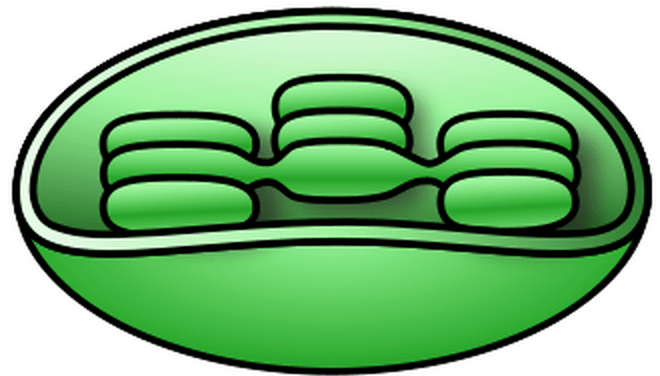


What is the function of a chloroplast?
makes proteins for animal cells
allows materials in and out of the cell
provides structure and support
absorbs sunlight for photosynthesis
Any cell that does not have a nucleus is considered a...
Eukaryote
Prokaryote
Multicellular
Unicellular