wayground logo

Free Printable Worksheets

NEW

Font size

S
M
L
XL
Worksheets

Introduction to Earth Science.

Total questions: 48

Worksheet time: 2hrs 36mins

Name
Class
Date
1.

The study of the origin, history and structure of the solid earth.

a)

geology

b)

meteorology

c)

astronomy

d)

oceanography

2.

The study of the earth's oceans.

a)

geography

b)

meteorology

c)

astronomy

d)

oceanography

3.

The study of the earth's atmosphere.

a)

geology

b)

meteorology

c)

astronomy

d)

oceanography

4.

The study of the universe beyond the earth?

a)

geology

b)

meteorology

c)

astronomy

d)

oceanography

5.

A possible explanation or solution to a problem.

a)

observation

b)

hypothesis

c)

conclusion

d)

theory

6.

A factor in an experiment that can be changed.

a)

variable

b)

control

c)

observation

d)

hypothesis

7.

A rule that correctly describes a natural phenomenon.

a)

hypothesis

b)

theory

c)

scientific law

d)

conclusion

8.
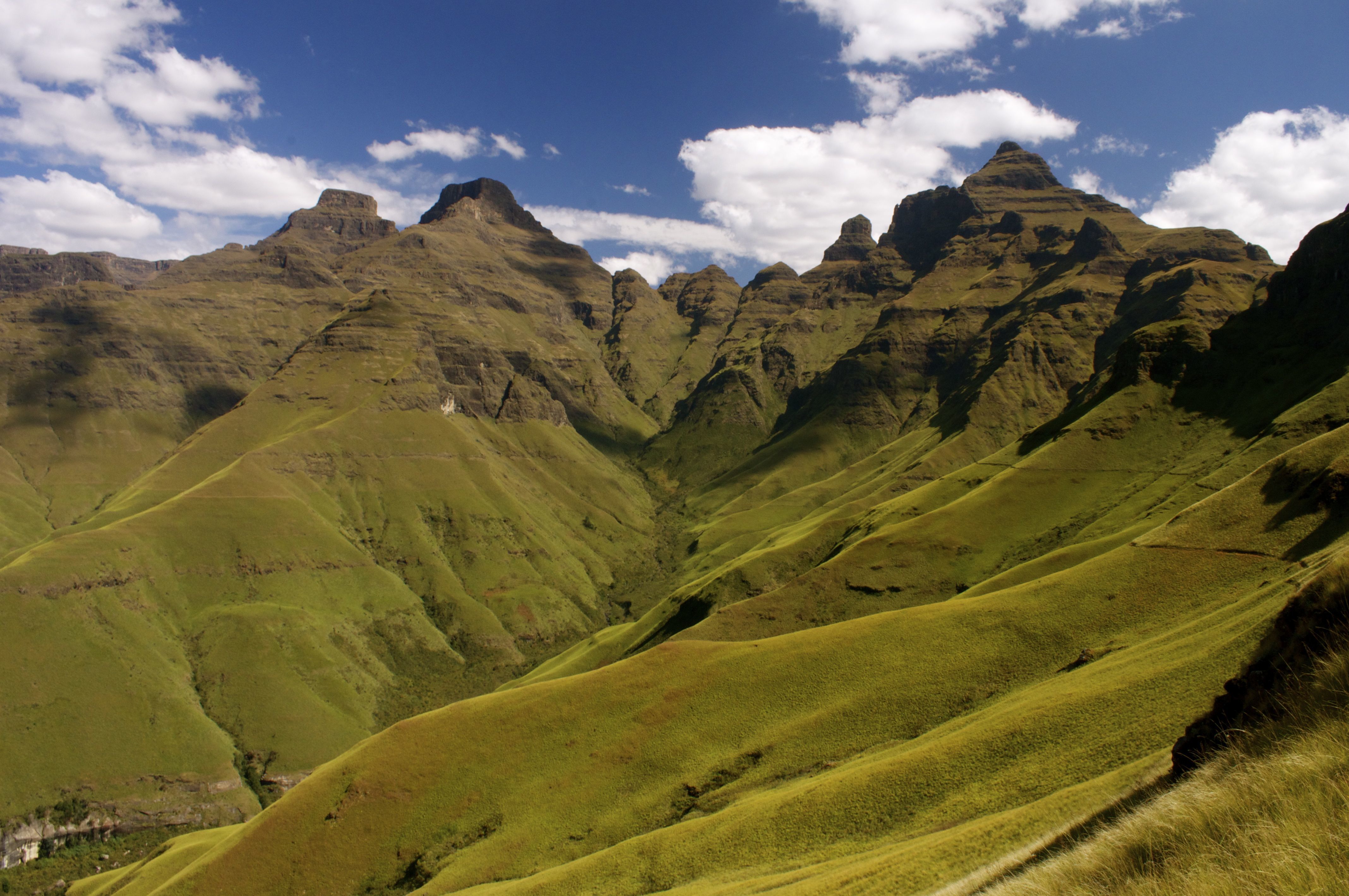
What branch of Earth Science does this picture represent?
a)
Environomental Science
b)
Meterology
c)
Oceanography
d)
Geology
9.

A representation of an object or system.

a)

control

b)

constant

c)

model

d)

law

10.
What is a factor that the experimenter has full control over and changes to see what happens?
a)
Dependent Variable
b)
Independent Variable
c)
Control group 
d)
Hypothesis
11.
The following statement is a hypothesis formed about marsh grass: 
If the amount of nitrogen marsh grass receives is increased, then the height of the grass will increase, because nitrogen is an essential nutrient needed for marsh grass to grow.
What is the independent variable of the statement above? 
a)
Height of grass
b)
Amount of nitrogen
c)
Essential nutrient
d)
Amount of growth
12.
In this graph, what is the dependent variable? 
a)
Walla Walla Island
b)
Time
c)
Number of Deer
13.

When was the Earth created?

a)

4.6 billion years ago

b)

4.6 million years ago

c)

4.3 billion years ago

d)

4 .3 million years ago

14.
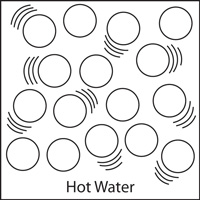
At higher temperatures
a)
particles in an object have less energy
b)
particles in an object move faster
c)
a gas contracts
15.
Freezing
a)
Solid to gas
b)
Liquid to solid
c)
Gas to solid
d)
Liquid to gas
16.
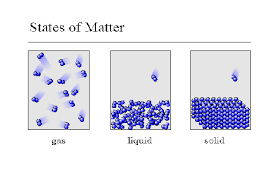
Which state of matter has tightly packed molecules?
a)
solid
b)
liquid
c)
gas
17.
Which state of matter has a definite shape?
a)
solid
b)
liquid
c)
gas
18.
What is happening when my ice cream changes from a solid to a liquid?
a)
freezing
b)
melting
c)
burning
d)
evaporation
19.
Particles of a liquid
a)
are tightly packed together and stay in a fixed position.
b)
have no viscosity.
c)
decrease in volume with increasing temperature.
d)
are free to move around one another but still touch.
20.
Particles (molecules) in a ______________________ have more energy than the other states of matter.
a)
gas
b)
solid
c)
liquid
21.
What is condensation?
a)
gas to solid
b)
gas to liquid
c)
liquid to solid 
d)
solid to liquid 
22.
The speed of the molecules determines the _____.
a)
volume
b)
density
c)
pressure
d)
temperature
23.
What happens when my glass of water is sitting in the sun and disappears into a gas?
a)
evaporation
b)
burning
c)
melting
d)
freezing
24.
Which accurately describes the atmosphere?
a)
Composed of masses of air particles that are constantly circulating.
b)
Composed entirely of nitrogen and oxygen which react to form ozone.
c)
Comoposed of masses of air particles that move very little, if at all.
d)
Composed of several layers that increase in density as altitude increases.
25.
The graph shows how temperature changes with altitude in the Earth's atmosphere. In the troposphere...
a)
Temperature decreases as altitude increases
b)
Temperature increases as altitude increases
c)
Temperature alternately increases and decreases as altitude increases
d)
Temperature stays the same as altitude increases
26.

The prefix "bio" comes from a Greek word that means what?

a)

Life

b)

Water

c)

Earth

d)

Ground

27.

What do we call FRESH water that lies beneath the Earth's surface?

a)

groundwater

b)

lake

c)

river

d)

spring

28.

Which of the following is found in the earths Geosphere

a)

Soil

b)

Rocks

c)

Minerals

d)

All of the Above

29.
This sphere includes the continents, the ocean floor, all the rocks on the surface, and all of the sand in the deserts. 
a)
Hydrosphere 
b)
Biosphere 
c)
Atmosphere 
d)
Geosphere 
30.
Oceans, rivers, lakes, and the moisture in the air are all part of which of Earth's spheres? 
a)
Hydrosphere 
b)
Biosphere 
c)
Atmosphere 
d)
Geosphere 
31.
When volcanoes erupt, dust and ash particles spread through much of the air blocking the sun.  Which two spheres are interacting? 
a)
Hydrosphere and atmosphere 
b)
Geosphere and atmosphere 
c)
Biosphere and atmosphere 
d)
Atmosphere and atmosphere 
32.
This is part of the....
a)
Geosphere
b)
Atmosphere
c)
Hydrosphere
d)
Cryosphere
33.
Earth's liquid water:
a)
biosphere
b)
cryosphere
c)
hydrosphere
d)
geosphere
34.
When a plants takes carbon dioxide from the air which two spheres are interacting? 
a)
Biosphere and atmosphere 
b)
Geosphere and atmosphere 
c)
Hydrosphere and atmosphere 
d)
Atmosphere and atmosphere 
35.

Plastic:

a)

takes hundreds of years to biodegrade

b)

doesn't biodegrade, but breaks into smaller pieces

c)

cannot be effectively recycled

d)

none of the above are true

36.

Microplastics are usually:

a)

1 mm or less

b)

2 mm or less

c)

5 mm or less

d)

10 mm or less

37.

What is true of water pollution in the US?

a)

nearly half of our rivers and streams are polluted

b)

nearly half of our lakes are polluted

c)

both of these are true

d)

neither of these are true

38.

80% of ocean pollution originates _________

a)

from spills on the ocean

b)

on land

c)

from human wastewater

d)

all of these combined

39.
What two elements make up water?
a)
Helium and oxygen
b)
Hydrogen and oxygen
c)
helium and carbon
d)
oxygen and carbon
40.

What is the main reason why scientists are worried about microplastics?

a)

They stay in the ocean for a really long time

b)

They make the ocean look ugly

c)

They are small enough to be eaten by a whole range of marine life

d)

They can strangle marine animals such as seals and turtles

41.
The direction of the flow of energy in a food web is represented by ___.
a)
Light bulbs
b)
Dotted Lines
c)
Arrows
d)
Bubbles
42.
What does every food chain start with?
a)
producers
b)
sun
c)
consumer
d)
decomposers
43.
A connection of food chains with many food energy paths in an ecosystem is a ____________
a)
ecosystem
b)
food web
c)
environment
44.
Trophic levels are represented by 
a)
squares
b)
circles
c)
pyramids
d)
lines
45.
All of the living and nonliving things in an area that interact with each other are called a/an ______.
a)
community
b)
habitat
c)
population
d)
ecosystem
46.
Organisms that look similar, interbreed and can produce fertile offspring
a)
Species
b)
Fish
c)
Community
d)
Trees
47.
A group of a particular species living and interacting in the same area
a)
Community
b)
Population
c)
Organisms
d)
Biosphere
48.
Different populations living and interacting with each other in the same area
a)
Biome
b)
Ecosystem
c)
Community
d)
Niche