wayground logo

Free Printable Worksheets

NEW

Font size

S
M
L
XL
Worksheets

Physical Science Test 1 Review

Total questions: 60

Worksheet time: 3600secs

Name
Class
Date
1.

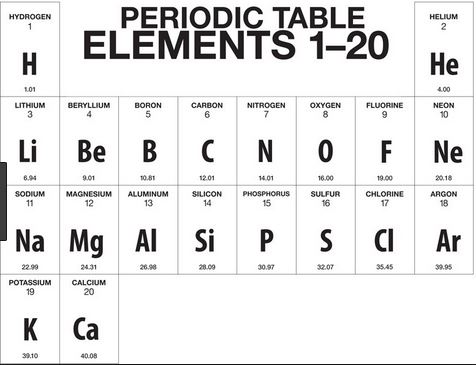
The vertical (up and down) columns in the Periodic Table are called

a)

groups

b)

towers

c)

periods

d)

atomic numbers

2.

Sodium (Na) is found in period

a)

3

b)

2

c)

4

d)

1

3.
What does the atomic mass tell you? 
a)
Basically,the number of electrons and protons
b)
The number of neutrons
c)
Basically, the number of protons and neutrons
d)
The number of protons.
4.
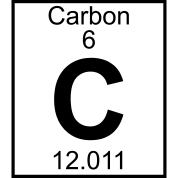
What does the 6 represent?
a)
atomic mass
b)
atomic number
c)
element name
d)
chemical symbol 
5.
These are found on the Periodic Table.
a)
Compounds
b)
Elements
c)
Mixtures
6.

The horizontal (side to side) rows in the Periodic Table are called

a)

groups

b)

families

c)

periods

d)

atomic numbers

7.

what is the name of group number 1

a)

halogens

b)

noble gases

c)

alkali

d)

alkaline earth

8.

what is the name of group number 2

a)

transition metals

b)

halogens

c)

metaloids

d)

alkaline earth

9.

what group number are the noble gases

a)

17

b)

18

c)

14

d)

15

10.
All matter is made of .....
a)
energy 
b)
atoms 
c)
air
d)
chemistry
11.
Most of the mass of an atom is found it its _____.
a)
electron cloud
b)
nucleus
c)
atomic number
d)
empty space
12.
An element is made up of only one kind of _____.
a)
isotope
b)
plastic
c)
atom
d)
metal
13.
What subatomic particles are located in the electron cloud?
a)
quarks
b)
protons
c)
electrons
d)
neutrons
14.
Which subatomic particle has a negative charge in the atom?
a)
proton
b)
neutron
c)
electron
d)
quark
15.
Which is a proton?
a)
A
b)
B
c)
C
16.
Which is a neutron?
a)
A
b)
B
c)
C
17.
Which is an electron?
a)
A
b)
B
c)
C
18.
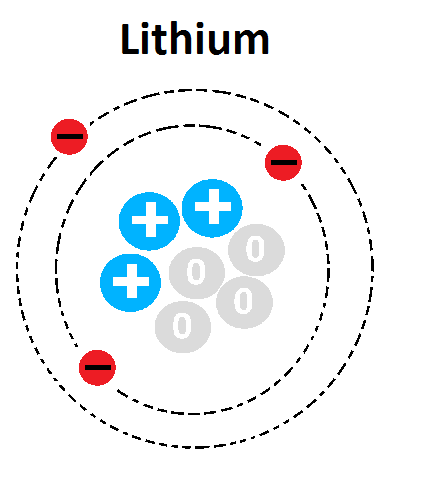
What is the number of protons that the element in this image contain?
a)
14
b)
7
c)
15
d)
18
19.
What are subatomic particles? 
a)
the nucleus 
b)
electron cloud
c)
positive charge
d)
electrons, protons, and neutrons
20.
What is the mass number of this atom?
a)
1
b)
3
c)
4
d)
7
21.
What is the atomic number of this atom?
a)
2
b)
4
c)
6
d)
none of the above
22.

What's a valence electron?

a)

electrons in the second energy level

b)

electrons in the outermost energy level

c)

the atomic number

d)

electrons in the first level

23.

How many valence electrons does Nitrogen Have?

a)

1 Valence electron

b)

2 Valence electron

c)

3 Valence electron

d)

4 Valence electron

e)

5 Valence electron

24.

How many valence electrons does Potassium Have?

a)

1 Valence electron

b)

2 Valence electron

c)

3 Valence electron

d)

4 Valence electron

e)

5 Valence electron

25.

How many valence electrons does Calcium Have?

a)

1 Valence electron

b)

2 Valence electron

c)

3 Valence electron

d)

4 Valence electron

e)

5 Valence electron

26.

This is a correct dot diagram for neon (Ne)

a)

true

b)

false

27.

How would you draw a Lewis dot diagram for Magnesium?

a)
b)
c)
d)
28.
The central region of an atom where its neutrons and protons are is called the
a)
nucleus 
b)
electron cloud
c)
core 
d)
center 
29.
How does the size of a proton compare to the size of a neutron?
a)
larger
b)
smaller
c)
equal
30.
Which of the following is not a compound?
a)
HCl
b)
Cl
c)
NaCl
d)
CO2
31.
Salt has a chemical formula of NaCl.  Salt is a...
a)
Compound
b)
Element
c)
Mixture
d)
None of the Above
32.
What cannot be broken down into other substances?
a)
Compound
b)
Mixture
c)
Solids
d)
Element
33.
A combination of substances that are not chemically combined is called a(n)____________. 
a)
mixture
b)
compound
c)
physical
34.
The air is a _________. 
a)
element 
b)
mixture 
c)
compound 
d)
energy 
35.

Examples are diamonds (C) and Uranium (U)

a)

elements

b)

mixtures

c)

compounds

36.
Classify the picture with the correct label.
a)
Element
b)
Compound
c)
Mixture of Elements
d)
Mixture of Compounds
37.
Classify the picture with the correct label.
a)
Element
b)
Compound
c)
Mixture of Elements and Compounds
d)
Mixture of Elements
38.
Classify the picture with the correct label.
a)
Element
b)
Compound
c)
Mixture of Compounds
d)
Mixture of Elements
39.
Classify the picture with the correct label.
a)
Mixture of Compounds
b)
Mixture of Elements
c)
Compound
d)
Mixture of Elements & Compounds
40.

Which component in a glass of soda represents a gas?

a)

ice cubes

b)

bubbles

c)

soda

41.
Which of the following changes liquid water into gas?
a)
boiling
b)
freezing 
c)
melting
42.
At higher temperatures
a)
particles in an object have less energy
b)
particles in an object move faster
c)
a gas contracts
43.

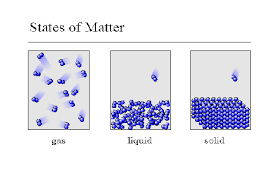
Which state of matter has a definite shape?

a)

solid

b)

liquid

c)

gas

44.
Define a liquid.
a)
Indefinite shape, indefinite volume
b)
Definite shape, definite volume
c)
Found in stars
d)
Definite volume, indefinite shape
45.
The state of matter that has no definite size or shape is
a)
Solid
b)
Liquid
c)
Gas
46.
Particles of a liquid
a)
are tightly packed together and stay in a fixed position.
b)
have no viscosity.
c)
decrease in volume with increasing temperature.
d)
are free to move around one another but still touch.
47.
What term describes a solid changing to a gas?
a)
Deposition
b)
Sublimation
c)
Evaporation
d)
Freezing
48.
How is a gas defined?
a)
Indefinite shape, indefinite volume
b)
Definite shape, definite volume
c)
Found in stars
d)
Definite volume, indefinite shape
49.

What kind of information might go on the X axis?

a)

Independent Variable

b)

Dependent Varaible

50.
What is the dependent variable in an experiment? 
a)
the thing we change or test
b)
the thing we keep the same
c)
the thing we measure in the end
d)
the normal situation
51.
What is a constant? 
a)
the normal situation
b)
the thing we measure in the end
c)
the thing we are testing
d)
the thing we keep the same for every part of the experiment
52.
A boy waters one plant with fresh water and one with salt water and measures growth. What is the dependent variable? 
a)
salt water
b)
fresh water
c)
growth of plants
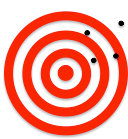
53.
Describe the accuracy and precision of the image
a)
Accurate and Precise
b)
Accurate and not precise
c)
Not Accurate and Precise
d)
not accurate and not precise
54.

What type of relationship is shown by the graph?

a)

direct

b)

indirect

c)

no correlation

55.
A student is planning an experiment to find out how the height from which he drops a ball affects how high the ball bounces. The dependent variable is the _____.
a)
Diameter of the ball
b)
Force acting on the ball
c)
Height that the ball bounces
d)
Height from which the ball is dropped
56.
What type of graph is this?
a)
Line Graph
b)
Pictograph
c)
Bar Graph
d)
Histogram
57.
What type of graph is this?
a)
Line Graph
b)
Pictograph
c)
Bar Graph
d)
Histogram
58.
What type of graph is this?
a)
Bar graph
b)
Histogram
c)
Pie Chart
d)
Stem Chart
59.
What is the base unit for measuring mass?
a)
Meter
b)
Liter
c)
Gram
60.
What is the metric unit for volume?
a)
gram
b)
meter
c)
Liter
d)
ounce