
 Worksheets
Physics EOYE quiz
Total questions: 65
Worksheet time: 33mins


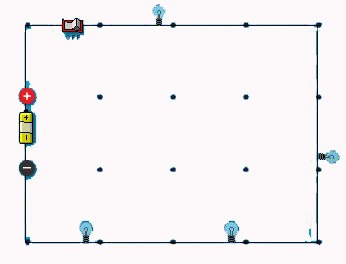
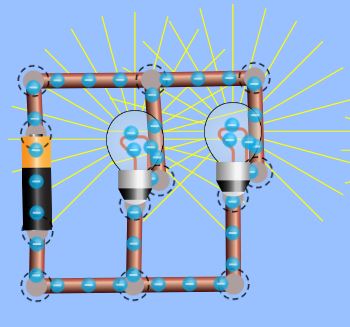
If the light bulb in the middle burned out, what would happen to the other two?
The light bulb to the left would stay lit, but the one to the right would turn off.
They would both stay lit.
The light bulb to the right would stay lit, but the one to the left would turn off.
They would both turn off.

Flow of electrons or charge through a circuit.
parallel circuit
closed circuit
open circuit
electric current

A material that allows heat and electricity to pass through it.
electron
parallel circuit
conductor
insulator

A material that does not allow heat or electrons to move through it easily.
methods of generating power
closed circuits
conductor
insulator

An electric circuit with only one path through which charge can flows. All components are connected in a series.
voltage circuit
series circuit
parallel circuit
electric current

The parts of an atom which move from one atom to the next to create a flow of electricity
current
electron
proton
neutron

The type of magnet in which the magnetic field is produced by an electric current is called an-
horseshoe magnet
bar magnet
refrigerator magnet
electromagnet

If you increase the voltage across a resistor, what will happen to the current?
Current will increase
Current will decrease
Current will stay the same
In a series circuit what happens when you add another bulb?
The bulbs gets brighter
The bulbs gets dimmer
Nothing changes
What effect do like (similar) charges have on each other?
They attract
They repel
No effect
They reverse each other
The unit for potential difference is ____
Ohms
Volts
Watts
Amperes
which is the field for opposite charges


Let's say you have a series circuit with 3 lightbulbs and one 3 volt battery. ABOUT how many volts would each bulb get?
About 1 volt each
About 3 volts each
About 1.5 volts each
About 6 volts each
Let's say you have a parallel circuit with 3 bulbs and one 3 volt battery. ABOUT how many volts would each bulb get?
1 volt each
3 volts each
1.5 volts each
6 volts each
How must a voltmeter be connected?
In series
In parallel
To a power supply
A type of magnet that has temporary magnetic effect when electric current flows through it.
This refer to
Electric
Electronic
Electrostatic
Electromagnet
What are the components of the electromagnets?
battery, wire and bulb
battery , copper wire and paper clips
battery, copper wire and iron nail
battery, wire and aluminum
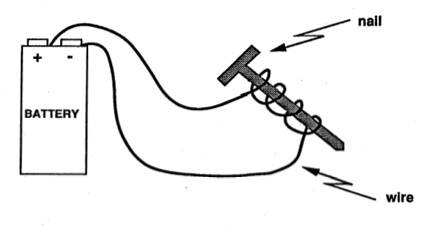
which one is the strongest eletromagnet?
50 turns on the coil, low current,
copper core
100 turns on the coil,
high current,
iron core
50 turns on the coil, low current,
iron core
100 turns on the coil,
low current,
iron core

How are electromagnets different from permanent magnets?
magnets can be turned on/off
you can turn an electromagnet on/off
magnets are more powerful
magnets have a North and South pole

What conclusion can you draw from this graph?
As current increases, magnetic strength decreases.
As current increases, magnetic strength increases.
As current decreases, magnetic strength increases.
There is no relationship between current and magnetic strength.
Which of the following is not a method for heat transfer
Radiation
Insulation
Conduction
Convection
How does heat energy reach the Earth from the Sun
Convection
Radiation
Conduction
Insulation
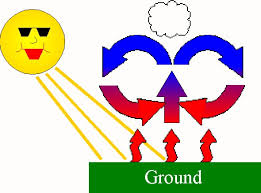
Which term means to transfer thermal energy by collisions between the particles that make up matter?
Heat
radiation
Conduction
Convection
The transfer of energy through matter by the direct contact of particles is called __.
Conduction
Convection
Radiation
Thermal energy
__ is the transfer of energy in the form of electromagnetic waves.
Radiation
Conduction
Convection
Temperature
Which is NOT a form of thermal energy transfer?
Conduction
Convection
Radiation
Temperature
Which form of thermal energy transfer does density of the substances play a key role?
Conduction
Convection
Radiation
Heat
A hot drink has...
Kinetic Energy
Heat Energy
Thermal Energy
Nuclear Energy
A cyclist at the top of a hill has...
Kinetic Energy
Chemical Potential Energy
Elastic Potential Energy
Gravitational Potential Energy
Humans get their energy from...
Chemical Potential Energy
Thermal Energy
Kinetic Energy
Nuclear Energy
Energy stored in objects being stretched or squashed...
Elastic Potential Energy
Kinetic Energy
Chemical Energy
Thermal Energy
The energy going into an energy transfer is always equal to the energy coming out. True or False?
True
False
Batteries are an example of which type of energy store?
Thermal
Magnetic
Chemical
Gravitational potential
Conservation of energy means that...
Energy can be destroyed and made before being transferred
Energy can't be made or destroyed it can only transferred from one store to another
Energy can be made and destroyed
Energy can be made and destroyed then transferred from one store to another
Electric kettles change ..........................energy to ...................
chemical/electrical
light/chemical
electrical/thermal
In Sun or a candle, ............................energy is changed into ...................... energy.
chemical/light
light/chemical
electrical/thermal

A car starts at A and is left to roll freely.
Where is the car's gravitational potential energy store at its greatest?
A
B
C
D
Which sequence describe the energy transfers as a stone is released upwards from a stretched slingshot?
Chemical -> Elastic -> Nuclear
Elastic -> Chemical -> Gravitational
Elastic -> Nuclear -> Kinetic
Elastic -> Kinetic -> gravitational
In the AIM, "To measure which food has the most amount of energy."
To fairly compare the energy present in different food, What two things should be controlled?
type of food
mass of food sample
amount of water in the boiling tube
temperature rise
In the AIM, "To measure which food has the most amount of energy."
How do the scientists measure the energy in food?
by measuring the mass of different food
by measuring the temperature of water before
by measuring the temperature of water after
by measuring the temperature rise of water
In the AIM, "To measure which food has the most amount of energy."
What is the independent variable?
the different kinds of food
the energy stored in food
the temperature rise of water
the mass of food sample
If 4 grams of cheese is burnt and the temperature rise is 16 degree Celsius, what is the temperature rise per gram of cheese?
4
8
2
16

