
 Worksheets
CHS Y9 - Light and sound
Total questions: 60
Worksheet time: 56mins
Light travels...
around corners
in a straight line
When light hits a surface and bounces off it, we say the light has been...
reflected
absorbed
refracted
When light appears to bend, we say it has been...
refracted
reflected
absorbed

A student placed a pencil in a cup of water. The pencil appears broken because light
always travels in a straight line.
is refracted when it passes through the water.
makes the water in the glass evaporate.
reflects the pencil on the water's surface.

The picture shows the _________ of light.
Reflection
Refraction
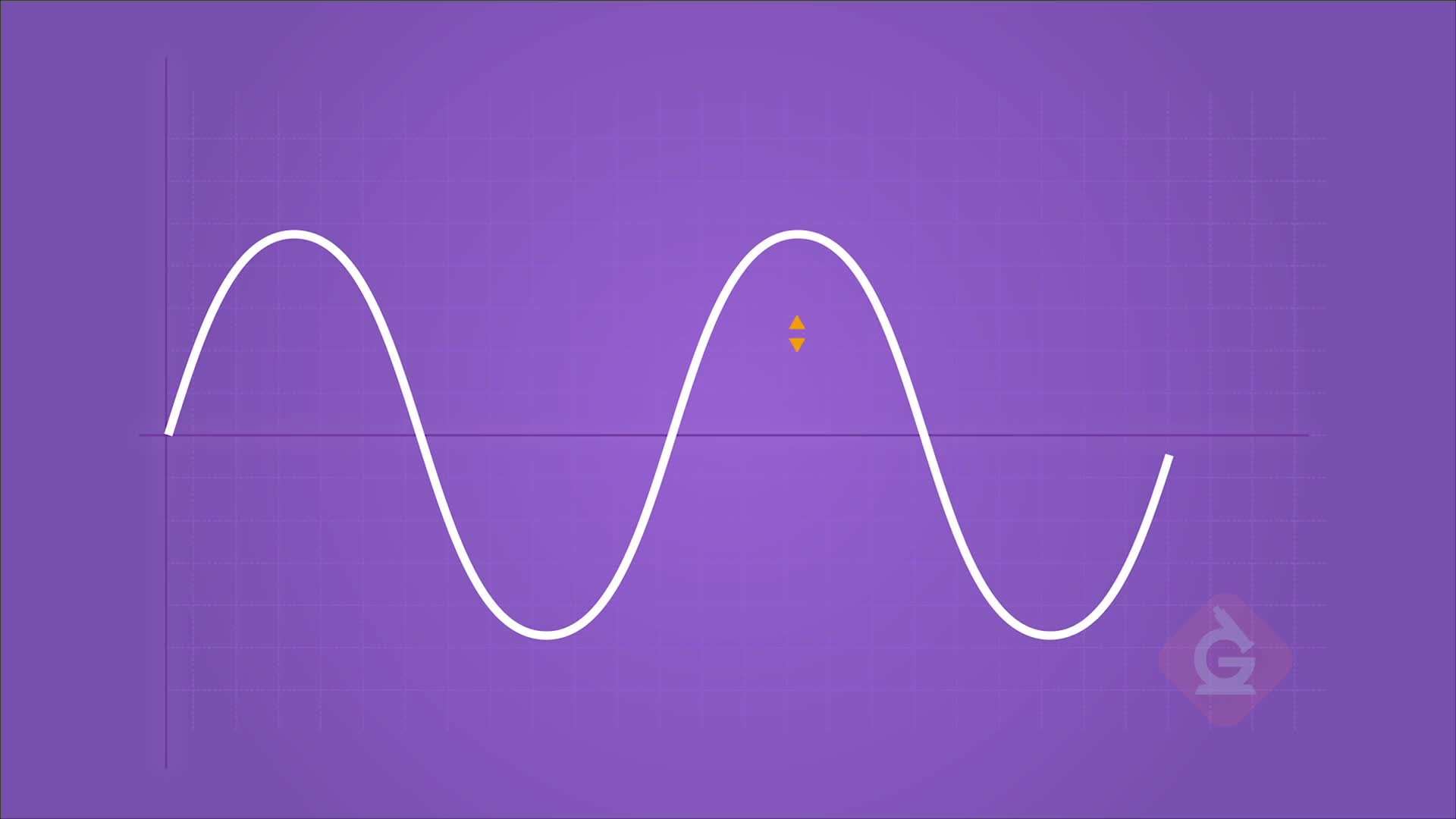
A repeating pattern that can transfer energy is better known as a...
motif
prism
radio
wave

The diagram shows the...
refraction of light.
absorption of light.
reflection of light.
scattering of light.

Which is the reflected ray?
A
B
C
D

Which is the reflected ray?
A
B
C
D
The ray of light that strikes a reflecting surface is called ________.
the incident ray
the reflected ray
the normal
none of the above
The imaginary line perpendicular to a reflecting surface is called _____.
the crooked line
the parallel line
the angular line
the normal line
The angle produced as a source of light bounces off a reflecting surface is called the ______.
angle of crookedness
angle of reflection
angle of incidence
angle of bounce

What can you use to see all the different colors in white light?
A flashlight
A shadow
A camera
A prism
The bouncing of a light ray when it strikes a reflecting surface is called _____________.
refraction
dispersion
reflection
diffraction
What is transported by a wave?
air
energy
matter
particles


Low frequency = _______ pitch
Low
High

High frequency = _______ pitch
High
Low
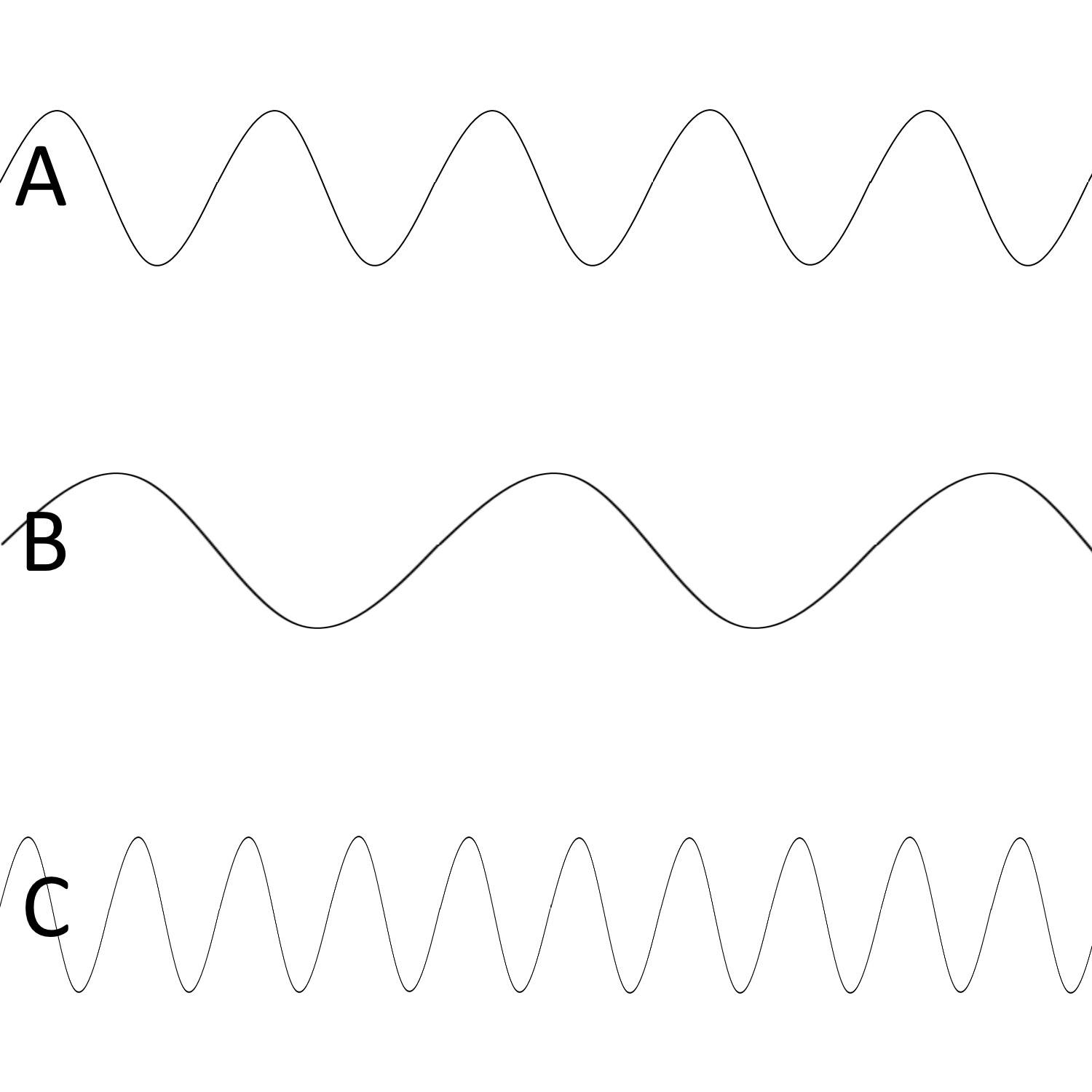
Which wave has the longest wavelength?
A
B
C
None (same wavelength)

Which wave has the highest frequency?
A
B
C
None (same frequency)
none of these are correct
What happens to the eardrum when sound hits it, causing the transmission of sound to the inner ear?
It opens
It grows hair
It refracts the sound
It vibrates
The number of waves that pass a fixed point in a given amount of time is...
frequency
wave speed
amplitude
wavelength
The length of one complete wave cycle is...
frequency
wave speed
amplitude
wavelength
The high pitch sound is...


The loudest sound is


Caleb is sitting near the window on a sunny day. When he closes the curtain, the room becomes darker. What property of the curtain allows it to make the room darker?
The curtain absorbs light.
The curtain is brightly colored.
The curtain folds easily.
The curtain is rectangular shape.
Why do we see objects as white?
They absorb all the colours in light.
They reflect all the colours in light.
They absorb some of the colours in light and reflect the others.

The angle of incidence is _________ the angle of reflection


Material that allows light to pass through allowing you to see "clearly" to the other side is said to be...
opaque.
translucent.
transparent.
The ear allows us to...
have a sense of balance.
detect sound waves.
detect sound waves and give us a sense of balance.
Where is the cochlea located?
The inner ear.
The middle ear.
The outer ear.
Where is the Eustachian tube in our middle ear connected to?
The back of the head.
The back of the throat.
The back of the eye.
What are the three tiny ear bones called?
Hammer, Angus, Stirrup
Hammer, Anvil, Stirrup
Homer, Anvil, Stirrup
Hanson, Angus, Stands
What is inside the cochlea?
Liquid and tiny hairs
Water and tiny hairs
Acid and hairs
Water and fuzz
What is the ear drum?
A thin piece of skin
A thin tendon
A bone
A thin sheet of muscle
The hammer, the anvil and the stirrup bones inside our ear are all also called the....
outicles
ossicles
tentacles
occulars
The wave with the lowest frequency is...
What does the optic nerve do?
It transmit impulses from the retina to the brain.
It helps the eye focus light.
It receives light and sends it to brain.
It transmits light rays to the retina.
What does the iris do?
It transmits light rays to the retina.
It helps the eye focus light.
It sends messages to the brain.
It helps control how much light enters the eye.
Which part of the eye contains light-sensitive cells?
Cornea
Lens
Retina
Pupil

What is the name of the coloured part of the eye?
(a)
What is the name of the hole that light goes through as it enters the eye?
(a)
What is the speed of sound?
3.3 metres per second
33 metres per second
330 metres per second
3300 metres per second


The point where the light rays meet is known as....
the firing point.
the focal point.
the refraction point.
the plane of the lens.
White paper reflects the light that lands on it but it doesn't work like a mirror because...
the light is scattered in all directions.
the light is refracted.
mirrors can only be made of glass.

Filters allow...
all light to go through them.
only the colour of light that matches the filter to pass through.
only the colours of light that don't match the filter to pass through.
no light to pass though them.

This girl is using a piece of equipment called a...
periscope.
telescope.
microscope.
macroscope.
In bright light, the pupil in our eyes will...
get bigger to let more light in.
get smaller to limit how much light gets in.
close completely to stop any more light getting in.

This jumper is red because it...
reflects white light.
reflects red light.
absorbs red light.
reflects blue light,

As we age, which sounds do we hear less well?
Low frequency noises
High frequency noises
Loud noises
Medium frequency noises

