wayground logo

Free Printable Worksheets

Font size

S
M
L
XL
Worksheets

Integumentary and Skeletal Systems

Total questions: 55

Worksheet time: 1hrs 21mins

Name
Class
Date
1.

a group of similar cells performing a specific function

a)

tissue

b)

organ

c)

joints

d)

ligaments

2.

composed of several kinds of tissue that work together to perform a specific job

a)

tissue

b)

organ

c)

joints

d)

ligaments

3.

What are the functions of the skeletal system?


Select ALL that apply.

a)

provides shape and support for your muscles

b)

protects internal organs

c)

makes red blood cells in the bone marrow

d)

stores calcium and other minerals

4.

What are the functions of the integumentary system?


Select ALL that apply.

a)

protects the body from the outside world

b)

helps to maintain body temperature

c)

helps to gather information for the nervous system

d)

produces vitamin D

5.

What is included in the integumentary system?


Select ALL that apply.

a)

skin

b)

hair

c)

nails

d)

bones

6.

The humerus, the bone in the upper arm of a human, is directly connected to other bones in the arm by

a)

cartilage

b)

tendons

c)

extensors

d)

ligaments

7.

One function of the human endoskeleton is to

a)

transmit impulses

b)

produce blood cells

c)

produce lactic acid

d)

store nitrogenous wastes

8.

Which two structures are directly involved in locomotion in humans?

a)

visceral muscle and fibrous tendons

b)

smooth muscle and ligaments

c)

skeletal muscle and bones

d)

cardiac muscle and immovable joints

9.

The connective tissue that cushions the vertebrae and provides flexibility to joints is known as

a)

tendon

b)

muscle

c)

cartilage

d)

bone

10.

Elastic fibers that connect the ends of bones at movable joints are known as

a)

tendons

b)

nervous tissue

c)

vascular tissue

d)

ligaments

11.

The diagram shows a section of human skin.

Structure X represents a

a)

nephron

b)

nephridium

c)

sweat gland

d)

Malpighian tubule

12.

Which is not a function of the skeletal system?

a)

shape and support

b)

movement

c)

protection

d)

gas exchange

13.
What is the top layer of the skin called?
a)
Dermis
b)
Hypodermis
c)
Epidermis
d)
Subcutaneous
14.
Nails are made out of what?
a)
All of the Above 
b)
Terminal 
c)
 Vellus 
d)
Keratin 
15.

What determines a person's hair and skin color?

a)

phenotype

b)

melanin

c)

keratin

d)

protein

16.

The type of muscle that allows movement.

a)

cardiac muscle

b)

skeletal muscle

c)

smooth muscle

d)

all of the above

17.

What kind of tissue is the surface of your skin?

a)

nervous

b)

epithelial

c)

skeletal

d)

connective

18.

How many bones are in the human skeleton?

a)

150

b)

200

c)

206

d)

212

19.

The skeleton of infants is made of this material to allow for passage through the birth canal?

a)

bone

b)

cartilage

c)

spongy bone

d)

calcium

20.

Ligaments connect

a)

muscles to bones

b)

cartilage to bones

c)

muscles to muscles

d)

bones to bones

21.

Tendons connect

a)

muscles to muscles

b)

muscles to bones

c)

bones to bones

d)

cartilage to bones

22.

The epidermis is composed of

a)

dead cells

b)

live cells

c)

dead and live cells

23.
# 1 Refers to the ...
a)
epidermis
b)
hypodermis
c)
dermis
d)
hair follicle
24.
# 2 Refers to the ...
a)
epidermis
b)
hypodermis
c)
dermis
d)
hair follicle
25.
# 3 Refers to the ...
a)
epidermis
b)
hypodermis
c)
dermis
d)
hair follicle
26.
# 4 Refers to the ...
a)
epidermis
b)
hypodermis
c)
dermis
d)
hair follicle
27.
The hypodermis ...
a)
is what makes skin be waterproof
b)
provides the pigment in the skin
c)
helps conserve heat and is made up of adipose tissue
d)
helps to keep skin from drying out
28.
Sebaceous glands ...
a)
is what makes skin be waterproof
b)
provides the pigment in the skin
c)
helps conserve heat and is made up of adipose tissue
d)
helps to keep skin from drying out
29.
The axial skeleton is composed of 
a)
80 bones
b)
206 bones
c)
126 bones
d)
10 bones
30.
The appendicular skeleton is composed of 
a)
80 bones
b)
206 bones
c)
126 bones
d)
10 bones
31.

Mature bone cells:

a)

osteoblasts

b)

osteomasts

c)

osteocytes

d)

osteoclasts

32.

Blood cell formation:

a)

ossification

b)

hemostasis

c)

hematopoiesis

d)

hemophilia

33.

Fat stored in the internal cavities of bones:

a)

red marrow

b)

osseous tissue

c)

adipose tissue

d)

spongy bone

34.

An example of a long bone is?

a)

Spinal Cord

b)

Wrist Bone

c)

Thigh Bone

d)

Sternum

35.

What type of bone is the patella?

a)

Flat Bone

b)

Long Bone

c)

Irregular Bone

d)

Sesamoid Bone

36.

The skull bones, hyoid bone and vertebral column bones are found in which skeleton

a)

Axial Skeleton

b)

Appendicular Skeleton

37.
What type of bone is the scapula?
a)
long bone
b)
short bone
c)
flat bone
d)
sesamoid bone
38.
What is the name of the collar bone?
a)
Clavicle
b)
Scapular
c)
Sternum
d)
Xiphoid
39.
Name the bone located at number  8.
a)
Humerus
b)
Radius
c)
Fibula
d)
Tibia
40.
Name the bone located at number 12.
a)
Patella
b)
Clavicle
c)
Sternum
d)
Scapula
41.
Name the bone located at number 16.
a)
Clavicle
b)
Humerus
c)
Radius
d)
Ulna
42.
Name the bone located at number 14.
a)
Femur
b)
Fibula
c)
Tibia
d)
Radius
43.
The ______________ is made up of arms, wrists, hands, fingers, legs, ankles, feet, and toes.
a)
Axial
b)
Appendicular
44.
Name the bones.
a)
Tarsals
b)
Carpals
c)
Phalanges
d)
Mandible
45.
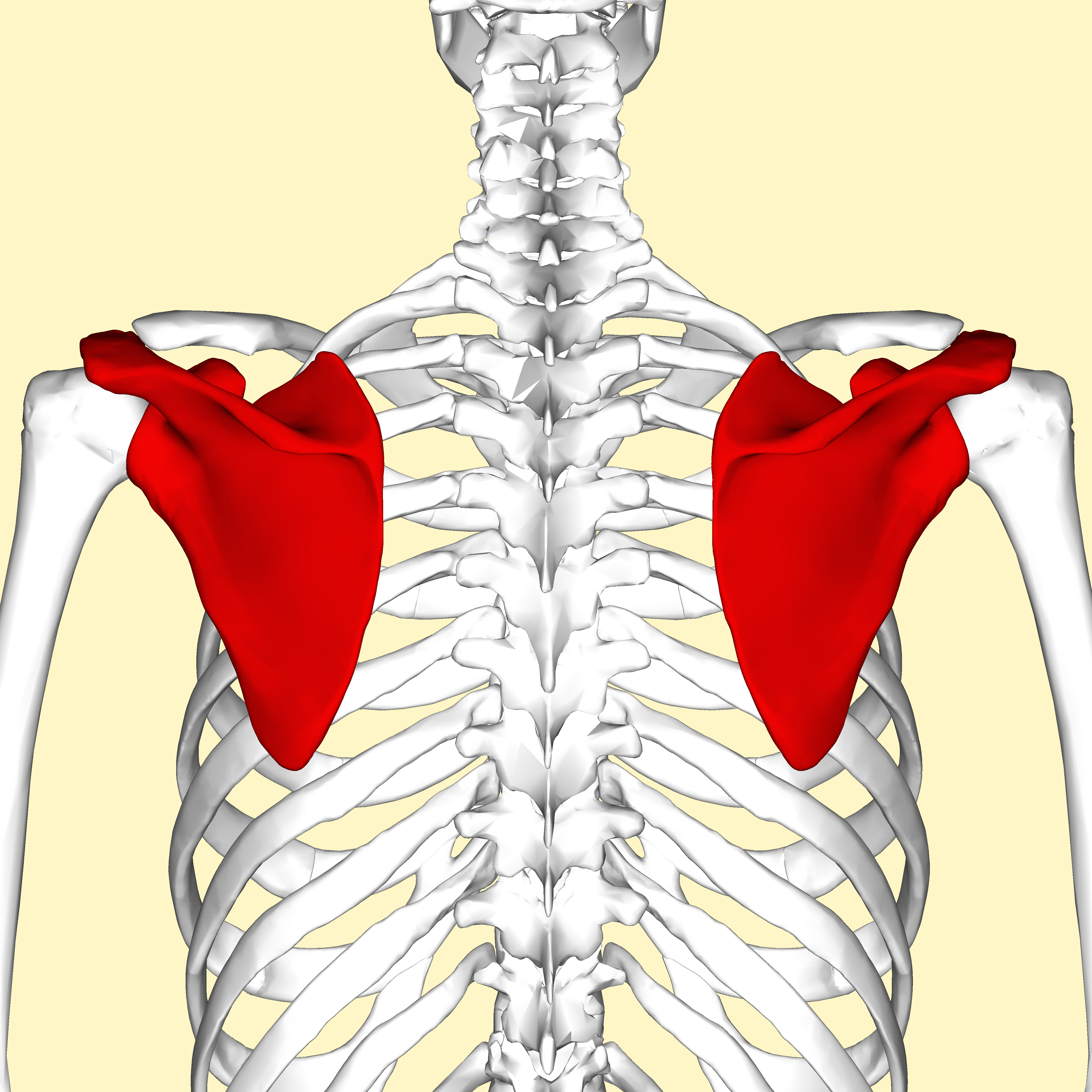
What bones is represented in the  picture?
a)
Clavicle
b)
Scapula
c)
Sternum
d)
Carpals
46.
Also known as the shin bone
a)
Femur
b)
Tibia
c)
Fibula
d)
Metatarsals
47.

The highlighted bone(s) is/are known as the ________.

a)

Humerus

b)

Ulna

c)

Radius

d)

Clavicle

48.
These 8 tiny bones make up the wrist.
a)
carpals
b)
tarsals
c)
metacarpals
d)
metatarsals
49.
Long bones of the feet
a)
metatarsals
b)
metacarpals
c)
tarsals
d)
carpals
50.

This long bone helps protect the heart and lungs and is called the:

a)

scapula

b)

clavicle

c)

vertebrae

d)

sternum

51.
Medial forearm bone
a)
humerus
b)
ulna
c)
radius
d)
carpal
52.
The epidermis is composed of _____.
a)
stratified squamous epithelium
b)
simple columnar epithelium
c)
adipose tissue
d)
connective tissue
53.

What layer of the skin contains sweat glands?

a)

Dermis

b)

Epidermis

c)

Hypodermis

d)

Subcutaneous

54.
The waterproofing protein that fills the cells in the upper layers of the epidermis.
a)
Keratin
b)
Melatonin
c)
Melanin
d)
Actin
55.
Which layer of the skin does NOT contain blood vessels? 
a)
epidermis
b)
hypodermis
c)
dermis