
 Worksheets
Atomic Physics
Total questions: 50
Worksheet time: 27mins
Which statement is MOST LIKELY true?
Ernest Rutherford's experiment led to the nuclear model of the atom.
Ernest Rutherford's experiment established the plum pudding model of the atom.
Robert Millikan's postulates form the most accepted theory for the atomic structure.
Robert Millikan's results had little impact on determining of the charge of the electron.
Which conclusion could be made from Ernest Rutherford’s gold foil experiment?
Atoms are made up of mostly empty space.
Atoms are mainly solid and block alpha particles.
The volume of the nucleus is large compared to the rest of the atom.
The mass of the nucleus is small compared to the rest of the atom.
What did Ernest Rutherford’s gold foil experiment demonstrate about atoms?
Their positive charge is located in a small region that is called the nucleus.
Their negative charge is located in small particles that are called electrons.
Their nucleus makes up the majority of the volume of the atom.
Their electrons are floating in a sea of positive charges.
What does the mass number tell you about an atom of that element?
The number of protons in the nucleus
The number of protons-the number of neutrons
The number of protons + neutrons in the nucleus
The number of protons and electrons in the atom. This is always the same.
There are 2 numbers associated with every element on the periodic table. Which one will always be bigger?
The atomic number
The mass number
The bottom number
The top number
What does the atomic number tell you about the atom of that element?
The number of neutrons - protons in the nucleus of the atom
The number of protons+neutrons in the nucleus
The number of neutrons in the nucleus
The number of protons in the nucleus

What type of ion will this Aluminium atom form when it becomes an ion?
3+ ion
3- ion
5+ ion
5- ion
When the isotope 5024X releases an alpha particle we get another element Y that looks like
5022Y
4622Y
4820Y
5426Y
When the isotope 5024X releases a beta particle we get another element, Y, that looks like
5023Y
4622Y
5025Y
5024Y
What is meant by the statement that 3215P has a half life of 14 days
It takes 7 days to go down to 50% radioactivity each time
It takes 14 days to lose 50% of its current isotope
After 14 days it starts to become less radioactive
It takes 14 days to go up by 50% radioactivity each time
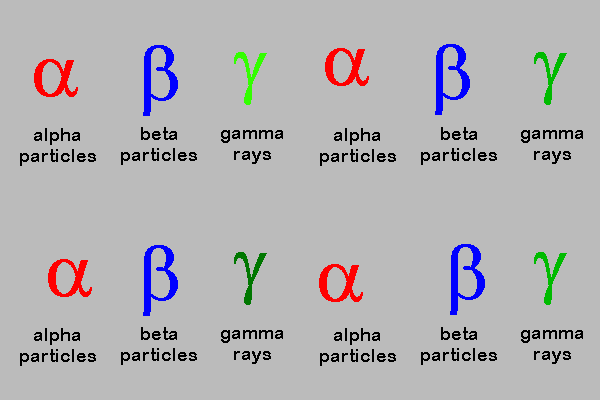
In order of most to least penetrating radiation we have
Alpha , Beta, Gamma
Beta , Gamma , Alpha
Gamma, Beta, Alpha
Gamma, Alpha, Beta
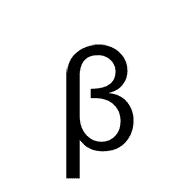
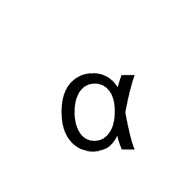
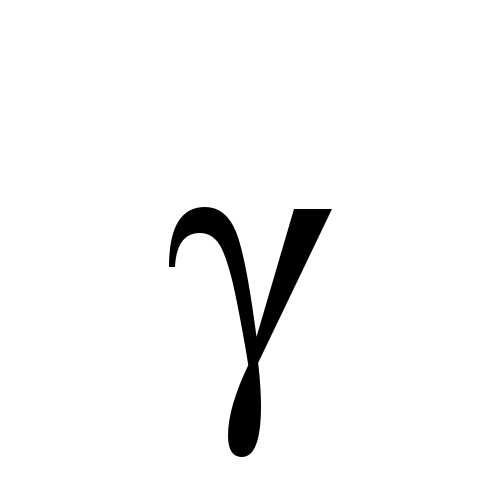
Which type of radioactive decay gives off energy only (no particles)?
alpha
beta
gamma
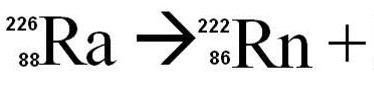
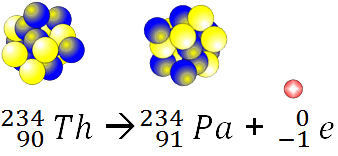
Complete the nuclear equation and determine the type of decay that is occurring in this reaction.
alpha, 42He
beta, 0-1e
gamma
none
Beta particles have a _____ charge.
+2
0
+1
-1
Which type of radiation can be found on the electromagnetic spectrum?
alpha
beta
gamma
Which source of background radiation does NOT contribute significantly to the annual radiation dose received by an average person?
Radon gas
Food and drink
Nuclear waste
Cosmic rays
Which of the following is not a type of radiation detectors?
Geiger Muller counter
Proportional counter
Semiconductor detector
Flame emission detector
Which statement is true for all three types of radioactive emission?
They are deflected by electric fields
They ionise gases
They are completely absorbed by a thin aluminium sheet
They emit light
When a neutron leaves the nucleus, it’s mass
Triples
Decreases
Increases
Stays the same
A Geiger-Muller tube is a _____ .
gas ionization detector
cloud chamber
fluorescence detector
spectrophotometer
Which type of radiation travels the furthest in air?
Alpha
Beta
Sound
Gamma
What is the range of beta radiation in air
A few centimetres (up to 5 cm)
A few metres
100 metres
More than 1km (almost infinite)
What material can be used to absorb gamma radiation?
Thin aluminium (a few mm thick)
Thick lead or concrete
A piece of wood
A sheet of paper
Which radiation is the most penetrating?
Alpha
Beta
Sound
Gamma
As well as alpha, beta and gamma radiation, the nucleus can also emit...
Sound
A neutron
Isotopes
Half-life

