
 Worksheets
Unit 1 review Environmental
Total questions: 73
Worksheet time: 53mins
Choose which of the following is NOT an example of a natural resource.
coal
sunlight
timber (trees)
plastic
The branch of philosophy that deals with good, bad, right, and wrong is called:
logic
ethics
science
culture
The variable that the scientist manipulates in an experiment is called the
controlled variable
observation variable
dependent variable
independent variable
Environmentalism is the study of how the natural world works, how our environment affects us, and how we affect the environment.
true
false
The process by which the scientific community examines a paper before its publication is called
peer review
partner share
fact checking
good reporting
Choose the best definition for sustainability
Using as many resources as you want, whenever you want.
Only using renewable resources and not using many nonrenewable resources.
Only using nonrenewable resources and not using many renewable resources.
Using only just enough resources for survival.
We have experienced both an agricultural revolution and an industrial revolution. Which one involved the transition from animal power to machines that run on fossil fuels?
agricultural revolution
industrial revolution
Sunlight, wind and water are __ resources.
renewable
nonrenewable
semirenewable
unrenewable
Coal, gasoline, and oil are ___ resources.
renewable
nonrenewable
semi-renewable
unrenewable
A possible explanation to a problem that has not yet been tested.
data
theory
hypothesis
fact
This part of the experiment serves as a basis for comparison; the one variable being tested has been omitted.
experimental group
control group
data
variables
In an experiment, this variable is the one that is deliberately changed by the scientist.
dependent variable
independent variable
data
control group
On which axis should the independent variable always be?
X
Y
In an experiment, this variable is the one that is being changed by the scientist.
dependent variable
independent variable
data
control group
What does the term 'Dependent variable' mean?
The scientist controls what to test
An educated guess
Ask a question
What is being measured
What is the first step in the scientific method?
Ask a question
Conclusion
No horseplay
Observe
What is Environmental Science?
a) The study of the environment and its issues.
b) The focus and aim to protect the environment.
c) The study of the interaction of humans with the natural environment.
What refers to the number and variety of species that live in an area?
Population
Biodiversity
Land Area
Which of the following is considered part of the environment?
Forest
People
Buildings
All of these
Environmental science is an interdisciplinary field of study. This means that…
It is limited to only one branch of science; ecology.
Each environmental issue is specific to only one type of science.
Multiple branches of science only (biology, chemistry, etc) are covered.
Many science and non-science fields of study, such as economics and politics, are included.
1. Which of the following is an example of an inexhaustible resource?
Sunlight
Coal
Iron Ore
Trees
Restrictions on pollution into the atmosphere.
Safe Drinking Water Act
Clean Water Act
Clean Air Act
Resource Conservation and Recovery Act
Which of the following types of environmental ethics places an emphasis on human interests?
Ecocentric
Anthropocentric
Biocentric
None of these
Which government agency is responsible for enforcing laws such as the Clean Air Act and Clean Water Act?
The FDA
The IRS
The EPA
The NRA
Which of the following is a non-renewable resource?
Wind
Sunlight
Water
Coal
As the human population grows, what happens to resources?
Decrease
Increase
Stay the same
Increase, then decrease
In the last several hundred years, the human population has _______________ dramatically.
Increased
Decreased
Stayed the same
None of the above
Oxygen is a gas produced by _ and used by _.
plants and animals
photosynthesis and carbon dioxide
animals and plants
carbon dioxide and photosynthesis
All of the carbon in existence is continually recycled in the carbon cycle.
True
False
Which one of these does not add CO2 to the atmosphere?
Cooking with gas
Planting trees
Burning wood
Riding in a bus
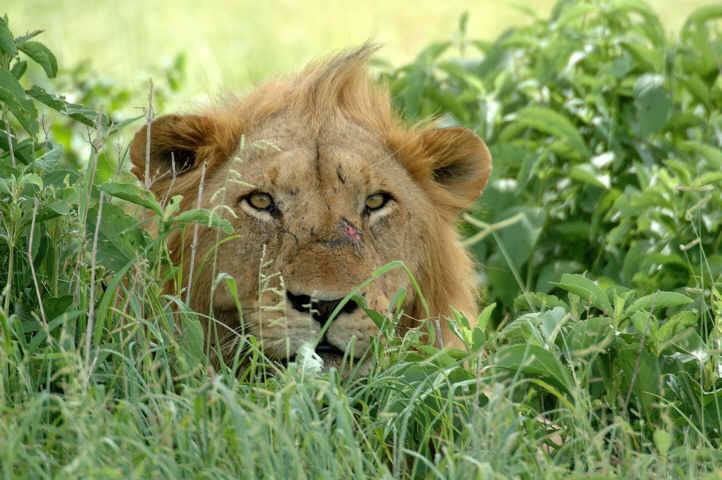
How does the carbon in grass become part of a lion?
The lion eats the grass.
Carbon from grass doesn't end up in a lion.
The carbon ends up in the lion's food chain.
The lion breathes in carbon given out by the plant.

What percentage of the atmosphere is composed of nitrogen gas?
87%
38%
78%
21%

How do plants obtain the nitrogen they need?
From the air
From the soil or water in which they live
From the Sun
From broken-down rocks

Organisms that break down dead plants and animals and release nitrogen back into the atmosphere are...
bacteria
plants
animals
producers
Which organisms need nitrogen to survive?
Only plants
Only animals
Only bacteria
All living organisms
All plants have nitrogen-fixing nodules on their roots.
True
False
How is nitrogen "fixed" into a usable form for plants?
Through the action of bacteria
Through lightning
Through the action of bacteria & lightning
Through photosynthesis
Which nutrient is not cycled through the atmosphere?
Carbon
Nitrogen
Phosphorous
Water
What role do decomposers play in the phosphorus cycle?
Absorb phosphorus
Release phosphorus into the atmosphere
Return phosphorus into the soil
Combustion

Identify the cycle in the picture.
Water cycle
Carbon cycle
Nitrogen cycle
Phosphorus cycle

Identify the cycle in the picture.
The Water cycle
The Carbon cycle
The Nitrogen cycle
The Phosphorus cycle
All EXCEPT _____________ directly cause erosion
wind
sunlight
rain
ice
Water is known as the universal __________ because it dissolves so many different substances.
solution
solvent
dipole
solute
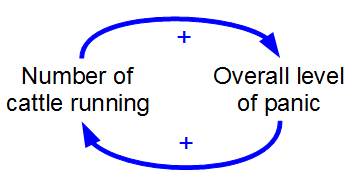
What type of feedback loop is the following an example of?
Negative Feedback Loop
Neutral Feedback Loop
Positive Feedback Loop
Cowboy Feedback Loop

What type of feedback loop is the following an example of?
Negative Feedback Loop
Neutral Feedback Loop
Positive Feedback Loop
Hypothermia Feedback Loop

What type of feedback loop is the following an example of?
Negative Feedback Loop
Neutral Feedback Loop
Positive Feedback Loop
Global Warming Feedback Loop

Which type of feedback loop is the following an example of?
Negative Feedback Loop
Neutral Feedback Loop
Positive Feedback Loop
Animal Feedback Loop

When quantity supplied is equal to quantity demanded
surplus
shortage
equilibrium
law of demand

What is a good system for analyzing issues?
Using a cause-and-effect chart
Determining the mean for a population
Using a decision-making model
Performing experiments

What is risk?
The collection of numerical data
The probability that a desired event will occur
The probability that an undesired event will occur
A group of similar things of interest to a scientist

Principles or standards that we consider important are known as:
Values
Models
Morals
Data

Your purchases can influence what is manufactured and how it is made.
True
False
Hardin's 'Tragedy of the Commons' essay addresses the conflicts associated with what environmental challenge?
Preventing pollution
Preserving biodiversity
Curbing overpopulation
Protecting shared resources
According to the law of supply and demand, reduced oil production leads to:
lower demand for oil
lower oil prices
higher prices for oil
exploration of new fuel sources
A cost-benefit analysis is a(n)
A. Study of the factors that influence decisions of buyers and sellers.
B. Economy in which the government decides what is made.
C. Equilibrium between a product's supply and its demand.
D. Comparison between what is sacrificed and gained by a specific action.
"Energy Star", "USDA Organic", and "Fair Trade Certified" are all examples of
A. ecosystems.
B. ecolabelling.
C. non-market values.
D. market failure.
In making environmental policies, with whom does the government interact?
A. Organizations
B. Businesses
C. Citizens
D. All of the above
A power company is given free land by the government to reduce the cost of providing wind-generated electricity to rural residents. This is an example of a
A. Command-and-control approach.
B. Cap-and-trade system.
C. Subsidy.
D. Green tax.
____________ is the study of how resources are converted into goods and services and how these goods and services are distributed and used.
A. Supply and demand
B. Cost-benefit analysis
C. Economics
D. Socialism
A producer will raise the price and supply of a product when the
A. demand is low.
B. demand is high.
C. price is high.
D. market is in equilibrium.
What determines the prices of goods and services?
Supply
Demand
Supply and demand
Goods
What exists when the quantity supplied is greater than the quantity demanded?
Surplus
Shortage
Overflow
Mass outrage
Kanye West's new shoe, the Yeezy Boost, sold out in stores. This is an example of...
Shortage
Surplus
Equilibrium
Supply
Defined as: an organized money system.
Service
Economy
Trade
Tariff
Defined as: Things that are made or grown and then sold.
Services
Exports
Imports
Goods
Defined as: To import a product or service from another country.
Imports
Goods
Services
Exports
Defined as: the performance of a duty or work for another person.
Good
Service
Export
Import
The point at which supply and demand meet
price ceiling
excess demand
equilibrium
disequilibrium
What is the condition known as when the quantity supplied is greater than the quantity demanded?
Abundant supply
Disequilibrium
Excess availability
Excess supply

