
 Worksheets
Intro to Business - Chapter 2
Total questions: 41
Worksheet time: 28mins
In business terms, what is a profit?
a risky venture
a holiday bonus
a monetary reward
a smart investment
A local dry cleaner that also launders and presses shirts is selling
industrial supplies
tangible items
consumer services
specialty services
For a business, positive income remaining after payment of expenses is
loss.
nothing.
profit.
debt.
Which of the following is a natural resource that can be renewed through people's efforts
water
trees
mineral deposits
crude oil
In a private enterprise economic system, the interaction of supply and demand primarily determines
confusion.
the price of the products being sold.
the extent of pollution.
government regulation.
7. How many different types of economies are there, according to your book?
4
3
8
367
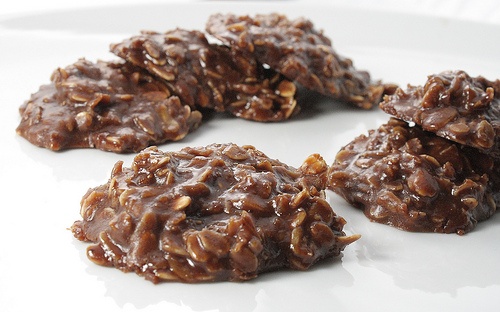
I have 7 students and only 5 cookies. The cookies are
needs
Scarce
Wants
Services

The economic resources used to make this desk are
Natural and Capital Resources only.
Human Resources only.
Labor and Capital Resources only.
Land (Natural), Labor, and Capital Resources
Which is NOT a factor of production?
natural resourecs
labor resources
capital resources
the marketplace
Which statement about natural resources is NOT true?
Natural resources can be processed to make goods.
The amount of natural resources available to a society has little effect on its economy.
Synthetic materials such as nylon can be made from natural resources.
Countries that have scarce natural resources must get them from somewhere else.
Which means the same as "human resources"?
capital resources
service providers
labor resources
unskilled workers
Which is an example of a capital resource?
a machine used to make molded plastic toys
a customer service representative
money borrowed from a bank
the president of a company
What is "opportunity cost"?
the income people receive by taking risks
giving up the chance to use a resource for one thing instead of another
the methods and labor used to produce a good
the income people have to purchase goods and services
Which is a characteristic of capitalism?
Resources are privately owned.
Resources are shared equally.
There is an even distribution of income.
Prices are determined by government planners.
Which is true about people working in a market economy who have labor skills that are in demand?
Their earnings are the same as other workers their age.
Their incomes tend to be lower than others whose skills are not in demand.
Their incomes tend to be higher than others whose skills are not in demand.
Their earnings are not related to demand.
Which is most important in determining the price of a product or service?
profit and competition
business owners' preferences
equilibrium pricing
supply and demand
Which is most likely to happen when the price for a good or service is high?
demand falls
profits rise
supply increases
competition decreases
Which is a characteristic of socialism?
Individuals (private companies) own all major resources.
The Government owns and controls major industries and/or services (like factories and healthcare).
There are many choices for consumers.
There are never any economic problems because the government is in control.
What are two basic types of economic systems?
supply and demand
competition and profit
private enterprise and free enterprise
market economy and command economy
Which of the following is the disadvantage for a market economy?
Sometimes, there are market failures (for example, business or industries can fail).
There is little government intervention.
Great variety of goods or services.
Price are determined by market forces (supply and demand).
The point at which the quantity demanded and the quantity supplied meet is called the __________ price.
not even
compromise
dynamic
equilibrium
1. Some natural resources, such as trees, wheat, and cattle, are
artificially produced.
imported.
renewable.
irreplaceable.
Which is a characteristic of socialism?
Individuals own all major resources.
Major industries are government owned.
There is little choice for consumers.
There is no incentive to create better products.

