wayground logo

Free Printable Worksheets

Font size

S
M
L
XL
Worksheets

Properties of Life

Total questions: 33

Worksheet time: 23mins

Name
Class
Date
1.
Cells are the basic unit of life
a)
true
b)
false
2.
When a collection of similar cells group together, they form what is called _________.
a)
Organs
b)
Tissue
c)
Organ system
d)
Organism
3.
A collection of tissue that is grouped together forms an ___________
a)
tissue
b)
organ system
c)
organism
d)
organ
4.
A collection of organs forms what?
a)
Organ system
b)
organism
c)
cell
d)
tissue
5.
Homeostasis
a)
allows for a wildly fluctuating internal environment
b)
is impossible in vertebrates
c)
is the maintenance of a relatively stable internal environment and often incorporates a form of feedback regulation
d)
is the maintenance of a relatively stable external environment and often incorporates a form of feedback regulation
6.
Which diagram represents an organ?
a)
#1
b)
#2
c)
#3
d)
#4
7.
Which is the largest structure?
a)
Cells
b)
Tissue
c)
Organ
d)
Organism
8.

Which of the following levels of organization in the body is composed of one or more organs working together?

a)

Organs

b)

Tissues

c)

Organism

d)

Organ System

9.

_______ are a group of similar cells that perform the same function.

a)

Tissues

b)

Organs

c)

Organ Systems

d)

Organism

10.

Which of the following is a structure made up of different types of tissues?

a)

Cells

b)

Organs

c)

Organ System

d)

Organism

11.

The body’s use of molecules for energy and growth is called...

a)

System

b)

Metabolism

c)

Microbiome

d)

Metabolism simulation

12.

A group of atoms joined together in a particular way is called..

a)

metabolism

b)

molecule

c)

microbiome

d)

scientific argument

13.

A set of interacting parts forming a complex whole.

a)

Digestive system

b)

Circulatory system

c)

Respiratory System

d)

System

14.
Cellular Respiration's goal is to
a)
make water
b)
make ATP
c)
make glucose
d)
make  oxygen
15.
What is the purpose of photosynthesis?
a)
make glucose
b)
make ATP
c)
make light
d)
release carbon dioxide
16.
What is the purpose of cellular respiration?
a)
to break down food
b)
to create energy in the body
c)
to release energy from food
d)
there is none; it's a waste of time
17.
Which is the most complex of the choices below?
a)
cell
b)
tissue
c)
organ
d)
organ system
18.
What is the most basic unit of life?
a)
cell
b)
tissue
c)
organ
d)
organ system
19.
Which of these is not true about all organisms?
a)
all living things have many cells
b)
all living things need water
c)
all living things respond to stimuli
d)
all living things reproduce
20.
What is another way of saying organism?
a)
living thing
b)
organ system
c)
tissue team
d)
critter
21.
Which choice shows the levels of organization in order from LARGEST to smallest.
a)
organism, organ system, organ, tissue, cell
b)
cell, tissue, organ, organ system, organism
c)
organism, cell, organ system, tissue, organ
d)
cell, cell, cell, cell, cell
22.
When a baby kitten becomes an adult cat, this is an example of...
a)
energy metabolism
b)
growth and development
c)
response to stimuli
d)
having cells
23.
Your body shivers when you are cold. This is because of the concept of...
a)
homeostasis
b)
heredity
c)
energy metabolism
d)
cellular organization
24.

Reproduction that involves two cells from different parents unite to produce the first cell of a new organism.

a)

Asexual

b)

Sexual

c)

Budding

d)

Division

25.

For single-celled organisms, _____ is

mostly an increase in size.


Multicellular organisms go through a

process called __________, where cells

divide and differentiate into different

kinds of cells.

a)

Evolve, respond to stimulus

b)

Expansion, progress

c)

Growth, development

d)

Production, evolution

26.

The combination of chemical reactions through

which an organism builds up or breaks down

materials as it carries out its life processes is called ...

a)

absorption

b)

metabolism

c)

digestion

d)

consumption

27.

Maintaining a stable internal

environment is called

a)

homeostasis

b)

equilibrium

c)

balance

d)

evenness

28.
Rocks are not living because
a)
they never move
b)
they aren't needed for humans
c)
they are not made of cells
d)
they don't break down
29.
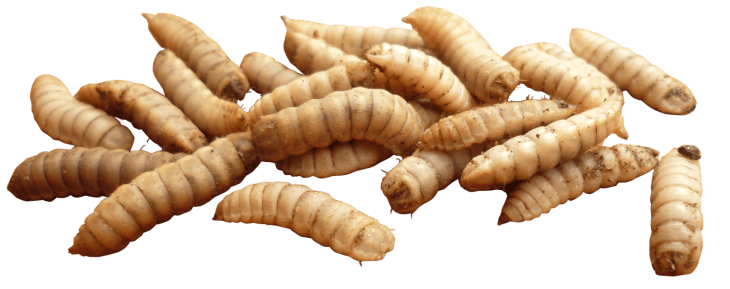
A maggot changing into a fly is an example of 
a)
reproduction.
b)
growth and development.
c)
homeostasis.
d)
evolution.
30.
An amoeba is a unicellular organism. Which characteristic of life is this?
a)
All living things use energy
b)
All living things contain cells
c)
All living things respond to their environment
d)
All living things grow
31.
What is the main source of energy on Earth?
a)
stars
b)
moon
c)
water
d)
sun
32.
The process whereby an organism produces more of its own kind
a)
development
b)
adaptation
c)
homeostasis
d)
reproduction
33.
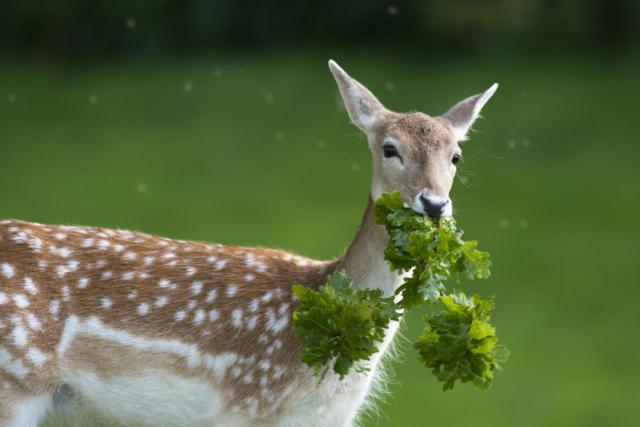
A plant using sunlight to make food to use or a deer eating leaves from a shrub are examples of
a)
universal genetic codes.
b)
organisms made of cells.
c)
responding to a stimulus.
d)
metabolism.