
 Worksheets
Foundations of Government
Total questions: 51
Worksheet time: 31mins


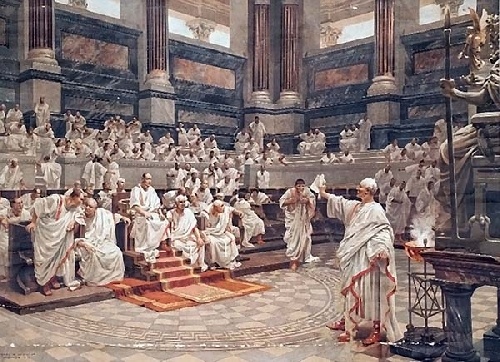
America's government is most similar to:
the Vatican's Theocracy
Middle Ages Monarchy
Athenian Democracy
Roman Republic
Most of the ideas and traditions that influenced the American government came from the colonist's British heritage.
True
False
Definition: The people are the source of any and all governmental power.
Limited Government
Rule of Law
Consent of the Governed
Representative Government
Definition: Government is not all-powerful and may do only those things the people have given it the power to do.
Rule of Law
Limited Government
Democracy
Consent of the Governed
Definition: In a representative system of government, the people elect public officeholders to make laws and conduct government on the people’s behalf.
Consent of the Governed
Representative Government
Federalism
Democracy
Definition: System of government in which power rests with the people.
Consent of the Governed
Federalism
Representative Government
Democracy
This document limited the power of the King of England.
Magna Carta
Declaration of Independence
Mayflower Compact
Which political theory held that God created the state, and God had given those of "royal birth" the right to rule?
Force Theory
Evolutionary Theory
Divine Right Theory
Social Contract Theory
Which political theory argues that the state arose out of a voluntary act of free people and that the state exists only to serve the will of the people?
Force Theory
Evolutionary Theory
Divine Right Theory
Social Contract Theory
Which political theory developed naturally out of the evolution of the family?
Force Theory
Evolutionary Theory
Divine Right Theory
Social Contract Theory
Which political theory of government is where a small group forces all people to submit to them?
Force Theory
Evolutionary Theory
Divine Right Theory
Social Contract Theory
No government. Everyone has the right to everything. People are always at war with each other.
autocracy
state of nature
social contract
natural rights
A king or queen rules the country.
democracy
oligarcy
monarchy
state of nature
An agreement between the people and their government.
social contract
anarchy
rule of law
separation of power
A document that explains what type of government a country has, how the government functions and how laws are made.
oligarchy
social contract
constitution
rights of the minority
A government in which people are personally involved in the decision making of the country. Most countries are too large for this to work.
representative democracy
theocracy
consent of the governed
direct democracy
Life, liberty and property
natural rights
state of nature
separation of power
dictatorship
A government where a religion is the ultimate authority and religious law is used to settle disputes and rule the people.
monarchy
oligarchy
theocracy
democracy
The citizens of the country give permission to the government by voting.
autocracy
anarchy
state of nature
consent of the governed
A small group of people have all the power in a country.
dictatorship
oligarchy
rights of the minority
theocracy
Power is split between branches and each has a function that they perform.
social contract
oligarchy
separation of powers
democracy
North Korea is an example of a ___________ because one person has all the power.
anarchy
democracy
theocracy
dictatorship
The United States federal government (national) is an example of a ______________.
oligarchy
representative democracy
monarchy
dictatorship

The belief that a government gets its power from ____________ is a core principle of a democracy.
A Monarch (King/Queen)
God(s) or a Divine Being
The People
Military Strength

Rulers in an absolute monarchy routinely used this theory to justify their legitimacy as heads of state.
Divine Right
Social Contract
Newton's 3rd Law
Chaos Theory

Which of our P.A.L.S. (Power, Authority, Legitimacy, and Sovereignty) deals with the act of actually governing a state? Think of it as the ability to rule...
Authority
Sovereignty
Legitimacy
Power

If a government's leader(s) has the right to create laws but does not possess the ability to enforce these laws, we could describe that government has having...
Legitimacy but no sovereignty
Sovereignty but no authority
Authority, but no power
Power but no authority

What is the ability to rule absolutely within a territory?
Sovereignty
Power
Authority
Leadership

The people who are members of a state and are protected and recognized by that state's laws and/or constitution.
Soldiers
Administration
Officials
Citizens

Power, Authority, Legitimacy and Sovereignty are foundational features of...
A population
A territory
A committee
A government

A government in which control of the country is in the hands of a small group of people.
Theocracy
Oligarchy
Absolute Monarchy
Representative Democracy

How would a democracy keep its legitimacy?
Through police/military force
Manipulation of the media
A fair and accessible voting process
Corruption of government officials

A government in which the monarch's power is checked by a constitution and governs alongside a parliament is...
Absolute Monarchy
Constitutional Monarchy
Dictatorship
Direct Democracy

